I’ll never forget the night I smelled fish in my hallway. It wasn’t dinner; it was my 1970s-era electrical panel literally melting because I tried to charge my new Tesla while my wife was running the dryer. I thought I was being smart by skipping the upgrade, but that fishy smell was a massive red flag that I was pushing my 100-amp service way past its breaking point. I made the classic rookie mistake of thinking ‘it’ll probably be fine,’ and it almost cost me my house. If you’re eyeing a Level 2 charger, you’re likely staring at a quote for a 200-amp service upgrade and wondering if the electrician is just trying to buy a new boat on your dime. I’ve been there, sitting at the kitchen table with three different quotes, wondering why one guy wanted $1,500 and the other wanted $4,000. Today, I’m going to pull back the curtain on what this actually costs—and why cutting corners is the most expensive thing you can do. [image]
Stop Guessing and Start Calculating Your Load
Modern homes weren’t built for the “always-on” lifestyle we lead now. When you add an EV to the mix, you’re essentially adding another whole house’s worth of demand to your system. I remember trying to squeeze a charger onto a tiny service once, thinking I could just be careful with my appliance use. Spoiler: you won’t be. You’ll forget, the breaker will trip, and you’ll wake up to a dead car. According to the National Fire Protection Association (NFPA), electrical distribution or lighting equipment is a leading cause of home fires, accounting for roughly 13% of all home structure fires. That’s a staggering reality when you realize most of those are preventable with proper capacity. Getting panel upgrades for EV chargers isn’t just about speed; it’s about not being part of that 13%. It’s about knowing that when you plug in, your house isn’t groaning under the weight of your tech.
Does your home really need the full 200-amp treatment?
Most people think the ‘cost’ is just the hardware, but the real price tag includes the permits, the labor, and sometimes even the utility company’s fees for running a new line to your house. I once spent three weeks fighting a permit because I didn’t realize a new ground rod was mandatory for a service upgrade in my zip code. It’s these little ‘hidden’ details that turn a $2,000 job into a $4,000 headache. But here’s the kicker: a 200-amp upgrade can actually increase your home’s value and make it future-proof for heat pumps and induction stoves, not just your car. Have you ever had your lights flicker the moment your charger kicks in? That’s your house telling you it’s tired. It’s struggling to breathe. You can even sometimes get the utility company to pay for your service upgrade if you know which programs to ask for. We’re going to break down every line item so you can go into this with your eyes wide open. Have you ever felt like your electrical panel was standing between you and the electric future you were promised? It’s a common fear, but once you understand the math, the fear disappears.
Read the Math Before You Buy the Copper
Think of your electrical panel like a multi-lane highway. If you have 100-amp service, you have two lanes. When you add an EV charger, you’re essentially trying to drive a massive semi-truck down one of those lanes for ten hours straight. It doesn’t matter if the other lane is empty; the friction and heat build-up are real. I once had a neighbor who insisted his panel was fine because he had three empty breaker slots. He didn’t realize those slots are just physical spaces; they don’t represent actual electrical capacity. You need to how to tell if your panel has space for an EV circuit by looking at the total load, not just the open holes in the plastic cover. Before you sign a contract, make sure you know how to read the load calculation your electrician sent you. This document is the only thing standing between you and a future of nuisance trips. If that calculation shows you’re at 95% capacity, you are playing with fire. 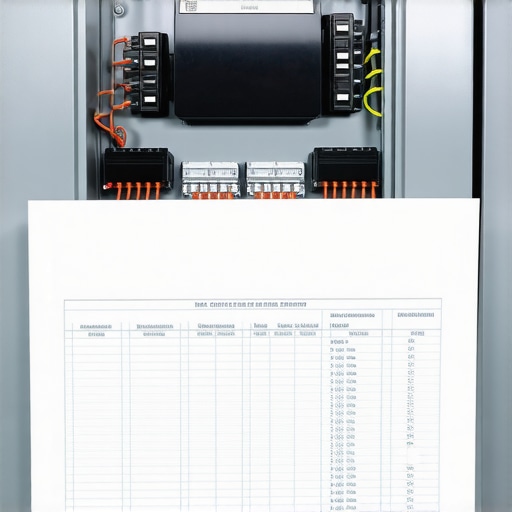
Why Thicker Copper is Your Best Insurance Policy
When it comes to the actual wire running from your panel to the garage, do not let anyone talk you into the bare minimum. I learned this the hard way when I used a thinner gauge for a short run, only to find the conduit was hot to the touch after a four-hour charging session. That is wasted energy turning into dangerous heat. In fact, the wire gauge mistake that fails 40 percent of inspections is usually the result of a DIYer or a rushed pro trying to save fifty bucks on materials. If your electrician mentions 8-gauge wire for a 50-amp circuit, ask them to check their math again. You want 6-gauge or better to ensure your house stays cool while your car gets juiced. You can spot the red flags early if you know the 4 signs your electrician used the wrong gauge wire before they close up the drywall.
Mastering the Art of Code Compliance
You might think building codes are just red tape, but in the EV world, they are literally written in the ashes of houses that burned down. For example, in 2025, the requirements for grounding and arc-fault protection are stricter than ever. Ensuring code compliance when installing EV chargers isn’t about pleasing an inspector; it’s about making sure your charger doesn’t become a giant fuse.
The Secret is in the Torque
Here is something 90% of homeowners miss: the torque settings. Every breaker and terminal has a specific inch-pound requirement. If it’s too loose, it arcs; if it’s too tight, it crushes the wire and creates a hot spot. I spent years just ‘snugging it up’ with a regular screwdriver until I saw a melted lug on a subpanel I’d installed. Now, I never work without a dedicated torque wrench. This is the forgotten torque test that prevents panel fires, and it’s a non-negotiable step if you care about safety. If you are doing a DIY install or watching a pro, ask for the specific torque wrench settings for a wall connector to ensure everything is locked down to factory specs. Upgrading your panel for better EV charging performance is a one-time investment that pays off every morning when you walk out to a fully charged, safely connected vehicle.Most people think a NEMA 14-50 outlet is the ‘gold standard’ because it’s what they use for their electric range. But here’s the contrarian truth: for a daily EV driver, a plug-in setup is actually a dangerous weak link. Those outlets were designed for appliances like dryers that cycle on and off, not a car that draws maximum current for eight hours straight. I’ve seen so-called ‘heavy duty’ outlets melt into a puddle of polymer because of poor contact tension over time. If you want a setup that won’t keep you up at night, the critical difference between hardwired and plug-in chargers is that hardwiring removes two massive points of failure. The Electrical Safety Foundation International (ESFI) warns that home electrical systems are often pushed to their thermal limits by modern continuous loads, which can lead to insulation breakdown long before a breaker actually trips. 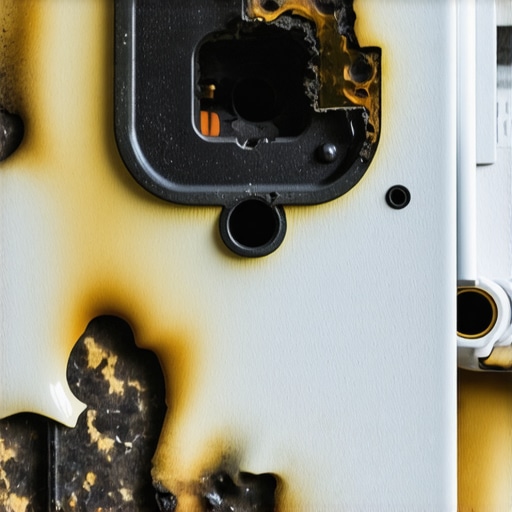
Hardwiring Beats the Plug Every Single Time
When you hardwire, you’re creating a permanent, vibration-resistant connection. I once helped a guy who couldn’t figure out 3 things to check if your charger won’t click into place, only to find out his outlet had slightly warped from heat, throwing the whole alignment off. It’s a classic ‘oops’ factor: the outlet itself becomes a sacrificial lamb. Furthermore, many DIYers forget that an outdoor plug-in station requires a very specific (and expensive) GFCI breaker that often fights with the charger’s internal safety logic. This leads to the frustrating phenomenon of why your ev charger trips the gfci in the rain. By hardwiring, you usually bypass the need for that external GFCI breaker (depending on your local 2025 code), saving you money and preventing nuisance trips that leave you with an empty battery in the morning.
Can your home handle a 100% continuous load for ten hours?
This is the question that separates the pros from the amateurs. In the world of troubleshooting ev chargers common compliance pitfalls and fixes, we often find that the ‘bottleneck’ isn’t the charger, but the thermal creep in the panel. If you see why your charging speed drops by half at midnight, it might not be a grid issue—it might be your charger’s internal sensors throttling back because the terminals are getting too hot. You need to how to verify code compliance for your ev charger installation by ensuring your electrician didn’t just ‘fit’ the breaker in, but actually accounted for the 125% continuous load rule required by the NEC. Have you ever fallen into this trap? Let me know in the comments. Moving forward, I’ll show you how to navigate the final inspection without breaking a sweat.Passing the final inspection is a huge relief, but don’t just set it and forget it. I treat my EV setup like a high-performance engine because, at 48 amps of continuous draw, it basically is. One of the biggest killers of long-term reliability is environmental degradation. If you live in a dusty area or near the coast, you’ll eventually need to learn how to clean your charger ports without damaging them. Fine particles create resistance, resistance creates heat, and heat leads to the dreaded ‘amber light’ of failure. I personally keep a can of high-quality electrical contact cleaner on the shelf next to my charger. It’s also worth listening to your equipment. If you notice a low-frequency buzzing that sounds like a beehive, you should investigate how to stop the annoying hum coming from your charger before that vibration indicates a terminal is working its way loose. 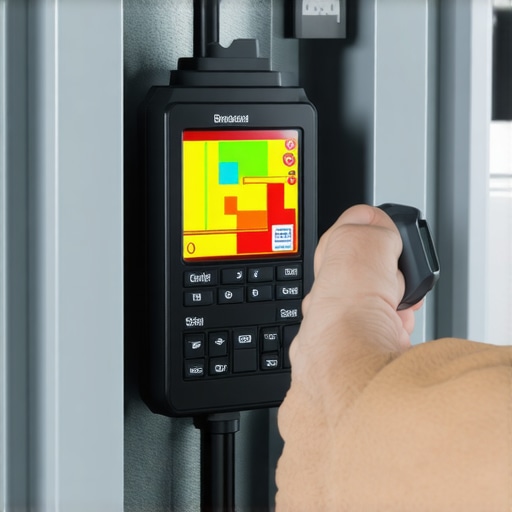
How can I keep my hardware happy for the long haul?
Maintenance isn’t just about cleaning; it’s about seasonal awareness. Last winter, I realized my heavy-duty cable was becoming a tripping hazard because it was so rigid it wouldn’t lay flat. Understanding why your charging cable gets stiff in the winter and how to fix it saved me from a broken connector and a potential fall. I recommend a simple biannual checkup: tighten the lugs with your torque wrench, check the cable jacket for nicks, and clear any spider webs from the unit’s cooling vents. For those deeper technical gremlins that pop up out of nowhere, keep a bookmark on ev charger troubleshooting expert tips for common issues.
The Tool I Use Every Six Months to Sleep Better
If you want to move from ‘hopeful’ to ‘certain,’ buy a digital infrared thermometer. According to technical documentation from Fluke, a leader in electrical testing equipment, thermal imaging is the gold standard for spotting ‘hot spots’ in residential systems before they fail. I open my panel every six months—with extreme caution—and point the laser at the EV breaker while the car is pulling its full load. If that breaker is 30 degrees hotter than the ones sitting next to it, I know the wire has expanded and contracted enough to lose its seal. Looking forward, the next big shift in this industry is bidirectional power. We are rapidly moving toward a world where you’ll learn how to use your ev as a backup home battery safely, essentially turning your car into a whole-home generator. If you aren’t sure if your current 200-amp upgrade is ready for that kind of two-way traffic, contact us for a professional evaluation before the technology hits the mainstream. **My challenge to you today:** Go out to your garage tonight while your car is charging and just listen. If you hear anything more than a faint whisper, it’s time to check your connections.
Three Hard-Won Truths from My Garage to Yours
After years of tinkering with residential grids, I have realized that the biggest threat to your home isn’t a power surge—it is complacency. Most homeowners assume that because a charger works on day one, it will work forever. Here are the lightbulb moments I wish I had before I smelled smoke: First, your panel is a living system that breathes with the seasons; metal expands and contracts, which is why 3 small mistakes that turn your garage panel into a fire hazard usually involve something as simple as a slightly loose lug. Second, the code is the minimum safety standard, not the gold standard. Always aim higher. Finally, trust but verify; even the best electrician can miss a torque setting, so doing your own visual check every six months is the best insurance policy you can’t buy.
The Gear that Keeps My Charger Running
I don’t leave my home’s safety to guesswork, and you shouldn’t either. To keep your high-voltage setup in peak condition, I recommend building a small ‘EV Maintenance Kit.’ This should include a high-quality torque wrench set to the specific inch-pounds required for your breakers, a non-contact voltage tester for safety, and a simple infrared thermometer. I personally use the thermometer to check for hot spots during peak charging sessions. If you are unsure where to start with technical checks, I always refer back to ev charger troubleshooting expert tips for common issues for a quick diagnostic guide. For a deeper dive into the legalities of your setup, the 2025 NEC Handbook is an invaluable resource to help you how to verify code compliance for your ev charger installation without needing a degree in electrical engineering.
[image]
Your Path to a Worry-Free Home Grid
Upgrading your home for the electric revolution is more than just a home improvement project; it’s a commitment to a cleaner, more efficient future. While the initial hurdles of 200-amp panel upgrades for EV chargers can feel daunting, the peace of mind that comes from knowing your home can handle the load is priceless. You have done the research, you have checked the math, and now you are ready to plug in with confidence. If you ever feel like the technical details are getting overwhelming, do not hesitate to contact us for a professional perspective. The future is electric, and your home is now officially ready for it. Have you ever noticed your lights flickering when your car starts charging at night, or have you already made the jump to a 200-amp service? Let me know in the comments below!