I walked out to my garage last spring, coffee in hand and ready for a busy morning, only to find my expensive Level 2 charging cable looking like it had gone through a paper shredder. My heart sank. There he was—a chunky gray squirrel, perched on the rafters, looking at me with zero remorse. It turns out, my ‘eco-friendly’ cable was essentially a giant piece of licorice to him. The frustration isn’t just about the money; it’s the sheer inconvenience of waking up to a dead battery when you’ve got a long commute and a meeting at 8:00 AM. If you’ve found yourself staring at exposed copper and wondering if your insurance covers rodent-induced rage, you aren’t alone. Today, I’m going to share exactly how I squirrel-proofed my setup so you don’t have to learn how to replace a frayed cable without buying a new station the hard way like I did. We are going to look at physical barriers, safe deterrents, and how to keep your installation safe without violating your electrical code.
Your Charging Cable Tastes Better Than Acorns
The truth is visceral and annoying: many modern manufacturers use soy-based insulation in their wiring. To a rodent, your garage isn’t just a shelter; it’s a snack bar. When I first saw the damage, I made the classic rookie mistake of trying to ‘patch it up’ with heavy-duty electrical tape and a prayer. Not only did it look terrible, but I eventually ended up with a series of intermittent charging errors because moisture reached the copper. I learned quickly that ensuring code compliance when installing ev chargers involves more than just a tidy mount; it means protecting the physical integrity of the line from external threats. I’ve even talked to neighbors who had to research the proper way to seal conduit openings against spiders and dust, but squirrels are a much more destructive force. I once tried smearing the cable with hot sauce—an old wives’ tale—and all it did was make my garage smell like a wing shack and attract more flies.
Can a few bite marks really cause a fire?
It sounds like an exaggeration until it happens to you. According to the National Fire Protection Association, rodents chewing through wires are a leading cause of unexplained electrical fires in residential structures. When a squirrel nicks the insulation, it creates a high-resistance path that generates immense heat under load. This is how you end up looking for troubleshooting ev chargers common compliance pitfalls and fixes while your garage smells like burnt ozone. I’ve been there, staring at a thermal camera realizing my ‘minor’ problem was a major safety risk. I even had to deal with how to fix the grounding fail that ruins ev permits because the rodent had gnawed right through the ground wire. Have you ever caught one of these furry little vandals mid-snack, or did you find the damage after the battery failed to charge? Let’s dive into the armor you need to put on your cables to keep the juice flowing and the critters at bay.
Wrap Your Cables in a Suit of Armor
I realized that trying to change a squirrel’s diet was a losing battle; I had to change the environment instead. The most effective move is using stainless steel flexible conduit. Think of it like a knight’s chainmail for your expensive wiring. While you are at it, you should understand the difference between residential and industrial grade wire for evs, because industrial-grade jackets are often tougher but still vulnerable to determined teeth. I spent a Saturday afternoon sliding my charging cable through a 1-inch diameter flexible stainless steel sleeve. It’s a bit like threading a needle with a garden hose, but once it’s on, no rodent on earth is getting through it. I remember watching from the window as that same chunky gray squirrel tried to get a grip on the new metal surface. Its claws just slid right off the polished steel, and it looked genuinely offended before scurrying away. It was the best $40 I ever spent compared to a $600 replacement cable.
Mount High and Keep It Tight
Where you put the unit matters just as much as what you cover it with. I’ve seen chargers mounted so low that they are practically a step-stool for rats. There is actually a sweet spot for this; you can check the best height to mount your charger for daily use to balance accessibility with pest prevention. By mounting the unit higher and ensuring the cable doesn’t drape on the floor, you remove the ‘bridge’ rodents use to reach the most sensitive parts of the station. 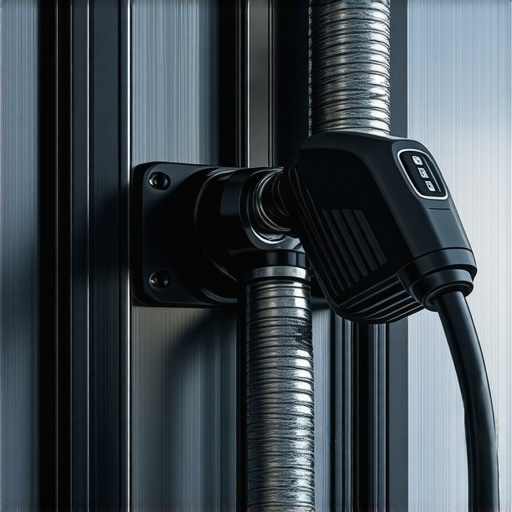
Seal the Entry Points Before They Move In
Rodents don’t just chew the cable; they want to get inside the wall or the charger casing itself. If you are routing wires through the ceiling or walls to reach a protected spot, you need to consider the safest way to route conduit through a finished ceiling. Use metal junction boxes and ensure any hole you drill is filled with steel wool and high-quality caulk. A squirrel can squeeze through a hole the size of a golf ball, so ‘tight enough’ isn’t good enough. I’ve seen people lose an entire charging station motherboard because a mouse nested inside the housing and caused a short circuit.
Don’t Let Protection Mess with Your Power
While you are busy armoring your setup, don’t ignore the electrical health of your home. Adding heavy-duty conduit or moving the charger to a ‘squirrel-free zone’ might tempt you to change the wiring. This is where most DIYers get into trouble. You must ensure you are using the specific wire gauge that prevents voltage drop over long runs, especially if you’ve moved the charger further from the panel to avoid a nesting area. I once helped a neighbor who ‘fixed’ his rodent problem by moving his charger to the other side of the garage, but he used a standard extension cord. It nearly melted the outlet because he didn’t realize upgrading your panel for better ev charging performance is often necessary when you change the layout of a high-load circuit. Before you make any major shifts in where your juice comes from, remember that why your ev permit application requires a load calculation worksheet isn’t just bureaucracy; it’s to prevent your house from becoming a giant toaster. If your panel is already stuffed to capacity, you might need to look into how to add an ev charger without a 200 amp panel upgrade so you can protect your car without blowing the main breaker.
Stop Chasing the Highest Amperage Possible
Everyone tells you that you need the fastest charge available, but in my experience, over-speccing your system is a recipe for a massive, unnecessary bill. Most homeowners think they need an 80-amp circuit to be ‘future-proof.’ However, unless you are driving 300 miles a day, a massive circuit often forces a full service upgrade that can cost thousands. I much prefer the ‘Goldilocks’ setup. There is a specific reason why your electrician recommends a 60-amp circuit for a 48-amp charger; it hits the perfect balance of speed and safety without melting your existing infrastructure. This falls under the National Electrical Code (NEC) Article 625.42, which classifies EV chargers as a continuous load, meaning they must be sized at 125% of the charger’s output. If you ignore this, you aren’t just breaking the law; you are inviting a house fire. Have you ever fallen into the trap of over-speccing your panel only to have it fail inspection? Let me know in the comments.
Why Does the Panel Keep Tripping When the Car is Half-Charged?
If your breaker keeps popping after twenty minutes of charging, it usually isn’t a faulty car. It is often a ‘nuisance trip’ caused by a conflict between the charger’s internal ground-fault protection and the GFCI breaker in your panel. Many jurisdictions require GFCI breakers for garage outlets, but double-layering them can cause issues. You might need to look into why the gfci in your panel keeps nuisance tripping your charger to find a code-compliant way to resolve the handshake error. Another silent killer is thermal expansion. Most DIYers tighten lugs with a standard screwdriver, but the specific torque wrench settings for a wall connector are mandatory for a reason. If those connections are off by even a few inch-pounds, the constant heat of charging will loosen the wire over time. This leads to arcing, and suddenly the reason your ev charger smells like burnt plastic becomes terrifyingly obvious. 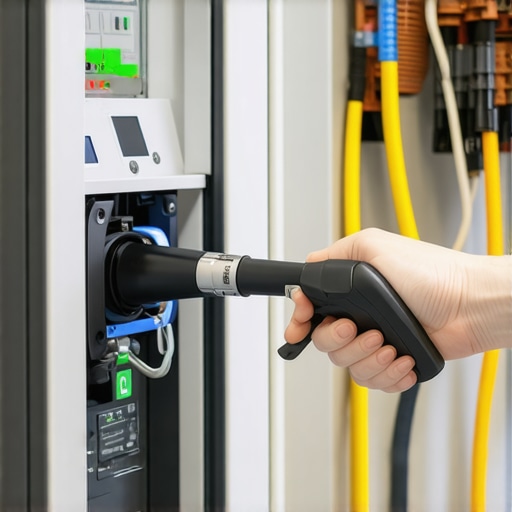
The Hidden Trap in Skipping Your Load Calculation
The biggest ‘oops’ factor I see from savvy DIYers is skipping the math. You can’t just look at a panel and see empty slots and assume there is ‘room.’ The physical space for a breaker does not equal the electrical capacity of the busbar. This is the hidden cost of skipping a panel load calculation. If you add a 50-amp load to a panel already struggling with an AC unit and an electric dryer, you will experience brownouts or a total main-breaker failure. I always tell my neighbors that understanding why your ev permit application requires a load calculation worksheet is the only way to ensure your house remains a home and not a hazard. If you find your panel is at capacity, don’t panic. You can often use ‘smart’ energy management or how to use load shedding devices to avoid a full service upgrade to prioritize your car without needing a 200-amp overhaul. It’s all about working smarter with the juice you already have.I’ve learned that a home charging station isn’t a toaster; you can’t just plug it in and ignore it for five years. Thermal cycling—the way metal expands and contracts as it heats up during a 40-amp charge—is a physical reality. Over time, those solid copper connections can actually wiggle themselves loose. This is exactly why your main lugs might be loose after a year of charging. I make it a habit every autumn to pop the cover off (after killing the breaker, obviously) and just give everything a visual once-over.
How do I keep my charger running for the next decade?
Consistency is your best friend here. Beyond the physical wires, you need to think about the environment. If your unit is outside, how to spot corrosion inside your outdoor charging pedestal becomes a critical skill. I’ve seen salt air or even high humidity turn a pristine terminal block into a crusty green mess in just two seasons. I also keep a small kit of the essential spare parts to keep for your home charging unit, specifically extra fuses and a spare J1772 holster, because the plastic triggers on those handles are always the first thing to snap when it’s 10 degrees outside.
The One Tool That Prevents Electrical Fires
If you take one thing away from my rambling, let it be this: buy a torque wrench. Not a standard wrench, but one that measures in inch-pounds. According to the National Electrical Code (NEC) Section 110.14(D), if a torque value is provided by the manufacturer, you are legally required to use a calibrated tool to meet it. This isn’t just about passing inspection; it’s about the fact that the specific torque wrench settings for a wall connector are designed to prevent arcing. I personally use a CDI Torque Products 1/4-inch drive wrench because it’s precise enough for those tiny terminal blocks. If you just ‘hand-tighten’ a 60-amp circuit, you’re asking for a meltdown. 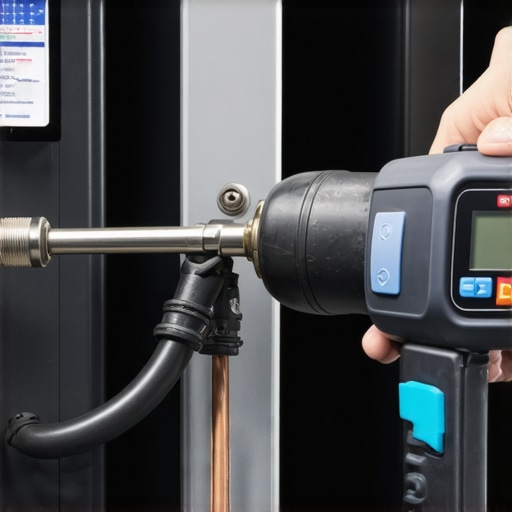
Stop Fighting Your Wi-Fi Router
We are moving into an era where ‘dumb’ chargers are becoming obsolete. However, a smart charger is only as good as its signal. I spent three weeks wondering why my scheduled charging kept failing until I realized my garage wall was basically a Faraday cage. If you’re struggling, you might need to dive into troubleshooting ev charger connectivity problems before you blame the hardware. Also, be prepared for the ‘subscription’ creep; why your ev charging app requires a cloud subscription is becoming a common gripe as manufacturers look for recurring revenue.
The Grid is Learning to Talk Back
In the next few years, I predict we’ll stop seeing the car as just a ‘drain’ on the house. With Vehicle-to-Home (V2H) technology, your car will become your backup generator. This will make your installation even more complex, requiring advanced transfer switches and bi-directional inverters. It’s why I tell everyone to over-build their conduit now. If you’re already pulling wire, pull a larger pipe than you think you need. Trust me, you’ll thank yourself when you’re upgrading for bi-directional power in 2027. My challenge to you: Go out to your panel tonight, safely open the door, and look for any signs of discoloration or ‘charring’ around your EV breaker. If you see even a tiny bit of brown plastic, call an electrician immediately. Catching it now costs a $50 breaker; catching it later costs a new panel.
The Expensive Lessons Only a Melted Cable Can Teach
Looking back on my battle with that chunky squirrel, I realized that the real victory wasn’t just fixing a wire; it was understanding how to keep the whole system healthy. One of the biggest eye-openers was discovering that physical damage isn’t the only threat. You also have to watch out for internal wear from heat, which is why your main lugs might be loose after a year of charging. I also learned that if things seem ‘off,’ ev charger troubleshooting expert tips for common issues can save you hours of frustration. Always remember: a tiny bit of preventative maintenance today prevents a massive electrical headache tomorrow.
My Shortlist of Non-Negotiable Maintenance Gear
I don’t go a month without checking my setup now, and there are a few tools I always recommend. First, get a calibrated torque wrench because why your charger needs a specific torque setting to pass inspection is actually about preventing arcing and fires. If you are working with an older house, you should definitely study up on panel upgrades for ev chargers what you need to know before adding more load. Finally, I always keep the essential spare parts to keep for your home charging unit in a drawer near the garage door so I’m never caught off guard by a broken holster or a blown fuse.
The Road to a Worry-Free Morning Commute
Your EV journey should be about the drive, not the drama in your garage. By armoring your cables and ensuring code compliance when installing ev chargers, you are protecting one of the most expensive investments you own. It takes a little extra effort to seal those conduits and torque those lugs, but the peace of mind is worth every second. You’ve got the tools and the knowledge now—go make that charging station bulletproof! Have you ever found a surprise guest or an ‘uninvited nest’ inside your electrical equipment? Let me know your wildest stories in the comments below!