I will never forget the sound of total silence that hit my house last August. It was 6:00 PM, the thermometer hit 95 degrees, and I had just pulled into the garage after a long commute. I plugged in my new EV, expecting a seamless transition to relaxation, only to hear a heavy, metallic thud. The lights died. The AC cut out. My wife’s office went dark right in the middle of a deadline. In my rush to be efficient, I had ignored the limits of my electrical service, and the house paid the price. It was a classic case of demand exceeding supply, and honestly, it was an embarrassing rookie move. We are going to fix that for you today so you never have to fumble for a flashlight in a hot garage again.
Stop Fighting Your Main Breaker Every Night
That blackout was my ultimate wake-up call. I realized that my electrical service wasn’t a bottomless pit of power I could tap into whenever I felt like it. Most of us just want to plug in and forget it, but without a smart strategy, you are essentially playing Russian Roulette with your home’s electrical heart. If you have already noticed 5 signs your main breaker is overwhelmed by a new level 2 charger, then you know the specific brand of stress I am talking about. We are going to look at how to choreograph your home’s energy consumption so your car, your dryer, and your air conditioner can finally coexist in peace. Have you ever had your entire house go dark just because you dared to start a load of laundry while the car was plugged in?
Is a massive panel upgrade really my only option?
In my early days of EV ownership, I made the expensive mistake of assuming I needed to drop five thousand dollars on a utility service upgrade just to get decent charging speeds. I was flat-out wrong. You can often find the secret to getting faster charging without a new panel simply by mastering the clock and understanding your home’s rhythm. According to data from the National Renewable Energy Laboratory (NREL), residential power demand typically peaks between 4 PM and 9 PM. This is the exact window when most people get home and plug in, creating a perfect storm for an overload. By shifting your charging window to the deep overnight hours, you aren’t just protecting your equipment; you are often taking advantage of lower utility rates that can save you hundreds a year.
Timing is Everything for Your Electrical Health
When you finally stop your breaker from tripping every time the dryer and ev run, you are doing more than just avoiding a household annoyance. You are preventing excessive heat buildup in your busbars and significantly extending the life of your main breaker. I once let a loose connection and poor scheduling go for too long, and let me tell you, the smell of melting plastic is not something you want in your garage. Scheduling is the most cost-effective tool in your arsenal to keep your home safe while ensuring you wake up with a full battery every single morning. We are going to dive into the specific settings and apps that make this automation hands-free.
Start with a Real Load Calculation
Before you even think about mounting that sleek new charger, you have to do the math. I used to think I could just eyeball my 200-amp panel and assume there was plenty of room. I was wrong. You need to perform a load calculation to see what your ‘peak’ looks like when the dryer, oven, and AC are all humming. If you are tight on space, you need to learn how to squeeze a level 2 charger onto a 60 amp service without tripping the main. It involves totaling your fixed loads and applying the NEC (National Electrical Code) demand factors. I remember helping a neighbor who insisted his ’empty’ panel could handle a 50-amp circuit, only to discover his electric tankless water heater pulled 120 amps by itself. We avoided a disaster by actually looking at the labels, not just the open slots.
The 80 Percent Rule You Can’t Ignore
Electricity isn’t like water in a pipe; it generates heat as it moves. For a continuous load like an EV charger—meaning anything running for three hours or more—you can only use 80% of the circuit’s rated capacity. If you put a 40-amp charger on a 40-amp breaker, that breaker will eventually overheat and trip, or worse, melt. Always pair a 32-amp charger with a 40-amp breaker, or a 40-amp charger with a 50-amp breaker. This is a non-negotiable part of ensuring code compliance when installing ev chargers.
Tighten Every Connection to Prevent Meltdowns
I once spent three hours wondering why a brand-new install was smelling like ozone. I had tightened the lugs by hand until they ‘felt’ right. Big mistake. I went back with a proper torque wrench and found two of the connections were still technically loose according to the manufacturer’s specs. This is why the forgotten torque test that prevents panel fires is the most critical step in the physical installation. High-amperage vibrations can loosen screws over time, leading to arcing. Use the specific inch-pound settings printed on the side of the breaker. 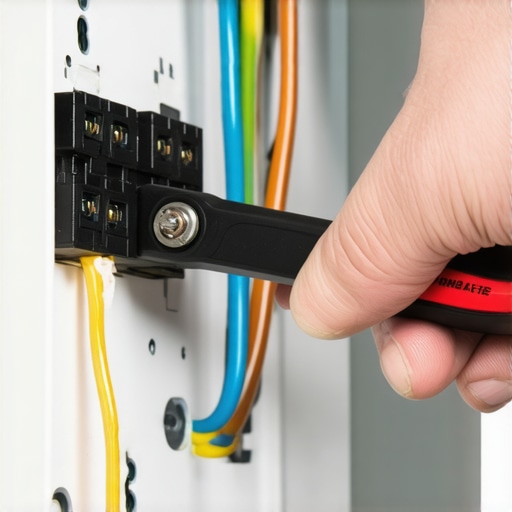
Avoid These Finicky Breaker Brands
Not all hardware is created equal. Some older panels use thin, clip-on style breakers that don’t handle the constant thermal expansion of EV charging well. If you have an older GE or certain Square D Homeline models, keep a close eye on them. I’ve seen the specific breaker brands that hate constant ev loads fail within months because they weren’t designed for 8 hours of peak draw every single night. If your breaker feels hot to the touch—not just warm, but painful—it’s time to swap it for a high-quality industrial-grade alternative.
Smart Ways to Share the Load
If your panel is truly maxed out, you don’t necessarily need a $3,000 service upgrade. You can use a smart load switcher or a dry-contact relay. These devices ‘pause’ the car charger whenever the clothes dryer or the water heater kicks in. It’s a brilliant way to stay within your power budget. You can even learn how to share a single circuit between two evs safely using chargers that communicate with each other to split the available amperage. I set this up for a two-Tesla household last year, and they never even notice the power shifting back and forth while they sleep.
While most homeowners focus on how fast they can refill their battery, they often overlook the mechanical stress an EV puts on their home. Everyone says you need the biggest breaker possible, but in my experience, pushing for the maximum 50 or 60 amps on an older panel is a recipe for a service call. I’ve found that 32-amp charging is the ‘Goldilocks zone’ for 90% of residential installs—it provides plenty of overnight range without cooking your busbars. If you are chasing speed at all costs, you might be falling for why your level 2 charger takes twice as long as the box promised because of heat-induced throttling.
Hardwire Your Connection to Avoid Common Fail Points
The biggest myth in the EV world is that a NEMA 14-50 plug is just as good as a hardwired connection. It isn’t. Every time you add a plug and a socket, you create two more points of high resistance. Over years of daily use, those spring-loaded contacts in a cheap big-box store outlet will loosen. I’ve seen countless melted ‘RV-grade’ outlets because they weren’t designed for the 8-hour continuous draw of a Tesla or an F-150 Lightning. This is the critical difference between hardwired and plug-in chargers that most DIYers ignore. A study published by the Electric Power Research Institute (EPRI) indicates that continuous high-amperage loads in residential settings significantly increase the risk of terminal failure if torque specifications are ignored by even a small margin. Hardwiring eliminates the plug-and-socket failure point entirely.
Why does my charger suddenly slow down after twenty minutes?
If you notice your charging speeds dropping mid-session, your car is likely detecting heat. This is usually due to the voltage drop secret thats ruining your morning charge. When your wire is too thin or the run is too long, the resistance causes the voltage to sag, and the charger dials back the power to prevent a fire. It is an ‘Oops’ factor that even some pros miss. 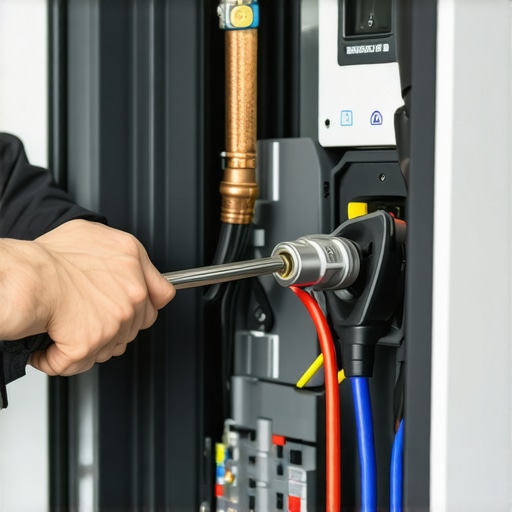
Don’t Fall for the Neutral Wire Trap
One of the most expensive mistakes I see involves homeowners trying to save money by using existing 3-wire dryer circuits. Modern EV chargers don’t actually use a neutral wire; they use two hots and a ground. However, some people try to bootleg the ground into the neutral slot of an old outlet. This is a massive code violation and incredibly dangerous. Not only will it fail an inspection, but the neutral wire trap that spikes your home utility bill can also cause weird interference with your home’s GFCI protection. If you are dealing with an older home, look into the permit saving trick for older homes with fuse boxes to do things the right way without a total gut renovation.
The Hidden Nuance of Wire Insulation
Not all 6-gauge wire is created equal. I’ve had clients buy cheap Romex when they should have been using THHN in conduit. The thermal properties are different. In a hot garage, Romex can’t dissipate heat as well as individual wires in a pipe. If you use the wrong material, you might see 4 signs your electrician used the wrong gauge wire before the year is out. Getting this right is a core part of ensuring code compliance when installing ev chargers. Have you ever fallen into this trap of prioritizing speed over heat management? Let me know in the comments.
Maintenance isn’t just for your car’s tires; it’s for the wall box too. I personally keep a $30 infrared thermometer in my toolbox. Every six months, I scan my main breaker while the car is pulling its full 40 amps. If I see one terminal significantly hotter than the others, I know it’s time to re-torque the lugs. This simple habit is how I caught a failing lug before it could melt my expensive subpanel. Beyond heat, you need to think about surges. Lightning isn’t the only threat; utility grid switching can fry your charger’s brain, which is exactly why your main service panel needs a surge protector for your ev setup. 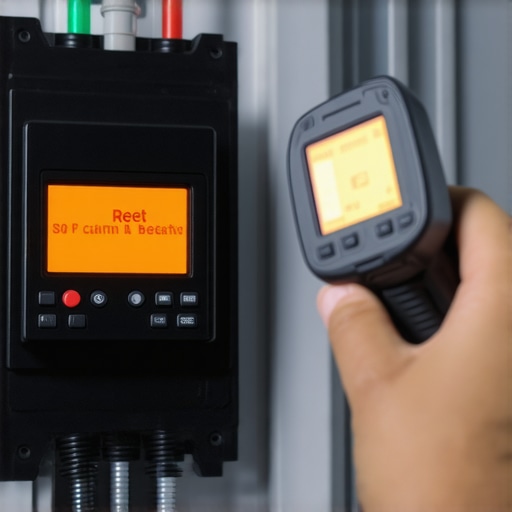
How do I keep my charging setup safe for the next decade?
The easiest way to ensure longevity is a physical inspection of the holster and the plug. I’ve seen pins inside the handle become pitted from arcing when people pull the plug before the session has fully ended. If you hear an unusual click or a buzz during the handshake, you might need to learn how to diagnose a faulty internal relay in your charging station. Most high-end units have replaceable parts, but you have to catch the mechanical wear early. According to the NFPA 70, Article 625 (the National Electrical Code’s section on EV systems), manufacturers must include specific safety shut-offs, but those electronic fail-safes are only as good as the physical connections behind them.
Stop Chasing Ghost Connections in Your Wi-Fi
It drives me crazy when my phone tells me the car didn’t charge because the smart charger lost its cloud heartbeat. Before you rip the unit off the wall, try troubleshooting ev charger connectivity problems by checking your 2.4GHz signal strength at the garage wall. Often, it is just a matter of a $20 Wi-Fi extender. If the software is stable but the hardware is acting up, walk through some ev charger troubleshooting expert tips for common issues like checking the reset button or the ground-fault interrupt.
The Future is Flowing Back to Your House
We are moving toward a world where your car isn’t just a sink for power, but a source. Bidirectional charging or Vehicle-to-Home (V2H) is the next big wave. To prepare, keep upgrading your panel for better ev charging performance on your radar, as these systems require even more robust busbars and specialized transfer switches. My best advice? Grab a simple infrared thermometer tonight and check your main breaker while the car is charging. If you find a hot spot above 140 degrees Fahrenheit, call a pro immediately before that heat turns into a fire.
Three Hard Truths About Home Power I Wish I Knew Sooner
Looking back at my own journey, I realized that I spent way too much time worrying about miles per hour and not nearly enough time worrying about the thermal stability of my panel. First, stop chasing the maximum amperage just because the charger box says you can. In many homes, aiming for a 48-amp draw on a 60-amp circuit is just asking for a nuisance trip. Stick to the 32-amp middle ground; it is kinder to your hardware and your wallet. Second, never skip the torque test. I learned the hard way that hand-tight is a recipe for a meltdown. Third, the paperwork matters more than you think. Understanding how to verify code compliance for your ev charger installation is the only way to ensure your insurance company stays happy. You can avoid the 3 hidden costs of diy ev charger wiring simply by respecting the electrical laws from day one.
What Lives in My Electrical Toolbag
I do not go near a charger installation without three specific things. I always carry a high-quality infrared thermometer to check for hot spots on the main breaker while the car is pulling its full load. Next, I rely on a calibrated torque wrench to hit the specific torque wrench settings for a wall connector specified by the manufacturer. Finally, keep a digital copy of the National Electrical Code (NEC) Article 625 handy on your phone. You would be shocked at how many people miss out on tax credits or rebates because they did not follow the specific labeling requirements found in the code. These small habits turn a stressful DIY project into a permanent, professional-grade upgrade.
Take Control of Your Home Energy Future
Installing a charger is more than just a home improvement project; it is the first step toward a more self-sufficient lifestyle. By upgrading your panel for better ev charging performance now, you are laying the foundation for solar integration and even future vehicle-to-home power capabilities. You have done the research, you know the risks, and now you have the tools to do it right. Don’t let the technical jargon intimidate you—just take it one connection at a time and prioritize safety over speed every single night. #IMAGE_PLACEHOLDER_E# Have you ever noticed your lights flickering when your car starts its charging session, or encountered a mysterious red ring on your wall box? Let me know your experience in the comments below!