It was a rainy Tuesday when the home inspector stared at my garage wall and let out a long, heavy sigh. Not the “I’m tired” kind of sigh, but the “this is going to cost you the sale” kind of sigh. I had spent months bragging to my neighbors about my home’s “future-proof” features, but I’d made a classic, avoidable rookie mistake. I thought I was being clever by doing a quick install myself, but that messy conduit and questionable circuit almost flushed a $500,000 deal down the drain. The reality is that today’s buyers aren’t just looking for granite countertops anymore; they’re looking for a reliable place to fuel up.
Your Garage is the New Curb Appeal
[image_placeholder_1] If you think about it, the garage has become the new high-end kitchen. Ten years ago, we focused on stainless steel appliances. Today, a clean, professional Level 2 charging setup is the ultimate “luxury” signal. When I was selling my place, I learned the hard way that the difference between a $500 and $1,500 charger install isn’t just about the hardware—it’s about the paperwork and the peace of mind you hand over to the new owner. I initially tried to save a few bucks by winging it, but the wire gauge mistake that fails 40 percent of inspections was waiting for me right behind the drywall. According to research from Zillow, homes mentioning “EV charging” in their listings can sell for up to 3.3% more than similar homes without it. That is a massive return on investment, provided you don’t mess up the basics.
Does a charger really add thousands to the price tag?
You might be skeptical. After all, can’t the new owners just install their own? Sure, they could. But in a competitive market, buyers want “turn-key.” They don’t want to spend their first weekend in a new house wondering how to tell if your panel has space for an EV circuit or dealing with the headache of a service upgrade. They want to plug in their Tesla or F-150 Lightning the moment the moving truck leaves. I almost lost my buyer because I had foolishly tried to cut corners, thinking I could just use a dryer outlet for my car. The inspector flagged it immediately as a code violation, and suddenly my “feature” became a “liability.” We’re going to walk through how to ensure your setup is an asset, not an eyesore that scares off the bank. Have you ever had a “simple” home improvement project turn into a nightmare once a professional or an inspector took a look at it? Let’s make sure that doesn’t happen with your charger. Before we get into the nuts and bolts, you need to understand that ensuring code compliance when installing EV chargers is the only way to actually see that bump in resale value.
Calculate Your Real Power Budget First
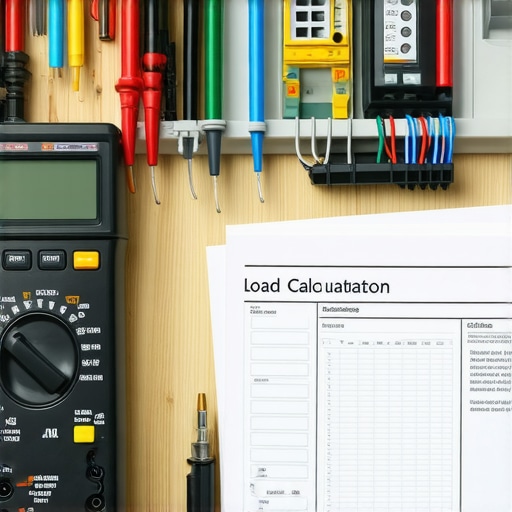
Think of your electrical panel like a dinner table. You only have so many chairs, and if you try to squeeze in a 50-amp EV charger when the table is already full of HVAC units and electric ranges, someone is going to get pushed off. Before you even buy the charger, you need to know how to read the load calculation your electrician sent you. This document is your shield against future fire hazards and the first thing a savvy buyer’s inspector will ask to see. I once ignored this and just swapped in a bigger breaker, only to realize my main service couldn’t handle the ‘party.’ If you see flickering lights when the car starts charging, you need to look for 5 signs your main breaker is overwhelmed by a new level 2 charger.
Check Your Main Breaker for Breathing Room
If your panel is physically full, you aren’t necessarily out of luck, but you must resist the urge to ‘make it fit’ with questionable hacks. You might need a subpanel or a specific load-management device. I’ve seen homeowners try to double-tap a breaker just to get their Tesla online, but that is a quick way to ensure your house never clears escrow. Always verify the total amperage of your home’s service before adding a heavy continuous load.
Stop Using the Wrong Wire and Pipe
This is where most DIYers—including my past self—trip up. I once tried to save forty dollars by using a slightly thinner wire I had left over from a workshop project. It seemed fine for twenty minutes, then the conduit started getting warm to the touch. That is the wire gauge mistake that fails 40 percent of inspections and creates a literal ticking time bomb in your walls. To do it right, you must match the specific conduit size needed for a 50-amp circuit to ensure the wires have enough air to dissipate heat. If the wire is too thick for the pipe, the insulation can degrade, leading to a short circuit that your breaker might not catch until it’s too late.
Measure the Bends Carefully
Every 90-degree turn in your conduit adds friction and heat. If you have more than four bends between pull points, you’ve built a trap, not a circuit. Inspectors hate seeing ‘snake-like’ conduit runs because it makes it nearly impossible to service the wires later without tearing out the drywall.
Grab a Torque Wrench or Risk a Fire
Most people think ‘hand tight’ is enough for electrical lugs. It isn’t. In fact, the forgotten torque test that prevents panel fires is the first thing a professional inspector looks for. If those connections are even slightly loose, the electricity will arc, generate massive heat, and eventually melt your expensive new hardware. I learned to keep a cheat sheet of the specific torque wrench settings for a wall connector right on my toolbox. It’s the difference between a system that lasts twenty years and one that dies in six months. Following these specific steps is the only way to ensure you how to pass your garage electrical inspection on the first try and actually see that promised bump in your home’s resale value.
People often assume that as long as the charger has a sleek app and a UL sticker, the hard part is over. But let’s dig deeper into the contrarian truth: the software is rarely the problem; it is the physical marriage between the charger and your specific panel brand. In my experience, homeowners obsess over charging speeds while completely ignoring the specific breaker brands that hate constant EV loads. Some breakers are designed for intermittent use—think of a dishwasher or a toaster. An EV charger is a marathon runner, pulling heavy current for eight hours straight. If you use a budget, mismatched breaker, it will eventually ‘soft trip’ or hum, even if it technically meets the amperage rating on the box. This is why knowing how to verify code compliance for your EV charger installation is about more than just checking a box; it’s about matching hardware to the thermal reality of your home.
Why does my breaker trip when the car is barely charging?
This is the ‘oops’ factor that drives people crazy. If you are installing an outdoor unit, you might think a standard GFCI breaker is the safe play. However, why your outdoor charger needs a specific type of GFCI is a nuance that even some seasoned electricians miss. Many modern chargers have built-in ground fault protection. When you put two GFCIs in a series—one in the breaker and one in the unit—they can ‘nuisance trip’ by misinterpreting each other’s test signals. The National Fire Protection Association (NFPA) indicates that improper grounding and nuisance tripping are primary reasons homeowners eventually bypass safety features, which is a recipe for disaster. If you are seeing red lights on the dash, you should start by troubleshooting EV chargers for common compliance pitfalls and fixes before you start replacing expensive hardware. 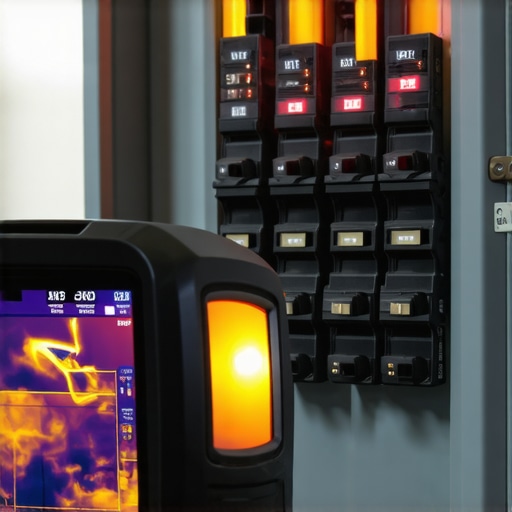
The Ground Rod Secret No One Mentions
When discussing panel upgrade strategies to meet EV charging code requirements in 2025, most people focus on the big 200-amp main breaker. But there is a hidden requirement that often doubles the labor cost: grounding. Depending on your local jurisdiction, adding a high-load circuit like an EV charger can trigger a code requirement to update your home’s entire grounding system. I’ve seen projects stall because the inspector realized why your panel upgrade might require a new ground rod to dissipate the increased potential for surges. If you don’t account for this, you might find yourself with a charger that technically works but keeps throwing a ‘PE’ error. Learning how to fix a ground fault error on your home station often leads back to these foundational grounding issues rather than the charger itself. Have you ever fallen into this trap where a ‘simple’ swap turned into a whole-home electrical audit? Let me know in the comments.It isn’t just about the installation day; it’s about the next five thousand nights of charging. One thing I’ve started doing—and I recommend every homeowner do—is a quarterly thermal audit. I bought a basic handheld infrared thermometer, and once every few months while the car is pulling full power, I point it at the breaker and the wall connector. If I see a temperature spike above 140°F, I know I’m heading toward a physical failure. This simple habit is how I caught the noise your breaker makes before it fails before it actually melted my subpanel. Most people ignore the physical wear and tear until they see a ‘Check Charging System’ alert on their dash. By then, you are usually troubleshooting EV chargers for common compliance pitfalls and fixes instead of just doing simple upkeep.
Stop Corrosion Before it Bricks Your Charging Station
Maintenance isn’t just about wiping the dust off the outer casing. It is about the microscopic grit inside the connector. I’ve seen high-end chargers fail because of a tiny bit of oxidation on the pins that increased resistance and heat. Knowing how to clean your charger ports without damaging them is a skill you need if you live anywhere with high humidity. If you are near the coast, the real lifespan of a Level 2 charger in coastal salt air is significantly shorter than one in a climate-controlled desert garage. You might even need to look into 3 ways to prevent static buildup on your charging handle if you live in a dry, windy climate where friction can cause electronic ‘hiccups’ during the handshake process.
How do I keep my charging gear running for a decade?
Beyond the internal electronics, the cable itself is the most common point of failure. If you leave it coiled tightly in a cold garage, the internal copper strands can eventually snap. I’ve written before about why your charging cable gets stiff in the winter and how to fix it, but the short version is that you need to avoid ‘memory’ kinks in the insulation. According to technical documentation from the National Fire Protection Association (NFPA) 70, Article 625, EV charging systems must be installed so that the cable is protected from physical damage, but it’s up to you to ensure it isn’t being run over by your tires or pinched in the garage door daily.
The Next Frontier: Your Car is a Giant Battery for Your Fridge
The future of this technology isn’t just one-way traffic. V2H (Vehicle-to-Home) is the next big thing, and it is going to change how we view our electrical panels. We are moving away from just ‘charging’ and toward total energy management. If you are already upgrading your panel for better EV charging performance, make sure you ask your electrician about bi-directional compatibility. Learning how to use your EV as a backup home battery safely will likely be a standard homeowner requirement by 2030. Next time you plug in, take thirty seconds to feel the temperature of the handle and the cable near the wall; if it is too hot to hold comfortably, stop the session and check for how to spot arc faults before they kill your charging session.
Lessons Carved in Burnt Breakers and Failed Permits
If there is one thing I’ve learned from my years of tinkering and one very expensive failed house sale, it’s that shortcuts in your electrical system are just deferred costs with interest. Here are a few lightbulb moments that changed my approach:
- The permit is your best friend. I used to think of it as a tax, but ensuring code compliance when installing EV chargers is actually your legal shield if a fire ever happens.
- Hardwired beats plug-in. While NEMA 14-50 outlets are popular, the critical difference between hardwired and plug-in chargers usually comes down to heat. A hardwired connection has fewer points of failure and fewer nuisance trips.
- Documentation sells. When I finally sold my home, having a folder with the permit, the load calc, and the how to verify code compliance for your EV charger installation checklist made the buyers feel like they were getting a professional-grade upgrade rather than a DIY gamble.
My Survival Kit for Reliable Home Charging
You don’t need a degree in electrical engineering, but having the right resources makes the job easier. First, I always keep a copy of my local utility’s specific EV guidelines—sometimes how to get your utility to pay for your panel upgrade is hidden in their fine print under residential rebate programs. Second, invest in a quality torque wrench; it is the most underrated tool in the garage for preventing arc faults. Lastly, don’t forget the financial side. I used a simple guide on how to claim the federal tax credit for your home installation to get back a significant portion of my total costs, which practically paid for the professional electrician I eventually hired.
Turn Your Garage into a Value Engine
Adding a high-quality EV charger isn’t just about convenience; it’s an investment in your property’s future. It signals to everyone that your home is ready for the next twenty years of technology. When you take the time to handle panel upgrades for EV chargers the right way, you aren’t just installing a piece of plastic on the wall—you’re building peace of mind for yourself and future residents. So, take that extra hour to torque the lugs, pull the permit, and do it right the first time. Your future self will thank you every time you plug in. Have you ever run into a surprise requirement from a local inspector that almost derailed your project? Let me know in the comments below!