I was standing in my garage last summer, sweat dripping down my neck, holding a shiny new wall connector and feeling like a total genius. I had the old unit off the wall in five minutes. ‘It is just a swap,’ I told my wife. ‘No need to call an electrician or deal with those permit vultures.’ Fast forward three months, and I was staring at a ‘Notice of Violation’ taped to my front door while my insurance agent explained why my minor garage fire claim was looking ‘problematic.’ I learned the hard way that when it comes to high-voltage equipment, there is no such thing as a simple swap.
City Hall Cares More About Your Charger Than You Think
You might think your local inspector is just looking for a payday, but the reality is much more sobering. Even when you are replacing an existing unit, you are dealing with a continuous load that pulls massive amounts of current for hours on end. I made the classic mistake of assuming my existing wiring was up to the task without checking the torque settings on the lugs—a move that nearly cost me my home. I should have checked how to verify code compliance for your EV charger installation before I ever touched a screwdriver. According to the National Fire Protection Association, electrical malfunctions remain a leading cause of home fires, and EV chargers are now one of the biggest electrical draws in any modern residence. When you skip the paperwork, you are not just ‘beating the system’; you are gambling with your safety and your home’s resale value. Have you ever looked at your electrical panel and wondered if that one ‘simple’ upgrade was actually a ticking time bomb?
Is a Permit Really Just a Way to Tax Homeowners?
It certainly feels like it when you are writing the check, but that signature from an inspector is your ultimate safety net. If you do not have it, you are looking at the permit error that stops 40% of residential charging installs and potentially thousands in fines later. Beyond the legal headache, skipping this step can lead to 3 hidden costs of DIY EV charger wiring that most people do not consider until they try to sell their house. Today, I am going to walk you through exactly why that piece of paper is the most important tool in your toolbox for ensuring code compliance when installing EV chargers and how it protects your family.
Stop Guessing and Start Calculating Your Load
Think of your home’s electrical panel like a finite monthly budget. If you spend $800 on rent and $400 on food, you cannot suddenly decide to buy a $1,000 mountain bike without something breaking. Your panel operates on the same principle. Before you even purchase a unit, you must know how to read the load calculation your electrician sent you. I remember helping a neighbor who was convinced his 100-amp service was plenty because he ‘did not use the dryer that much.’ He skipped the formal math, and three days later, his main breaker tripped while he was halfway through a shower because the AC, the car, and the water heater all kicked in simultaneously. If you ignore this step, you will likely encounter 5 signs your main breaker is overwhelmed by a new level 2 charger, which usually begins with an audible hum or a panel cover that feels uncomfortably warm to the touch.
The Wire Gauge Trap That Fails Every Time
You cannot simply use whatever leftover wire you have sitting in your garage. An EV charger is a high-amperage, continuous load—it is the electrical equivalent of running a marathon, not a quick sprint. Selecting the wrong thickness is the wire gauge mistake that fails 40 percent of inspections and creates a massive fire hazard behind your drywall. I once inspected a DIY install where the owner used 10-gauge Romex for a 48-amp circuit because it was cheaper and easier to bend through the studs. By the time the inspector arrived, the wire insulation had already begun to discolour from internal heat. To pass, you must verify you have the specific conduit size needed for a 50 amp circuit so the wires have enough physical space to dissipate heat efficiently.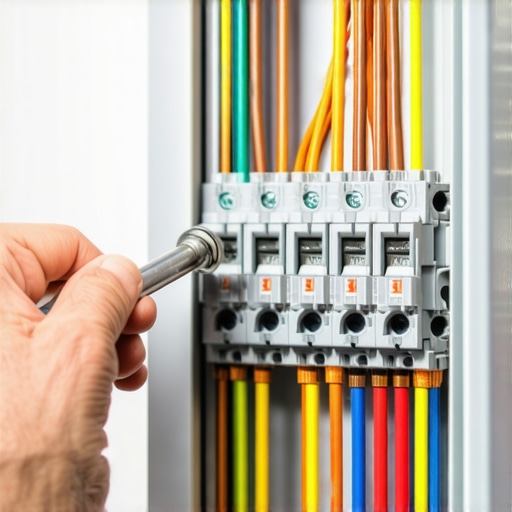
Why Your Torque Wrench is Actually a Fire Extinguisher
This is the step most people ignore because it feels like overkill. It is not. Electrical connections naturally expand and contract as they heat up during a charge and cool down afterward. If these connections are not tightened to the exact manufacturer specifications, they will loosen over time, cause arcing, and eventually ignite. I once ‘hand-tightened’ a subpanel lug until I thought it was ‘good enough’ without using a specialized tool. A month later, my garage started smelling like rotting fish—one of the most common 5 reasons your electrical panel smells like fish which indicates melting plastic. When I opened the cover, the lug was literally glowing. Since then, I never touch a terminal without checking the specific torque wrench settings for a wall connector. It is truly the forgotten torque test that prevents panel fires.
Don’t Let Your Old Panel Become a Bottleneck
If you live in a house built before the 1990s, your electrical panel might be your biggest obstacle to modern convenience. You need to dive into panel upgrades for ev chargers: what you need to know before committing to a high-speed unit that your home cannot handle. Sometimes, you can avoid a costly $3,000 service upgrade by utilizing the secret to getting faster charging without a new panel, such as a smart load-management device that pauses the car charger when your oven is on. Additionally, pay close attention to your grounding system. I have seen dozens of homeowners fail their final inspection because they did not know how to fix the grounding fail that ruins ev permits, often failing simply because they forgot to bond a subpanel correctly or used the wrong type of grounding rod for their soil type.Most homeowners are told that installing a NEMA 14-50 outlet is the ultimate ‘future-proof’ move. I used to say the same until I saw the charred remains of a high-end receptacle in a client’s garage. Everyone says plugs offer flexibility, but in my experience, a plug is just a massive point of failure for a continuous load. The reality is that consumer-grade outlets are rarely designed for the sustained heat generated by an 8-hour charging session at 40 amps. If you want true reliability and safety, you need to understand the critical difference between hardwired and plug-in chargers. Hardwiring removes the friction-based connection of a plug, significantly reducing the risk of thermal runaway. Have you ever fallen into the ‘flexibility’ trap? Let me know in the comments. 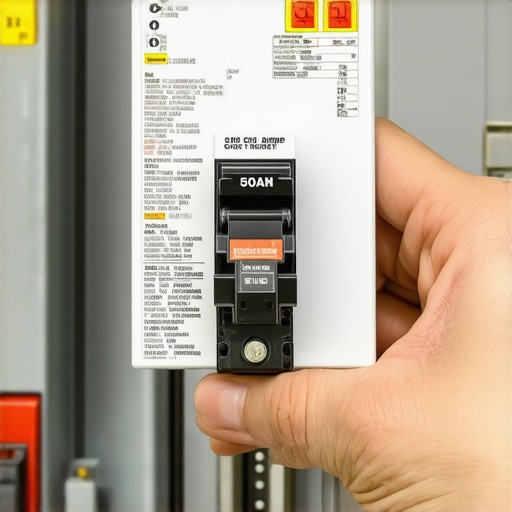
Why Your ‘Universal’ Plug is Actually a Failure Point
Beyond the outlet itself, people often underestimate how their panel reacts to the constant pull of electricity. We are not talking about a toaster that runs for two minutes; we are talking about a marathon. According to the Electrical Safety Foundation International (ESFI), nearly half of home electrical fires involve distribution equipment that was pushed past its limits by high-draw appliances. This is why upgrading your panel for better ev charging performance isn’t just an upsell from your electrician—it is often a physical necessity for the longevity of your home’s infrastructure.
Stop Grabbing Random Breakers Off the Shelf
Another common ‘oops’ factor is the breaker choice. I’ve seen DIYers and even some general contractors grab whatever 50-amp breaker is cheapest at the hardware store. This is a dangerous gamble because there are the specific breaker brands that hate constant ev loads. If the internal spring tension and thermal-magnetic trip curves aren’t precisely matched to your panel’s busbar, you’ll end up with a breaker that runs hot, eventually melting the plastic housing before it ever trips. This is a classic example of why staying within the same manufacturer family for your panel components is non-negotiable for code compliance.
Why Does Your Outdoor Station Keep Tripping the GFCI?
For those installing units outside, a common headache is the ‘nuisance trip.’ Many modern EV chargers have sensitive internal ground-fault protection that clashes with the GFCI breakers required by the National Electrical Code (NEC) for outdoor outlets. This ‘double-GFCI’ conflict is exactly why your ev charger trips the gfci in the rain or high humidity. Solving this requires a deep dive into troubleshooting ev chargers: common compliance pitfalls and fixes, where often the only code-compliant solution is to transition to a hardwired setup that doesn’t require that secondary, redundant GFCI breaker. Don’t let a rainy night leave you with an empty battery just because of a component mismatch.Once you move past the initial install, you enter the ‘set it and forget it’ trap. I see it all the time—homeowners assume that because the car is charging, everything is safe. But electrical infrastructure is a living thing. It breathes, expands, and contracts under the stress of 48 amps of continuous flow. I personally make it a habit to do a ‘sniff and touch’ test every quarter. If you smell anything like ozone or heated plastic, you need to start troubleshooting ev chargers: common compliance pitfalls and fixes immediately. I also check the physical cable jacket for abrasions. If you live in a cold climate, you already know how to keep your charging cable from freezing to the driveway, but you also need to ensure those frozen cables aren’t cracking, which leads to moisture ingress and potentially 3 signs your charger motherboard is fried from a surge.
How can I keep my home charging station running for the next decade?
Maintenance is about vigilance and the right tools. You should be checking your software logs just as often as the hardware. If your unit is cutting out, it might not be the wires at all; I often find that why your smart charger lost its wi-fi connection again is the root cause of ‘failed’ charge sessions. Beyond the digital side, you need to verify your terminal connections. According to the Copper Development Association, up to 90% of electrical failures occur at the connections, which is why the National Electrical Code (NEC) Section 110.14(D) now mandates the use of calibrated torque tools for all terminal tightenings. If you skipped this, you are inviting high-resistance heat to slowly cook your panel. I recommend a yearly check to ensure you are still ensuring code compliance when installing EV chargers as standards evolve.
The Thermal Camera Trick That Saves Houses
My go-to tool isn’t a screwdriver; it’s a FLIR thermal camera that plugs into my smartphone. I use it to scan the breaker while the car has been charging for at least an hour. If that breaker is glowing white-hot compared to the others, I know I’m looking at the specific breaker brand that keeps tripping during fast charging or a loose lug. This simple check can identify 5 signs your old electrical panel is a charging bottleneck before a fire ever starts. #IMAGE_PLACE_HOLDER_D#
Smart Scaling and the Future of Home Energy
Looking ahead, we aren’t just going to be pulling power from the grid; we’ll be pushing it back. Bidirectional charging (V2H) is the next frontier. If you haven’t looked into how to use your ev as a backup home battery safely, you’re going to be left behind when the grid fluctuates. This will require even more robust panel upgrade strategies to meet ev charging code requirements in 2025. I predict that AI-driven load management will soon be mandatory for any home with more than one EV, making it easier to handle troubleshooting ev charger connectivity problems across a multi-unit ecosystem. Your charger will eventually become the heartbeat of your home’s microgrid. My best advice? Go to your garage right now and put your hand near (but not on) the charger’s main breaker while it’s active. If it feels like a space heater, it’s time to call a pro and check your torque settings before things get expensive.
Hard Truths About High-Voltage DIY That Saved My Sanity
The biggest ‘aha’ moment I had wasn’t about the wiring itself, but about the respect I had to develop for the physics of heat. I used to think ‘tight’ was ‘tight,’ but in reality, metal expands and contracts under heavy loads. If you are struggling with your setup, check out ev charger troubleshooting expert tips for common issues to see where you might be cutting corners. Another lesson? The code book isn’t your enemy. Staying up to date with code compliance essentials for ev charger installations in 2025 is the only way to protect your insurance policy and your family. Finally, trust your nose; if you smell ozone or a fishy scent, stop the charge immediately and investigate.
The Gear That Makes Inspections a Breeze
To do this right, you need a few specialized tools that most DIYers skip. First, get a high-quality, calibrated torque wrench. Using the forgotten torque test that prevents panel fires is how pros ensure a connection won’t fail six months down the line. I also recommend a basic thermal imaging camera for your phone to spot hot breakers and a digital copy of the latest National Electrical Code. These aren’t just gadgets; they are your safety net for how to verify code compliance for your ev charger installation.
Step Into the Future of Home Power
Installing a charger is the first step toward a smarter, more efficient home. It can feel overwhelming at first, but with the right mindset and a focus on safety, you are setting yourself up for years of fossil-fuel-free driving. Don’t be afraid to take it slow and get a professional second opinion. You are not just installing a plug; you are building a personal power plant in your garage. If you ever feel like you’re in over your head, you can always contact us for professional guidance. Did you encounter any unexpected ‘red tags’ or surprises during your charger installation? Let me know in the comments below!