I stood in my driveway at 6:00 AM, coffee steaming in the crisp morning air, staring at the green pulse of my neighbor Dave’s charger. It was done. Fully charged. Meanwhile, my own car was still wheezing through a charging cycle that had started eight hours ago. We have the exact same car. We bought our chargers at the same time. Yet, he gets a full battery in four hours, and I’m lucky to hit 80% by the time I have to leave for work. It felt like a personal insult from the electrical grid itself. I was doing everything ‘right,’ or so I thought. I had the Level 2 station, the fancy app, and the heavy-duty cable. But I was missing the invisible details that actually move the needle on charging velocity.
Why Dave’s Car Is Ready and Yours Is Still Lagging
That morning was my lightbulb moment. I realized that ‘Level 2’ is a broad label that hides a lot of nuance. I spent the next weekend digging through my garage, checking breaker sizes, and reading manuals that were far too dry for a Saturday afternoon. What I found was a mess of bottlenecks. Most people think they can just buy the most expensive box on Amazon, plug it in, and get lightning speeds. I made that exact mistake early on. I actually tried to run a high-amperage charger on a circuit that was never designed for it, which is one of the biggest signs your electrician used the wrong gauge wire or, in my case, that I was being a bit too optimistic about my DIY skills. Your neighbor isn’t lucky; they just have a system where every component—from the breaker to the port—is actually synchronized.
Is a Faster Home Setup Actually Worth the Hype?
You might be wondering if those extra miles per hour really matter if the car sits overnight anyway. But what happens when you get home at 7:00 PM with 5% battery and need to head out again at 9:00 PM for an emergency or a late dinner? That’s where the difference between a 16-amp and a 48-amp charge becomes a life-saver. Today, we’re going to solve the mystery of the ‘slow Level 2.’ We’ll look at the technical gaps, the code requirements that might be holding you back, and how to fix them without blowing your budget. We are moving past the marketing fluff and getting into the copper and steel reality of home power.
Hunt Down the Bottlenecks Hiding in Your Walls
Your charging speed isn’t just about the ‘box’ on the wall; it’s about the entire path from the utility pole to your car’s port. I didn’t realize that my old electrical panel was a major bottleneck until I saw the lights flicker when the dryer kicked on. According to the National Fire Protection Association (NFPA), EV charging is classified as a ‘continuous load,’ meaning your system has to handle maximum power for three hours or more. This is much more demanding than a toaster or a vacuum. If your wiring is too thin, the voltage drops, and your car’s onboard computer will intentionally throttle the speed to keep things from melting. It’s a safety feature, but a frustrating one. You might be suffering from wire gauge mistakes that fail inspections every single night without even knowing it. Have you ever noticed your charging handle getting suspiciously warm, or does your car’s app show a lower voltage than it should? We need to talk about what your electrician might not have mentioned about fast home charging. Sometimes, the fix is as simple as a software setting in your charger’s app, and other times, it’s about upgrading your panel for better performance. There is a secret to getting faster charging without a full panel replacement in some cases, and I can’t wait to show you how I finally matched Dave’s speeds.
Calculate Your Load Before You Blow a Fuse
To fix the lag, you have to start where the power begins. Most of us just look at the main breaker and think, ‘200 amps? Plenty!’ But it’s about the math of what’s already running. You need to learn how to read the load calculation your electrician sent you. Think of your electrical panel like a dinner table. If every chair is taken by the AC, the dryer, and the oven, there’s no room for the hungry EV. If you try to force it, you’ll end up needing expert tips for common issues when the breaker starts humming. Every house has a limit, and pushing past it without a plan is why your car might be charging at half-speed while your AC struggles.
Why Thinner Wire Is Costing You Miles Every Night
This was my biggest facepalm moment. I had used a wire gauge that was technically ‘rated’ for the amperage, but the run was over 50 feet. This caused a voltage drop. Basically, the electricity gets tired on its way to the car. Why thinner wire is costing you miles every night comes down to resistance turning your expensive power into useless heat inside the conduit. If your charger is on the opposite side of the house from your panel, you cannot stick to the bare minimum code requirements for wire size; you have to upsize to account for the distance. 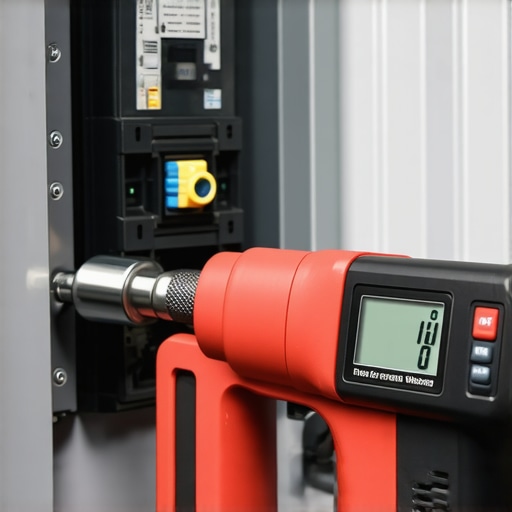
The Forgotten Torque Test That Prevents Panel Fires
Here is a specific step I missed: the torque wrench. I used to think hand-tight was fine. One night, I noticed a faint ‘electric’ smell in the garage. When I opened the panel, the wire at the breaker was slightly discolored. It wasn’t loose to the touch, but it wasn’t torqued to the manufacturer’s specific inch-pounds. This micro-gap creates resistance, which creates heat, which causes the car to slow down the charge to protect itself. Always perform the forgotten torque test that prevents panel fires during your install. It’s not just about safety; it’s about maintaining a solid ‘pipe’ for that electricity to flow without friction.
Check for the Hidden Throttles in Your Charger’s Brain
Sometimes the bottleneck isn’t in your walls; it’s in the software. Many Level 2 chargers have internal DIP switches or app settings that limit the amperage. If your electrician didn’t flip the physical switch inside the unit to match your 60-amp breaker, your 48-amp charger might be stuck at 16 amps by default. I’ve seen people spend $2,000 on a panel upgrade only to find out the secret to getting faster charging without a new panel was just a toggle in the settings menu. Before you call for a service upgrade, dig into the installer menu of your app. You might find a ‘power sharing’ or ‘limit’ setting that’s been holding you back since day one. You can also stop your breaker from tripping every time the dryer and EV run by using smart scheduling rather than just lowering the raw speed.Let’s get one thing straight: just because your installation passed inspection doesn’t mean it’s actually optimized for your car. I used to think the ‘Green Sticker’ from the city was a badge of performance. It isn’t. Code is a safety floor, not a performance ceiling. One of the most frustrating nuances I discovered—and one that many electricians miss—is the ‘Double GFCI’ headache. Most modern Level 2 chargers have sensitive ground-fault protection built right into the handle. When you pair that with a GFCI breaker in the panel, which many local codes now require for garage outlets, they can ‘fight’ each other. This leads to nuisance tripping during high humidity or even just random mid-night shutoffs. It’s a classic example of troubleshooting common compliance pitfalls where the law and the technology clash.
Does Your Charger Really Need That Extra GFCI Breaker?
Technically, the National Electrical Code (NEC) has strict rules about this, especially for plug-in units. But if you have a hardwired station, you can often bypass the need for that extra breaker, which removes a massive point of failure. According to research by the Electric Power Research Institute (EPRI), cumulative leakage current in EVSE systems often hovers just below the trip threshold of standard residential GFCI breakers. A humid morning is all it takes to push it over the edge. This is why your outdoor charger needs a specific type of GFCI or, better yet, a hardwired connection to avoid the requirement entirely. 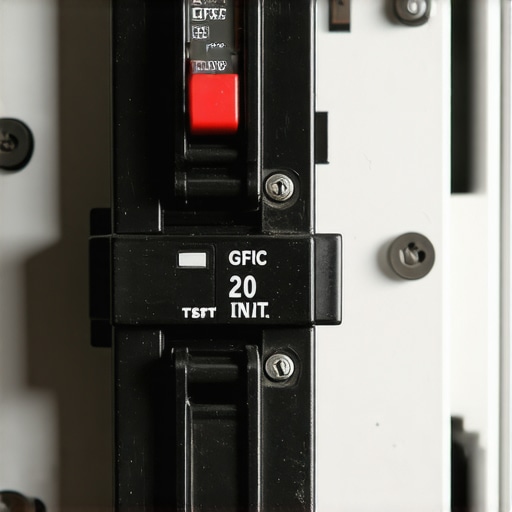 Another nuance people get wrong is the ‘breaker brand’ myth. We like to think all 50-amp breakers are created equal, but certain breaker brands hate constant EV loads more than others. Some cheaper brands are notorious for ‘heat soaking’—they don’t trip because of an actual overload, but because the internal bi-metal strip gets too hot from the continuous three-hour draw. If your charger keeps stopping after two hours, don’t just assume the car is full; check if the breaker is hot to the touch. This is one of the expert tips for common issues that separates a standard electrician from an EV specialist. You must verify code compliance for your installation while also demanding high-performance components. Have you ever fallen into this trap where your charger trips for no apparent reason? Let me know in the comments. We also need to talk about ensuring code compliance without sacrificing speed. Sometimes, upgrading your panel for better performance is less about space and more about the quality of the busbars and their ability to shed heat during those long summer nights.Once I finally matched Dave’s charging speeds, I realized that the real challenge wasn’t just getting the power—it was keeping it. High-amperage charging is brutal on equipment. It is a marathon, not a sprint, and if you treat it like a ‘set it and forget it’ appliance, you are asking for trouble. I’ve become a bit of a fanatic about preventative maintenance because I never want to wake up to a half-charged car again.
The One Tool Every EV Owner Needs But Doesn’t Have
I don’t care how fancy your charger’s app is; it can’t tell you if a wire is vibrating loose in your wall. I started using a digital infrared thermometer—the kind you’d use for cooking or checking HVAC vents. Once a month, while my car is pulling its full 48-amp load, I open my electrical panel and scan the EV breaker. If that breaker is reading significantly higher than the others, I know I have a resistance issue. Catching a hot spot early is how you avoid the disaster when your electrical panel smells like fish due to melting insulation. It’s also the best way to double-check that you actually performed the forgotten torque test that prevents panel fires during the initial install.
How do I maintain my home charging setup for long-term reliability?
Maintenance is surprisingly simple but critically important. First, I check the charging handle pins for any signs of arcing or discoloration. You can learn how to clean your charger ports without damaging them using compressed air and specific contact cleaners. Second, I inspect the cable for ‘bird-caging’ or kinks. In the summer, the cable gets soft, and in the winter, you’ll notice why your charging cable gets stiff and prone to cracking if you coil it too tightly. Finally, I regularly update the firmware on my station to prevent troubleshooting EV charger connectivity problems that often pop up after a car’s software update. According to the Electrical Safety Foundation (ESFI), residential electrical fires account for over $1.3 billion in property damage annually, often triggered by sustained high-load devices that aren’t periodically inspected. 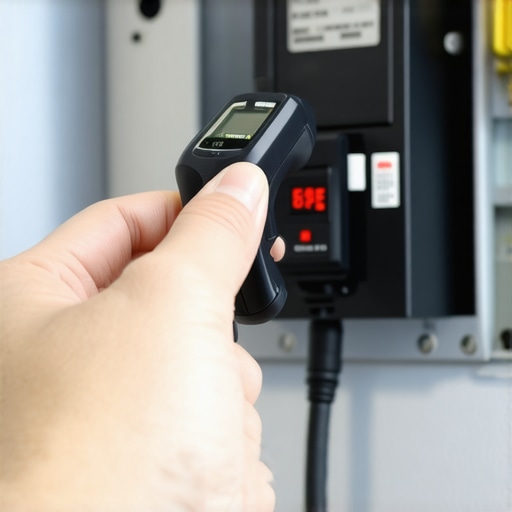
Bidirectional Power Is the Next Big Leap
Looking ahead, our home setups are going to do much more than just gulp down electricity. We are moving toward a world of vehicle-to-home (V2H) technology. I’m already preparing my panel for this by researching how to use your EV as a backup home battery safely. This trend will change everything from how we size our subpanels to how we interact with the utility grid during peak hours. If you want to stay ahead of the curve, you need to ensure you verify code compliance for your installation now, so you aren’t forced to rip everything out when the new bidirectional standards become the norm. If you haven’t yet, I highly recommend grabbing a torque wrench and checking your breaker terminals today—it’s the single best thing you can do for your peace of mind.
Hard-Won Secrets From My Garage Floor
After months of trial and error, I realized that the most common hurdles aren’t usually big, expensive failures; they are tiny, invisible oversights. First, always assume your app settings are wrong until you manually verify them; many chargers ship with a ‘safe mode’ that throttles speed by default. Second, don’t ignore nuisance tripping during high humidity, as this is often a sign of a conflict between your charger and a GFCI breaker rather than a hardware failure. Finally, if you haven’t performed the forgotten torque test that prevents panel fires, you are leaving your home’s safety and your car’s charging velocity to chance. It only takes ten minutes to check, but it offers years of peace of mind.
The Gear That Saved My Sanity
You don’t need a degree in electrical engineering to maintain a high-performance system, but you do need a few specific items in your toolkit. I personally rely on a Digital Infrared Thermometer to scan for hot spots in the panel while the car is charging; it is the fastest way to catch a loose connection before it melts. I also keep a Torque Wrench calibrated for specific torque wrench settings for a wall connector to ensure every terminal is perfectly seated. Lastly, keep a link to the latest NEC code updates handy to settle debates with contractors. These tools shift you from a passive user to an informed owner who can identify troubleshooting EV charger connectivity problems before they ruin a morning commute.
Take Control of Your Charging Speed
Building a fast, reliable home charging setup isn’t about luck—it is about intentionality. By looking closer at your wiring, verifying your panel’s capacity, and ensuring code compliance, you turn your garage into a high-speed fueling station that rivals the pros. Don’t let troubleshooting EV charger issues intimidate you; start with the basics of heat and resistance, and you will eventually match those Dave-level speeds. The peace of mind that comes from knowing your car is ready whenever you are is worth every bit of effort. Have you ever discovered a ‘ghost’ bottleneck or a loose wire that was slowing you down? Let me know in the comments below!