I still remember the smell of singed plastic wafting into my kitchen at 2 AM. It was three years ago, just two weeks after I’d brought home my first electric vehicle. I was so proud of my ‘plug-and-play’ setup; I bought a portable charger, plugged it into an old dryer outlet in the garage, and assumed I was a genius for saving a few hundred bucks on an electrician. I was wrong. Dead wrong. When I finally pulled that plug out, the prongs were discolored, and the outlet housing was warped from the heat. I realized then that why you should never use a standard outlet for daily EV charging isn’t just a suggestion—it’s a survival rule. That night was my wake-up call about the technical gap between a temporary plug and a permanent hardwired installation.
The Great Debate That Every New EV Owner Faces
We all want the simplest path to a full battery. For most of us, that means choosing between a NEMA 14-50 plug-in unit or a hardwired station that’s permanently bolted to your wall. If you’re leaning toward the plug because it feels more ‘flexible,’ I get it. I’ve been there. But after years of troubleshooting EV chargers for friends and neighbors, I’ve seen the hidden pitfalls that the glossy brochures don’t mention. Today, I’m going to break down the real-world performance, safety, and code requirements of both so you don’t end up with a melted garage wall like I almost did. We’re going to look at why your charging station isn’t reaching its full 48-amp potential just because of the way it’s connected.
Is a plug-in connection actually less reliable?
It’s a fair question. You use plugs for your oven and your dryer, so why is an EV different? The difference lies in the duty cycle. Your dryer runs for 45 minutes; your EV pulls massive current for eight hours straight. I made the classic rookie mistake of using a cheap, ‘builder-grade’ outlet that wasn’t designed for continuous high-amperage draw. If you are going the plug route, you absolutely have to know how to pick a NEMA 14-50 outlet that won’t melt under the pressure. According to data from the National Fire Protection Association (NFPA), electrical failures are a leading cause of home fires, and continuous loads require specific hardware ratings that many DIYers overlook.
Where Hardwiring Wins Every Single Time
If you want the maximum speed—we’re talking that sweet 48-amp or 80-amp charging—you usually have to go hardwired. Most plug-in models are capped at 40 amps to meet safety codes for a 50-amp circuit. I’ve had neighbors ask me, ‘Why is your charger faster than mine?’ and the answer is usually that I skipped the plug. Hardwiring allows for a more robust connection and often simplifies ensuring code compliance because you aren’t worrying about GFCI nuisance tripping that frequently plagues plug-in units. Have you ever woken up to a car that didn’t charge because a tiny power surge tripped the outlet’s safety switch? Before you buy your equipment, consider if your setup needs a panel upgrade for your EV charger to handle these high-performance hardwired loads. Have you already purchased your charger, or are you still trying to decide which mounting style fits your garage better?
Size Up Your Electrical Panel First
Think of your home’s electrical panel like a dinner plate. You can only fit so much on it before things start falling off the edge. Before you even think about drilling holes in your drywall, you have to determine if your current service can handle a massive new continuous load. I remember helping my buddy Dave install his first charger. He was insistent that his 100-amp panel was ‘plenty.’ We skipped the math, and halfway through his first night of charging, the AC kicked on, the dishwasher was running, and the whole house went pitch black. That is the hidden cost of skipping a panel load calculation; it is not just about the money, it is about the reliability of your entire home. Most jurisdictions will demand a formal document, so make sure you understand why your EV permit application requires a load calculation worksheet before you start pulling wires.
Pick the Wire That Won’t Choke Your Current
Running the right wire is like choosing the right diameter for a high-pressure fire hose. If the wire is too thin, it creates resistance, which generates heat—and heat is the enemy of your home’s safety. For a standard 50-amp breaker serving a 40-amp charger, you generally need 6 AWG copper. If you’re pushing for that 48-amp charge on a 60-amp breaker, you might even need to step up. You should check the exact wire gauge you need for a 50-amp EV circuit to ensure you aren’t creating a bottleneck. I always recommend sticking with copper over aluminum for these high-stress applications, even if it costs a bit more. The thermal expansion properties are just more stable. When you compare the difference between copper and aluminum for EV wiring, copper wins for longevity in a high-draw scenario every time.
Tighten Everything to Spec or Face the Consequences
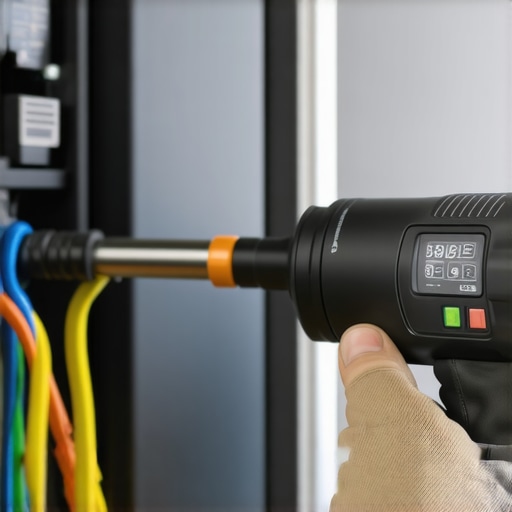
This is where I see the most dangerous mistakes. Most DIYers—and even some pros who are in a rush—will just tighten the terminal screws until they ‘feel’ tight. In the world of high-amperage EV charging, ‘good enough’ is a recipe for a fire. Metals expand and contract as they heat up and cool down during a charging cycle. If the connection isn’t torqued to the manufacturer’s exact inch-pound specification, it will eventually wiggle loose, arc, and melt your expensive charger’s motherboard. This is exactly why your charger needs a specific torque setting to pass inspection. I never walk into a garage without my torque screwdriver anymore; it is the only way to be 100% sure that the connection is solid for the next ten years.
Make It Legal to Avoid a Massive Headache Later
Nothing kills the joy of a new EV like a ‘red tag’ from a city inspector hanging on your garage door. Beyond the technical wiring, you have to consider the physical placement. Codes often dictate how high the unit must be off the ground and how much clearance you need around it. If your garage is packed with holiday decorations and old lawnmowers, you need to clear it out. Knowing how to pass an EV inspection when your garage is overcrowded is half the battle. These rules aren’t just bureaucracy; they ensure that if a component fails, the damage is contained. Staying current with code compliance essentials for EV charger installations in 2025 will save you from having to tear everything out and start over because of a minor oversight.
Why a 200-Amp Panel Isn’t the All-Access Pass You Think It Is
Most homeowners assume that if they have a modern 200-amp service, they can just slap a 50-amp breaker in and call it a day. In my years of inspecting systems, I’ve found that this is a dangerous oversimplification. You have to look at the total continuous load calculation, not just the number on the main breaker. I’ve seen 200-amp panels that were already pushed to the limit by heat pumps, electric ranges, and hot tubs. Simply ‘having room’ for a breaker doesn’t mean your panel’s busbars can handle the thermal stress of an EV drawing max current for hours. Often, upgrading your panel for better EV charging performance is more about managing heat dissipation and terminal integrity than it is about raw amperage capacity. If you skip the math, why your breaker gets hot to the touch during charging will be the first sign that your system is struggling.
The 125 Percent Rule and the Heat Threshold
One of the most common technical mistakes I see involves ignoring the duty cycle requirements set by the National Electrical Code (NEC) Article 625. Since an EV charger is defined as a continuous load, the circuit must be sized at 125% of the charger’s output. This is precisely why your electrician recommends a 60-amp circuit for a 48-amp charger. If you try to run a 48-amp load on a 50-amp breaker, the breaker will eventually trip—not because of a short circuit, but because of thermal fatigue. This constant heating and cooling can also lead to mechanical failure. I always tell people to check why your main lugs might be loose after a year of charging; the vibration from thermal expansion is real and can cause arcing that fries your equipment before you even realize there’s a problem.

Can you really skip the panel upgrade by using smart load management?
Many ‘advanced’ DIYers think they can bypass a costly service upgrade by using smart chargers that promise load balancing. While it’s true that learning how to use load shedding devices to avoid a full service upgrade can save you thousands, it is not a ‘get out of jail free’ card for code compliance. If your local utility meter cannot handle the spike, or if your service entrance wires are undersized, no amount of software throttling will make the installation legal or safe. You still need to ensure you are ensuring code compliance by performing a physical load calculation. Have you ever fallen into this trap of over-relying on software to fix a hardware limitation? Let me know in the comments.
Stop Creating the Double-GFCI Nuisance Nightmare
Here is a specific warning for those going the plug-in route: Do not pair a GFCI breaker with a high-end EV charger that has its own built-in ground-fault protection. This creates a ‘blind’ interference where the two safety systems conflict, leading to constant interruptions. I’ve spent countless hours troubleshooting EV chargers only to find that the homeowner was trying to be ‘extra safe’ and ended up with a car that won’t charge. Understanding why the GFCI in your panel keeps nuisance tripping your charger is essential for a frustration-free morning. When in doubt, look into troubleshooting EV chargers: common compliance pitfalls and fixes to ensure your setup follows the 2025 standards without sacrificing reliability. If you’re still feeling unsure about your specific panel layout, you can always contact us for a professional assessment of your home’s electrical health.
It is easy to think that once the lights turn green on your wallbox, you are set for life. However, a high-voltage system that draws 40+ amps every single night is essentially a mechanical system that needs periodic oversight. My secret weapon—and the one tool I recommend every serious EV owner keep—is a compact thermal imaging camera. Every six months, I pop the cover off my panel while the car is charging and scan the connections. If I see a glowing orange spot on one of the wires, I know I have a high-resistance connection that needs attention. This is the proactive way of troubleshooting EV chargers: common compliance pitfalls and fixes before they become fire hazards. If you have ever wondered why your breaker gets hot to the touch during charging, this tool will show you exactly which terminal is struggling.
How do I keep my home charging setup safe for the long haul?
I treat my charger like my HVAC system: it gets an annual inspection. I check for discoloration around the terminals and use a torque screwdriver to re-verify the settings. The National Electrical Code (NEC) Section 110.14(D) mandates that torque tools be used where a value is marked on the equipment. Vibrations from the 60Hz hum and thermal cycles can actually back screws out over time. This is precisely why your main lugs might be loose after a year of charging. Don’t overlook the software side, either. Keeping your unit on the latest firmware can prevent you from troubleshooting EV charger connectivity problems caused by modern router updates. 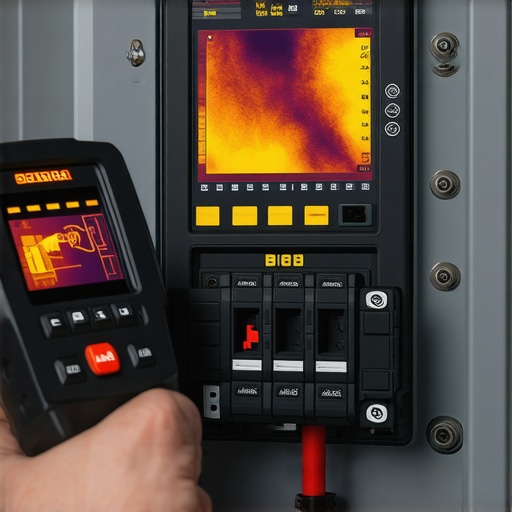
The Future of Your Garage Is Bidirectional
I predict that within the next few years, your garage setup won’t just be about pulling power—it will be about pushing it back. Bidirectional charging, or Vehicle-to-Home (V2H), is going to turn our cars into the ultimate home backup batteries. If you are already looking at how to upgrade your homes service for dual ev charging, you should start thinking about whether your current hardware is future-proof. When you are ensuring code compliance when installing ev chargers today, make sure to leave physical space in your panel for a transfer switch or a smart gateway. I also recommend investing in the best breaker lockouts for your home charging circuit to keep the system secured during these future upgrades. My challenge to you: grab an infrared thermometer today and check your breaker’s temperature while the car is pulling its max load. It is the easiest way to catch a problem before it catches you off guard.
Lessons Carved in Burnt Plastic and Blown Breakers
If there is one thing I have learned from years of hands-on experience, it is that heat is a silent killer in electrical systems. I used to think that as long as the charger worked, everything was fine. Now I know that a ‘working’ charger can be slowly melting its internal components if the wire gauge is even slightly off. This is why you should always take the time for how to verify code compliance for your ev charger installation before you call the job done. Another ‘lightbulb moment’ came when I realized that the cheapest breaker in the store is rarely the best choice for an EV; continuous loads require high-quality components that can handle thermal stress day in and day out. Don’t be afraid of the inspector either—they are your final safety net, not an obstacle to be avoided.
The Precise Gear I Trust to Protect My Garage
You do not need a truck full of tools, but you do need the right ones for high-amperage work. My first recommendation is a professional-grade torque screwdriver. Many people skip this, but why your charger needs a specific torque setting to pass inspection is rooted in preventing loose connections that lead to house fires. I also swear by a simple infrared thermometer to check my panel every few months. If you are seeing temperatures above 140°F on your breaker, it is time to look at panel upgrade strategies to meet ev charging code requirements in 2025 before a failure occurs. Finally, keep a digital copy of your load calculation worksheet on your phone; it is the most valuable document you own when it comes to future home upgrades.
Build a Charging Hub That Outlasts Your Current Car
Installing a charger is about more than just convenience—it is an investment in your home’s infrastructure. By prioritizing quality wiring and proper torque, you are ensuring code compliance when installing ev chargers that will serve you for decades, regardless of what new vehicle you park in the driveway next. If the technical details still feel a bit overwhelming, do not hesitate to contact us for a second opinion. You deserve the peace of mind that comes with a professional-grade setup. Have you ever noticed your lights flickering or your breaker getting warm while your EV is plugged in? Let me know in the comments below!