I still remember the smell. It was two o’clock in the morning, and I’d just stepped out to the garage to grab a tool when I was hit by the acrid, metallic tang of melting plastic. My heart dropped. My brand-new electric car was plugged into a standard NEMA 14-50 outlet I’d picked up for fifteen bucks at a local big-box store. When I reached out to touch the faceplate, it wasn’t just hot; it was soft. The plastic was literally beginning to liquefy under the pressure of a 40-amp continuous load. That night, I learned a terrifying lesson: just because a plug fits doesn’t mean the outlet is ready for the marathon of EV charging.
Get a Grip on Industrial Strength Components
[image-placeholder]Most people assume that all NEMA 14-50 receptacles are created equal. They look the same, they have the same four holes, and they are rated for the same voltage. But here is the cold, hard truth: most of the outlets you find on the shelf at the hardware store were designed for clothes dryers. A dryer runs for maybe forty-five minutes and then shuts off. An EV charger is a “continuous load,” meaning it pulls high current for hours on end, every single night. If you use a cheap residential-grade outlet, you are essentially asking for a fire. I made that mistake so you don’t have to. I thought I was being savvy by saving thirty dollars on the part, but I ended up nearly losing my house. When you are ensuring code compliance when installing ev chargers, you have to look beyond the bare minimum. You need an industrial-grade receptacle—brands like Bryant or Hubbell are the gold standard for a reason. They use significantly more copper, which means less resistance and far less heat.
Does the Brand of Your Receptacle Actually Matter?
It absolutely does, and your safety depends on it. Many homeowners are skeptical about spending $50 or $90 on a single outlet when a $10 version exists. However, the internal clamping pressure on these heavy-duty units is much higher. This prevents the “arcing” that happens when a plug is slightly loose, which is exactly why your breaker gets hot to the touch during charging. According to the National Fire Protection Association (NFPA), electrical failures are a primary cause of residential fires, often exacerbated by high-draw appliances used on insufficient hardware. I eventually realized that the benefit of a hardwired charger over a nema plug is substantial if you want to avoid these issues entirely, but if you must use a plug, you cannot cut corners. When I finally installed a proper industrial outlet, the charging handle didn’t even get warm. No more ev charger troubleshooting or middle-of-the-night panic attacks. The internal architecture of these industrial outlets is where the magic happens. While a cheap outlet uses thin metal “fingers” to grab the plug’s prongs, a high-end receptacle uses thick brass plates that wrap around the prong with massive force. This contact surface area is critical. If the surface area is small, the electricity has to “squeeze” through a narrow point, which creates friction—and in the electrical world, friction is heat. I spent weeks dealing with troubleshooting ev charger connectivity problems only to realize the issue was the heat buildup at the outlet was causing my charger to throttle its speed for safety. It was a frustrating cycle of slow charges and safety warnings. Have you ever felt the faceplate of your EV outlet while it was mid-charge? I’d love to hear if yours is running hot or staying cool.
Stop Squinting at Your Wire Gauge
The wire is the circulatory system of your charging setup. If it’s too thin, your car is effectively trying to breathe through a cocktail straw while running a marathon. Many DIYers fall into the common wire sizing error that causes voltage drops during charging by using 8 AWG for a 50-amp circuit because they saw it on a standard household chart. For a continuous high-draw load, you must use the exact wire gauge you need for a 50-amp ev circuit, which is 6 AWG copper. I’ve seen people try to cut costs by using aluminum, but understanding the difference between copper and aluminum for ev wiring is vital because aluminum expands and contracts significantly more than copper under heat. This constant movement can loosen connections over time, leading to dangerous arcing inside your walls. Always how to verify your electrician actually used copper wire for the install before you sign off on the job.
The Small Tool That Saves Your House
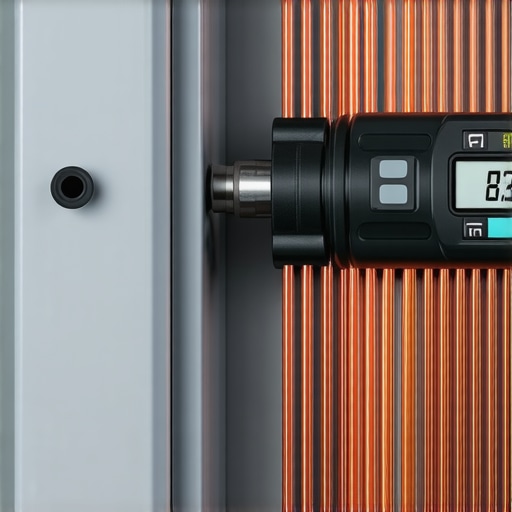
I learned this the hard way during my first sub-panel installation. I tightened the lugs by feel, thinking “man-tight” was enough. A month later, I smelled that familiar acrid scent and found the insulation on my neutral wire turning a toasted marshmallow brown. It wasn’t a bad breaker; it was a loose connection. This is why the specific torque settings that prevent panel fires during high load charging are not just suggestions—they are mandatory code requirements. Every terminal lug has a torque rating printed right on it, usually in inch-pounds. If you aren’t using a calibrated torque wrench to meet those specs, you are essentially guessing with your family’s safety.
Why Your Breaker Needs Its Own Room
Your EV should never share a circuit with other heavy appliances. Think of a circuit like a narrow hallway; if too many people try to run through it at once, everyone slows down or trips. You must ensure why your charging station needs a dedicated circuit breaker to prevent nuisance tripping and excessive heat buildup. If your panel is already crowded, upgrading your panel for better ev charging performance is often the only safe path forward. I’ve noticed that when a main breaker is pushed to its absolute limit, you’ll start seeing 3 signs your main breaker is running dangerously hot during overnight charging, such as a faint buzzing sound or a “hot electronics” smell coming from the metal casing. If you catch these signs early, you can avoid a total system failure and a costly emergency call-out.
Don’t Ignore the Labeling Requirements
Once the wiring is pulled and the torque is set, you need to label everything clearly. It sounds like busy work, but the specific circuit labels required by the electrical inspector serve a critical purpose: they tell emergency responders exactly where to cut power in a crisis. During my last inspection, the city official almost failed the project because my handwriting on the panel schedule was illegible. Professionalism in the small details—like clear labels and secure conduit—is what separates a hobbyist install from a code-compliant one that will help you how to pass your electrical inspection on the first visit without a second thought.
Stop Defaulting to an Expensive Service Upgrade
Common wisdom suggests that if your electrical panel is full, you’re looking at a $3,000 to $5,000 service upgrade. I used to believe that too, but here is the contrarian truth: you often do not need more power; you just need to be smarter with what you have. Most homeowners are told they need a 200-amp service to accommodate a Level 2 station, but by implementing how to load balance your home electrical system without a full panel swap, you can often stay within your existing capacity. Advanced load management devices monitor your home’s total usage in real-time and throttle the charger only when you turn on the oven or the dryer. This is a game-changer for those wondering how to add an ev charger to a home with a small 60-amp panel. Section 625.42(B) of the 2023 National Electrical Code (NEC) now explicitly recognizes these systems as a valid way to avoid upgrading the entire service, provided the equipment is listed for the purpose.
Why Does Your Breaker Trip When Nothing Seems Wrong?
The most frustrating “trap” for new EV owners is the phantom trip. You wake up, and your car hasn’t charged a mile. This often happens because of a conflict between two safety systems. Modern EV chargers have built-in Ground Fault Circuit Interrupter (GFCI) protection, but the 2020 NEC update requires a GFCI breaker for any 240V outlet in a garage. These two GFCIs can essentially “talk” to each other, creating electrical noise that causes why your ev charger trips the gfci even when not in use. This is why many pros recommend hardwiring the charger; it eliminates the need for that secondary GFCI breaker and solves the nuisance tripping overnight. If you are stuck in a cycle of ev charger troubleshooting, check if you have a GFCI-on-GFCI conflict first. 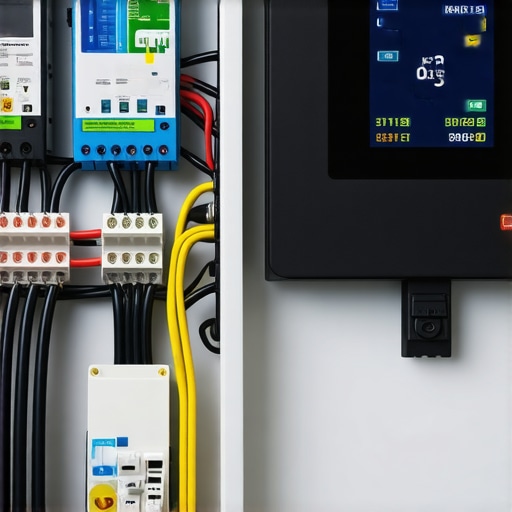
The Thermal Trap Most DIYers Ignore
Another nuance involves the “90 percent trip.” I see this constantly in my inbox: “My car charges for three hours and then the breaker clicks off.” Most people assume the charger is drawing too much current, but the real reason your circuit breaker trips at 90 percent charge is usually thermal buildup, not an amperage spike. As the battery fills, the resistance can change, but the real culprit is a breaker that is crowded by other hot breakers. If your panel is packed tight, the heat from the adjacent circuits can actually lower the trip threshold of your EV breaker. It’s a subtle dance of thermodynamics that requires panel upgrade strategies to meet ev charging code requirements in 2025 that focus on spacing and airflow just as much as amperage capacity. Dealing with troubleshooting ev chargers common compliance pitfalls and fixes often means moving the breaker to a cooler spot in the panel rather than replacing it. Have you ever fallen into the “upgrade-first” trap, or did you find a way to make your current panel work? Let me know in the comments below.
Why I Keep an Infrared Thermometer Next to My Charging Station
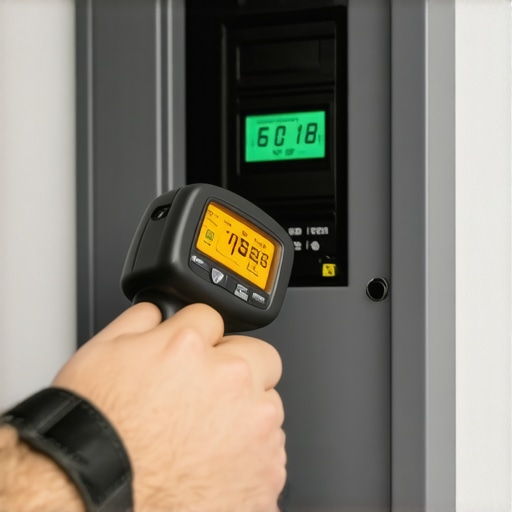
I don’t just plug in my car and walk away anymore; I treat my electrical system like the high-performance machine it is. Every few months, I pull out my Fluke 62 Max infrared thermometer—a tool that has saved me more than once from a potential disaster. By scanning the surface temperature of my breaker and the charging handle while the car is pulling its maximum 48-amp load, I can spot thermal anomalies before they trigger a shutdown. If you see a temperature spike of more than 20 degrees Celsius over the ambient garage temperature, you are likely looking at a high-resistance connection. This is the most proactive way to how to spot a dying breaker before it shuts down your charging session and avoid the dreaded smell of ozone. According to the NFPA 70B Standard for Electrical Equipment Maintenance, regular thermal inspections are a cornerstone of preventing industrial electrical failure, and your home charger should be treated with that same level of respect.
How can I keep my charging setup safe for the next decade?
Maintenance isn’t just about the wires inside the wall; it is about the physical interface that you touch every single day. Dust, spider webs, and oxidation are the silent killers of charging efficiency. I make it a habit to perform 3 maintenance-tasks-that-keep-your-outdoor-charger-running-through-winter, which includes a visual inspection of the pins for any signs of blackening or pitting. If the pins look dull, learning how to clean the pins on your charging handle safely using specialized electronic contact cleaner can prevent the heat buildup that leads to melted ports. Additionally, don’t overlook the software. Many modern units require periodic firmware updates to handle new vehicle handshaking protocols. Knowing how to update your charger software without calling a technician ensures that your hardware remains compatible as your car’s manufacturer pushes over-the-air updates to the battery management system.
Prepare for the Era of Bi-Directional Power
The next five years will transform your EV from a simple consumer of energy into a mobile battery for your entire home. We are moving toward a world of V2H (Vehicle-to-Home) technology where your car can power your house during a blackout. This shift means that your current upgrading your panel for better ev charging performance today needs to account for two-way power flow. I predict we will soon see a mandatory requirement for why your ev charger needs a surge protector in the panel as standard code, because as we start pushing power back into the grid, the sensitivity of our home electronics to voltage spikes will only increase. If you haven’t already, check if your current setup allows for future-proofing; it’s much cheaper to install a larger conduit now than to dig it up again in 2027. My advanced tip for you this week: Grab a torque screwdriver and verify your terminal connections against the specific torque settings that prevent panel fires during high load charging—it is the single most effective thing you can do to ensure your house stays standing while you sleep.
The Night I Almost Lost My House to a $10 Part
Reflecting on my journey from a melting garage outlet to a rock-solid industrial setup, the biggest lightbulb moment wasn’t about electricity—it was about respect for the load. Residential hardware simply isn’t built for the relentless pull of a modern EV. I learned that saving a few bucks on a socket is a fool’s bargain. If you find yourself constantly ev charger troubleshooting, there is a high probability that the physical infrastructure beneath your drywall is crying for help. I also realized that while DIY is tempting, the nuances of ensuring code compliance when installing ev chargers are there to prevent the exact ‘smell of melting plastic’ that woke me up at 2 AM. Always over-spec your wire and never, ever skip the torque wrench.
The Essential Gear for Every EV Garage
You don’t need a professional electrician’s van, but a few specific items will make your life significantly safer. First, an infrared thermometer is your best friend; it allows you to check for heat spikes before they become fires. Second, I swear by DeoxIT Gold for cleaning the pins on your charging handle to keep resistance low. Finally, a calibrated torque screwdriver is the only way to ensure your connections won’t vibrate loose over time. If you’re still feeling unsure about your setup, reviewing troubleshooting ev charger connectivity problems can often point toward these physical hardware issues rather than software glitches.
Your Roadmap to a Stress-Free Charge
Starting your EV journey should be an exciting leap into the future, not a source of anxiety. By taking the time to prioritize safety over speed, you are protecting your most valuable asset: your home. Whether you are currently upgrading your panel for better ev charging performance or just installing your first Level 2 station, remember that doing it right the first time is always cheaper than fixing a disaster later. Embrace the peace of mind that comes with a professional-grade installation and a truly code-compliant setup. Have you noticed your charging handle getting warm after a long session, or have you already made the switch to an industrial-grade outlet? Let me know in the comments below!