I stood in my garage for twenty minutes, staring at the green blinking light on my wall, then at the identical light in my neighbor Dave’s garage. We both have 50-amp circuits. We both drive long-range EVs. Yet, Dave was adding 35 miles of range every hour, and I was barely hitting 22. It felt like a personal insult. I’d spent more on my ‘smart’ hardware, but I was the one stuck waiting for a full charge before work. That frustration led me down a rabbit hole of wire gauges, load calculations, and the realization that I had fundamentally misunderstood how my home’s electrical system talks to my car.
The Night I Realized My Charger Was Lying to Me
I used to think that ‘Level 2’ was a universal speed. It isn’t. I made a huge mistake early on by ignoring the hidden cost of skipping a panel load calculation. I just assumed that if the breaker didn’t trip, everything was fine. In reality, my charger was automatically throttling itself because it sensed the voltage drop from the undersized wire I’d used to save a few bucks. Today, I’m going to help you stop the ‘range envy.’ We are going to look at why your smart charger might actually be slower than a basic plug-in model and how to fix the bottlenecks in your own garage. Have you ever felt like your car is taking way longer to charge than the manual promised?
Is professional electrical work actually worth the hype?
Many homeowners think they can DIY their way to max speed, but I learned the hard way that upgrading your panel for better EV charging performance is usually the missing link to reliable power.
Why Your Amps Are Stuck in the Mud
The most common reason for the speed gap isn’t the car; it’s the ‘continuous load’ rule. According to the National Fire Protection Association, the National Electrical Code dictates that your charger can only pull 80% of the breaker’s rated capacity for hours on end. If you have a 50-amp breaker, your car should be pulling 40 amps. But if your installer didn’t set the internal limiters correctly, or if you’re dealing with a charging station not reaching its full 48-amp potential, you’re effectively driving a sports car with a speed governor. I spent weeks wondering why the city inspector failed my garage wiring the first time, only to realize I hadn’t accounted for how other appliances on the same service were choking my available power. [image_placeholder_1] It isn’t just about the wires; it’s about the strategy you use to feed your vehicle.
Get Your Math Right Before You Buy the Copper
Think of your home’s electrical panel like a dinner party where the power is the food. If you invite a 48-amp EV charger (a very hungry guest) without checking how much food you have left, someone is going to starve—or more likely, your main breaker will trip. I learned this the hard way when I tried to run my dryer and charge my car simultaneously. The lights didn’t just flicker; the whole house went dark. This is why you cannot ignore the hidden cost of skipping a panel load calculation. You need to know your ‘available capacity’ after your stove, AC, and water heater have taken their share. If your math shows you’re redlining your 100-amp service, you’ll need to look at upgrading your panel for better EV charging performance to ensure you aren’t just creating a fire hazard in your wall.
Why Cheap Wires Will Cost You a Fortune Later
I once tried to save sixty bucks by using a generic wire I found online. Within three months, the insulation was brittle and discolored. When it comes to 240V high-amperage circuits, the materials aren’t just a suggestion; they are the lifeline of the system. You must use the exact wire gauge you need for a 50-amp EV circuit, which is typically 6 AWG for most runs. Also, don’t let a contractor talk you into cheaper alternatives without knowing the difference between copper and aluminum for EV wiring. Copper handles the heat cycles of an EV much better than aluminum, which can expand and contract, eventually loosening your connections. If you’re using a plug-in model, you must learn how to pick a NEMA 14-50 outlet that won’t melt under pressure. Residential-grade outlets found at big-box stores are often designed for dryers that run for 45 minutes, not EVs that pull max power for eight hours straight.
Tighten Everything or Risk a Fire
One of the most overlooked steps in the garage is the physical connection at the breaker. Most DIYers—and even some pros—just ‘hand-tighten’ the lugs. But heat is the enemy of electricity. When I first checked my own panel after a month of charging, I found one of the wires was so hot I couldn’t touch it. I had ignored the specific torque settings that prevent panel fires during high load charging. Using a torque screwdriver to hit the exact inch-pounds specified by the manufacturer isn’t just being picky; it’s what keeps your house from burning down while you sleep. 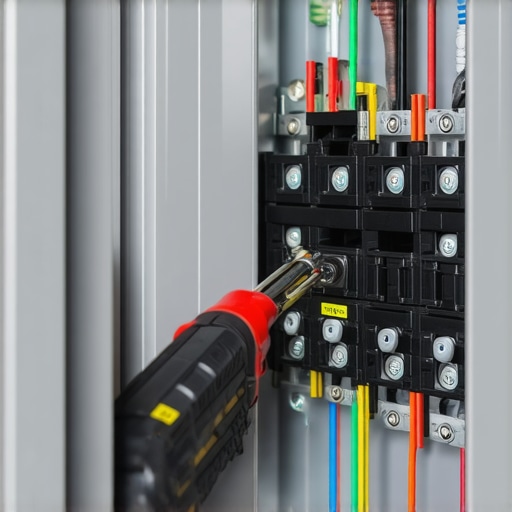
Skip the Full Panel Upgrade with These Smart Hacks
If your load calculation shows you’re over the limit, don’t panic and shell out $4,000 for a new service entrance immediately. You can actually learn how to add an EV charger without a 200-amp panel upgrade by using intelligent hardware. I eventually installed a ‘load shed’ device. It’s like a traffic cop for your electricity; it monitors your total home usage and temporarily pauses the car charger if the electric oven and AC both kick on at the same time. Knowing how to use load shedding devices to avoid a full service upgrade saved me thousands and kept me within code. It’s the smartest way to bridge the gap between an aging electrical system and a high-tech vehicle without breaking the bank.
Many ‘experts’ will tell you that if you want a 48-amp charger, you absolutely must shell out for a 200-amp service upgrade. I’m here to tell you that’s often a lazy recommendation. In my experience, most homes have plenty of ‘room’ if you stop looking at peak numbers and start looking at real-time consumption. While panel upgrades for EV chargers are sometimes necessary, they are frequently used as a default upsell when a more elegant solution—like an energy management system—would work better. The mistake isn’t just about the money; it’s about the wasted capacity you’ll never actually use. Have you ever fallen into this trap? Let me know in the comments.
Don’t Ignore the Phantom Neutral Requirement
One of the most confusing ‘oops’ factors happens when homeowners buy a high-end charger and realize it won’t work with their existing 240V setup. You might think two hot wires and a ground are enough, but you need to know why your new charger requires a neutral wire even for 240V. Some smart chargers use that neutral to power their internal Wi-Fi boards and logic controllers. If you skip it, you might find your car ‘handshaking’ with the charger but never actually drawing power. It’s a classic case where basic electrical knowledge fails you because modern EVSEs (Electric Vehicle Supply Equipment) are essentially computers that happen to move a lot of juice.
Why does your car reject a perfectly good connection?
If you’ve checked your breakers and your wires but the car still won’t charge, you’re likely dealing with a communication protocol error. According to the Electric Power Research Institute (EPRI), over 15% of home charging failures are actually software-related rather than electrical. This is where you have to move past the multimeter and start troubleshooting a communication error between your car and charger. Often, it’s a high-resistance ground or a pilot signal wire that isn’t seated properly, telling the car’s onboard inverter that the connection is ‘unsafe’ even when it looks fine to the naked eye.
The Danger of the Invisible Double-Tap
When you are poking around your panel, there is one critical safety violation that many DIYers and hurried contractors commit: the double-tap. This is when two wires are shoved into a single breaker lug. Under the massive, sustained load of an EV, this creates a localized hotspot. You must check your panel for double-tapped breakers immediately. A study by the NFPA indicates that loose or improper connections are a leading cause of electrical fires in residential settings. It’s why you should always strive for ensuring code compliance when installing EV chargers by giving your car its own dedicated space in the panel. If you’re out of room, don’t double up; look into tandem breakers or panel upgrade strategies to meet EV charging code requirements in 2025 to do it the right way.
Verify Your Grounding Before the Inspector Arrives
Lastly, don’t assume your garage is properly grounded just because your lightbulbs work. EVs are incredibly sensitive to ‘dirty’ power and floating grounds. I’ve seen chargers refuse to initiate because the grounding rod was ten feet too short or the bonding was corroded. Always verify code compliance for your EV charger installation by testing the ground-to-neutral voltage. If it’s anything more than a few millivolts, your car’s safety sensors might lock you out of a charge entirely. Staying ahead of these code compliance essentials for EV charger installations isn’t just about passing an inspection; it’s about protecting the most expensive ‘appliance’ you’ve ever plugged into your home.
My Secret Weapon for Catching Panel Fires Before They Start
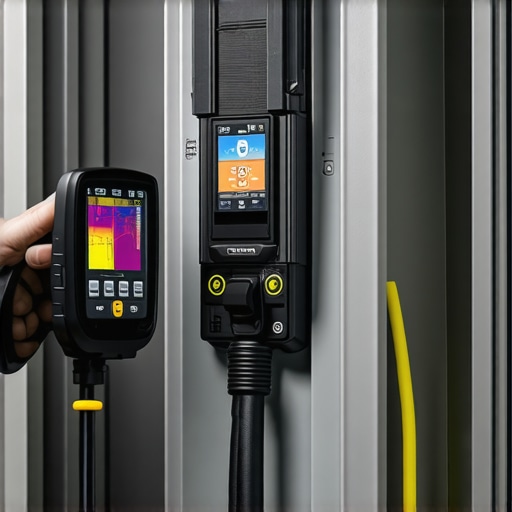
Once you’ve passed inspection, you might think your job is done. But I’ve learned that high-amperage circuits need an ‘annual physical’ just like we do. My favorite tool—and the one I recommend to every EV owner—is a simple infrared thermometer. Every few months, I open my panel door (carefully!) while the car is charging at full blast. I’m looking for hotspots. If one breaker is significantly hotter than the others, it’s a red flag. This is often the first clue in how to spot a dying breaker before it shuts down your charging session. Knowing why your breaker gets hot to the touch during charging allows you to swap out a $20 part before it welds itself to your bus bar and costs you a $2,000 repair.
Why Your Smart Charger Needs a Software Update Just Like Your Phone
We often forget that modern EVSEs are connected devices. I once spent an entire Saturday morning wondering why my car wasn’t charging, only to realize the manufacturer had pushed a security patch that required a manual reboot. You need to get comfortable with how to update the firmware on your smart charging station. These updates often improve the ‘handshake’ protocol between the car and the grid, preventing those annoying ‘Waiting for Power’ messages. If your house suffers a surge or a flicker, you also need to know how to reset your home charging station after a power outage without having to flip the main house breaker. According to technical documentation from the Charging Interface Initiative (CharIN), keeping your firmware updated is the single best way to ensure compatibility with future vehicle models that may use slightly different communication timings.
#IMAGE_PLACE_HOLDER_D#
How do I keep my charger healthy for the next ten years?
Maintenance isn’t just about the wires inside the wall; it’s about the hardware you touch every day. If your charger is outside, the environment is your biggest enemy. I make it a habit to perform 3 maintenance tasks that keep your outdoor charger running through winter, including checking the port for debris and ensuring the holster isn’t collecting water. If you let the contact pins oxidize, you’ll increase resistance, which leads to heat, which leads to a melted charging port on your car. A quick blast of electronics cleaner once a year can save you from a very expensive service center visit.
Prepare for the Two-EV Future Without Re-Wiring Everything
Looking ahead, the biggest trend I see is the ‘multi-EV household.’ Most people assume they’ll need a second dedicated 50-amp circuit, but that’s rarely the case. We are moving toward a world of dynamic power sharing. You can learn how to balance multiple EVs on a single home circuit by using chargers that talk to each other. They split the available 40 amps—giving 20 to each car—and then ramp up the second car once the first is full. This is the ultimate way to utilize panel upgrade strategies to meet EV charging code requirements in 2025 without actually having to pull new heavy-gauge wire through your finished ceiling. I predict that within five years, bidirectional charging (V2H) will be standard, turning our cars into giant backup batteries for our homes. If you want to stay ahead of the curve, I highly recommend buying an infrared thermometer today and doing a thermal sweep of your panel during your next long charging session; it’s the most empowering $30 you’ll ever spend on your home’s safety.
The Hard Truth About My Failed First Inspection
My biggest takeaway after three years of EV ownership is that ‘good enough’ is a fire hazard. I once thought that tight was tight, but without the specific torque settings that prevent panel fires during high load charging, you are just gambling with your home. Another lightbulb moment was realizing that ensuring code compliance when installing EV chargers isn’t about red tape; it’s a diagnostic checklist that reveals the weak points in your home’s infrastructure. If your car isn’t charging at full speed, don’t blame the battery until you’ve checked for voltage drop or a loose neutral wire. I found that my own system was losing nearly 5% of its efficiency just due to a slightly oxidized connection that I would have never noticed without a thermal scan.
My Personal EV Diagnostic Toolbox
You don’t need a degree in electrical engineering, but you do need three specific items to keep your garage running safely. First, a handheld infrared thermometer is the only way to catch 3 signs your main breaker is running dangerously hot during overnight charging before a failure happens. Second, I swear by the official NEC (National Electrical Code) handbook—it’s the only way to verify code compliance for your EV charger installation without relying on hearsay from forums. Lastly, always keep your manufacturer’s app updated so you can dive into ev charger troubleshooting expert tips for common issues the moment a red light starts blinking. [image_placeholder_final]
Take Control of Your Garage Power Today
Stop letting range anxiety and electrical confusion keep you from enjoying your vehicle to its full potential. Whether you are currently upgrading your panel for better EV charging performance or just trying to squeeze more speed out of your current 100-amp service, remember that knowledge is your best insulator. Stay curious about how your home works, stay diligent with code compliance essentials for EV charger installations in 2025, and you’ll never have to worry about a cold start or a warm breaker again. You have the tools and the strategy now—go make your garage the high-tech hub it was meant to be. Have you ever caught a loose wire or a hot breaker in your own panel? Let me know in the comments below!