I remember standing in my garage two years ago, clutching a printed quote for $3,400. Between the necessary panel upgrade and the long conduit run to the side of the house, the cost of finally getting a Level 2 charger felt like a punch to the gut. I almost called the electrician back to cancel. My ‘green’ dream was starting to look like a very expensive nightmare. I was frustrated, bordering on angry, because nobody tells you that the car is only half the expense. Then, I stumbled upon a specific provision in the federal tax code that changed everything. It wasn’t just a small deduction; it was a massive reimbursement that covered nearly half of my total out-of-pocket costs.
How I Stopped Worrying About the Price Tag and Started Charging Faster
The secret lies in the Alternative Fuel Infrastructure Tax Credit, often referred to as Section 30C. Most people think tax credits are only for the cars themselves, but the federal government is actually desperate for us to fix our home grids. If you live in an eligible area, you can claim 30% of the cost of hardware and installation, up to $1,000. When you pair this with local utility rebates, the math starts to look very different. I eventually learned how to claim the federal alternative fuel infrastructure tax credit properly, and it felt like finding free money under the couch cushions. Today, I want to show you exactly how to navigate this process so you don’t leave thousands of dollars on the table like I almost did. We are going to look at the specific equipment that qualifies and why your panel upgrades for ev chargers might actually be your biggest tax win.
Is this tax credit actually too good to be true?
It’s natural to be skeptical. I certainly was. My biggest mistake early on was assuming that every single zip code qualified. I spent three hours researching wire gauges and the exact gauge of wire you need for a 60 amp circuit, only to realize I hadn’t even checked if my census tract was eligible. The 2023 updates to the law shifted the focus toward ‘non-urban’ or ‘low-income’ areas, which sounds restrictive until you realize how many suburban neighborhoods actually fit those definitions. According to data from the U.S. Department of Energy, nearly 60% of the country remains eligible for these infrastructure incentives. Have you ever looked at a quote for a panel upgrade and wondered if your wallet could actually survive the transition? You aren’t alone, and the solution usually starts with the tax form you need for your home electrical upgrade. Before you buy a single foot of conduit or hire a contractor, you need to understand the geography of these credits. I’ll show you how to verify your address in seconds and what specific documentation you need to keep to satisfy the IRS.
Step One: Find Your Spot on the Map
I remember the anxiety of refreshing the Department of Energy’s mapping tool. My house sits right on the edge of a rural boundary, and a single block could have cost me three thousand dollars. You need to verify your census tract immediately. If you aren’t in a ‘non-urban’ or ‘low-income’ area as defined by the latest census data, the 30C credit is off the table. This isn’t about where you think you live; it’s about how the IRS sees your dirt. Once you confirm eligibility, you can move on to the actual hardware, where the real savings hide.
Your Panel acts as the Heart of the Operation
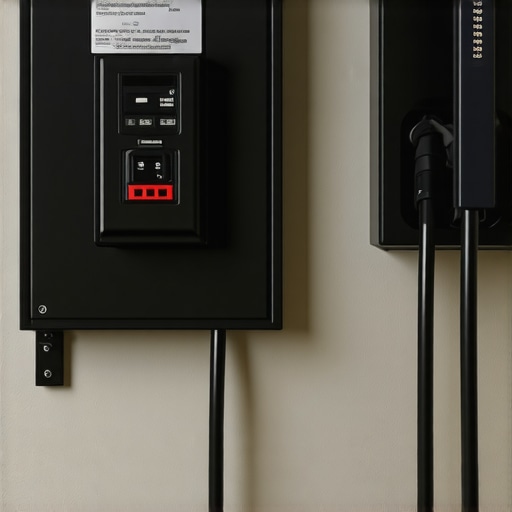
Think of your electrical panel like a city’s main bridge. If you try to force a thousand semi-trucks across a bridge designed for sedans, things start to crumble. To get that tax credit, your installation must be a permanent fixture, which often requires significant panel upgrade strategies to meet EV charging code requirements in 2025. I learned the hard way that cramming a 50-amp breaker into a crowded 100-amp service is a recipe for disaster. You must account for the specific panel space requirements for a Level 2 install. If you don’t have the physical room or the load capacity, the IRS won’t care about your ‘green’ intentions—they only care if the installation is safe and compliant.
Why Wire Thickness is Non-Negotiable
I once helped a neighbor troubleshoot a DIY job where he used 10-gauge wire for a 40-amp charger because it was ‘cheaper.’ Within twenty minutes, the insulation was soft to the touch. It’s like trying to pump a fire hose’s volume through a cocktail straw; the friction creates heat, and heat creates fires. To stay safe and keep your warranty intact, you must use the exact wire gauge you need for a 50-amp EV circuit. Improper sizing isn’t just a code violation; it’s the primary reason why your breaker gets hot to the touch during charging. The federal credit specifically covers these materials, so there is zero excuse to take shortcuts with copper prices.
The Paperwork You Can’t Afford to Lose
The IRS doesn’t take your word for it. You need a paper trail that would make a librarian proud. This starts with a passed inspection. I’ve seen homeowners lose their credit because they didn’t realize how to pass your electrical inspection on the first visit involves more than just a working plug. You need clear labels, proper conduit depth, and a signed-off permit from the local authority. By ensuring code compliance when installing EV chargers from day one, you create the necessary evidence to file Form 8911. Keep your invoices itemized—separate the charger cost from the labor and the panel materials—to ensure you are claiming every eligible penny without triggering an audit.
Everyone tells you that if you have an older 100-amp panel, you are doomed to spend thousands on a full service upgrade before you can even think about a Level 2 charger. It is the most common piece of advice in EV forums, and frankly, it is often wrong. While electricians love the big ticket of a panel swap, modern technology has given us a ‘cheat code’ called active load management. Instead of rebuilding the whole bridge, you can install a smart controller that pauses the car’s intake if the oven and dryer kick on at the same time. Learning how to load balance your home electrical system without a full panel swap can save you enough money to pay for the charger itself twice over. In my experience, homeowners rush into upgrades they don’t actually need because they haven’t bothered to calculate if your 100-amp service can handle a daily commute based on real-world usage data.
Can your current 100-amp service actually survive a 48-amp continuous load?
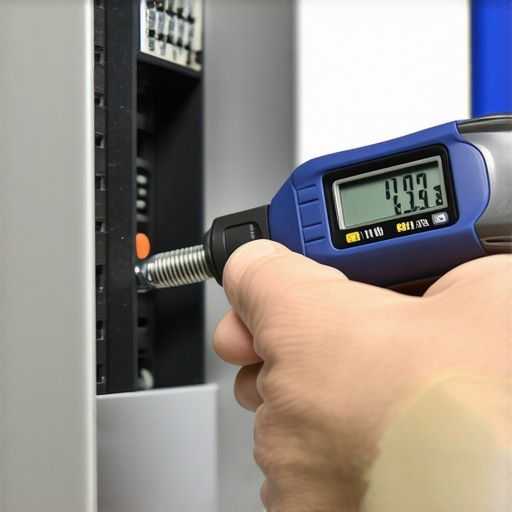
The nuance most people miss is the ‘continuous load’ rule. In the electrical world, an EV charger is one of the few things that pulls massive power for hours on end, unlike a toaster that runs for two minutes. This creates sustained thermal stress. I have seen perfectly ‘to-code’ installations fail after six months because the installer didn’t account for the specific torque settings that prevent panel fires during high load charging. According to the National Fire Protection Association (NFPA), poor terminations are a leading cause of electrical fires in residential settings. If your electrician isn’t using a calibrated torque wrench to tighten those lugs to the exact inch-pounds specified on the breaker, they are doing it wrong. A connection that feels ‘tight’ to the hand can still vibrate and expand under heat, leading to a loose neutral or a melted busbar.
The Trap of the ‘Cheap’ Circuit Breaker
Here is a hard truth: not all 50-amp breakers are created equal. I have seen homeowners buy off-brand components to save twenty bucks, only to find themselves asking why your breaker gets hot to the touch during charging a week later. High-end EV chargers demand high-performance breakers with better thermal dissipation. If you use a lower-tier brand, you might experience nuisance tripping where the circuit breaker trips at 90 percent charge simply because the ambient temperature in the garage rose by ten degrees. This is why code compliance essentials for EV charger installations in 2025 are moving toward stricter requirements for hardware quality and thermal monitoring.
Stop Ignoring the Small Noises and Flickers
If you notice that your garage lights flicker when the car starts charging, do not ignore it. That isn’t just a ‘quirk’ of having a powerful car; it is often a sign of a voltage drop caused by undersized wiring or a failing connection in your main panel. Advanced troubleshooting means looking for the ‘hidden’ compliance issues, like the hidden danger of loose neutral wires in your electrical panel, which can fry the sensitive electronics in your car’s onboard charger. By ensuring code compliance when installing EV chargers from the very start, you aren’t just pleasing an inspector—you are protecting a $50,000 investment on wheels. Have you ever noticed your lights dimming when you plug in, or have you fallen into the ‘mandatory panel upgrade’ trap? Let me know in the comments below!
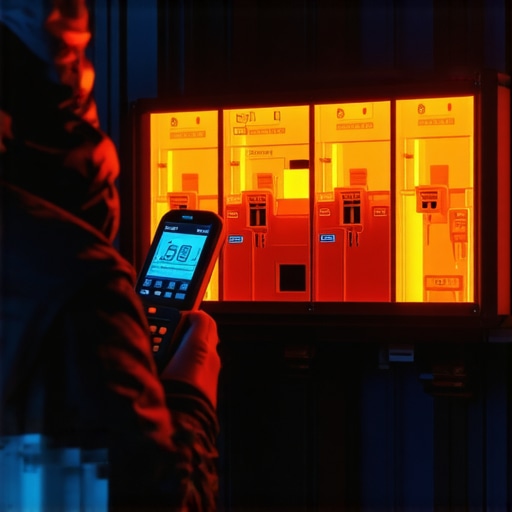
I used to think that once the inspector signed off and the green light on my charger stayed solid, my job was done. I was wrong. After about eighteen months, I noticed a faint acrid smell in my garage during a heavy charging session. I didn’t wait for a fire; I grabbed my infrared thermometer. Checking for thermal anomalies is the single most important thing you can do for long-term safety. I now make it a habit to scan my panel every six months while the car is pulling its full load. If you see a breaker hitting 140 degrees Fahrenheit while the others are at 90, you are looking at a looming failure. Learning how to spot a dying breaker before it shuts down your charging session saved me from a middle-of-the-night emergency call.
The one tool every EV owner should keep in their toolbox
You don’t need to be an electrician to own a torque screwdriver. Most people assume that once a wire is screwed in, it stays there forever. But thermal expansion and contraction—the literal breathing of the metal as it heats and cools—can loosen those connections over time. I personally go back in and verify the specific torque settings that prevent panel fires during high load charging once a year. It takes ten minutes and ensures that I’m never the guy on the news with a charred garage wall. According to technical documentation from Flir Systems, thermal imaging can detect loose electrical connections up to six months before they actually fail. This isn’t just about being paranoid; it is about protecting your home.
How do I keep my home charging station running for a decade?
Maintenance isn’t just about the wires; it’s about the hardware and the software too. If your charger is mounted outside, you need to be proactive. I’ve found that 3 maintenance tasks that keep your outdoor charger running through winter, like checking the gasket seals and cleaning the contact pins, prevent the dreaded ‘waiting mode’ errors. Internally, you should be checking for firmware updates. Many people don’t realize how to update your charger software without calling a technician, but it’s usually as simple as connecting it to your home Wi-Fi and hitting ‘update’ in the app. These updates often improve thermal management and communication protocols with your car’s BMS.
Why today’s panel upgrade is actually a future-proof investment
I predict that within the next five years, we won’t just be taking power from the grid; we will be giving it back. Vehicle-to-Home (V2H) technology is the next frontier. When you invest in upgrading your panel for better EV charging performance today, you aren’t just buying the ability to charge faster. You are setting up the infrastructure to use your car as a massive backup battery for your house during a blackout. This is why I always tell people to go bigger than they think they need. If you are already doing the work, don’t just aim for ‘barely enough’ to pass inspection. Go for the capacity that allows for future bidirectional charging. I highly recommend you take ten minutes tonight to download your charger’s companion app and check for a firmware update—it’s the easiest maintenance win you’ll ever get.
The Hard Truths About Home Grid Management
Reflecting on my journey, the biggest lightbulb moment wasn’t about the car; it was realizing that I am now my own utility manager. First, never assume your panel is ‘fine’ just because it’s not tripping yet; thermal fatigue is a silent killer that builds up over months of high-amperage draws. Second, always how to verify code compliance for your ev charger installation before the inspector arrives to save yourself from costly re-work fees. Finally, remember that ev charger troubleshooting expert tips for common issues often boil down to the simplest things, like checking for debris in the charging port or ensuring your Wi-Fi signal actually reaches the garage for those critical firmware updates.
The Gear That Actually Matters
If you want to do this right, skip the flashy accessories and focus on the skeleton of your system. I swear by a quality infrared thermometer for monthly panel checks—it’s the only way to see heat before it becomes a fire. I also suggest looking into why your ev charger needs a surge protector in the panel, because one lightning strike shouldn’t fry your vehicle’s expensive inverter. Also, keep an eye on the specific breaker brand that keeps tripping on level 2 chargers in your area, as some older or cheaper residential brands simply weren’t designed for the 100% continuous duty cycle an EV demands.
Your Path to Energy Independence Starts Here
Installing an EV charger is more than just a home improvement project; it’s a declaration of independence from the gas pump. It can feel overwhelming, but when you break it down into manageable steps—checking your census tract, sizing your wire, and tightening your lugs—it becomes a very achievable goal. Don’t let the fear of a complex panel upgrade or code compliance hurdles stop you from making the switch. You have the tools, the tax credits are waiting, and the long-term savings are real. Have you checked your census tract yet to see if you qualify for that 30% credit, or are you still on the fence about the installation? Let me know in the comments below!