I still remember the sinking feeling in my gut when my buddy Mike called me over to look at his non-responsive Ford F-150 Lightning. He had done the install himself, feeling confident after watching a few videos, but we plugged it in, heard a faint pop, and then nothing. No lights, no charging hum, just the expensive smell of toasted silicon. It turns out a slightly loose connection on the neutral bar had created a floating neutral, sending 240 volts screaming through circuits designed for half that. I have made my fair share of blunders too; early on, I once skipped the forgotten torque test that prevents panel fires and nearly charred a busbar. But seeing a fifty-thousand-dollar vehicle turned into a very heavy paperweight because of one copper wire? That is a different level of heartbreak. [image_placeholder_1]
The Silence That Costs Twelve Thousand Dollars
Today, I am going to show you exactly how to spot the warning signs of a failing neutral and why your electrical panel is the unsung hero—or villain—of your EV journey. We will talk about how to detect a loose neutral wire before your electronics fry and the simple steps you can take to safeguard your investment. According to the Electrical Safety Foundation International (ESFI), electrical malfunctions are a leading cause of home fires, and many of these stem from the very connection issues we are discussing today. Have you ever noticed your lights flickering when the AC kicks on while your car is charging? Drop a comment and let me know, because that is often the first shout from a neutral wire that is about to give up the ghost.
Is a single loose wire really enough to total my car computer?
It sounds like an exaggeration, right? But here is the reality: when that neutral connection fails, the voltage in your home is no longer balanced. One leg of your power can spike while the other drops, and your EV sensitive onboard charger is often the first thing to catch that surge. You might notice 3 signs your charger motherboard is fried from a surge, but by then, the damage is done. This is exactly why your main service panel needs a surge protector for your EV. By the time we finish today, you will know how to audit your own setup to ensure your car stays as smart as the day you bought it.The first thing you need to realize is that your home was likely never designed to run at 80% capacity for ten hours straight every night. Most household loads—like a toaster or a vacuum—are intermittent. An EV charger is a marathon runner, and if there is even a millimeter of gap in your connections, heat starts building up immediately. Think of your electrical panel as a high-pressure plumbing system; if the return pipe (the neutral) is clogged or loose, the pressure has nowhere to go but back into your expensive appliances. This is exactly why you need to perform the forgotten torque test that prevents panel fires.
Stop Your Panel From Choking Your EV
You cannot just ‘hand-tighten’ these terminals and call it a day. Copper and aluminum expand and contract as they heat up and cool down. Over time, that movement can back a screw out just enough to create an arc. I remember a service call to a house in the suburbs where the owner, Sarah, complained that her kitchen microwave would ‘groan’ every time she plugged in her Tesla. I opened her main service panel and saw the main lug was actually glowing a dull cherry red. I did not even need a thermal camera; I could smell the ozone. She was lucky we caught it before the busbar melted. This is why you must use the specific torque wrench settings for a wall connector or any high-amperage circuit.
Verify Your Connections With a Torque Wrench
Grab a calibrated torque wrench—not a standard screwdriver. Check the manufacturer’s spec sheet; it usually calls for something like 20 to 50 inch-pounds depending on the lug size. If you see discoloration on the wire insulation, the damage is already starting. You should also watch for 3 signs your main lug is loose and causing power flickers before you even open the box. 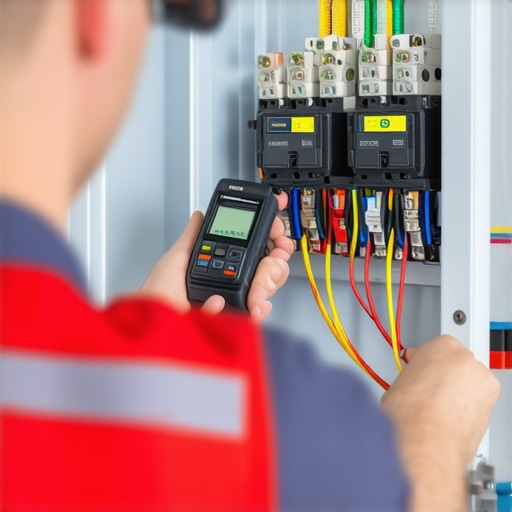
Avoid the Thin Wire Speed Trap
Another massive mistake I see DIYers make is trying to save twenty bucks by using a smaller gauge wire. If the manual calls for 6 AWG, do not try to pull 8 AWG just because you have a leftover roll. Why thinner wire is costing you miles every night comes down to voltage drop. Heat in the wire is literally energy that isn’t reaching your battery. Plus, you need to ensure you are using the specific conduit size needed for a 50-amp circuit to allow for proper heat dissipation. If you pack too many wires into a small pipe, they cook each other.
Balance the Load to Save Your Breakers
If your home only has a 100-amp service, adding a 50-amp charger is like trying to pour a gallon of water into a pint glass. You have to be smart about it. You might need to look into panel upgrade strategies to meet EV charging code requirements in 2025 or implement a hardware-based load management system. This allows you to load balance your fleet without tripping the main feed by automatically throttling the charger when the dryer or oven kicks on. It is often a much faster alternative to waiting months for a full service upgrade from the utility company.Let’s dig deeper into what the ‘experts’ often get wrong. Most contractors will tell you that a 200-amp service is non-negotiable for a Level 2 install. I’m here to tell you that’s a myth designed to sell you more labor. If you understand load calculation, you can often learn how to squeeze a level 2 charger onto a 60-amp service without spending a fortune on a new panel. This involves using smart energy management systems that prioritize your home’s essentials over the car during peak usage. Have you ever fallen into this trap of paying for more power than you use? Let me know in the comments. One ‘oops’ factor that kills warranties is the secondary ground rod. I’ve walked onto jobs where the owner thought they were being extra safe by driving a separate rod just for the charger. In reality, the grounding rod mistake that voids your ev warranty creates a ground loop that can fry the very electronics you’re trying to protect. The National Fire Protection Association (NFPA) notes in NFPA 70 that all grounding systems must be bonded to a single point of truth to prevent voltage differentials. If you miss this, you aren’t just out of code; you’re creating a literal lightning rod for your car’s motherboard. 
Mastering the Continuous Load Nuance
Why does your charging speed drop suddenly after 20 minutes?
This is a classic symptom of thermal throttling. If you’re seeing why your charging speed drops suddenly after 20 minutes, it’s usually because the heat in your junction box has exceeded the safety limits of the charger’s internal sensors. This often happens because people don’t realize the difference between residential and industrial grade wire for evs. Residential wire is great for a bedroom light, but for a continuous 48-amp draw, you need high-temp THHN in a properly sized conduit. When ensuring code compliance when installing ev chargers, you have to account for the ‘continuous load’ rule, which requires the circuit to be sized at 125% of the charger’s output. If your electrician missed that 125% buffer, you’re not just breaking the rules; you’re cooking your walls. If you’ve already run into issues, checking out troubleshooting ev chargers common compliance pitfalls and fixes can save you a second trip from the inspector.I have learned the hard way that ‘set it and forget it’ is a recipe for a 2 AM emergency call. Once a year, I pull the cover off my own panel—safely, with the main off—and I do not just look; I use a FLIR thermal imager. If a breaker is sitting at 140 degrees while the car is pulling 40 amps, that is a massive red flag. This is not just about ev charger troubleshooting expert tips for common issues; it is about preventative medicine. According to IEEE standards on residential electrical maintenance, thermal cycling—the constant expansion and contraction of metal—is the primary cause of connection degradation in high-amperage circuits. If you are not checking those lugs, you are essentially waiting for a failure. I always tell my clients that how to verify code compliance for your ev charger installation is not a one-time event; it is an ongoing responsibility. 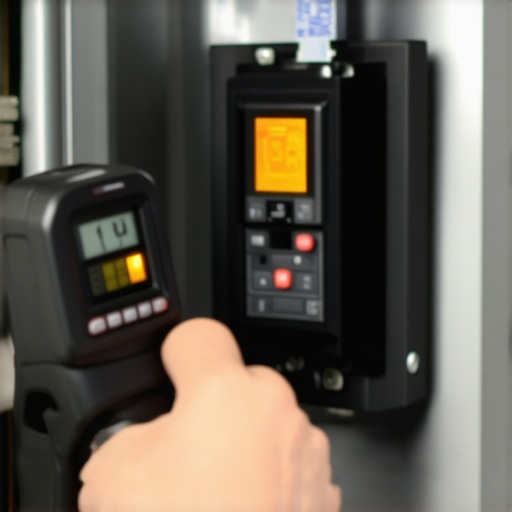
Spot Heat Before It Spots You
You do not need a professional-grade five-thousand-dollar camera to do this. Even a basic smartphone attachment can show you if one wire is glowing brighter than the others. I once found a client’s neutral wire looking like a lightsaber on my screen because of a loose terminal. We caught it weeks before it could have caused a fire. Beyond the panel, you should be looking at the hardware itself. If you live near the ocean, you need to be aware of the real lifespan of a level 2 charger in coastal salt air. Salt and high-voltage electronics are a volatile mix, and a little bit of dielectric grease on the plug pins can prevent the ‘death crust’ of corrosion from forming.
How do I keep my charging system healthy for the long haul?
Maintenance really comes down to three things: torque, temperature, and tidiness. Every twelve months, re-verify those the specific torque wrench settings for a wall connector because copper ‘creeps’ under pressure. Keep the area around your panel clear; your breakers need airflow to dissipate the heat generated by a ten-hour charging session. If you start hearing a hum, do not ignore it. Knowing how to stop the annoying hum coming from your charger can often lead you to a loose mounting bracket or a vibrating transformer that is slowly shaking its own internal connections apart.
Prepare Your Panel for Two-Way Traffic
Looking ahead, the biggest trend I see is Vehicle-to-Home (V2H) technology. We are moving toward a world where your car is not just a drain on the grid, but a backup battery for your house. This is why upgrading your panel for better ev charging performance now is so critical. You do not want to be the person with a shiny new bidirectional charger who cannot use it because their 1980s-era busbar cannot handle the reverse flow. Learning how to use your ev as a backup home battery safely starts with a robust, code-compliant foundation. If your panel is already crowded, consider panel upgrade strategies to meet ev charging code requirements in 2025 to ensure you have the physical space for an automatic transfer switch. My advanced tip for today: go buy a thermal thermometer pen and check your breaker temps tonight after the car has been charging for two hours. If it is over 150°F, call an electrician tomorrow.
Hard-Won Truths From the Service Van
After years of fixing DIY disasters, I have realized that the smallest oversight causes the biggest headaches. First, never underestimate the power of physical resistance; if a wire feels even slightly ‘bouncy’ under a lug, it is not seated properly. Second, code compliance is not just about passing an inspection—it is about ensuring your family sleeps soundly while five thousand lithium-ion cells charge downstairs. When I talk about ensuring code compliance when installing ev chargers, I am really talking about life insurance for your house. [image_placeholder_1] Lastly, the ‘smell test’ is real. If your garage starts smelling like a hot hairdryer, shut the breaker off immediately and look for 3 small mistakes that turn your garage panel into a fire hazard before the damage becomes permanent.
The Toolbox That Keeps My Garage Safe
I do not step near a high-voltage circuit without three specific things. My first recommendation is the NFPA 70 Handbook. It is dense, but it is the definitive guide for code compliance essentials for ev charger installations in 2025. Next, get a high-quality digital torque wrench. I trust the GearWrench or Precision Instruments brands because they give you that audible click that prevents over-tightening. Finally, a thermal imaging camera for your phone is worth every penny. Being able to see heat before it turns into smoke is the ultimate peace of mind. If you are ever in doubt, you can always reach out to a pro via our contact page to get a second pair of eyes on your setup.
Take Charge of Your Home’s Future
Electrical work can be intimidating, but you do not have to be a master electrician to be a smart homeowner. By focusing on the fundamentals—tight connections, proper wire sizing, and strict code compliance—you are building a garage that is ready for the next twenty years of automotive innovation. Whether you are upgrading your panel for better ev charging performance or just doing a yearly safety check, your diligence will pay off in safety and reliability. Have you ever checked the temperature of your breakers while your car was charging? Let me know what you found in the comments below.