I was standing in my garage, clutching the heavy cable of my brand-new EV charger, when the reality of my 1970s electrical panel finally hit me. I had just spent a small fortune on the car, only to be told that the real cost of upgrading to a 200-amp service would tack on another few thousand dollars I simply didn’t have. It felt like a gut punch. My excitement vanished, replaced by the dread of expensive infrastructure upgrades. I thought I was stuck with a slow, agonizing trickle charge forever. But then I discovered the "black box" solution that changed everything. Today, I am going to show you how to bypass the massive electrician bill and get your Level 2 speeds without ripping out your walls.
Skip the Multi-Thousand Dollar Bill for a New Panel
Most electricians will look at a 100-amp or 125-amp service and immediately tell you it is time for a full replacement. They aren’t exactly lying; the signs your main breaker is overwhelmed are hard to ignore once you start pulling 40 amps for a car while the clothes dryer is humming. However, load management modules (LMMs) act like a smart traffic cop for your home’s electrons. Instead of widening the "road" by installing a bigger service, these modules just tell certain appliances to wait their turn. It is a logic-based fix for a physical space problem.
Is a Load Management Module actually worth the hype?
I get it. Adding more tech to solve a hardware capacity problem sounds like a gimmick. You are likely wondering if this setup is actually safe or if it is just a workaround that will leave you in the dark. The truth is, these systems are highly regulated. According to the National Electrical Code (NEC), specifically Article 750, automated load management is a fully recognized method to ensure your home does not exceed its capacity. It is not just "hype"—it is a math-based safety protocol that keeps you within your home’s limits while maximizing your charging speed.
The Time I Almost Melted My Service Entry
I’ll be honest with you: I tried to be cheap before I got smart. Early on, I attempted to "manually" manage my load. I told my family we would simply never charge the car while the oven or the AC was running. One humid July evening, we forgot. The smell of hot plastic and the frustration of a tripped main breaker in the pitch black taught me that human memory is a terrible safety device. I felt like a failure as a homeowner. That is when I finally installed a dedicated management system. It was a game-changer. Have you ever had your main breaker trip because you added one too many gadgets? I would love to hear your "oh no" moment in the comments below. We are going to dive into exactly how these modules work so you don’t make the same mistakes I did.
Calculate Your Actual Load Before Spending a Dime
First, you need to know exactly how much headroom you have left on your 100-amp bus bar. This isn’t about looking at the number on the main breaker and subtracting the car’s amperage; that is a dangerous oversimplification. You need to learn how to read the load calculation your electrician sent you or perform a demand calculation yourself. When I first looked at my own panel, I saw a sea of breakers and assumed I was maxed out. However, a real calculation showed that my average ‘demand’ was much lower than the sum of the breakers. Identifying these 5 signs your old electrical panel is a charging bottleneck early will save you from buying hardware that your house can’t actually support even with management.
Why a simple demand calculation saves your wallet
I spent three hours with a multimeter and a calculator because I refused to believe I needed a 200-amp service. It turned out that even with the AC and the dryer running, I had a 30-amp window most of the time. The problem wasn’t the total capacity; it was the spikes. By understanding the math, you can determine if a load management module is a viable path or if you truly are at the physical limit of your wires.
Choose Your Load Management Weapon
Once you know your limits, you need a device that performs dynamic load balancing. Think of this like a smart faucet for your car. When the house ‘plumbing’ is full of water (power), the car’s faucet closes. When the house is quiet, the faucet opens wide. This is one of the most effective panel upgrades for ev chargers that doesn’t involve ripping out the enclosure. You generally have two choices: a hardware-based ‘shedder’ that cuts power entirely or a smart EVSE (Electric Vehicle Service Equipment) that communicates with current transformer (CT) clamps. 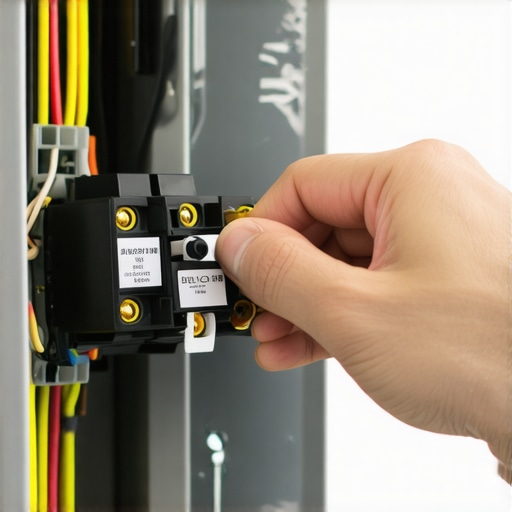
The CT clamps that save your service
I remember crouched in front of my panel, trying to snap the CT clamps around the thick main service wires. The space was so tight I actually scratched my knuckles against the cold steel of the enclosure and muttered things my neighbors probably shouldn’t have heard. But the moment I snapped that last clip and saw the real-time data feed on my phone showing the house pulling only 12 amps, I knew I’d saved thousands of dollars. These clamps monitor the total current entering your home and tell the charger to throttle down in real-time. This is the smart way to schedule charging without overloading your service, ensuring you never hit that trip point.
Stay Legal and Safe While You Save
Don’t just DIY this and hope for the best. You must focus on ensuring code compliance when installing ev chargers because an unpermitted load-managed system can still be a liability. You need to verify code compliance for your ev charger installation to ensure the hardware is UL-listed and the logic is failsafe. If the communication wire between your charger and the clamps breaks, the system should default to the lowest possible amperage to protect your home.
Why those small torque settings save your house
When I was finishing my install, I almost skipped the torque wrench. I thought ‘hand tight’ was enough. Then I remembered the horror stories of loose lugs causing heat build-up. Using the specific torque settings that prevent garage fires is a non-negotiable step. A loose connection at 40 amps generates enough heat to melt insulation long before the breaker ever trips. This is how you stop your breaker from tripping every time the dryer and ev run while keeping the fire department away from your driveway.Most people think that if the lights don’t flicker while the car is plugged in, their installation is a success. I’m going to challenge that right now. In my experience, a ‘working’ charger is not the same as a ‘safe’ or ‘efficient’ one. Many homeowners believe that using a NEMA 14-50 plug-in station is the smartest move for future-proofing. It’s actually a common trap. While it seems convenient to be able to unplug your charger, those consumer-grade outlets are rarely designed for the continuous, high-amperage draw of an EV for hours on end. This is the critical difference between hardwired and plug-in chargers that most sales reps won’t mention: hardwiring eliminates a major point of thermal failure.
Stop Obsessing Over the Breaker and Look at the Copper
It is easy to get tunnel vision regarding your panel’s capacity, but the real bottleneck is often the physical wire hidden in your walls. I’ve seen countless DIYers and even some ‘pro’ installers rely on the bare minimum wire gauge to save a few bucks. This is the wire gauge mistake that fails 40 percent of inspections for a reason. If your wire is too thin for the run length, you aren’t just risking a code violation; you are dealing with voltage drop. Have you ever wondered why your car estimates an 8-hour charge but takes 10? The voltage drop secret thats ruining your morning charge is usually to blame. Thin wire acts as a heater, and that heat is energy you’re paying for that never makes it into your battery. 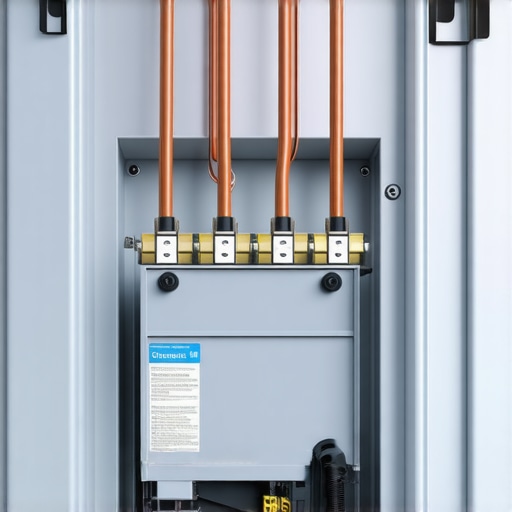
Why Your Inspector Might Miss This Critical Heat Trap
Even if you pass your final walkthrough, you aren’t necessarily out of the woods. An inspector checks if the system is ‘to code’ at that moment, but they don’t stick around to see why your main electrical panel feels hot when the car is plugged in after four hours of charging. Heat fatigue is a slow killer. One specific ‘oops’ factor I see constantly is the neutral wire trap that spikes your home utility bill. In a dedicated 240V circuit, the neutral often gets neglected, but if your home has imbalanced loads, a poorly handled neutral can lead to stray voltage that degrades your charger’s motherboard over time. If you start seeing weird error lights, don’t just swap the unit; check the connections. Refer to these ev charger troubleshooting expert tips for common issues before you call for a warranty replacement.
Can a Smart Charger Actually Outsmart Your Local Utility?
A study by the Electric Power Research Institute (EPRI) indicates that nearly 20% of residential charging ‘failures’ are actually software handshaking errors between the car, the charger, and the local grid. This is particularly common in ‘smart’ setups designed to save you money. If your station stops mid-session, it might just be losing its mind—or its signal. Knowing how to stop your smart charger from losing wi-fi every night is often more important than the electrical hardware itself. Have you ever fallen into this trap? Let me know in the comments. We need to shift our focus toward verifying code compliance for your ev charger installation through the lens of long-term durability, not just passing a one-time check. Always remember that the forgotten torque test that prevents panel fires is your final line of defense.After six months of using a load-managed system, I realized that maintenance isn’t just about cleaning the dust off the box. I bought a cheap infrared thermometer—one of those handheld laser ones—and I make it a habit to point it at my main breaker while the car is pulling its full 40 amps. If you see temperatures climbing toward the 140°F (60°C) mark, you have a problem. Even if you’ve already handled 0a href=”https://brightsparkzelectric.com/upgrading-your-panel-for-better-ev-charging-performance”0upgrading your panel for better ev charging performance0/a0, thermal expansion can loosen those lugs over time. I call it the ‘six-month snug’; I go back in with my torque wrench and verify everything is still seated to spec. It’s one of those 0a href=”https://brightsparkzelectric.com/ev-charger-troubleshooting-expert-tips-for-common-issues”0ev charger troubleshooting expert tips for common issues0/a0 that professionals rarely mention but enthusiasts live by.
How do I maintain my EV charging setup for the long haul?
The secret to longevity is checking your ports and software. Every few months, I take a can of compressed air and some electronic contact cleaner to the handle. You’d be surprised how much grit from the driveway ends up inside that J1772 or NACS connector. Learning 0a href=”https://brightsparkzelectric.com/how-to-clean-your-charger-ports-without-damaging-them”0how to clean your charger ports without damaging them0/a0 prevents high-resistance connections that can melt your expensive charging handle. On the software side, I check for firmware updates monthly. Manufacturers like Wallbox and Tesla frequently push updates that improve the ‘handshake’ logic between the car and the grid. If you are 0a href=”https://brightsparkzelectric.com/troubleshooting-ev-charger-connectivity-problems”0troubleshooting ev charger connectivity problems0/a0, nine times out of ten, a simple firmware refresh solves the ‘session interrupted’ errors that plague smart chargers.#IMAGE_PLACE_HOLDER_D#
Scale Your Power Without Scaling Your Bill
As we look toward 2025, the game is changing. We aren’t just talking about charging anymore; we are talking about bidirectional power. The 0a href=”https://brightsparkzelectric.com/code-compliance-essentials-for-ev-charger-installations-in-2025″0code compliance essentials for ev charger installations in 20250/a0 are starting to include provisions for Vehicle-to-Home (V2H) systems. If you’ve already invested in a load management module, you’re ahead of the curve. These systems are the foundation for using your car as a giant Powerwall. You can learn 0a href=”https://brightsparkzelectric.com/how-to-use-your-ev-as-a-backup-home-battery-safely”0how to use your ev as a backup home battery safely0/a0 by leveraging the same CT clamps you installed to protect your 100-amp service. According to technical documentation from Eaton’s Energy Management Circuit Breaker (EMCB) series, active monitoring is the only way to safely integrate distributed energy resources without blowing the utility fuse. I highly recommend you do a ‘stress test’ this weekend. Turn on your heavy hitters—the dryer, the oven, and the AC—then plug in your car. Monitor your management app. If the car scales back exactly as promised, you’ve achieved the gold standard of DIY electrical engineering. If it doesn’t, you need to revisit 0a href=”https://brightsparkzelectric.com/how-to-verify-code-compliance-for-your-ev-charger-installation”0how to verify code compliance for your ev charger installation0/a0 and check your signal wiring. Don’t wait for a trip to find out your safety logic is flawed.
Real-World Lessons from My 100-Amp Journey
Reflecting on my experience, the most vital thing I learned wasn’t about the amperage itself, but about trust. You have to trust the math over the gut feeling of an old-school installer who might just want to sell you a bigger service box. I realized that knowledge is the ultimate load balancer. When you know exactly how many amps your HVAC and dryer pull, you stop fearing the main breaker. I also discovered that ev charger troubleshooting expert tips for common issues often come down to physical connections rather than software glitches. My biggest lightbulb moment? Realizing that thermal expansion is a physical reality—metal moves when it gets hot, and that is why the forgotten torque test that prevents panel fires is something I now perform as part of my semi-annual home maintenance.
The Essential Kit for Every EV Homeowner
I don’t just rely on the smart app on my phone to tell me my garage is safe. If you’re serious about this, you need a few physical tools that provide genuine peace of mind. First, get a non-contact infrared thermometer. It is the fastest way to spot 3 small mistakes that turn your garage panel into a fire hazard before they lead to a service call. #IMAGE_PLACEHOLDER_E# Second, I swear by a 1/4-inch drive torque wrench; it is the only way to ensure your lugs are tightened to the manufacturer’s exact specifications. Finally, keep a digital folder with your permit and inspection docs. It’s essential for verifying code compliance for your ev charger installation when you eventually go to sell your home or file an insurance claim. Don’t forget to look into how to claim the federal credit for your home installation to recoup some of your hardware costs.
Flip the Switch with Confidence
Transitioning to an EV feels like a massive hurdle when you’re looking at an aging electrical system, but it’s actually a brilliant opportunity to modernize how your whole house breathes power. By choosing a managed load solution over a brute-force panel upgrade, you aren’t just saving thousands of dollars—you’re becoming a more informed homeowner. You are now equipped with the strategies for upgrading your panel for better ev charging performance without the traditional sticker shock. If you ever feel stuck or just want a professional second set of eyes on your demand calculations, reach out to a specialist via our contact page. Your garage is no longer a relic of the 20th century; it’s a sophisticated high-tech fuel station. Have you run your own load calculation yet, or are you still staring at those breakers in confusion? Let me know in the comments below!