I stood in my garage at 11:45 PM, the air so thick with humidity I felt like I was breathing through a damp towel. My car was sitting at 12%, and I had a 200-mile drive ahead of me the next morning. Every time I plugged in, the charger would hum for three seconds before a sharp clack echoed through the house. The breaker had tripped. Again. It’s a special kind of helpless feeling, isn’t it? You’ve got this high-tech machine in your driveway, but it’s being defeated by some extra water vapor in the air. I used to think my house was haunted, or worse, that I’d wasted thousands on a faulty installation. It turns out, I was just making a classic mistake: I didn’t realize how much troubleshooting common issues involves the environment itself, not just the wires. We are going to fix that today so you can sleep soundly, even when it’s muggy out. Have you ever found yourself resetting a breaker in your pajamas while swatting mosquitoes? It is incredibly frustrating, but there is a path out of this humid mess. [image]
Why Your Breaker Hates the Muggy Weather
When the dew point climbs, everything changes. Those tiny gaps inside your charger or your outdoor outlet become bridges for micro-currents. Most people don’t know that outdoor chargers require a specific kind of GFCI protection because standard ones are incredibly sensitive to ‘leakage’ caused by moisture. I once spent an entire weekend replacing a perfectly good charging cable, only to find out the real culprit was a microscopic layer of condensation on the terminal block. It was an embarrassing, expensive lesson. Moisture is conductive, and your breaker is designed to be paranoid. When those two things meet, you get nuisance trips. The key is understanding that your charger isn’t necessarily broken; it’s just reacting to a physical change in the atmosphere. Before you start ripping wires out of the wall, we need to address how that moisture is getting in and why your code compliance might actually be making the system too sensitive for local weather conditions.
Does This Mean My Electrical Panel Is a Fire Hazard?
This is the big fear, right? We see a trip and we think ‘fire.’ While a trip is actually the safety system doing its job, constant nuisance tripping can point to deeper issues like inadequate panel performance. According to the Electrical Safety Foundation International (ESFI), moisture-induced leakage current is one of the most common reasons for GFCI ‘phantom trips’ that aren’t actually dangerous but are immensely annoying. It’s less about your house burning down and more about a system that’s just a bit too sensitive for its own good. If your equipment is older, you might be seeing signs of a charging bottleneck where the heat from the current and the humidity from the air combine to create a perfect storm of resistance. Before you assume you need a total panel upgrade for your charger, we need to look at how moisture is sneaking into the party. Let’s dive into the practical steps to seal your system and keep the power flowing.
Seal Every Entry Point Before the Next Storm Hits
Moisture is a persistent intruder; it finds the smallest gaps in your conduit and moves in without an invitation. If your installer used standard PVC without industrial-grade sealant at every joint, you have essentially created a straw for humidity to travel straight into your charger’s sensitive internal circuitry. To stop this, you should immediately look into how to use a liquid-tight conduit for outdoor charger exposed runs. This isn’t just about keeping the rain off the wires; it is about stopping the “chimney effect.” This phenomenon occurs when warm, moist air is pulled from the ground or the exterior into the cooler enclosure of the charger, where it condenses directly onto the motherboard. I once saw a high-end charger motherboard completely fried because a single unsealed hole in the bottom of the unit allowed a year’s worth of morning dew to collect inside like a tiny, electrified pond.
Tighten Your Terminals to Kill the Heat
Think of a loose electrical connection like a narrow, potholed bridge with too many heavy trucks trying to cross at once. It creates friction, which inevitably leads to heat. When that heat meets the heavy, humid air inside your service panel, you get rapid oxidation—the silent killer of electrical efficiency. I remember a service call for a homeowner in a coastal area whose charger tripped every time the humidity hit 80%. When I opened the panel, the main lugs were so loose I could move them with my thumb. The humidity had accelerated the corrosion on those loose points until the electrical resistance was so high the breaker tripped as a fail-safe. This is why you must perform the forgotten torque test that prevents panel fires. Using a calibrated torque wrench ensures the metal-to-metal contact is tight enough to exclude oxygen and moisture, effectively sealing the connection from the atmosphere.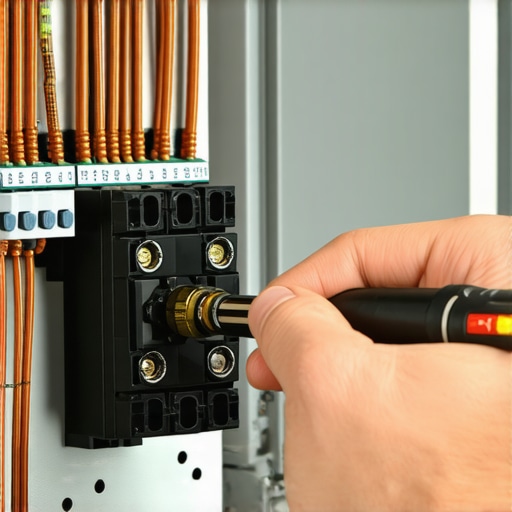
The Difference Between a Standard and Weather-Ready GFCI
Not all breakers are created equal, even if they look identical on the shelf. If you are using a generic GFCI breaker from a big-box store in a high-humidity environment, you are practically inviting “phantom trips.” These units are designed for dry indoor bathrooms, not the sustained, 40-amp continuous load of an EV charging in a muggy garage or driveway. You need to ensure why your outdoor charger needs a specific type of GFCI is part of your troubleshooting checklist. Specialized weather-resistant or high-immunity GFCIs have much higher tolerances for the microscopic amounts of “leakage” current that moisture naturally creates on wires, meaning your car actually finishes its charge by 6 AM instead of stopping at midnight.
Identify If Your Panel is Reaching Its Breaking Point
If you have sealed the conduit and torqued the lugs but the trips persist, your electrical heart might be overstressed. Continuous high-amperage loads generate significant heat that panels in humid climates struggle to dissipate. It is critical to know how to tell if your panel is actually a fire hazard versus just being slightly undersized for the job. You might be seeing 5 signs your old electrical panel is a charging bottleneck, where the cumulative effect of ambient humidity and internal electrical resistance makes the breaker trip as a desperate cry for help. Don’t just keep flipping the switch back to ‘on’; you need to look for the underlying cause of the heat before the breaker stops working entirely.Most people assume that if a breaker trips during a humid night, the electrical panel simply can’t handle the load. They think the solution is a $3,000 service upgrade. But here is the contrarian truth: I’ve seen 200-amp panels fail where a 100-amp panel succeeded, simply because of how the heat was managed. In my experience, a trip is rarely about the total ‘math’ of your home’s power; it is almost always about the thermal reality of a continuous load. Most residential circuits are designed for intermittent use—your toaster runs for two minutes, your vacuum for ten. An EV charger is a marathon runner, pulling heavy current for eight hours straight. This creates a cumulative heat effect that most standard hardware isn’t prepared for, especially when moisture adds resistance to the mix. If you are constantly resetting that switch, you might be falling into troubleshooting EV chargers common compliance pitfalls and fixes that have nothing to do with your total amperage.
Why Does My 200-Amp Panel Still Struggle with a 40-Amp Charger?
It’s the question that drives homeowners crazy. You have the capacity on paper, yet the breaker is hot to the touch. This happens because of a phenomenon known as ‘thermal creep.’ According to the National Electrical Code (NEC) Section 625.42, EV charging is classified as a continuous load, meaning the branch circuit and overcurrent protection must be sized at 125% of the load. If your electrician skipped the math and put a 40-amp breaker on a 40-amp load, that breaker is going to trip every single time the ambient temperature or humidity rises. It’s not a malfunction; it’s the physics of resistance. I often find that people are using the specific breaker brands that hate constant EV loads, which are prone to internal fatigue much faster than industrial-grade alternatives. 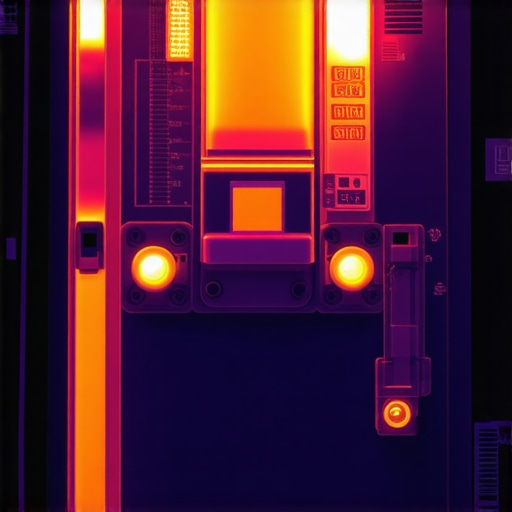
Watch Out for the Neutral Wire Trap
Here is the ‘oops’ factor that trips up even seasoned DIYers: the neutral wire. Many Level 2 chargers are 240V and don’t actually require a neutral, but many homeowners pull one anyway ‘just in case’ or miswire it in a way that creates a parallel path for current. This is the neutral wire trap that spikes your home utility bill and causes ghost voltages that can fry your charger’s motherboard. If you’ve noticed your charging speed drops suddenly or the unit feels abnormally hot, you need to check if your thinner wire is costing you miles every night due to voltage drop. Heat and moisture are the enemies of efficiency. If your wire gauge is even slightly off, the resistance increases, the heat spikes, and the breaker does exactly what it was born to do: it dies to save your house. Have you ever noticed your breaker feeling hot after a few hours of charging? Let me know in the comments, because that’s the first sign of a much larger problem. Before you commit to a full upgrading your panel for better EV charging performance, make sure you aren’t just fighting a battle against poor thermal physics. If you’re unsure where to start, you can always contact us for a professional evaluation of your local setup.I used to think that once the inspection sticker was slapped onto the panel, my job was done forever. But electrical systems aren’t statues; they are living, breathing loops of energy that expand and contract. If you want to avoid that midnight clack of a tripping breaker three years from now, you need to treat your charging setup like a high-performance engine. I’ve started carrying a pocket-sized thermal camera—specifically the FLIR ONE—whenever I check my garage. It’s the only way to see ‘invisible’ heat before it becomes a smell. When I point it at my breaker while the car is pulling 48 amps, I’m looking for a nice, even glow. If I see a bright white ‘hot spot’ on one specific lug, I know I’m days away from a failure. This isn’t just me being paranoid; it’s about how you verify code compliance for your EV charger installation long after the city inspector has left. Metal fatigues, and screws back out over time due to thermal cycling. 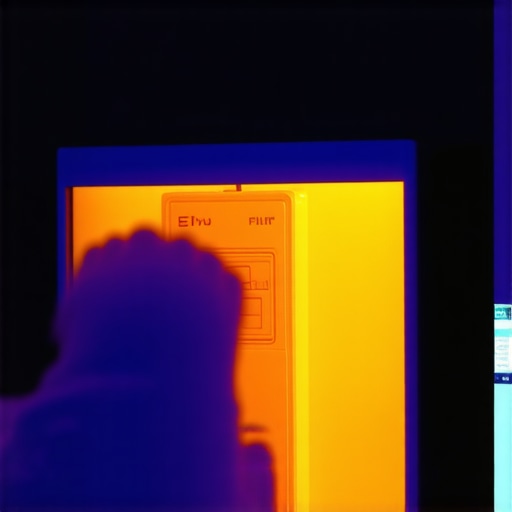
The One Tool That Sees What Your Eyes Miss
If you don’t want to drop a few hundred on a thermal camera, at least invest in a high-quality torque screwdriver. I cannot stress this enough. Most DIYers and even some ‘rushed’ pros just tighten things until they feel ‘snug.’ But as we’ve discussed, why your charger needs a specific torque setting to pass inspection isn’t just a bureaucratic hurdle; it is a physical requirement. According to technical documentation from Schneider Electric, even a 10% deviation from the manufacturer’s specified torque can lead to a 30% increase in connection temperature under continuous load. Once a year, I shut off the main power and give every connection in the EV circuit a quick check. This is the best way to detect a loose neutral wire before your electronics fry or a terminal melts into a puddle of plastic.
How Can I Keep My Charging System Safe Over the Long Haul?
The secret to longevity is keeping the heat down and the firmware up. Most modern chargers are essentially computers that happen to move a lot of current. I make it a habit to check for software updates every few months because manufacturers often release patches that optimize the ‘ramp-up’ speed of the current, which reduces the initial thermal shock to your breakers. Also, don’t overlook the physical health of your panel’s exterior. I’ve seen people spend $50,000 on an EV only to let spiders and dust clog the ventilation of their charging unit. You should also consider why your main service panel needs a surge protector for your EV specifically to protect the car’s sensitive onboard charger from utility-side spikes. This is a small investment that prevents a $3,000 repair bill down the road.
Why Load Management Is the Secret to a Two-Car Garage
Looking forward, the trend is moving away from ‘bigger’ panels and toward ‘smarter’ panels. We are entering the era of bidirectional charging and V2H (Vehicle-to-Home), where your car might actually power your house during a blackout. If you’re planning to add a second EV, don’t automatically assume you need a 400-amp service. Instead, look into how to load balance your fleet without tripping the main feed. Smart chargers can now talk to each other, splitting the available 60 amps between two cars dynamically. This is the future of home energy—software-defined electricity that keeps you compliant without the need for massive infrastructure overhauls. My challenge to you? Go to your panel right now, safely touch the plastic cover over your EV breaker while it’s charging, and feel the temperature. If it’s more than ‘warm,’ you need to contact us for a professional thermal audit before that heat turns into a headache.
The Hard Lessons My Humid Garage Taught Me
After years of dealing with midnight trips and morning range anxiety, I’ve realized that consistency is far more important than raw capacity. Here are the lightbulb moments that changed how I approach my home setup: First, never underestimate the power of thermal expansion and contraction. Metals move, and those tight screws you set in the dry heat of July might be dangerously loose by a damp January. Second, moisture doesn’t just cause shorts; it creates subtle resistance that generates heat long before a fuse blows. Finally, always treat your charger as a high-performance appliance rather than a standard outlet. When you realize that upgrading your panel for better EV charging performance is as much about thermal management as it is about total amperage, everything starts to click into place.
The Tools That Saved My Sanity and My Charger
I no longer leave my charging reliability to chance or guesswork. If you’re serious about maintaining your own system, you absolutely need a calibrated torque screwdriver—knowing why your charger needs a specific torque setting to pass inspection is the difference between a safe garage and a fire hazard. I also highly recommend keeping a basic thermal camera attachment in your toolkit; it is the only way to see if a breaker is struggling before it fails. For outdoor setups, industrial-grade duct seal is a non-negotiable requirement to block the chimney effect of humid air. Lastly, if you are struggling with software glitches alongside these electrical hurdles, check out our guide on troubleshooting EV charger connectivity problems to ensure your smart features aren’t the hidden bottleneck. [image]
Take Control of Your Home’s Power Today
Electrical work can feel intimidating, but your home is a system you can master with the right perspective. By sealing those conduits, tightening those lugs, and understanding the specific needs of your local climate, you are doing more than just charging a car—you are protecting your home. Don’t let a little humidity stand between you and a full battery every morning. If you ever feel like the heat is getting out of hand or the technical details are overwhelming, you can always contact us for a professional review of your installation. You’ve got this. Have you ever walked out to your garage only to find a ‘charging error’ light blinking on a rainy morning? Tell me what fixed it for you in the comments below!