I stood there with my chest puffed out, pointing at the sleek new charging station I’d just bolted to the garage wall. My neighbor was watching from his lawn, and I felt like I’d finally joined the future. Then the city inspector arrived. He didn’t even pull out a screwdriver. He just looked at my main panel and asked for my load calculation worksheet. I gave him a blank stare. That was the moment I learned that nearly half of residential EV installs hit a dead end because of one specific permit oversight: failing to prove the home can actually handle the juice. It’s a gut-punch that keeps 40% of projects in permit purgatory.
The Day the Inspector Rained on My Parade
It is a visceral feeling of failure when you spend the money and run the conduit, only to be told you can’t flip the switch. I made a classic rookie mistake. I assumed that because I had two empty slots in my breaker box, I was good to go. I didn’t account for the continuous load rules that the National Electrical Code is so obsessed with. If you don’t ensuring code compliance from the jump, you’re just begging for a Red Tag. According to research from the National Renewable Energy Laboratory (NREL), the existing electrical capacity in older homes is the primary barrier to widespread residential charging adoption.
Does My Old Panel Actually Need a Full Overhaul?
You might be sitting there thinking your 1970s or 80s panel is a tank that can handle anything. I thought the same until I saw the smoke—metaphorically speaking. The truth is, most inspectors won’t even look at your beautiful wiring if you haven’t performed a formal load calculation. This is the exact how to fix the grounding fail that ruins so many dreams, but the paperwork is usually where the battle is won or lost. We are going to dive into the specific panel upgrade strategies to meet EV charging code requirements in 2025 so you can actually get your permit signed off on the first try. Have you ever had a city official tell you your house wasn’t ‘strong’ enough for your new car?To get that permit signed, you have to stop thinking about your panel as a collection of switches and start seeing it as a finite energy budget. Think of your home’s electrical capacity like a water bucket. Your main service line—usually 100 or 200 amps—is the pipe filling it. Every appliance is a hole in the bottom. If you open a massive 50-amp hole for an EV charger while the AC and dryer are already draining the bucket, you’re going to run dry. This is exactly why upgrading your panel for better ev charging performance isn’t just about adding a breaker; it’s about ensuring the ‘pipe’ is big enough for the demand.
Treat Your Electrical Panel Like a Water Bucket
Most homeowners assume that if there is physical space in the box, there is power available. I made this mistake in my first house, a 1950s ranch with a 100-amp service. I slapped in a dual-pole breaker, and the first time I charged at night while the dishwasher was running, the main breaker didn’t just trip; it felt hot to the touch. That heat is the sound of your house screaming for help. 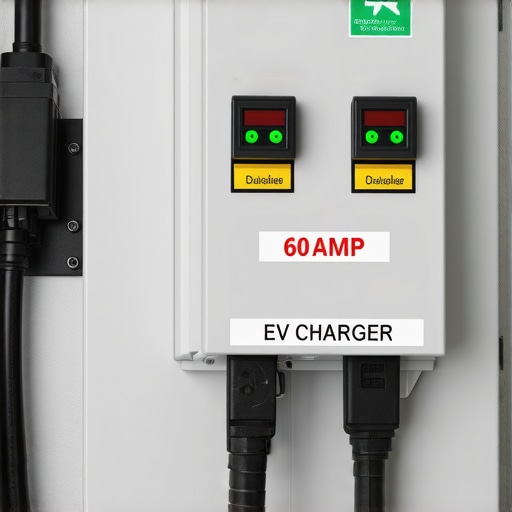
Run the Math Before You Run the Wire
You need to perform a formal demand calculation based on NEC Article 220. You take the first 10,000 volt-amps of your general load at 100%, then take 40% of the remainder. Then, you add your heavy hitters: the dryer, the electric range, and the HVAC system. Finally, you add the EV charger as a non-coincident load if applicable. If that total number exceeds your main breaker’s rating, you’re stuck. You might need to look into panel upgrades for ev chargers what you need to know before buying the car to avoid a massive permit rejection.
Respect the 80 Percent Rule for Continuous Loads
The National Electrical Code classifies EV charging as a ‘continuous load’ because it draws maximum current for hours on end. This means you can’t use 100% of the breaker’s rating. This is why your electrician recommends a 60 amp circuit for a 48 amp charger. If you try to pull 50 amps through a 50-amp breaker for six hours, the heat buildup will cause nuisance tripping or, worse, melt the busbar. I’ve seen DIYers try to save $20 on wire gauge, only to find their the specific conduit size needed for a 50 amp circuit won’t even accommodate the thicker wire required for the 125% safety margin.
Choose Between a Smart Switch and a Full Service Upgrade
If your math doesn’t add up, don’t panic. You don’t always need to spend $4,000 on a utility service upgrade. I recently helped a friend who only had 60 amps available in his total service. Instead of a new panel, we installed a Load Management Device (LMD). It’s basically a traffic cop for your electricity. When the electric oven turns on, the LMD tells the charger to pause or throttle down. This is the ultimate way to stop your breaker from tripping every time the dryer and ev run without ripping your meter off the wall. If you go this route, ensure you’re using hardware that is UL-listed for load shedding, as some inspectors are still wary of this tech.
The conversation usually stops at “will it fit,” but we need to talk about the silent failure point: the plug vs. hardwire debate. Most people think a NEMA 14-50 outlet is more convenient because you can swap chargers later. In my experience, that convenience is a liability. High-load, long-duration cycles create thermal expansion in the outlet’s contacts. If you aren’t careful, you’ll see why the real reason your home value increases with a pro ev setup usually involves a clean, hardwired install. Hardwiring eliminates the extra point of failure and allows for a 60-amp circuit that delivers a true 48-amp charge.
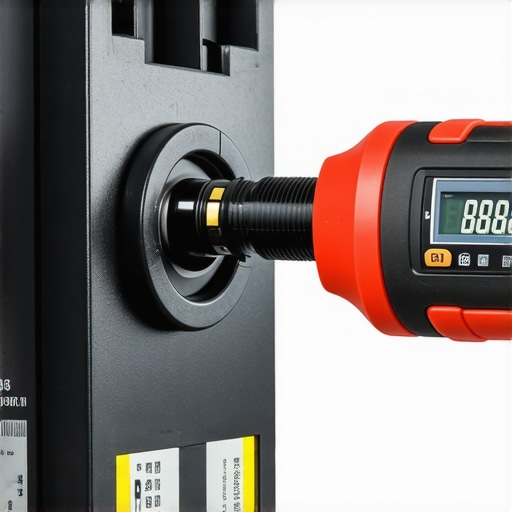
Does Your Electrician Actually Use a Torque Screwdriver?
This is the ultimate “pro” litmus test. According to the Electrical Safety Foundation International (ESFI), over-tightened or under-tightened connections are a leading cause of electrical fires in high-amperage residential circuits. If your installer “hand-tightened” the breaker lugs, they’ve already failed the forgotten torque test that prevents panel fires. EV charging creates a “thermal soak” effect—the heat builds up and stays there for hours. This causes metals to expand and contract, eventually loosening screws that weren’t set to the exact inch-pound specification.
Spotting the Hidden Damage Before It Smells
I’ve opened panels where the plastic on the breaker was slightly discolored, a subtle sign of “cooking” long before the breaker actually trips. You need to know how to tell if your panel is actually a fire hazard because an EV charger will find the weakest link in your system within a week. If you’re dealing with weird behavior, like the car stopping at 2 AM, don’t just blame the software. You might be seeing ev charger troubleshooting expert tips for common issues often point back to “voltage drop” from poor lug contact. Check your app for “Under Voltage” errors; it’s usually a physical connection problem, not a cloud issue.
Why a Cheap Charger is a Multi-Thousand Dollar Gamble
There’s a temptation to buy a $200 unit from a random online marketplace. Don’t. I’ve seen these units fail to communicate correctly with the car’s onboard computer, leading to why some new cars refuse to charge on older level 2 units. Worse, they often lack proper internal thermal monitoring. If the handle gets hot, a quality unit throttles down; a cheap one just melts. Before you commit, make sure you know how to verify code compliance for your ev charger installation. Have you ever fallen into this trap where a ‘simple’ setup turned into a troubleshooting nightmare? Let me know in the comments.
Once that green light on your charger stays solid, it is easy to think you are in the clear forever. But I have learned the hard way that an EV circuit is more like a high-performance engine than a standard light switch; it needs a tune-up every once in a while. I personally make it a habit to pop my panel cover once a year—safely and with the main breaker off—to check for signs of thermal stress. I have seen enough charred insulation to know that why your main lugs might be loose after a year of charging is usually down to the constant expansion and contraction of metals under heavy, sustained load. If you are not using the specific torque wrench settings for a wall connector, you are essentially leaving your home’s safety to luck.
Don’t Let Loose Lugs Melt Your Investment
The pros do not just crank it down until it feels tight. We use calibrated tools because even a fraction of a turn can be the difference between a cool connection and a localized heater. The National Electrical Manufacturers Association (NEMA) emphasizes in their PB 2.1 standards that proper torque is the single most critical factor in preventing terminal failure in high-amperage equipment. If you suspect things are getting too hot, grab an infrared thermometer. It is the fastest way to spot a problem before it smells like ozone. 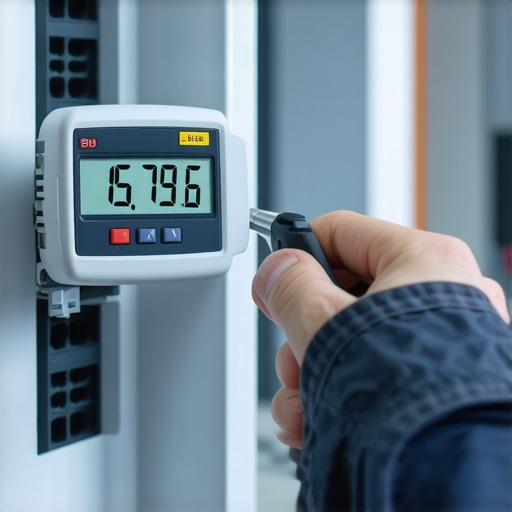
How do I keep my charging setup safe for the next decade?
Long-term reliability comes down to clean power and clean data. Beyond the physical wires, you have to keep the software from becoming a bottleneck. I have had neighbors call me in a panic because their car stopped charging at 3 AM, and nine times out of ten, it was a simple firmware hang-up. Learning how to fix an ev charger that wont connect to your home wi-fi is often more important than the actual electrical work once the unit is already on the wall. If you are seeing weird drops in speed, check the digital handshake between the car and the station before you start ripping out wire.
Why Your Smart Charger Is Acting Dumber Than a Brick
Most modern units rely on a cloud heartbeat to function. When that server goes down or your signal drops, the charger often defaults to a safe lower amperage or refuses to initiate the session entirely. This is a common part of ev charger troubleshooting expert tips for common issues that many people overlook. In the next few years, I predict we will move toward local-only communication protocols like Matter, removing the dependency on flaky manufacturer servers. We are already seeing the industry shift toward Vehicle-to-Grid (V2G) tech, which will eventually turn your car into a backup battery for your whole house. To stay ahead of that curve, make sure you know how to verify code compliance for your ev charger installation today, so your system is ready for the bidirectional upgrades coming down the pike. My big pro-tip? Next time you charge, feel the charging handle after 30 minutes. If it is more than just slightly warm, check your pins for debris or oxidation immediately.
What I Learned After Three Red Tags and a Scorched Busbar
Getting your system signed off isn’t just about following a manual; it is about respect for the physics of high-voltage electricity. My biggest lightbulb moment came when I realized that a panel is not a static object. Over time, those high-load connections can loosen due to thermal cycling. If you are not sure about your current setup, learning how to tell if your panel is actually a fire hazard is the most important skill you can have before plugging in a vehicle for eight hours straight. Also, never assume your panel’s labeling is accurate; previous homeowners often leave behind a mess of circuits that can throw off your load calculations. Finally, remember that the forgotten torque test that prevents panel fires is not just a suggestion; it is the difference between a reliable charger and a costly service call.
The Gear That Keeps My Garage Safe and Charging
I do not step into a garage without a few specific tools that have saved my project more than once. First, a calibrated digital torque wrench is non-negotiable for meeting the specific torque wrench settings for a wall connector. I also highly recommend keeping an inexpensive infrared thermometer handy; aim it at your main lugs while the car is charging to catch hot spots before they trip a breaker. For those who want to go deeper into the rules, the NFPA 70 handbook is the ultimate source of truth. I trust these resources because they remove the guesswork from an environment where guessing leads to failure. If you are still in the planning phase, always check how to verify code compliance for your ev charger installation using the latest 2025 standards to ensure your investment stays protected.
Your Future Garage Starts With a Solid Foundation
The transition to electric driving is an exciting shift, but it should not be a stressful one. By taking the time to audit your home’s capacity and respecting the thermal demands of a Level 2 charger, you are setting yourself up for thousands of miles of worry-free driving. There is a massive sense of pride that comes with ensuring code compliance on your own terms. You have done the hard work of researching, calculating, and preparing—now it is time to enjoy the convenience of a full battery every single morning. Have you ever had a city official flag your electrical work for something you thought was minor? Let me know in the comments below!