I stood in my dim garage, staring at a breaker panel that looked like it belonged in a museum of mid-century mishaps. I had just dropped a significant chunk of change on a beautiful new electric car, and I figured a few hundred bucks more would get my charger humming. Boy, was I wrong. My first mistake was thinking my 1978 condo was “EV ready” just because it had a spare outlet in the corner. That assumption led to a cascade of failed city inspections, angry emails from the HOA board, and a realization that the sticker price of the car was only the beginning of the financial investment. [image_placeholder]
Why Your 1970s Panel is Planning a Mutiny
If you live in a building that remembers the Reagan administration, your electrical system probably wasn’t designed for the massive, sustained draw of a Level 2 charger. Most older units were built for a fridge, a TV, and maybe a single avocado-colored toaster. When I tried to force a 48-amp charger onto my existing system, the lights flickered like a scene from a horror movie. I quickly learned the hard way about the hidden cost of skipping a panel load calculation. I thought I could just eyeball the capacity, but the reality is that older infrastructure often lacks the “headroom” for modern high-performance tech. The problem is often buried in the walls or tucked away in shared utility closets. In many older buildings, shared garage wiring is a nightmare for condo EV owners because the utility meters aren’t even near the parking stalls. I spent three weeks just trying to figure out how to route conduit through three firewalls without violating building codes. It’s not just about the wire; it’s about choosing the best conduit materials for high-heat garage environments that won’t warp or degrade when the sun hits the parking deck. According to the National Fire Protection Association (NFPA 70), over 50% of residential electrical fires involve distribution or lighting equipment, which is exactly why inspectors are so incredibly picky about EV circuits in multi-family dwellings.
Is this project actually worth the headache?
You might be sitting there thinking, “Maybe I’ll just stick to the local Supercharger.” I get it. The initial hurdle feels like climbing Everest in flip-flops. But here’s the truth: once you get past the bureaucracy and the wiring upgrades, the convenience of waking up to a full battery is life-changing. Today, I’m going to show you how to navigate these murky waters without going broke. We will look at how to add an ev charger without a 200-amp panel upgrade and, more importantly, how to avoid the expensive permit errors I made during my first attempt. Early on, I hired a local “handyman” who swore he knew what he was doing. He didn’t. He didn’t even realize why a new charger might require a neutral wire when my old dryer outlet didn’t. He nearly fried my main bus bar because he didn’t account for the heat a 50-amp circuit generates over eight hours. It cost me double to fix his mess. That’s why I always tell my neighbors you need to find an electrician who actually understands EV codes before you even buy the charging unit. Have you ever had a contractor give you a quote for an EV install only to see their eyes go wide when they see your condo’s ancient electrical room? Tell me about your “hidden cost” horror stories in the comments!
Start with the Cold Hard Math
Before you even unbox that shiny new charger, you have to treat your electrical panel like a finite bank account. You cannot spend more amps than you have in the vault. Most people assume if they have a 100-amp or 125-amp panel, they can just slap a 50-amp breaker in there and call it a day. That is the fastest way to a dark house. You absolutely must perform a load calculation to see what’s actually left over after your HVAC, water heater, and oven take their cut. In fact, why your ev permit application requires a load calculation worksheet isn’t just about red tape; it is about ensuring your main breaker doesn’t trip every time you try to charge your car while drying a load of towels. Think of your electrical capacity like a milkshake: if too many straws are pulling at once, the system collapses. I learned this the hard way when I realized why a 100-amp service isnt always enough for two evs—or even one hungry EV and an electric range.
Avoid the Full Service Upgrade with Smart Hardware
If your math comes back red, don’t panic. You don’t necessarily need to spend $5,000 to rip out your entire service entrance. You can look into how to use load shedding devices to avoid a full service upgrade. These clever gadgets sit in your panel and temporarily pause your car’s charging if they detect your home’s total usage is getting too close to the limit. It’s like having a traffic cop in your breaker box. This is often the bridge between ‘not possible’ and ‘done today’ for older homes. 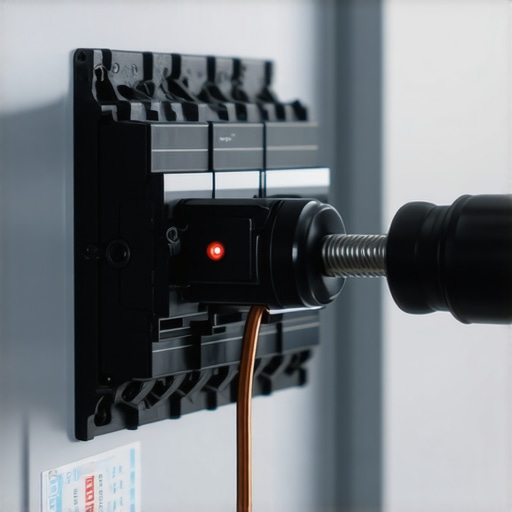
Stop the Melt Before It Starts
Heat is the silent killer of EV installations. Unlike a vacuum or a blender, a car charger pulls maximum power for six to twelve hours straight. This ‘continuous load’ creates a heat soak that can turn cheap components into charcoal. I remember visiting my neighbor Dave’s garage after he did a DIY install. He used a bargain-bin receptacle, and by the end of the month, the plastic was warped and smelled like a chemical fire. I had to show him how to pick a nema 14-50 outlet that wont melt under pressure. You need industrial-grade parts for this, not the $10 residential version meant for a range that only runs for 30 minutes at a time.
Why Your Torque Wrench is Your New Best Friend
If you think ‘hand tight’ is good enough for electrical work, you’re in for an expensive surprise. When a wire isn’t torqued to the specific inch-pounds required by the manufacturer, tiny air gaps allow for arcing. Over time, that arcing creates heat, and heat creates resistance, which creates more heat. It’s a vicious cycle that ends in a fried motherboard. This is exactly why your charger needs a specific torque setting to pass inspection. Inspectors in 2025 are looking for those torque marks on the lugs because it’s the number one cause of failure in high-amperage residential circuits. You also need to verify the exact wire gauge you need for a 50-amp ev circuit to prevent voltage drop, which is basically energy lost as heat along the length of the wire.
Pass the Inspection on the First Try
Getting a permit isn’t just about following the law; it’s about protecting your home insurance. If your garage catches fire and you don’t have a signed-off permit, good luck getting that claim paid. Focus on ensuring code compliance when installing ev chargers by checking the height of the unit and the clearance around it. I once saw an install fail because the charger was mounted too low to the ground, creating a trip hazard and violating the National Electrical Code. Taking the time for upgrading your panel for better ev charging performance now means you won’t be paying an electrician to come back and fix ‘minor’ mistakes that an inspector flagged as life-safety issues.
While many electricians will tell you that a $5,000 service upgrade is the only way to charge safely, I’m here to challenge that. In my experience, the 200-amp upgrade is often an expensive upsell that ignores the brilliance of modern load management. I’ve helped dozens of neighbors navigate how to add an ev charger without a 200-amp panel upgrade by utilizing smarter hardware solutions. The secret lies in how smart chargers use dynamic balancing to prevent blown fuses. These systems essentially throttle the car’s draw when the dryer or AC kicks on, allowing you to maximize your existing infrastructure without ripping out your service entrance. However, the real ‘trap’ isn’t the capacity of your panel; it’s the physical integrity of the connection points themselves.
Check Your Connections Six Months Later or Risk a Fire
Most homeowners assume that once the city inspector signs off, they are safe forever. This is a dangerous misconception. A phenomenon called thermal cycling means that the constant heating and cooling of your wires—common with high-amperage continuous loads—can actually loosen the screws in your panel over time. I’ve seen perfectly installed systems develop dangerous hot spots because the homeowner didn’t realize why your main lugs might be loose after a year of charging. This is precisely why your charger needs a specific torque setting to pass inspection, but torque isn’t a one-and-done event. According to data from the Electrical Safety Foundation International (ESFI), residential systems face their highest stress levels when high-amperage loads run for over three hours, which can cause hardware to expand and contract, eventually leading to arcing. #IMAGE_PLACE_HOLDER_C#
Why do my lights still flicker even with a code-compliant install?
This is a question I get constantly from people who followed every rule in the book. Often, it isn’t a capacity issue at all, but rather a sign of troubleshooting ev charger connectivity problems or harmonic distortion on the line. I’ve diagnosed cases where why your ev charger is causing your tv to flicker was actually due to high-frequency noise bleeding back into the home’s circuits from a poorly shielded charging motherboard. Furthermore, if you rely solely on ‘smart’ features without verifying your hardware, you might find why your smart charger is actually slower than a basic plug-in model. This happens when the unit detects heat-induced resistance and throttles the speed to prevent a meltdown. Before you assume your car or charger is defective, you must look at troubleshooting ev chargers common compliance pitfalls and fixes. The ‘oops’ factor is real: ignoring the physical layer of your electrical system while obsessing over the software is a recipe for frustration. Have you ever fallen into this trap of thinking a permit meant you never had to look at your panel again? Let me know in the comments.
Once you survive the permits and the initial anxiety of that first charge, you might be tempted to close the panel door and never look back. That’s a mistake that costs thousands in the long run. Professional maintenance isn’t just for commercial fleets; it is about protecting the most expensive appliance in your home. I’ve made it a habit to perform a ‘health check’ every six months, and honestly, the peace of mind is worth more than the half-hour it takes.
The Tool That Saved Me From a Melted Socket
If you really want to be proactive, stop guessing and start seeing. I personally use a compact thermal imaging camera that plugs right into my smartphone. By scanning the breaker while the car is pulling its full 48 amps, I can see exactly where the heat is concentrating. If the breaker or the wire lugs are glowing bright white on the screen, I know I have a high-resistance connection that needs immediate attention. According to technical documentation from Fluke Corporation, thermal imaging can identify thermal anomalies that are invisible to the naked eye but indicate loose connections or failing components. This is the ultimate way of how to verify code compliance for your ev charger installation long after the inspector has left. If you see heat, something is wrong. Period. 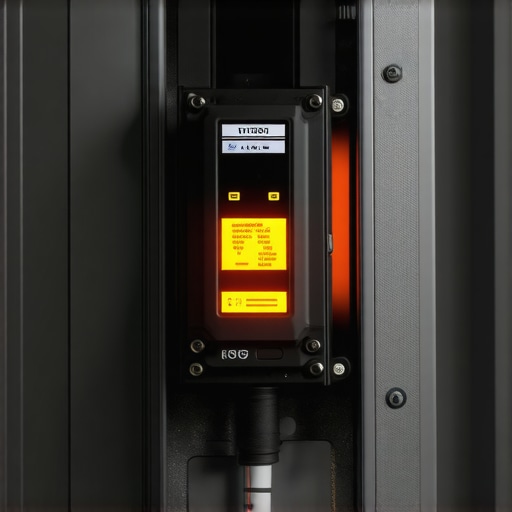
How do I keep my charger healthy for the next decade?
Maintenance is more than just looking for fire hazards; it’s about software and small parts too. People often forget that these are smart devices. You should regularly check how to update the firmware on your smart charging station to ensure you have the latest safety patches and power-balancing algorithms. I also keep a small kit of the essential spare parts to keep for your home charging unit, specifically spare holsters and cable organizers. If you let your cable drag on the concrete, the jacket will eventually fray, leading to internal shorts. Furthermore, I cannot stress enough the importance of protection from the outside in. In my neighborhood, we get nasty summer storms, which is why your ev charger needs a surge protector in the panel. One lightning strike nearby can fry the sensitive motherboard of a $700 charger in a millisecond.
Prepare for the Two-Car Future Without Ripping Out Your Walls
Looking ahead, the biggest trend I see is the ‘second car’ crisis. Most of my neighbors who bought one EV are now looking at a second, and their panels simply cannot handle two 50-amp circuits. Instead of another expensive service upgrade, look into dual-head units. You’ll need to know how to calculate the exact circuit load for a dual head charger so they can share a single breaker safely. We are moving toward a future of Vehicle-to-Home (V2H) technology, where your car will actually power your house during peak hours. This means your electrical infrastructure will be working 24/7, not just while you sleep. To prepare for this, I recommend you stop treating your charger like a ‘set it and forget it’ tool. Start by grabbing a screwdriver and a torque wrench this weekend and checking those main lugs. It’s the single most effective way to ensure you aren’t calling an emergency electrician at 2:00 AM. Go ahead—pop that panel cover and see what’s happening inside!
Lessons from a Near-Melted Main Breaker
After a year of living with an EV, I’ve realized that electrical maintenance isn’t a chore; it’s part of the car’s fuel system. One of the biggest shifts in my thinking was moving away from ‘set it and forget it’ to a mindset of active monitoring. I learned that even the best installation needs a check-up because copper expands and contracts under heavy loads. If I could go back, I would have prioritized panel upgrades for ev chargers what you need to know much earlier in the process rather than trying to squeeze every drop of power out of an aging system. It’s also vital to realize that your car’s software might tell you it’s charging, but it won’t tell you if the wall outlet is reaching 200 degrees. That’s why I now advocate for ev charger troubleshooting expert tips for common issues being part of every owner’s manual.
My Personal Survival Kit for DIY EV Owners
If you’re going to manage your own home charging station, you need more than just a standard toolbox. I swear by these three things: a high-quality torque screwdriver to prevent arcing, a non-contact voltage tester for safety, and a thermal imaging attachment for my phone. Seeing heat signatures before they become fires is the ultimate ‘pro’ move. I also recommend keeping a printed copy of the code compliance essentials for ev charger installations in 2025 in your garage. When an inspector or a future home buyer asks about your setup, having that documentation ready proves you didn’t cut corners. [image_placeholder]
The Peace of Mind That Comes with a Full Battery
Yes, the road to a safe EV install is paved with load calculations, permit fees, and occasionally, a little frustration. But the first time you wake up, walk into your garage, and see that green light without a single worry about the local grid or your home’s safety, it all becomes worth it. You are essentially building your own private gas station, and doing it right the first time ensures that station stays open for a decade. Don’t let the technical hurdles scare you away from the future of transportation.
Have you ever discovered a loose wire or a hot breaker in your panel during a routine check? I’d love to hear your stories below!