I still remember the acrid smell of ozone and melting plastic that greeted me at 6:00 AM on a Tuesday. I thought I was being the smartest guy on the block. I’d just brought home my shiny new EV, and after seeing the price of a professional install, I figured I’d “hack” the system. I saw that dusty old NEMA 10-30 dryer outlet in the corner of my garage and thought, 240 volts is 240 volts, right? I bought a cheap adapter online and went to bed feeling like a genius. I woke up to a dead car, a tripped main breaker, and a wall socket that looked like it had been through a small war. It was the kind of mistake that makes your stomach drop, and honestly, I’m lucky I didn’t lose the whole house. Today, I am going to walk you through why this specific shortcut is a recipe for disaster and how you can set up a safe, reliable charging station that won’t keep you up at night.
Your garage is not a laundromat and your car knows it
We’ve all been there—trying to save a few bucks after dropping a fortune on a new vehicle. But here is the cold, hard truth: dryer outlets were never designed for the grueling demands of an electric vehicle. When you run a dryer, it cycles on and off. When you charge a car, you are pulling a massive, “continuous load” for eight, ten, or twelve hours straight. That sustained heat is exactly what leads to those 3 small mistakes that turn your garage panel into a fire hazard. My mistake wasn’t just being cheap; it was fundamentally misunderstanding how electricity handles stress. Dryers are intermittent loads, but an EV is the equivalent of running your dryer, toaster, and microwave all at once, forever. This intensity causes thermal expansion in the outlet’s metal contacts. Over time, those contacts loosen, create resistance, and eventually, they melt.
Is that dryer plug really worth risking your house?
You might be thinking, “But the adapter fits perfectly!” Trust me, that’s a trap. Most older dryer outlets are 3-prong (NEMA 10-30), which lacks a dedicated ground wire. Modern EVs are sensitive machines that require proper grounding to keep their motherboards from frying. I’ve seen folks try to bypass this with the danger of using an extension cord for level 1 charging or by daisy-chaining adapters, but you’re essentially playing Russian roulette with your home’s wiring. According to the National Fire Protection Association (NFPA), electrical distribution and lighting equipment are leading causes of home fires, and forcing a high-draw EV through a residential-grade dryer outlet is the fastest way to join those statistics. We are going to solve this the right way today, starting with why you likely need to look into panel upgrades for ev chargers before you even think about plugging in again. Have you ever noticed your dryer outlet feeling hot to the touch after a cycle, or are you currently tempted by that “easy fix” adapter on Amazon? Let’s get you on the right path before you flip that switch.
Start with a Realistic Load Calculation
Before you even buy a charger, you need to know if your house can actually handle the extra weight. Think of your electrical panel like a bucket of water. Every appliance you turn on—the AC, the oven, the dishwasher—pokes a hole in that bucket. An EV charger doesn’t just poke a hole; it’s like cutting the bottom out of the bucket. I once sat at my kitchen table with a notepad, convinced my 100-amp service could handle a 50-amp charger, a hot tub, and two AC units. I didn’t realize that electrical codes require you to account for everything running at once. When I finally sat down to how to read the load calculation your electrician sent you, I saw my home was already at 85% capacity. Adding the charger without a plan would have tripped the main breaker every time the fridge kicked on during a charge.
Why You Need to Know Your Panel’s Limit
You cannot simply guess how much power you have left. You need to learn how to tell if your panel has space for an ev circuit before the hardware arrives. If you are redlining your electrical system, you aren’t just risking a nuisance trip; you are inviting a fire. This is why many older homes require panel upgrade strategies to meet ev charging code requirements in 2025 to ensure the infrastructure can support a 40 or 50-amp draw for ten hours straight.
Hardwire Your Connection to Avoid Melted Plugs
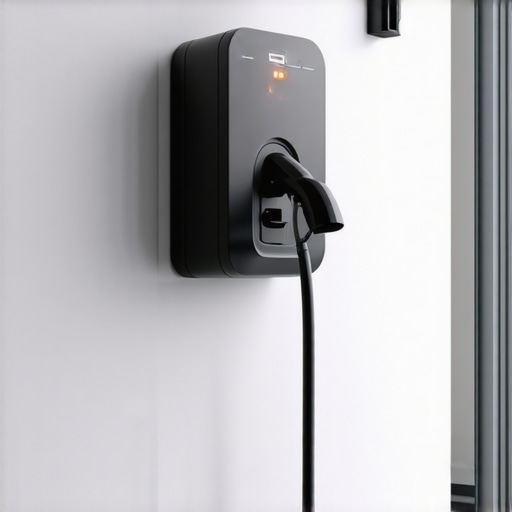
While the allure of a plug-in NEMA 14-50 is strong, hardwiring is the superior choice for safety. Every time you have a plug, you have a mechanical connection that can loosen. Looseness creates resistance, resistance creates heat, and heat creates fire. When you hardwire, the copper goes straight into the terminals of the charger. Understanding the critical difference between hardwired and plug-in chargers is the first step in building a resilient system. Hardwired units also allow for higher amperage—sometimes up to 48 or 80 amps—whereas plug-in units are legally capped at 40 amps. If you’re on the fence, look into how to choose between a hardwired or plug-in station to see which fits your daily driving needs better.
Choose the Right Gauge Before You Pull the Trigger
Wire is expensive, and it’s tempting to go one size smaller to save a hundred bucks. Don’t. Using 8-gauge wire when the manual calls for 6-gauge is a recipe for disaster. Not only will the wire get hot, but you will also experience a voltage drop, meaning you’re paying for electricity that is turning into wasted heat instead of miles. This is the wire gauge mistake that fails 40 percent of inspections. Furthermore, why thinner wire is costing you miles every night isn’t just about speed; it’s about the efficiency and longevity of your car’s charging hardware.
The Permit is Your Insurance Policy
A lot of people try to avoid the city inspector because they don’t want the hassle or the fee. But that inspector is the only person standing between you and a contractor who took a dangerous shortcut. Following ensuring code compliance when installing ev chargers ensures that every torque setting and conduit depth is perfect. If your house burns down and the insurance company finds an unpermitted 50-amp circuit in the garage, they have a very easy reason to deny your claim. Avoiding the permit error that stops 40 of residential charging installs is about more than just paperwork; it’s about peace of mind. You should always know how to verify code compliance for your ev charger installation so you can double-check the work yourself.
Let’s dig deeper into what actually happens behind your drywall when that car starts pulling power. Everyone tells you that a smart charger is the ‘brain’ of the operation. I’ll be the contrarian here: your charger is actually the simplest part of the system. The real intelligence lives in your electrical panel, or at least it should. A common myth is that ‘load management software’ is a magic bullet that fixes a weak service. In my experience, relying solely on software is a band-aid that often masks underlying wiring fatigue. If you are serious about long-term safety and performance, you should be prioritizing upgrading your panel for better ev charging performance rather than just hoping a digital setting prevents a thermal event. When you’re pulling 40+ amps for ten hours, you aren’t just using electricity; you are stress-testing every single screw and terminal in your home’s infrastructure.
Tighten it till it clicks or watch it melt
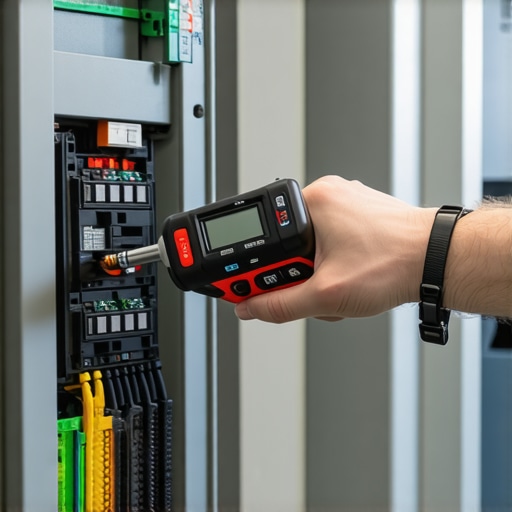
I’ve seen DIYers and even some hurried pros spend $800 on a high-end charger and then $0 on a calibrated torque wrench. That is the ultimate ‘oops’ factor. Electrical terminals are not like lug nuts on a tire; you can’t just ‘feel’ when they are right. If you don’t follow the forgotten torque test that prevents panel fires, the heat from the current will cause the metal to expand and contract. Over weeks of charging, a slightly loose screw becomes a very loose screw, creating a micro-arc. If you ever notice a strange scent in the air, you need to check the 5 reasons your electrical panel smells like fish, because that ‘fishy’ smell is actually the chemical signature of burning insulation and overheating breakers.
Stop blaming the rain for your charging failures
When a charger trips a breaker on a stormy night, most people assume water got into the handle. While that’s possible, the nuanced truth is often a grounding or bonding issue within the panel itself. Understanding troubleshooting ev chargers common compliance pitfalls and fixes reveals that many ‘nuisance trips’ are actually the safety system working exactly as intended to prevent a lethal shock. If your station is outside, why your outdoor charger needs a specific type of gfci becomes a critical question of code compliance. According to the National Fire Protection Association (NFPA), electrical distribution equipment is a leading cause of home fires, and the sustained load of an EV will find the weakest link in your grounding system within minutes. I’ve even seen cases where the neutral wire error that fries car motherboards occurred because someone tried to save time by skipping a dedicated ground check during a ‘simple’ swap.
Does my outdoor setup really require a second grounding rod?
This is a question I get from more advanced homeowners who have read the 2023 NEC updates. The answer is often yes, depending on how far your charger is from the main service. Failing to account for this is the grounding rod mistake that voids your ev warranty and leaves your car’s sensitive electronics vulnerable to lightning surges or grid spikes. You should always know how to verify code compliance for your ev charger installation before the inspector knocks on your door. Ensuring you follow code compliance essentials for ev charger installations in 2025 isn’t just about passing a test; it’s about making sure your house doesn’t become a statistic. Have you ever fallen into the trap of thinking a ‘smart’ feature could replace proper copper-and-bolt infrastructure? Let me know in the comments below.
Most people think that once the inspector signs off and the car starts charging, the journey is over. I’m here to tell you that’s when the real work begins. If you treat your charging station like a toaster—something you just plug in and ignore for a decade—you are asking for a middle-of-the-night emergency. After my near-miss with the melting outlet, I became obsessed with thermal monitoring. I don’t just trust that the wires are staying cool; I verify it. This isn’t just about ensuring code compliance when installing ev chargers during the first week; it’s about ensuring that compliance remains intact as your home ages and the seasons change.
The $30 Tool That Saved My Garage
If you own an EV, you need to own an infrared thermometer. Every few months, I open my garage and point that red laser right at the breaker and the charging handle while the car is pulling its full load. If I see temperatures climbing above 140°F, I know I have a problem before it starts to smell like ozone. This simple check is how I spotted 5 signs your main breaker is overwhelmed by a new level 2 charger before it actually tripped. You are looking for ‘hot spots’—places where a single terminal is significantly hotter than the others. That is a neon sign for a loose connection. I’ve even used it to identify why your charging speed drops when it gets too cold, which is often a physical resistance issue rather than just software limitations.
How do I keep my home safe from charging fatigue over time?
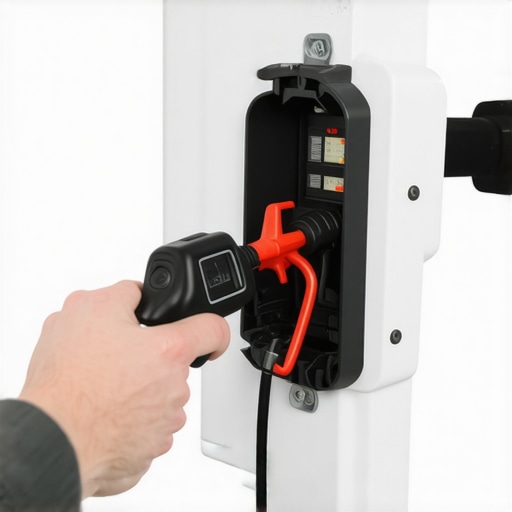
Maintenance isn’t just about looking for fires; it’s about physical upkeep. You need to know how to clean your charger ports without damaging them. Dust, spider webs, and oxidation are the enemies of high-amperage transfer. I also make it a habit to re-verify my torque settings annually. According to NEC Section 110.14(D), terminal tightening torque must be verified with a calibrated tool where specified on the equipment. I grab my torque screwdriver and ensure everything is still at the specific torque wrench settings for a wall connector. Metal expands and contracts with every charging cycle, and things can eventually wiggle loose. If you notice the car struggling to communicate, you might be heading toward troubleshooting ev charger connectivity problems which often stem from a dirty or slightly loose control pilot pin.
Plan for the Second Car Before You Need It
The future isn’t just one EV; it’s two. If you are already pushing your panel to the limit, you need to start thinking about why your garage needs a subpanel for that second ev. I wish I had installed a 100-amp subpanel from day one. It would have saved me thousands in labor. When you scale up, knowing how to properly size a subpanel for your ev workshop becomes the difference between a seamless upgrade and a total service overhaul. We are also seeing a massive shift toward bidirectional charging. Soon, you won’t just be taking power from the grid; you’ll be learning how to use your ev as a backup home battery safely. This trend is going to turn our garages into mini power plants, making robust wiring even more critical than it is today. My advanced tip for you this week: Buy a high-quality torque screwdriver and check your breaker terminals tonight—you might be surprised how much a ‘tight’ screw can move after six months of heavy use.
The Expensive Truth I Learned the Hard Way
After my garage-melting disaster, I realized that EV ownership isn’t just about the car; it’s about becoming the steward of your home’s most powerful circuit. One major lightbulb moment for me was realizing that your car doesn’t care if your house burns down—it just wants those amps. This makes troubleshooting ev chargers common compliance pitfalls and fixes a necessary skill for any owner. I also learned that the ‘sniff test’ is real. If you ever walk into your garage and catch a whiff of something organic but sharp, don’t ignore those 5 reasons your electrical panel smells like fish. It’s often the sound of a looming electrical failure that software can’t detect. Lastly, I learned that a permit isn’t a government tax; it’s the only third-party validation that your family is safe at night.
My Personal Toolkit for a Bulletproof Garage Setup
I don’t go a month without checking my gear. To keep everything running perfectly, I rely on a few specific tools that every EV owner should consider. First, a calibrated torque screwdriver is non-negotiable. Using the specific torque wrench settings for a wall connector ensures that my terminals never wiggle loose under the stress of 40-amp loads. I also keep an infrared thermometer handy to spot thermal runaway before it becomes a fire. For those who want to stay ahead of the game, I highly recommend reading up on how to verify code compliance for your ev charger installation. If you ever feel over your head, don’t hesitate to reach out to the pros at our contact page to ensure your system is handled by experts.
#IMAGE_PLACE_HOLDER_E#
Secure Your Electric Future Without the Fire Risk
Building a safe home charging environment is about more than just avoiding a trip to the breaker box; it’s about preparing your home for the next decade of transportation. By following code compliance essentials for ev charger installations in 2025, you aren’t just following rules—you’re building a resilient, high-performance power hub. Don’t let a cheap adapter or a skipped permit be the reason you lose sleep. Take control of your home’s infrastructure, invest in quality copper, and charge with total peace of mind. Have you ever noticed a strange smell or excessive heat coming from your garage outlet while charging? Let me know your experiences in the comments below.