I stood there in my driveway, breath visible in the crisp -5 degree air, staring at my dashboard with a mix of disbelief and growing rage. My ‘fast’ charger was trickling power into my car at a pace that suggested the electricity was being delivered by a particularly unmotivated snail. I had a meeting across town, and the 200 miles of range I expected to see after a quick coffee break simply weren’t there. It is a gut-punch moment every new EV owner faces during their first real winter. You realize very quickly that the glossy brochures didn’t mention the chemical stubbornness of lithium-ion cells when the mercury drops. Today, I am going to peel back the curtain on why this happens and, more importantly, how you can trick your car into actually taking a charge when the world is frozen solid. Have you ever sat at a public charger for an hour only to see your battery percentage crawl up by a measly five percent? Let me know in the comments, because I have been in those cold, lonely shoes.
Why Your 150kW Charger Suddenly Feels Like a 110V Outlet
Early in my EV journey, I made a classic rookie mistake that I still cringe about today. I pulled up to a high-powered stall with a battery that was basically a block of ice, expecting a twenty-minute top-off. I didn’t bother with pre-conditioning because I thought the sheer power of the station would ‘force’ the heat into the system. I was dead wrong. I sat there shivering while the car throttled the intake to a pathetic 12kW to prevent the battery from literally plating itself with lithium and dying a premature death. This is often why your charging speed drops suddenly or never even starts at a decent clip in the first place. The car is protecting itself from you. I also learned the hard way that physical hardware struggles too; if you have ever fought with a frozen plug, you know why your charging cable is stiff in the winter and how that alone can make a simple task feel like a wrestling match. Research from the Idaho National Laboratory confirms this isn’t just in your head, noting that EV charging times can increase by roughly 300% when temperatures hit freezing compared to a mild 77°F day.
Is Fast Charging in the Cold Actually Possible?
There is a lot of skepticism out there, and for good reason. You might be wondering if the whole ‘fast charging’ promise is just a marketing lie once the snow starts falling. The truth is that while the physics are against us, the technology usually has a workaround—if you know how to use it. If you are charging at home, you might notice why some ev chargers work better with cold weather than others, particularly those with better thermal insulation or more robust internal relays. I eventually had to look into how to protect your outdoor ev charger from heavy rain and snow just to ensure the hardware didn’t fail before the battery even had a chance to warm up. We are going to dig into the specific settings and habits that will save your morning commute.
Warm Up Your Battery Before You Plug In
The single most effective way to beat the cold is a process called pre-conditioning. Think of your EV battery like an athlete; you wouldn’t ask a sprinter to run a 100-meter dash in a snowstorm without a proper warm-up. If you plug a frozen battery into a high-powered charger, the internal resistance is so high that the energy just bounces off, converted into heat instead of storage, or worse, gets throttled to a trickle. Last February, I learned this the hard way when I stopped at a public station without pre-conditioning. I was getting such low speeds that I actually thought the station was broken. I spent 45 minutes just waiting for the battery to reach a temperature where it could finally accept more than 10kW.
The Navigation Trick Every EV Owner Needs
Most modern EVs will automatically start warming the battery if you set the car’s built-in GPS to a fast-charging station. Even if you know exactly where the charger is, tell the car you are going there. This triggers the thermal management system to divert energy to the battery heaters. If your car doesn’t have this ‘smart’ feature, you might have to rely on ev charger troubleshooting expert tips for common issues to see if there is a manual override in your settings. For those charging at home, try to time your charging session so it finishes right before you plan to leave. This ensures the battery is still chemically active and warm from the charging process itself when you hit the road.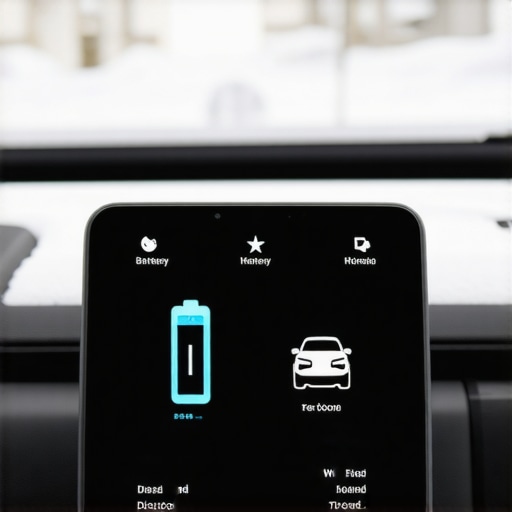
Your Electrical Panel Might Need More Muscle
In the summer, your home charger might hum along just fine, but winter adds a massive load to your entire house. You are running the heater, the water heater is working harder, and your EV is demanding a steady, high-amperage stream of power to keep itself from freezing. I have seen many neighbors wonder why their breaker keeps tripping in January. Often, it is because their system is redlining. You should consider upgrading your panel for better ev charging performance if you notice your lights flickering when the car starts its cycle. It is the difference between having a firehose and a garden hose when you are trying to fill a pool in a hurry.
Ways to Boost Power Without a Full Overhaul
If a full service upgrade sounds too expensive, there are clever workarounds. You can learn how to add an ev charger without a 200 amp panel upgrade by using load-shedding devices or smart energy managers. These devices act like a traffic cop for your electricity; they pause the car charger if the electric oven or dryer kicks on, preventing a total system shutdown. Also, pay attention to the hardware itself. This is why your electrician recommends a 60 amp circuit for a 48 amp charger; that extra overhead provides a safety buffer when the cold makes everything less efficient. If you are struggling with a cord that feels like a lead pipe, knowing why your charging cable is stiff in the winter and what to do—like keeping the cable inside the garage or using a specialized winter-rated holster—can save you from a morning of frustration.
The Code Mistake That Quietly Melts Your Panel
Most homeowners—and honestly, many general electricians—assume that if a circuit can handle a dryer, it can handle an EV. This is a dangerous myth. Unlike a dryer that runs for 45 minutes, an EV is a ‘continuous load.’ According to the National Fire Protection Association (NFPA) in NEC Article 625, any load running for more than three hours must be derated to 80% of the circuit capacity. This is exactly why your electrician recommends a 60 amp circuit for a 48 amp charger. If you try to pull 40 amps through a 40-amp breaker for eight hours straight, you aren’t just ‘pushing it’; you are actively inviting a fire. I’ve seen panels where the plastic around the breaker has actually started to char because the heat had nowhere to go. This is a prime example of the hidden cost of skipping a panel load calculation. You might save a few dollars on wire gauge today, only to pay for a full panel replacement next year. Have you ever fallen into this trap? Let me know in the comments.
Why Does Your 40-Amp Charger Keep Tripping a 40-Amp Breaker?
If your breaker keeps popping, don’t just flip it back on and hope for the best. The ‘Oops’ factor here is usually the torque. Most people think ‘tight is tight,’ but EV chargers are incredibly sensitive to resistance. If the lugs in your panel or the terminals in the charger aren’t tightened to the exact inch-pound specifications, the microscopic gaps create arcing. Over time, this leads to thermal expansion and contraction. I’ve seen dozens of DIY installs fail because the installer didn’t realize why your charger needs a specific torque setting to pass inspection. Eventually, that loose connection is the reason your ev charger smells like burnt plastic. If you can smell your electricity, you’ve already waited too long to troubleshoot.#IMAGE_PLACE_HOLDER_C#
Don’t Let a Missing Permit Tank Your Home Sale
There is a common sentiment in the EV community that ‘it’s just a plug, I don’t need a permit.’ This is perhaps the most expensive mistake you can make. Beyond the safety risks, an unpermitted charger is a massive red flag during a home inspection. I’ve talked to many sellers who had to rip out beautiful charging setups because they couldn’t show how to verify code compliance for your ev charger installation to the buyer’s agent. Inspectors are getting much stricter about this as EVs become mainstream. They will look for why your main lugs might be loose after a year of charging and check for that critical neutral wire. Even if the charger doesn’t ‘use’ it for charging, many modern units require it for the internal logic boards, which is why your new charger requires a neutral wire even for 240v. Cutting corners on the permit is the permit error that stops home charger installs in their tracks. It is always cheaper to do it right the first time than to pay an electrician to fix a ‘working’ system just to satisfy a city official.I’ve spent plenty of time talking about the mistakes I made, but let’s pivot to the gear that keeps my mind at ease today. If you ask any seasoned electrician what the most critical tool for an EV install is, they won’t say a wire stripper or a drill. They’ll tell you it’s a calibrated torque screwdriver. I personally use a Wiha iTorque set because it takes the guesswork out of tightening terminal lugs. As specified in the National Electrical Code (NEC) Section 110.14(D), installers are now strictly required to use a calibrated torque tool for any terminal where a value is clearly marked. Why the fuss? Because EV charging is a marathon, not a sprint. The constant heat cycles cause metal to expand and contract, and if your connections aren’t perfectly tensioned, they will wiggle loose over time. This is exactly why your main lugs might be loose after a year of charging, even if they felt tight during the initial install. By hitting the exact inch-pound specification, you ensure that high-amperage current doesn’t find a path of resistance that turns your panel into a toaster.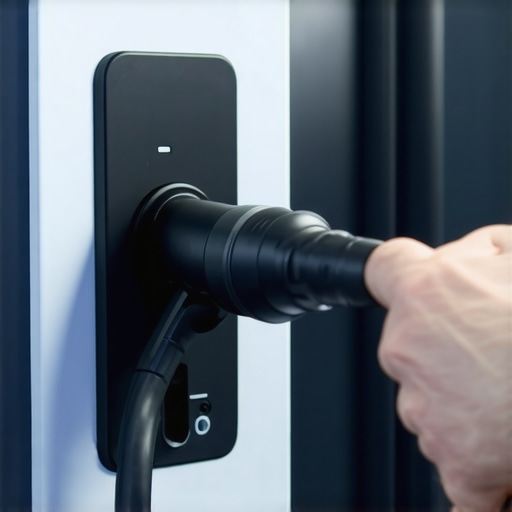
How can I keep my charging setup safe for the next decade?
Maintenance isn’t just about the physical hardware; it is about the digital brains of the operation too. I make it a habit to check for software updates at least once a quarter. Many owners forget that their modern Wallbox or ChargePoint is essentially a computer mounted on the wall. Manufacturers frequently push patches that improve thermal management, efficiency, and connectivity. Learning how to update the firmware on your smart charging station can actually prevent hardware failures before they start by ensuring the cooling fans and internal relays are operating at peak logic. I also do a quick physical inspection of the charging port every few months. If you see any black soot, pitting, or discoloration on the pins, that is a sign of arcing, and you need to stop charging immediately. It is all part of the process of ensuring code compliance when installing ev chargers—true compliance is a continuous job, not just a one-and-done inspection.
Prep for the Day Your Car Powers Your House
Looking ahead, the biggest trend in the EV world is bi-directional charging. Your car is essentially a massive battery on wheels, and soon, it will be able to power your entire house during a blackout or peak pricing hours. If you are building or renovating your garage now, do not just install for today’s needs. This is why your garage needs a sub-panel for multiple chargers or at least a V2H (Vehicle-to-Home) ready setup. It makes the process of how to verify code compliance for your ev charger installation much easier when you have a dedicated energy hub rather than trying to cram everything into an old main panel. We are moving toward a ‘smart’ grid where your car and house talk to each other to save you thousands. My best advice for an advanced user? Go into your charger’s mobile app right now and set a maximum charge limit of 80% for your daily commute; it preserves the chemical health of your battery far longer than topping it off to 100% every single night.
The Hard Lessons That Saved My Charging Habits
Looking back at my first winter with an electric vehicle, I realize that most of my stress came from treating the car like a gas-powered machine. The biggest shift for me was accepting that troubleshooting starts long before you plug in. One lightbulb moment occurred when I realized that code compliance isn’t just about passing an inspection; it’s about the physical integrity of your home. I now know why your main lugs might be loose after a year of charging—the constant heat of a 48-amp draw creates physical movement in the metal. I also stopped guessing about my home’s capacity after seeing the hidden cost of skipping a panel load calculation. If I could go back, I would tell myself to prioritize the panel upgrade immediately rather than waiting for a breaker to fail in a blizzard.
Gear That Actually Makes a Difference
I do not believe in buying every gadget on the shelf, but a few things are non-negotiable for a reliable EV charger setup. First, get a calibrated torque screwdriver. It sounds like overkill until you realize that a loose connection is a leading cause of electrical failure. Second, I highly recommend finding a pro who specializes in this niche; knowing how to find an electrician who actually understands ev codes saved me from a massive headache during my last renovation. Finally, if you are seeing performance drops, do not ignore them. I have found that upgrading your panel for better ev charging performance is the single best investment you can make for long-term peace of mind. I personally rely on the latest NFPA guidelines and my local utility’s peak-time apps to keep costs low and safety high.
Your Road to a Bulletproof Home Setup
You should not feel intimidated by the technical side of owning an EV. Every challenge you face, from a stiff cable to a slow charge rate, is just a puzzle with a logical solution. By focusing on ensuring code compliance when installing ev chargers, you are protecting your family and your investment. The future of transportation is parked in your driveway, and with a little bit of preparation, even the harshest winter will not stand in your way. Have you ever dealt with a surprise breaker trip in the middle of a snowstorm? Let me know in the comments below!