I remember pulling my brand-new EV into a high-end shopping center, expecting the charging experience to match the luxury of the stores nearby. Instead, I was directed to a dark, cramped corner behind the dumpster. I had to navigate a literal obstacle course of trash and cracked asphalt just to reach the plug. It was a complete vibe-killer. If you are a business owner, you need to understand that luxury drivers don’t just want a charge; they want an experience that feels safe, accessible, and premium. I made the massive mistake early on of thinking that as long as electricity was flowing, the location didn’t matter. I once installed a series of chargers behind a warehouse to save on conduit costs, and surprise, surprise—it sat empty for months. I quickly learned that the ‘puddle problem’ and the ‘dark corner syndrome’ are the fastest ways to ensure your expensive infrastructure goes to waste. Today, I am going to walk you through how to flip the script and create a layout that actually draws in the clientele you want.
Stop Treating Your Charging Station Like a Loading Dock
High-end drivers are often early adopters who value their time and their vehicles. If your layout requires them to perform a 12-point turn just to align their port, they simply won’t come back. You have to think about the ‘path of least resistance.’ When I first started consulting on these projects, I didn’t realize why commercial charger pedestals fail after the first heavy winter, and it usually comes down to poor placement where snowplows or salt buildup destroy the equipment. It is not just about the hardware; it is about the environment. You want wide bays, excellent lighting, and a clear line of sight from the main entrance. I have found that placing chargers near the front of a lot, but not so close that they are constantly ‘ICE-d’ (blocked by internal combustion engine cars), is the sweet spot. Have you ever avoided a business just because the parking situation looked like a nightmare? That is exactly how luxury EV owners feel about poor charging layouts.
Is a premium layout actually worth the extra cost?
It is easy to get sticker shock when you look at the price of paving, bollards, and high-end lighting. However, according to a report by the International Energy Agency (IEA), premium EV owners are 70% more likely to frequent businesses that offer ‘secure, well-lit, and amenity-rich’ charging environments. If you are learning how to set up a commercial charging fleet for your small business, you have to factor in that high-end drivers are also high-end spenders. While they wait for their car to top off, they are in your shop or your restaurant. I also cannot stress enough that why your charger pedestal needs a bollard for safety is a conversation about protecting your investment from distracted drivers. We are going to dive into the specifics of spacing, signage, and those little luxury touches that make a world of difference.
Get the Power Right Before You Dig
The most expensive mistake you can make isn’t the charger itself; it’s the trenching and the infrastructure behind the wall. If you don’t calculate your total building load correctly, you’re building on a foundation of sand. I remember a project at a boutique hotel where we thought we could just ‘tap in’ to the existing distribution board. Three days after the grand opening, the entire kitchen went dark because the chef turned on the industrial ovens while two luxury SUVs were fast-charging at 48 amps each. If you skip the math, you will face the hidden cost of skipping a panel load calculation. You need to look at panel upgrades for EV chargers as an investment in uptime, not just a line item expense. This is about more than just electricity; it is about ensuring your chargers don’t cause a brownout every time a guest plugs in.
Calculate the Real Load Requirements
Think of your electrical panel like a water pipe. If you try to push a fire hose’s worth of water through a straw, something is going to burst. Before you even order the hardware, you must perform a load study. In 2025, you should be looking at panel upgrade strategies to meet EV charging code requirements to stay ahead of the curve. If your building is older, understanding how to tell if your utility meter can handle the extra load is the question that saves you thousands in emergency repairs later.
Design a Space That Actually Fits a Modern Car
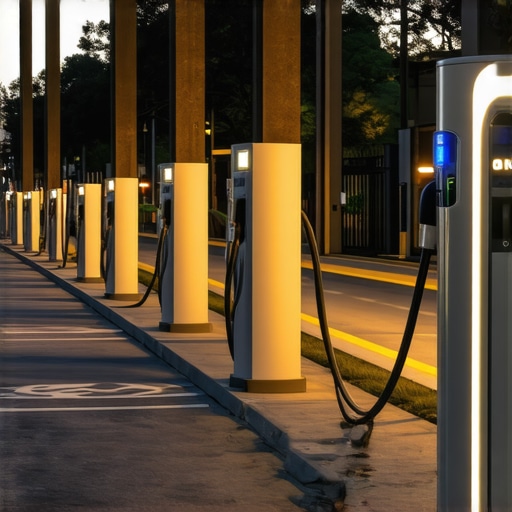
Luxury EVs are getting bigger, not smaller. If you design your stalls based on the dimensions of a 1990s sedan, you are going to see a lot of scraped rims and dented pedestals. I once saw a driver in a high-end electric truck struggle for ten minutes just to get the cable to reach because the pedestal was mounted too far back in a narrow stall. We eventually had to move the units, which involved re-digging to meet the specific depth requirements for underground EV wiring. It was an embarrassing and costly fix that could have been avoided with a better initial layout.
Avoid the Common Layout Pitfalls
Your layout needs to account for ‘cable management.’ A 25-foot cable laying in a puddle is a tripping hazard and a total brand-killer for a premium site. You should prioritize retractable cable systems or overhead management. Also, don’t forget that ensuring code compliance when installing EV chargers often dictates exactly how much clearance you need around the equipment for accessibility. If a person with mobility issues can’t navigate the space between the car and the charger, you aren’t just being inconsiderate; you’re likely violating local laws. Use wide, clearly marked stalls to give everyone room to breathe.
Don’t Let Your Tech Go Dark
A premium charger that won’t connect to the internet is just a very expensive wall ornament. For commercial sites, Wi-Fi is rarely enough. The signal has to fight through concrete walls and interference from other electronics. This is why your commercial charger needs a cellular connection. I’ve spent countless hours troubleshooting EV charger connectivity problems only to realize the signal was being blocked by a nearby transformer. Go with hardwired ethernet or a dedicated LTE gateway from the start. It saves you from the ‘I can’t start my session’ phone calls at midnight and keeps your data flowing smoothly.
Forget the 200-Amp Requirement Myth
I hear it all the time from ‘experts’ on forums: you can’t possibly install a high-end Level 2 charger unless you have at least a 200-amp service. In my years of troubleshooting, I’ve found this to be one of the most expensive lies in the industry. While a larger panel is nice, it is often overkill. I have successfully integrated chargers into 100-amp and 125-amp systems without a single flicker of a lightbulb. The secret isn’t more raw power; it’s intelligence. By learning how to add an ev charger without a 200 amp panel upgrade, you can save your clients or yourself thousands of dollars. A study by the Pecan Street Research Institute suggests that most residential homes rarely hit 50% of their rated capacity, even during peak hours. Instead of a massive service upgrade, look into how to use load shedding devices to avoid a full service upgrade. These devices automatically throttle the car’s draw when the dryer or oven kicks on, keeping you safely within the limits of your existing panel.
Is your ‘smart’ charger actually breaking local electrical codes?
Here is where things get technical. You might have the best hardware on the market, but if the installation doesn’t respect the nuance of the 2025 NEC (National Electrical Code), you’re sitting on a liability. Many installers ignore the ‘continuous load’ rule, which requires the circuit to be sized at 125% of the charger’s output. If you’re pulling 48 amps, you need a 60-amp breaker—period. I’ve walked onto too many sites where someone used a 50-amp breaker for a 48-amp load, leading to why your breaker gets hot to the touch during charging. You must stay updated on code compliance essentials for ev charger installations in 2025 to ensure the safety of the property. Have you ever fallen into this trap of over-estimating your panel’s needs or under-estimating the heat generated by a continuous load? Let me know in the comments.
The Double-GFCI Trap That Ruins Your Morning Charge
This is the ‘Oops’ factor that bites even seasoned electricians. Most modern EVSEs (Electric Vehicle Supply Equipment) have built-in GFCI protection. If you install that charger on a circuit protected by a GFCI breaker in the panel, those two systems will often ‘fight’ each other. This results in nuisance tripping where your car stops charging at 3 AM for no apparent reason. If you’re wondering why the gfci in your panel keeps nuisance tripping your charger, this redundancy is almost always the culprit. Code technically requires GFCI protection for outlets in garages, but if you hardwire the unit, you can often bypass this headache legally, depending on your local jurisdiction.
The Tiny Detail That Prevents Panel Fires
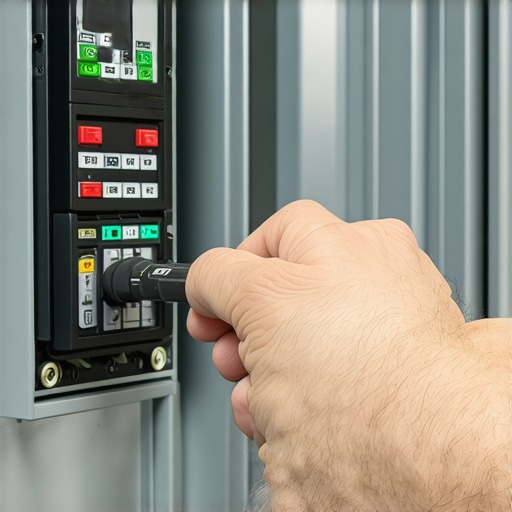
If you want to show true expertise, talk about torque. Most people think ‘hand-tight’ is enough for a circuit breaker. It isn’t. When a charger pulls high current for eight hours straight, the thermal expansion and contraction can loosen those connections over time. This leads to arcing and, eventually, a melted busbar. I never step onto a job without a calibrated torque screwdriver because the specific torque settings that prevent panel fires during high load charging are written right on the side of the breaker for a reason. Ignoring this is the fastest way to void a warranty and risk a catastrophe. When upgrading your panel for better ev charging performance, these mechanical nuances matter just as much as the electrical ones. If you’re currently dealing with a dead unit, check out these ev charger troubleshooting expert tips for common issues before you start tearing out wires.
I have learned over the years that a simple multimeter just doesn’t cut it when you are dealing with high-performance electrical systems. I personally use a FLIR E5-XT thermal imaging camera for every final inspection I perform. This tool reveals ‘invisible’ heat signatures that tell me if a connection is slightly loose before it ever becomes a fire hazard. This is absolutely crucial when upgrading your panel for better ev charging performance because high-amperage draws for hours on end will find the weakest link in your wiring. If you see a bright orange glow around a terminal on your screen, that is your immediate cue to grab a torque wrench and fix it. 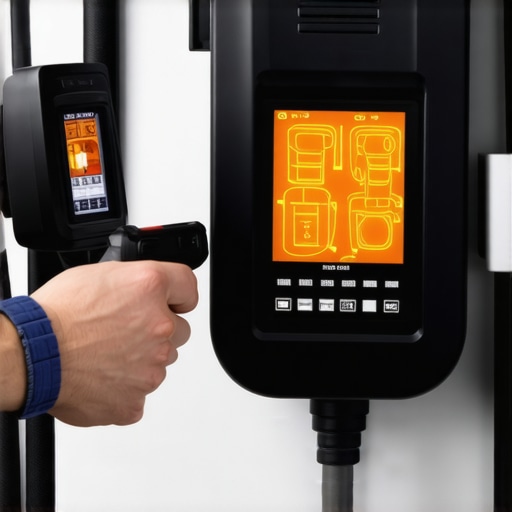 People often forget that modern chargers are essentially computers strapped to your wall. I have seen countless units stop working simply because a cloud security certificate expired or the software hung. You need to know how to update the firmware on your smart charging station to patch vulnerabilities and improve communication with newer vehicle models. It is also the very first step I take when ev charger troubleshooting expert tips for common issues fail to solve a simple connectivity lag.
How can I keep my charger healthy for the long haul?
Physical maintenance is frequently overlooked until the morning you find your car hasn’t charged. Every six months, I recommend a ‘tug test’ on the charging cable and a visual check for any spider webs or debris inside the port that could cause arcing. If you live in a region with harsh seasons, performing 3 maintenance tasks that keep your outdoor charger running through winter can prevent internal relays from sticking due to moisture. According to NFPA 70 Article 625, which is the National Electrical Code standard for Electric Vehicle Power Transfer Systems, maintaining clear access and ensuring any required ventilation remains unobstructed is vital for compliance and safety. I truly believe the next major trend is bidirectional charging, where your car feeds the house. Preparing your infrastructure now by learning how to verify code compliance for your ev charger installation ensures you are ready for that two-way traffic. If you haven’t checked your terminal tightness since the day it was installed, my best advice is to grab a calibrated torque screwdriver today and verify those manufacturer specs immediately.
Why I Stopped Relying on Luck and Started Trusting the Torque Wrench
After years in the field, I’ve realized that the difference between a charging station that lasts ten years and one that fails in ten months is often invisible to the naked eye. One of the biggest ‘lightbulb moments’ for me was discovering how thermal expansion can loosen even the tightest-looking connections. I used to think a firm twist was enough, but now I know that precision is the only way to prevent heat damage. Another lesson is that ‘smart’ features are only as good as your signal; I’ve seen homeowners waste thousands on high-end tech only to have it fail because of a simple concrete wall blocking the signal. Lastly, never assume the work is done until you’ve checked the materials. I always recommend that you take the time to how to verify your electrician actually used copper wire for the install, as aluminum can cause significant issues in high-draw EV circuits if not handled with specific connectors.
The Professional Gear That Makes the Difference
If you are planning to manage your own installation or just want to be an informed owner, there are a few resources I swear by. First, the NFPA 70 (NEC) Handbook is my primary reference; it’s more than just rules, it’s a guide to why those safety standards exist in the first place. For hardware, I never go to a site without a calibrated torque screwdriver and a high-resolution thermal imaging camera. These tools take the guesswork out of the equation. #IMAGE_PLACEHOLDER_E# I also frequently point clients toward our specialized guide on upgrading your panel for better ev charging performance because it simplifies the complex engineering into actionable steps. These aren’t just gadgets; they are the baseline for a safe, reliable home or business charging hub.
Build a System That Lasts for Decades
Taking the leap into high-powered EV charging can feel overwhelming, but it is one of the best investments you can make for your property’s value and your daily convenience. Don’t let the technical jargon or the dense code books intimidate you. By focusing on a quality layout, proper torque settings, and smart load management, you are setting yourself up for a seamless experience. Remember to take the final step and learn how to verify code compliance for your ev charger installation so you can sleep soundly knowing your system is both legal and safe. The future is electric, and you’re now equipped to lead the way with confidence. Have you ever run into a weird charging glitch that turned out to be a simple loose wire or a connectivity dead zone? Let me know your experience in the comments below!