I sat there on my balcony, staring at my shiny new EV, feeling like a total fraud. I’d done it—I went green—but every night I was out there wrestling with a dusty extension cord I’d snaked through the kitchen window just to get a measly 4 miles of range per hour. It was embarrassing, it was slow, and frankly, using an extension cord for your EV is a fire hazard I should have known better than to risk. I felt trapped by my lease. I assumed my landlord would hear the words “Level 2 charger” and immediately envision the building burning down or his electrical bill skyrocketing. But I was wrong. I eventually figured out the “magic words” to get that permit signed, and today, I’m going to show you exactly how to pitch this so your landlord actually says yes.
Your Landlord Needs a Reason to Say Yes
Most property owners aren’t trying to be difficult; they’re just protective of their investment and terrified of “unauthorized” electrical work. When I first approached my property manager, I made the classic mistake of making it sound like a favor he was doing for me. Big mistake. You have to frame this as an upgrade to their property that you just happen to be paying for. We are going to look at how to present a professional plan that covers multi-unit dwelling permits and safety standards so they can’t find a reason to doubt you.
Is this Level 2 upgrade really worth the struggle?
You might be wondering if you should just keep trickle charging or hitting the local mall for a fast charge once a week. Trust me, the convenience of waking up to a “full tank” every single morning changes the entire experience of owning an electric car. Interestingly, data from the National Association of Realtors indicates that EV charging is now a top-tier amenity that can actually justify higher rent premiums for owners. Have you ever had a landlord shut you down before you even finished your sentence? I want to hear about it! Before you go back for round two, you need to understand that showing up with a plan for ensuring code compliance is your strongest leverage. To make this work, we have to talk about the physical reality of the building’s infrastructure, specifically if the current setup needs panel upgrades for EV chargers before the first wire is even pulled.
Why Your 100-Amp Panel Might Actually Be Enough
Think of your electrical panel like a multi-lane highway. If every appliance is a car, the 100-amp service is the total width of the road. Most landlords fear an EV is like a massive semi-truck that will cause a permanent traffic jam. You need to prove there is enough shoulder room. I remember when my landlord, Mr. Henderson, looked at the panel and just shook his head. He was convinced we would need a total service overhaul, which meant big dollar signs in his eyes. But I brought in a professional to show him how to calculate if your 100-amp service can handle a daily commute without blowing a fuse. By running a formal load calculation, we proved the building only peaked at sixty percent capacity even with the AC blasting. If your panel is indeed tight, you can discuss how to load balance your home electrical system without a full panel swap, which is a much cheaper pill for a landlord to swallow than a three-thousand-dollar service upgrade. 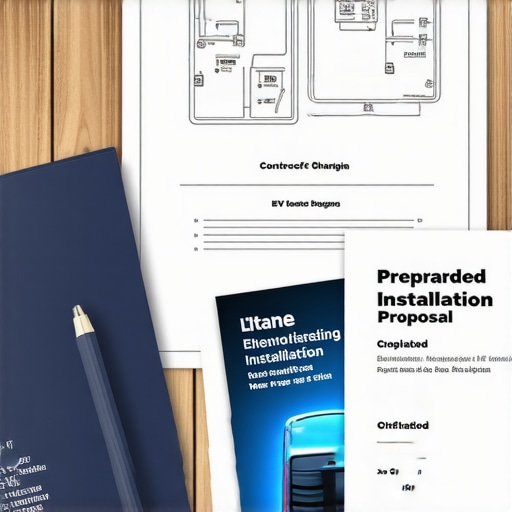
The Document That Makes You Look Like a Pro
Don’t just send a casual text saying, “Hey, can I plug in my car?” You need what I call a Charger Installation Proposal. This is exactly where I won my battle. I handed over a physical folder containing the spec sheet of the charger, the electrician’s license, and a clear diagram of the wire run. I made sure to emphasize the specific panel space requirements for a Level 2 install so there were no surprises about how many breaker slots I was taking up. When you show them you have already considered panel upgrades for EV chargers as a planned contingency rather than a surprise expense, they realize you are not some DIY hobbyist winging it with a YouTube video.
Stop Code Violations Before They Start
Landlords live in constant fear of city inspectors and insurance adjusters. To put them at ease, you must speak the language of the local building department. Explaining that you already know the exact gauge of wire you need for a 60-amp circuit shows you are serious about fire safety and longevity. In my own case, I actually pre-filled the permit application and highlighted the sections on how to pass your electrical inspection on the first visit. I told Mr. Henderson, “I am paying for the permit, the labor, and the hardware. You are just getting a building that is 2025-ready for free.” He could not find a single logical reason to say no because I had removed every technical mystery and financial risk. Even if things get bumpy during the first week of use, having some ev charger troubleshooting expert tips ready ensures you do not have to call the property manager for minor connectivity hiccups, keeping the peace for the long term.While most people assume that a NEMA 14-50 outlet is the safest and most flexible way to charge, I’m here to tell you that’s a common myth that could cost you your security deposit—or worse. The reality is that the benefit of a hardwired charger over a NEMA plug is undeniable when you look at the thermal load. Standard consumer-grade outlets were designed for clothes dryers that run for an hour, not an electric vehicle pulling maximum current for eight to ten hours straight. This brings us to a massive ‘oops’ factor I see all the time: copper versus aluminum wiring. You absolutely must how to verify your electrician actually used copper wire for the install. Aluminum expands and contracts at a different rate under load, which often leads to loose connections and arcing over time.
The Danger of Treating Your EV Like a Toaster
I’ve seen homeowners try to save fifty bucks on wire only to end up with a charred outlet box because they didn’t account for continuous load rules. This isn’t just about ‘getting the car to charge’; it’s about code compliance essentials for EV charger installations in 2025. One of the most overlooked technical details is the terminal torque. If you don’t use a calibrated torque wrench on those breaker lugs, you are asking for trouble. The specific torque settings that prevent panel fires during high load charging are non-negotiable in the National Electrical Code (NEC) Section 110.14(D). According to the National Fire Protection Association (NFPA), poor electrical terminations are a leading cause of failure in high-amperage residential circuits. 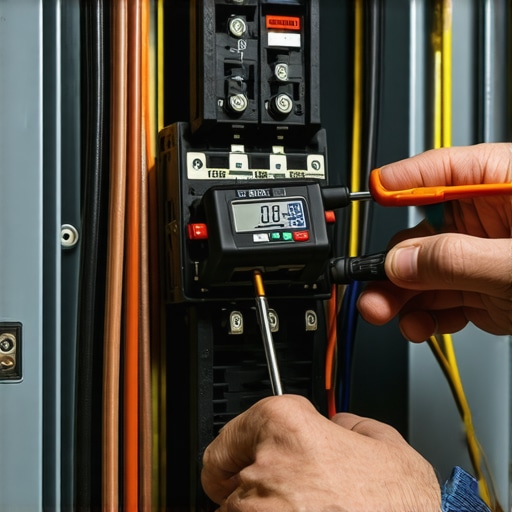
Can Your Existing Sub-Panel Handle a Second Car?
As your EV needs grow, you might wonder how to upgrade your garage sub-panel for dual charging stations without ripping out your finished walls. This is where the technical nuance comes in. You don’t necessarily need more raw power from the utility; you might just need better management. I often suggest panel upgrade strategies to meet EV charging code requirements in 2025 that focus on smart load shedding. If your car is charging and the central AC kicks on, a smart load manager can temporarily throttle the car’s intake. This keeps everything within the bounds of ensuring code compliance without a five-thousand-dollar service upgrade.
Stop Chasing Ghost Errors in Your Charger App
If you’ve ever woken up to a ‘Charging Fault’ notification, you know the frustration. Many people assume the charger is broken, but it’s often troubleshooting EV chargers common compliance pitfalls and fixes like a sensitive GFCI. Interestingly, why your EV charger trips the GFCI even when not in use is often due to a conflict between the charger’s internal safety monitor and a redundant GFCI breaker. It’s called ‘nuisance tripping,’ and it’s a classic advanced headache. Before you call for a warranty replacement, learning how to verify code compliance for your EV charger installation includes checking that your electrician didn’t accidentally ‘double-protect’ a circuit that already has an internal monitor. Have you ever fallen into this trap or had a charger that just wouldn’t stay connected? Let me know in the comments! If you’re feeling overwhelmed by the technicalities, you can always contact us for a professional review of your setup.Once your charger is up and running, you might think the work is done, but the set it and forget it mindset is a recipe for a melted port or a failed session. I make it a habit every few months to inspect the physical connector because if you live in a dusty or humid area, grime builds up on the contact points. Knowing how to clean the pins on your charging handle safely is a tiny maintenance win that prevents high-resistance heat from damaging your car’s expensive charging port. For those of us dealing with road salt and freezing rain, these 3 maintenance tasks that keep your outdoor charger running through winter are essential to avoid finding a frozen, useless brick in the middle of January.
How do I keep my charging station running for a decade?
To really ensure longevity, you need to look beyond the plastic box on the wall and focus on the brains and the blood of the system. I personally use a handheld infrared thermometer to check my electrical panel once a month while the car is pulling its full 48 amps. It sounds like overkill, but catching 3 signs your main breaker is running dangerously hot during overnight charging before it actually trips or melts can save you from an emergency service call. According to technical data from the Alternative Fuels Data Center, proactive component inspections can mitigate the vast majority of hardware failures in residential EVSE setups. Beyond the physical hardware, you should learn how to update your charger software without calling a technician. Manufacturers constantly push patches that improve the handshake reliability between the car and the wall unit, and missing these updates is often why apps start laggy behavior. 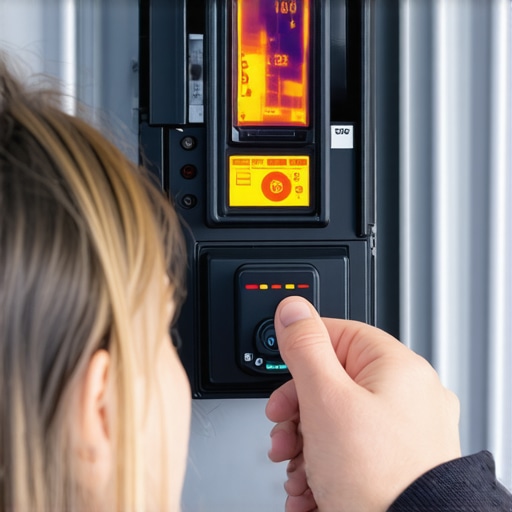 I am also a huge advocate for using the data at your fingertips to save money. I spent a few hours learning how to use an app to schedule charging and save on your bill, and it has been a total game changer for my monthly budget. By pinpointing the best time of day to charge your car for the lowest utility rate, I have effectively cut my fuel costs by another forty percent compared to just plugging in whenever I get home. Looking ahead, the real future of this tech is bidirectional charging where your car powers your house during a blackout. We are not quite there for every car model yet, but keeping your current panel in top shape ensures you will be ready when that tech goes mainstream. My challenge for you this weekend? Open your charger app, check for a firmware update, and take five minutes to wipe down your charging cable with a damp cloth to keep the garage looking sharp.
The Lessons I Learned While Navigating the Landlord Minefield
Looking back, the biggest ‘aha’ moment wasn’t technical—it was psychological. I realized that my landlord didn’t care about my car; he cared about his insurance premiums and property value. Once I started leading with code compliance essentials for EV charger installations in 2025, his posture changed from defensive to curious. It’s also vital to remember that even a perfect installation can have ‘ghost’ issues. I spent three nights wondering if my car was broken before I realized that troubleshooting EV charger connectivity problems often comes down to simple Wi-Fi signal strength in a concrete garage.
The Resources I Lean On for a Bulletproof Setup
I don’t expect you to become an electrician overnight, but having these references in your back pocket will make you the most informed tenant in the building:
- The Local Code Handbook: Knowing how to verify code compliance for your EV charger installation gives you the confidence to call out shortcuts if a ‘budget’ electrician shows up.
- An Infrared Thermometer: This $20 tool is how I monitor my panel for heat. It’s the best way to prove that upgrading your panel for better EV charging performance was a smart move rather than a safety risk.
- A Trusted Professional: Sometimes, you just need a second pair of eyes. Don’t be afraid to contact us if the technical jargon starts to feel like a foreign language.
Take the Lead and Transform Your Rental
You have the blueprint now. You know how to talk about load calculations, how to spot the difference between copper and aluminum, and most importantly, how to frame this as a win-win for your property manager. By ensuring code compliance when installing EV chargers, you aren’t just charging a car—you’re future-proofing your lifestyle. Go ahead, print out that proposal and start the conversation. Have you tried pitching a charger to your landlord yet, or are you still stuck on the ‘trickle charge’ struggle? Let me know in the comments below!