I’ll never forget that Tuesday in February. It was 4:45 AM, the coffee was bitter, and four of my delivery vans were sitting stone-cold at 20% battery. I’d spent the previous year swearing that Level 2 charging was “good enough” for our small fleet. I was wrong. I’d basically gambled our morning route on the hope that a ten-hour trickle would save us some money. It didn’t. It cost us three frustrated clients and a whole lot of my dignity. That was the morning I realized that for anyone running a real business, the transition to DC fast charging isn’t just a luxury—it’s a survival tactic.
The 3 AM Panic That Changed Everything
We’ve all been there—trying to squeeze every last penny out of existing equipment. When I first started looking at how to set up a commercial charging fleet for your small business, I made the classic rookie mistake. I assumed that if the vans were parked for 8 hours, they’d be fine on a standard Level 2 setup. But I ignored the “real world” factors: extreme cold, battery degradation, and those days when a driver returns later than expected. I even committed the cardinal sin of the hidden cost of skipping a panel load calculation, which eventually led to a very expensive service call when our main breaker decided it had finally had enough of the heat.
The shift to DC fast charging (DCFC) isn’t just about speed; it’s about the “buffer.” It’s knowing that if a van rolls in at midnight, it can still be at 100% by 1 AM. According to the International Energy Agency, the global demand for high-power charging infrastructure is skyrocketing as commercial fleets realize that time is the only currency that really matters in logistics. If your vehicles aren’t moving, you’re losing ground to every competitor who decided to how to wire a 3-phase charger for your business location properly from the start.
Will This Rapid Charging Toast My Battery Life?
This is the big one. I hear it every time I grab a beer with other managers. “Aren’t you worried you’re killing the cells?” they ask. In the early days, maybe. But modern battery management systems (BMS) are incredibly smart. They handle the heat and the current with surgical precision. I’d much rather replace a battery a year earlier than lose a contract today because my fleet is stuck at the plug. Plus, you need to ensure why your commercial charger needs a cellular connection so you can monitor those health metrics in real-time. Don’t let fear keep you tethered to a slow-motion business model.
Stop Letting Slow Charging Kill Your Delivery Window
The reality is that your fleet’s needs have evolved. You might think you’re saving money on infrastructure, but the labor costs of drivers waiting for a charge will eat those savings in a month. I learned the hard way that upgrading your panel for better EV charging performance is an investment in your company’s heartbeat. We’re going to look at the exact steps to make this transition without blowing your budget or your transformer.
Have you ever had to tell a driver to stay home because the “reliable” charger failed to do its job overnight? It’s a gut-wrenching feeling that no manager should have to deal with twice.
Get Real About Your Current Power Limits
The very first thing I did after that disastrous Tuesday was call an electrician who didn’t just ‘do houses.’ You need someone who understands industrial loads. We sat down and realized that the hidden cost of skipping a panel load calculation was nearly $5,000 in emergency repairs. You cannot eyeball this. You need to document every single amp your building currently pulls before you even think about adding a 50kW or 100kW DCFC unit. If your math is off by even 10%, you’ll be dealing with nuisance trips right when your delivery window is closing.
When we did our audit, we found out our main lugs were already running hot. To fix this, we looked into upgrading your panel for better EV charging performance to ensure the busbars could handle the continuous draw. It’s not just about the total capacity; it’s about the heat. DC charging is a marathon for your electrical system, not a sprint.
Stop Using Residential Parts for Commercial Stress
I once tried to save $400 by using a slightly lower grade of conduit I found at a big-box store. Within three months, the vibration from the nearby loading dock and the thermal expansion from the DC cables caused a hairline fracture in the seal. Moisture got in, and the whole unit faulted during a rainstorm. Now, I strictly follow the rule of using the difference between residential and industrial grade wire for EVs as my bible. Industrial-grade components are built for the 100% duty cycle that fleet vehicles demand.
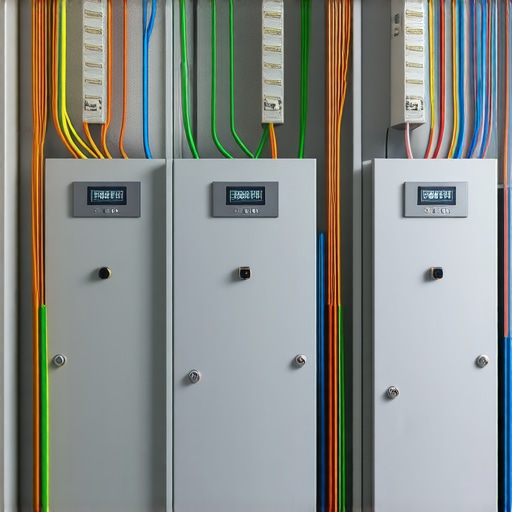
You also need to pay attention to your cable runs. We had one charger that kept giving us ‘low voltage’ errors. It turns out the run was 150 feet, and the original installer used standard sizing. I had to rip it out and install the specific wire gauge that prevents voltage drop over long runs. Since then, the charging speed has stayed rock-solid from 0 to 80%.
Master the Art of Code Compliance
Don’t even think about skipping the permit process. I’ve seen guys get their entire operations shut down by the fire marshal because they didn’t have the right clearances. You must focus on ensuring code compliance when installing ev chargers from day one. This includes things you might not think about, like why your charger pedestal needs a bollard for safety. I learned this the hard way when a driver in a hurry backed a Sprinter van into an unprotected pedestal. The repair cost more than the original installation.
Configure the Brains of Your System
Once the heavy iron is in the ground, you have to manage the software. I highly recommend looking into how smart chargers use dynamic balancing to prevent blown fuses. This technology allowed us to run three fast chargers on a service that, on paper, should only have supported two. It shaves the peaks off the energy usage without the driver ever noticing a difference in speed. If things do go sideways, having a solid handle on ev charger troubleshooting expert tips for common issues will keep your fleet moving while you wait for a technician to arrive for the complex stuff.
Most managers think that getting the green ‘passed’ sticker from the inspector is the finish line. I used to be one of them. But here is the contrarian truth: code compliance is the absolute bare minimum for safety; it is not a guarantee of operational reliability. In my experience, a system built strictly to yesterday’s code will often struggle with the 100% duty cycle of a modern delivery fleet. You need to look at panel upgrade strategies to meet ev charging code requirements in 2025 as a baseline, then over-engineer from there. If you’re just meeting the standard, you’re essentially running your business on a ‘C minus’ grade electrical diet.
Why Passing Inspection Doesn’t Guarantee Your Fleet Stays Moving
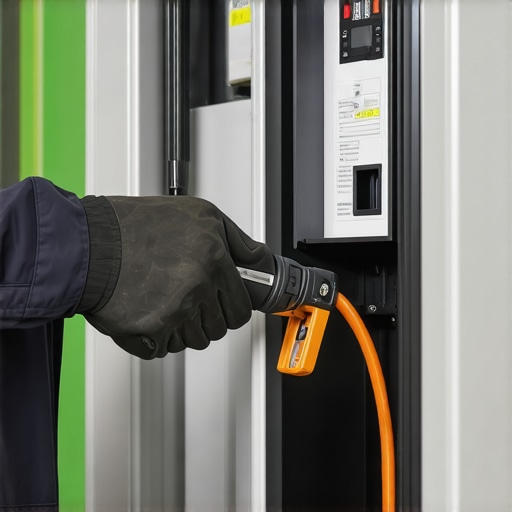
I’ve seen dozens of ‘compliant’ installations fail because they didn’t account for thermal fatigue. When a DC fast charger pulls massive current for hours, the heat is intense. The ‘oops’ factor I see most often is skipping the specifics of terminal connections. If you aren’t checking why your charger needs a specific torque setting to pass inspection, you are setting a timer on your own downtime. Hand-tightening works for a light switch; it’s a fire hazard for a 50kW charger. According to the Electrical Safety Foundation International (ESFI), thermal expansion in loose connections is a leading cause of industrial electrical failure. I now mandate that my team uses a calibrated torque wrench for every single lug, and we re-check them after the first month of heavy use.
Can a Simple Grounding Error Mimic a Total Hardware Failure?
Absolutely. We once spent three days trying to how to diagnose a faulty internal relay in your charging station, only to realize the issue was a slight voltage potential on the ground wire. This is where the grounding trick that fixes intermittent charging errors comes into play. Modern EVs are incredibly sensitive to ground-to-neutral bonds. If your electrician treats your commercial charger like a standard HVAC unit, you’re going to get phantom errors that vanish the moment the technician arrives. You have to be proactive. Always how to verify code compliance for your ev charger installation using a high-quality multimeter to check for ‘dirty power’ before you blame the charger’s motherboard. Have you ever fallen into this ‘ghost in the machine’ trap? Let me know in the comments.
The One Tool That Saves My Sanity Every Quarter
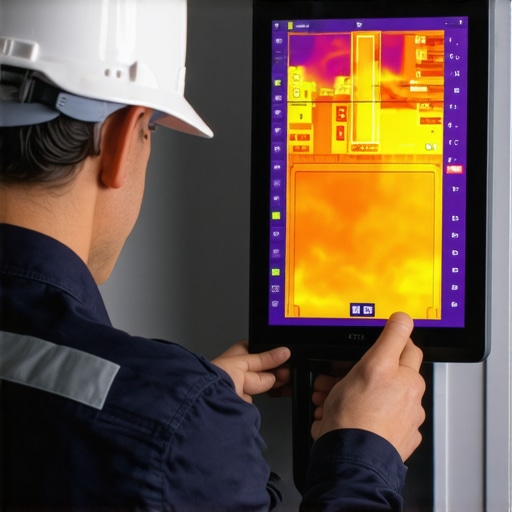
I stopped guessing about the health of my chargers the day I bought a handheld thermal imager. If you’re managing more than two plugs, you need to see what’s happening behind the cover plates. I do a walkthrough every three months while the fleet is under full load. If a breaker looks like a glowing ember on my screen, I’ve caught a loose wire before it turns into a service call. It’s part of my broader strategy for ev charger troubleshooting expert tips for common issues—find the heat before the heat finds your wallet. I also keep a kit of the essential spare parts to keep for your home charging unit, like replacement J1772 holsters and cable management clips, because physical wear and tear is the silent fleet killer. The sheer physical abuse these cables take from being dropped and dragged is enough to compromise even the best industrial insulation.
How do I keep this expensive hardware running for a decade?
People often think these units are like gas pumps—set it and forget it. But a gas pump doesn’t have a motherboard and a high-voltage inverter constantly battling the elements. Maintenance is more than just wiping down the screens. You have to be proactive about the environment, especially if you are located near the coast or in the salt belt. You need to know how to spot corrosion inside your outdoor charging pedestal before it reaches the main logic board. I’ve seen morning dew and minor leaks turn a $10,000 unit into a paperweight in less than three seasons. Beyond the physical, don’t neglect the digital. I set a calendar reminder to check how to update the firmware on your smart charging station every month. According to the NFPA 70 Article 625 (National Electrical Code), EV charging is considered a ‘continuous load,’ meaning it pulls full power for hours at a time. This puts a massive strain on every connection point, which is why software-driven thermal monitoring and up-to-date firmware are no longer optional.
Future-Proof Your Service Before the 2025 Rules Kick In
The landscape is shifting faster than most business owners can keep up with. If you are still running on a basic service with four chargers, you are likely living on borrowed time as your fleet grows. I am already implementing panel upgrade strategies to meet ev charging code requirements in 2025 to prepare for bidirectional charging (V2G). Eventually, your fleet won’t just consume power; it will provide it back to your building during peak demand, essentially turning your vans into a revenue-generating battery. To get there, you need to double-check your current setup and how to verify code compliance for your ev charger installation to ensure you aren’t building on a shaky foundation. I keep a dedicated log of every error code we encounter, using troubleshooting ev chargers common compliance pitfalls and fixes as a guide to spot patterns before they lead to a total outage. If you’re feeling overwhelmed by the technical requirements or the heat signatures you’re seeing in your panels, don’t hesitate to contact us for a professional audit. My biggest piece of advice? Go buy a calibrated torque wrench today and re-torque every terminal in your charging panel to the manufacturer’s spec; it is the single most effective way to prevent a fire and keep your delivery windows open.
The Real-World Realities They Don’t Print in the Manual
Looking back at that Tuesday morning, I realize I was trying to solve a 2025 problem with a 2015 mindset. The biggest hurdle isn’t the hardware; it’s the maintenance philosophy. I’ve learned that ensuring code compliance when installing ev chargers is just your ticket to play—the real win is in the follow-up. Every six months, we now do a full ‘stress test’ where we charge every vehicle simultaneously for two hours. It’s the only way to see how the system breathes under pressure. If you’re not doing this, you’re just waiting for a component to fail at the worst possible time. Another lesson? Don’t treat software like a ‘bonus’ feature. If you ignore ev charger troubleshooting expert tips for common issues, you’ll find yourself stranded by a simple cloud sync error or a frozen firmware update. I now treat my charger’s cellular signal as being just as important as the copper in the walls.
Building Your Fleet’s Reliability Toolkit
I don’t go anywhere near our charging bays without a few specific items that have saved us thousands in potential downtime. First is a calibrated torque wrench—because as I mentioned before, ‘hand tight’ is a recipe for a thermal event. Second, a high-quality thermal imager is your best friend for spotting troubleshooting ev chargers common compliance pitfalls and fixes before they ever trigger a breaker. I also keep a physical binder of every single load calculation and permit, because when an inspector shows up for a surprise visit, having your how to verify code compliance for your ev charger installation paperwork ready keeps your operation running without interruption. Lastly, keep a stash of the essential spare parts to keep for your home charging unit, such as replacement J1772 holsters and cable management clips, as physical wear is the most frequent cause of minor failures.
#IMAGE_PLACE_HOLDER_E#
Stepping into a Faster Future with Confidence
Transitioning to high-speed infrastructure feels daunting, but it’s the most transformative thing you can do for your logistics. You aren’t just buying chargers; you’re buying uptime and peace of mind. By focusing on a robust upgrading your panel for better EV charging performance strategy now, you’re setting your business up to handle the next generation of high-capacity batteries. The anxiety of 20% battery levels will soon be a distant memory for your drivers. If you ever feel like the technical requirements are stacking up against you, feel free to contact us for a second pair of eyes on your layout. We’ve been in the trenches and know exactly what it takes to keep those wheels turning safely and efficiently. Have you ever had a ‘ghost error’ that vanished the moment an electrician walked through the door? Let me know in the comments below!