I’ll never forget the sharp, metallic tang of ozone that drifted through my garage the first night I tried to charge my new EV. It was a visceral “uh-oh” moment. I stood there, staring at a breaker panel that looked like it had been installed during the Eisenhower administration, wondering if I’d just made a very expensive mistake. My kitchen lights were flickering like a scene from a low-budget horror movie, and I immediately started worrying about the fishy smell coming from my panel. I called an electrician, and when he handed me a $4,500 quote for a service upgrade, I felt the air leave my lungs. I nearly gave up on home charging entirely. But then, I stumbled upon a piece of information that changed everything: my utility company actually wanted to help me pay for it.
Stop Paying Out of Pocket for a Heavy-Up
The biggest mistake I made early on was assuming that everything past the utility pole was my financial burden. I spent weeks researching what I needed for an EV panel upgrade, dreading the invoice. What I didn’t realize is that many utilities have massive, under-publicized budgets for residential infrastructure. They see your EV not just as a car, but as a new revenue stream, and they are often willing to subsidize the cost of the utility service upgrade to ensure your home can handle the load.
Is the utility really going to write me a check?
It sounds like a suburban myth, right? I was incredibly skeptical too. However, according to data from the U.S. Department of Energy, state-mandated electrification goals have forced utilities to set aside billions for grid updates, which often includes the hardware on your side of the meter. I almost fell for the “quick fix” of trying to squeeze a level 2 charger onto a 60-amp service, which would have been a disaster for my home’s resale value and safety. Instead, I learned how to navigate their “make-ready” programs. Have you ever felt like your power company is just a faceless giant taking your money every month? It’s time to flip the script. [IMAGE_PLACEHOLDER] Today, I’m going to show you exactly how to make them foot the bill for your next big electrical project.To get the utility to pay, you have to speak their language. They don’t call it ‘free money.’ They call it ‘Residential EV Infrastructure Support’ or ‘Make-Ready Programs.’ The first thing I did was pull my last three electric bills and look for a small line item labeled ‘Energy Efficiency’ or ‘System Improvement.’ That’s where your money is hiding.
Scout for the Make-Ready Gold Mine
I remember sitting at my kitchen table, frustrated, after finding a ‘make-ready’ PDF on my utility’s website that was 40 pages long. I almost closed the tab. But then I saw a clause: if the service upgrade is required to support a Level 2 charger, the utility would cover up to $2,500 of the line-side work. That meant the new wire from the pole and the new meter base—the most expensive parts—were essentially free. I had to pay my electrician for the inside work, but the ‘heavy lifting’ was on them. You need to search your utility’s website for ‘EV charging rebates’ or ‘make-ready’—don’t just look at the residential homepage, dig into the ‘clean energy’ or ‘contractor’ sections to find the actual incentive documentation.
Prove Your Panel is Maxed Out
Before you call the utility, you need a professional load calculation. This isn’t just a guess; it’s a formal document that proves your current service is insufficient for the added demand of an EV. If you try to skip this, you might end up with 5 signs your main breaker is overwhelmed. My electrician showed me that my dryer, AC, and new charger together exceeded my panel’s capacity by 20 percent. That ‘fail’ was my golden ticket. It proved to the utility that their existing infrastructure couldn’t support the ‘electrification’ goals the state was breathing down their necks about. If you have an older home, you’re likely already dealing with panel upgrades for EV chargers that are long overdue. 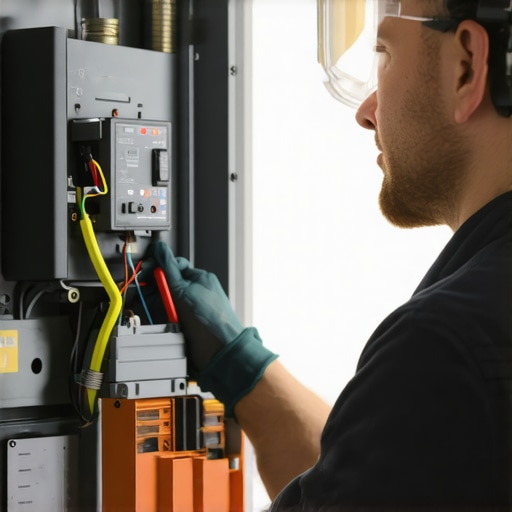
Nail the Code Compliance Check
You must focus on how to verify code compliance for your EV charger installation. The utility won’t touch your project if it looks like a DIY disaster. I once saw a neighbor try to save money by using a standard extension cord—please, understand the danger of using an extension cord for level 1 charging. It’s an automatic rejection from any rebate program. One detail people miss is the torque. Inspectors are getting strict about internal connections. I actually had to show my inspector the specific torque wrench settings for a wall connector because if those lugs aren’t tight to spec, the heat buildup can melt your new equipment and void your utility agreement.
Why a Subpanel Might Be Your Best Friend
Sometimes a simple upgrade isn’t enough. If your main panel is tucked away in a finished basement, it might be easier to run a heavy feeder to the garage and install a dedicated subpanel. This is why your garage needs a subpanel for that second EV even if you only have one car today. It simplifies the wiring and keeps the utility-funded upgrade clean and concentrated on the high-load areas, making the final inspection a breeze.
Stop treating the NEC as a finish line
Most homeowners—and honestly, some general electricians—mistakenly believe that passing a municipal inspection means the job is ‘perfect.’ I’m here to tell you that’s a dangerous misconception. In my experience, code is simply the bare minimum safety standard; it is not a performance standard. For example, while ensuring code compliance when installing EV chargers might satisfy an inspector, it doesn’t guarantee your car will charge at peak efficiency. Most people think ‘if it passes, it’s fast,’ but the National Electrical Code (NEC) doesn’t account for the subtle loss of power that happens over long wire runs.
The voltage drop secret that slows your morning
If your charger is at the far end of a long garage or a detached shed, you might be a victim of a silent performance killer. Even if you follow the code compliance essentials for EV charger installations in 2025, a standard wire gauge might technically pass inspection while causing a 3% to 5% drop in voltage. This results in heat and wasted money. I’ve seen setups where the voltage drop secret was the culprit behind a charger taking nine hours to do a job that should have taken six. Always ask your installer to size up the wire gauge for runs over 50 feet. It costs a bit more upfront, but it pays for itself in charging speed and longevity.
Why does my 50-amp circuit feel sluggish?
This is the question that separates the pros from the amateurs. Often, the issue isn’t the car or the charger; it’s the thermal throttling happening inside your panel. If your electrician skipped the forgotten torque test that prevents panel fires, the connection points can create micro-arcs and excessive heat. According to the National Fire Protection Association (NFPA), improper terminations are a leading cause of electrical failure in high-draw continuous loads like EV charging. 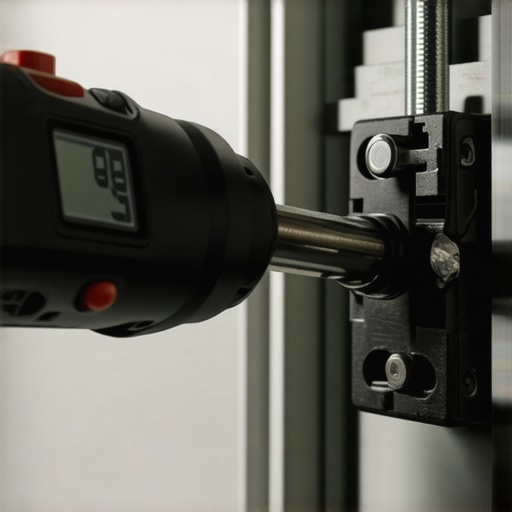
The torque wrench is not optional
Here is the ‘oops’ factor I see constantly: tightening panel lugs ‘by feel.’ Modern breakers for EV circuits require specific inch-pound settings. If they are too loose, they heat up; if they are too tight, they crush the wire strands, creating a bottleneck. This is a critical step in upgrading your panel for better EV charging performance. I once helped a neighbor who was dealing with constant ‘nuisance trips’ only to find his main lugs were half a turn away from melting the busbar.
Don’t ignore the diagnostic lights
When things go wrong, don’t just flip the breaker and hope for the best. Proper ev charger troubleshooting requires looking at the blink codes on your unit. Often, a ‘ground fault’ error isn’t a broken charger—it’s a sign that your home’s grounding system is inadequate, a common issue when panel upgrade strategies fail to include a new ground rod. Have you ever fallen into this trap of thinking ‘done’ meant ‘optimized’? Let me know in the comments.
The six-month checkup that prevents a meltdown
Most people think that once the inspection sticker is on the panel, they never have to look at their charger again. That’s a recipe for a 2 a.m. emergency. I make it a habit every six months to open my panel—carefully—and check for signs of heat stress. I personally use a FLIR thermal camera attachment for my phone. It sounds like overkill, but seeing a bright yellow ‘hot spot’ on a breaker can tell you if your main lugs might be loose after a year of charging before you ever smell smoke. The National Electrical Manufacturers Association (NEMA) emphasizes that thermal cycling—the constant heating and cooling of wires—can naturally loosen connections over time.
Stop insects from turning your conduit into a condo
You’d be surprised how many ‘faulty’ chargers are actually just victims of biology. Spiders and wasps love the warmth of a charging unit and the ready-made tunnels of your conduit. If you don’t use the proper way to seal conduit openings against spiders and dust, you risk a short circuit that can fry a $600 motherboard. I use duct seal putty at every entry point. It’s a five-dollar fix that prevents a five-hundred-dollar headache.
How do I keep my charging station running for a decade?
Consistency is key. Beyond the internals, I regularly wipe down the charging handle and inspect the pins. If you notice any discoloration, you need to know why your ev plug contacts look burnt and what to do next because that resistance will only increase your power bill and slow down your charging. 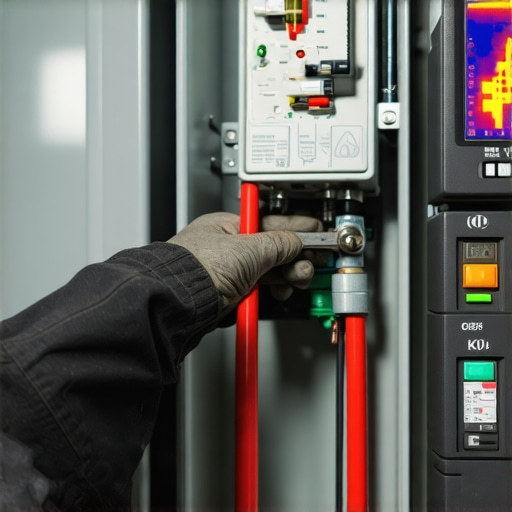
Future-proof your garage with a smart subpanel
If you’re planning on a second EV, don’t just run another individual line. I’m a huge advocate for how to properly size a subpanel for your ev workshop. This gives you a central hub for maintenance and troubleshooting. I predict that within the next five years, bidirectional charging (V2H) will be the standard, and having a dedicated subpanel now makes that transition much cheaper later. If you’re currently seeing errors, don’t panic—start with ev charger troubleshooting expert tips for common issues before you call the pros. My biggest piece of advice? Go buy a high-quality torque wrench today and verify those settings yourself. It is the single most important tool in your EV maintenance kit. Try checking the torque on your breaker lugs this weekend; you might be shocked at how much they’ve settled since the initial install.
The Hardest Lesson I Learned While Chasing Peak Charging Speed
I used to think ‘good enough’ was okay for my garage, but I was wrong. The biggest ‘aha’ moment was realizing that every connection is a potential failure point that can degrade over time due to thermal cycling. If you ignore the little things, you’ll eventually be forced into ev charger troubleshooting at the worst possible time—usually when you’re late for work. I also learned that the utility company is not your enemy; they are your silent partner in financing that heavy-up if you know how to navigate their make-ready programs. Lastly, never underestimate the power of a dedicated subpanel; it’s the difference between a cluttered electrical mess and a professional, safe charging station.
The Diagnostic Tools That Saved My Sanity
You don’t need a degree in electrical engineering, but you do need the right gear to ensure your setup stays safe. A high-quality digital torque wrench is non-negotiable—I recommend checking the specific torque wrench settings for a wall connector before you even start the job to avoid crushed wires or loose lugs. I also swear by a basic thermal camera attachment for my smartphone; it makes spotting a loose connection or an overheating breaker as easy as taking a photo. [IMAGE_PLACEHOLDER_E] Finally, keep a copy of the latest code guidelines handy to ensure you are ensuring code compliance when installing EV chargers without the guesswork. Learning how to verify code compliance for your EV charger installation yourself can save you from a failed inspection and expensive rework.
Building a Future-Ready Home One Breaker at a Time
Transitioning to electric driving is about more than just a car; it’s about upgrading your home’s DNA for the next generation of energy efficiency. By following smart panel upgrade strategies to meet ev charging code requirements in 2025, you aren’t just passing an inspection—you’re protecting your family and your real estate value. Don’t let the technical jargon or the initial contractor quotes scare you away. Take it step-by-step, utilize every utility rebate available, and do the job right the first time. Your future self will thank you every morning when you walk out to a fully charged, safely powered vehicle. Have you ever found a loose connection or a ‘hot spot’ in your panel after a long charging session? Let me know in the comments below!