I still remember the sinking feeling in my gut when I walked out to the driveway at 6 AM, coffee steaming in my hand, and saw a limp, severed wire where my Level 2 charger used to be. Someone had literally snipped my investment right off the wall while I slept twenty feet away. It’s a gut-punch that makes you feel both violated and incredibly frustrated—not to mention the headache of being stranded with a nearly dead battery. If you’ve ever worried about your gear walking away in the middle of the night, you aren’t being paranoid; you’re being smart. Today, I’m going to share exactly how I turned my driveway from a ‘help-yourself’ buffet into a fortress, and how you can do the same without breaking the bank or ruining your curb appeal.
Your Charger is a Target and Why I Learned the Hard Way
When I first installed my unit, I made the classic rookie mistake of thinking my neighborhood was ‘too nice’ for thieves. I didn’t even bother with a lock. I figured the weight of the cable and the obscure nature of EV tech would protect it. Boy, was I wrong. According to the National Insurance Crime Bureau (NICB), the rising value of metals like copper has led to a significant spike in thefts of outdoor electrical components across the country. This isn’t just about the hardware cost; it’s about the impact of ev charging on your home resale value and your daily peace of mind. I quickly realized that ensuring code compliance when installing EV chargers is only half the battle; the other half is making sure the thing stays on your wall. Have you ever walked out to find your charging port tampered with? I’d love to know if I’m not the only one who has faced this specific nightmare.
Is cable theft actually worth the worry?
You might be thinking, ‘Who would actually want to steal a heavy, specialized cable?’ The reality is that thieves aren’t always looking to resell the charger as a unit. Many are after the high-grade copper inside that feeds your vehicle. A standard Level 2 cable contains a significant amount of the stuff, and with scrap prices fluctuating, it’s a tempting prize for someone with a pair of bolt cutters. I once tried to save money by using a cheap, flimsy padlock from a big-box store—it was cut in seconds. That was a mistake that taught me the difference between a $500 and $1500 charger install; security isn’t where you want to cut corners. Whether you are troubleshooting ev chargers common compliance pitfalls or just trying to keep your property safe, a layered defense is the only way to go. We need to look at everything from physical locks to smart monitoring to keep the ‘bad guys’ at bay before we even get to the stage of how to protect your charging station from local vandals. It’s time to get proactive about your outdoor electrical security.
The transition from feeling like a victim to feeling like a strategist started with one realization: a plug-in charger is basically a portable ATM for thieves. If you can unplug it in three seconds, so can they. I spent a frantic Saturday last October ripping out my old NEMA 14-50 outlet and switching to a permanent connection because I finally understood the critical difference between hardwired and plug-in chargers. Hardwiring your unit doesn’t just look cleaner; it creates a significant physical barrier. A thief with a pair of snips can take a cable, but taking the whole unit requires opening the housing, which buys you time and likely triggers a security camera alert.
Stop Making it Easy by Bolting Everything Down
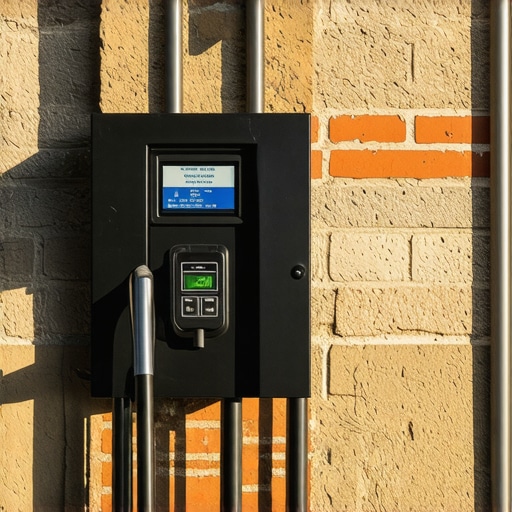
When I first installed my replacement unit, I didn’t just screw it into the siding. I used security Torx bolts that require a specific driver bit. Most opportunistic thieves carry bolt cutters or a standard screwdriver, not a specialized bit set. Think of your charger security like a home safe—if it isn’t bolted to the floor, it isn’t actually a safe. Beyond the unit itself, you need to think about the ‘path of least resistance.’ If your wire is exposed, it’s a target. I learned that the exact conduit depth required for outdoor chargers is not just a code requirement for safety; it’s a security feature. Running your wires through thick, rigid metal conduit (RMC) rather than thin PVC makes it significantly harder for someone to quickly saw through and grab the copper.
Build a Physical Cage if You Must
If you live in a high-traffic area, sometimes a lock isn’t enough. I’ve seen neighbors install custom-made steel cages around their units. It might sound overkill, but when you consider how to protect your charging station from local vandals, a physical barrier is the only 100% effective deterrent. I actually tried a heavy-duty locking holster first. It worked for the handle, but it didn’t protect the cable. The cage approach ensures the entire loop is inaccessible when you aren’t home. It’s the same logic as putting a steering wheel lock on a car—it’s about making your neighbor’s house look like a much easier target than yours.
Check if Your Panel Can Handle the Extra Security Gear
Most people don’t think about their electrical panel when they think about security, but they should. Adding motion-sensing floodlights, high-definition cameras, and smart alarms all pull a small but consistent load. Before you go on a security shopping spree, you need to know how to tell if your panel has space for an EV circuit and the additional peripheral devices. Think of your electrical panel like a dinner table; if every chair is already taken by the AC, the dryer, and the car, you can’t just squeeze in three more ‘guests’ without someone getting bumped off. I once saw a DIY security install where the owner tapped into the EV circuit for his floodlights. Bad move. It caused constant nuisance trips because the charger’s heavy draw didn’t leave enough headroom for the lights to kick on. If you notice 5 signs your main breaker is overwhelmed by a new level 2 charger, adding more security hardware might actually compromise your home’s electrical integrity.
The Power of Smart Monitoring
Modern chargers come with WiFi for a reason, and it isn’t just to see how many miles you added. I have my alerts set to ‘aggressive.’ If my charger loses connectivity or is manually paused, my phone starts buzzing like a hornet’s nest. This saved me once when a group of kids tried to mess with the handle. The instant notification allowed me to flip on the porch lights before they could do any real damage. If you’re constantly fighting with your app, you might be troubleshooting ev charger connectivity problems instead of actually protecting your gear. A stable connection is a security requirement, not a luxury. Layering these digital alerts with physical locks creates a ‘defense-in-depth’ strategy that most thieves simply won’t bother testing.
Let’s dig deeper into what I call the ‘Compliance Mirage.’ Most homeowners believe that as long as the green light is on, the system is perfect. But I’ve learned that ensuring code compliance when installing EV chargers isn’t about just checking boxes for an inspector; it’s about managing the extreme thermal stress of a continuous electrical load. Everyone tells you that you need a bigger panel to be safe, but in my experience, upgrading your panel for better ev charging performance is often secondary to the literal quality of your terminal connections. The National Fire Protection Association (NFPA) explicitly states in NEC 110.14(D) that where a torque value is indicated, a calibrated tool must be used. If your electrician just used a standard screwdriver because they’ve ‘done this for twenty years,’ you might have a ticking time bomb. I’ve seen top-of-the-line units fail because of the forgotten torque test that prevents panel fires. It is a common trap: you focus on the software and the external security cameras while the metal inside your wall is slowly expanding and contracting into a loose, sparking mess. 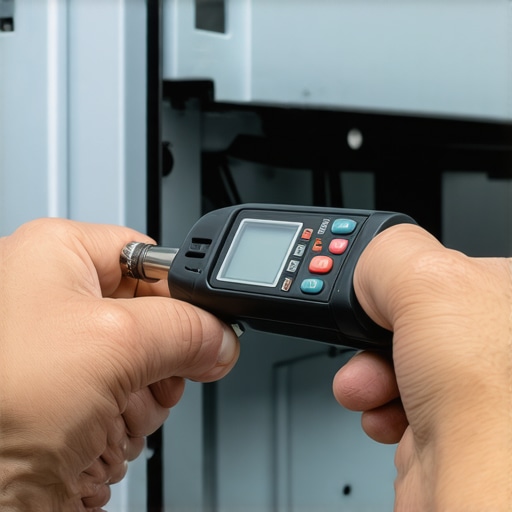
Why did my perfectly installed breaker trip after six months?
This is the advanced question that keeps many owners up at night. Often, it isn’t a hardware failure at all; it’s a symptom of environmental nuances like humidity or slight grounding imbalances. If you are trying to figure out why your ev charger trips the gfci in the rain, you’re likely dealing with a sensitivity conflict between your charger’s internal safety logic and your home’s breaker. This is why learning how to verify code compliance for your ev charger installation involves more than a visual check. You have to understand the interplay between the specific breaker brands that hate constant ev loads and the atmospheric conditions of your garage. I once spent three days troubleshooting ev chargers common compliance pitfalls and fixes only to realize the issue was the wire gauge mistake that fails 40 percent of inspections. Using a gauge that is ‘just enough’ leads to voltage drops that trigger safety resets. Have you ever fallen into this trap? Let me know in the comments.
Stop the Heat Before it Stops Your Commute
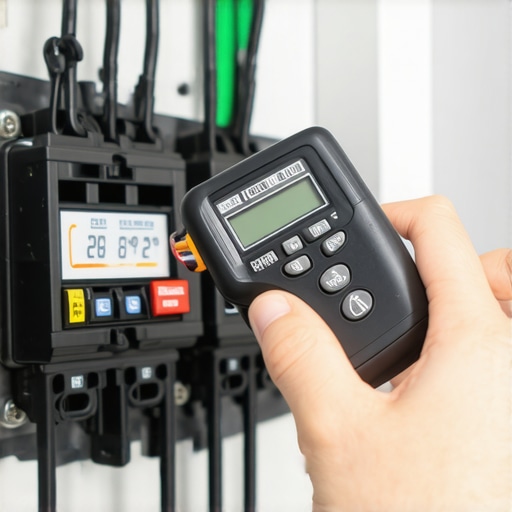
One thing I’ve learned from obsessively monitoring my own setup is that heat is the ultimate enemy. Even with the best gear, those heavy amps moving through your wires for eight hours straight every night generate a lot of thermal energy. To stay ahead of the curve, I bought a basic handheld infrared thermometer. Every three months, while my car is drawing its full load, I open the panel door and scan the breakers. If I see one sitting at 140°F while the others are at 90°F, I know I’ve got a loose connection that needs attention. It’s part of ev charger troubleshooting expert tips for common issues that most people ignore until they smell smoke. I’m also a big fan of using a contact cleaner to how to clean your charger ports without damaging them, especially after a particularly dusty summer. According to the International Association of Electrical Inspectors (IAEI), nearly 30% of electrical failures in high-load residential scenarios can be caught early through this kind of periodic thermal inspection. This isn’t just about the charger; it’s about the long-term integrity of your home’s infrastructure. If you notice a persistent hot spot, you might be looking at upgrading your panel for better ev charging performance to handle the modern demands of an all-electric household.
The Cheap Tool That Saves My Hardware Every Season
I cannot stress this enough: get yourself a torque wrench. I don’t care if you’ve been a DIYer for decades; you cannot feel the difference between 20 and 35 inch-pounds by hand. When I was how to verify code compliance for your ev charger installation, I realized my installer had skipped the final torque check. I went back in with the specific torque wrench settings for a wall connector and found two lugs that were dangerously loose. This isn’t just about code; it’s about making sure your house doesn’t burn down while you’re asleep. Loose terminals are the leading cause of arcing, which is why how to spot arc-faults before they kill your charging session is a skill every owner needs. If you’re currently working on your garage, make sure you or your electrician actually uses a calibrated tool, don’t just ‘grunt-tighten’ the connections and hope for the best.
How do I keep my home charging setup running for a decade?
Consistency is key. Aside from the thermal checks, I recommend a physical inspection of the cable every month. Look for nicks, ‘kinking’ in the outer jacket, or any discoloration on the plug pins. We are moving toward a future where our cars will actually power our homes during outages, and knowing how to use your ev as a backup home battery safely will require a rock-solid, bidirectional-ready infrastructure. In the next few years, I predict we will see smart panels and V2G (Vehicle-to-Grid) technology become the standard, automatically managing loads so we don’t even have to think about it. This shift will turn our chargers from simple appliances into critical power hubs. For now, we are the early adopters, which means we have to be the smartest people in the room regarding maintenance. My advanced tip for you this week is to buy a $30 infrared temp gun today and scan your breaker while the car is pulling 40 amps—it’s the most eye-opening thing you’ll ever do for your home’s safety. It takes ten seconds and could save you from a multi-thousand-dollar panel replacement down the road.
Lessons From My Driveway Fortress
After months of tinkering, I’ve realized that the best security isn’t just about a lock; it’s about a proactive mindset. One of the biggest shifts for me was learning how to verify code compliance for your ev charger installation on my own instead of blindly trusting a contractor. I also found that the forgotten torque test that prevents panel fires is the single most important 10-minute check you can perform. Finally, remember that your setup is alive—it breathes heat and handles massive loads, so treating it like a set-it-and-forget-it toaster is the fastest way to invite trouble.
My Personal Safety Toolkit
I don’t leave my electrical health to chance, and you shouldn’t either. I swear by a basic infrared thermometer to catch hot spots before they melt a breaker. I also highly recommend a calibrated torque wrench to ensure every lug is snug to manufacturer specs. If you’re finding that your hardware is pushing your home to its limit, upgrading your panel for better ev charging performance is a long-term investment that pays for itself in peace of mind. These aren’t just gadgets; they are the frontline of your home’s defense. #IMAGE_PLACEHOLDER_E#
Take Control of Your Power Today
Building a secure and reliable charging setup doesn’t happen overnight, but every small step you take—whether it’s adding a security bolt or checking a wire gauge—makes your home safer. Focus on ensuring code compliance when installing EV chargers and the rest of the security pieces will fall into place. You’ve got the knowledge now; it’s time to go out to the garage and make it happen. Your EV charger is more than just a plug; it’s the heartbeat of your daily commute.
Have you ever caught a loose wire or a hot breaker before it caused a real problem? Let me know in the comments below!