I was standing in my garage, admiring the green glow of my new charger, feeling like I’d finally beaten the system. No more gas stations. No more oil changes. Then, the first full-month utility bill arrived. It wasn’t just high; it was astronomical. I’d missed a crucial detail: my utility company didn’t just want to sell me power; they wanted to track exactly where it was going. I realized then that the real reason your electricity bill doubled might not be the car itself, but the rate you’re being charged for it. To get the cheap electricity they promised for EVs, I needed a separate meter.
The Day My Electricity Bill Made Me Do a Double Take
Look, I made a classic mistake. I jumped the gun and installed my Level 2 unit without checking the fine print of my local utility’s EV-specific tariffs. I thought a standard panel upgrade for EV chargers was the end of the road. It wasn’t. By the time the inspector showed up, I learned that to qualify for the discounted overnight rates, my car’s juice had to be measured entirely separately from my toaster and my AC. This meant a second meter socket, another permit, and a lot of frustration.
Is this just a sneaky way for the power company to charge me more?
Honestly, I thought so at first. It felt like another hoop to jump through and another bill to pay. But here is the kicker: a separate meter is often the only way to access Time-of-Use (TOU) rates that can drop your charging costs to pennies. Without it, you might be stuck paying peak afternoon rates for a car that sits in your garage all night. A report from the Smart Electric Power Alliance suggests that as more of us plug in, utilities are forced to use these meters to manage grid stability and prevent local transformers from literally melting under the strain of thousands of cars charging at once.
Why Your Commute Needs Its Own Power Line
Moving to a separate meter system isn’t just about the bill; it’s about ensuring code compliance when installing EV chargers in a way that future-proofs your home. If you are wondering how to get the utility company to pay for your service upgrade, asking about a dedicated EV meter program is often the secret handshake you need. They want the data, and they are sometimes willing to subsidize the hardware to get it. Have you checked your utility’s website lately to see if they offer a dedicated EV rate? It might be the difference between saving a fortune and just trading a gas bill for a massive power bill. I learned the hard way that installing a dedicated meter upfront is much cheaper than retrofitting one six months later.
Map Out Your Dedicated Meter Strategy
Moving from the idea of saving money to actually seeing it on your bill requires a physical change in how power enters your home. Think of your home’s electrical system like a plumbing network; your main service is the big pipe coming from the street. When you add a high-power EV charger, you are essentially trying to hook up a fire hose to a kitchen sink. To get those sweet EV-only rates, you need a way to branch that fire hose off before it ever hits your house’s main meter. This usually involves installing a new meter socket in parallel with your existing one. I remember the first time I attempted this; I thought I could just tap into the existing lines. I quickly realized that ensuring code compliance when installing EV chargers means following a very specific sequence that the utility company dictates.
Choose Between a Sub-Meter or a Utility-Owned Unit
You have two paths here. A private sub-meter is great for your own data tracking, but if you want the utility company to actually lower your rate, they usually insist on their own equipment. This means you’ll need a dual-meter socket adapter or a completely separate meter hub. If you are already looking into panel upgrades for EV chargers, this is the time to make that move. I once helped a neighbor who ignored this advice; he installed a beautiful Level 2 charger only to find out the utility wouldn’t give him the discount because his meter couldn’t distinguish between his Tesla and his air conditioner.
Don’t Skip the Load Calculation Step
Before you start drilling holes in your siding, you must perform a load calculation. This isn’t just busy work; it’s about making sure you don’t melt your main service lugs. If your home has a 100-amp service and you add a 50-amp charger, you’re already at half capacity before you even turn on a light bulb. Many older homes require upgrading your panel for better EV charging performance to handle the continuous draw of a vehicle. I’ve seen panels that literally smelled like burnt fish—a classic sign of overheating—because someone tried to skip this step.
Wire Gauge and Terminal Security
When you are running the lines from the new meter to your charger, the gauge of the wire is non-negotiable. Using a wire that is too thin is like trying to push a gallon of water through a straw; it creates heat and resistance. Once the wire is in place, the forgotten torque test that prevents panel fires is the final hurdle. Most DIYers just tighten the screws until they feel ‘snug,’ but breakers and lugs require specific inch-pound settings. If they are too loose, they arc; if they are too tight, they crush the wire and create a hot spot.
Why Your Inspector Is Obsessed With Labeling
Once the physical work is done, you have to prove it’s safe. One of the most common reasons people fail their final electrical inspection is poor documentation. You must know the right way to label your electrical panel for EV circuits so that anyone—including emergency responders—knows exactly how to kill the power to the charger. I once spent three hours tracing wires in a basement because a previous owner hadn’t labeled a single thing. It’s frustrating and, more importantly, it’s a code violation. If you are struggling with a charger that keeps tripping or won’t start, ev charger troubleshooting often starts with checking these very connections. Setting up a dedicated line ensures that when you do need to fix something, you aren’t guessing which circuit is causing the headache. If you find your garage setup getting crowded, it might be time to consider why your garage needs a subpanel for that second ev to keep your wiring organized and compliant.Let’s dig deeper into what actually happens behind your drywall once that charger starts pulling 40 amps for eight hours straight. Most homeowners are told that a 200-amp service is the gold standard, but here is a contrarian take: a bigger panel doesn’t always solve your problems if your load calculation is flawed from the start. I’ve seen people spend $3,000 on upgrading your panel for better EV charging performance only to find their main breaker still trips because they didn’t account for the ‘continuous load’ rule. According to the National Fire Protection Association (NFPA) 70 code, an EV charger is a continuous load, meaning it can only pull 80% of the breaker’s rated capacity. If you put a 50-amp charger on a 50-amp breaker, you aren’t being efficient; you are creating a fire hazard.
Is a 200-Amp Upgrade Always the Only Solution?
Many electricians will default to a full service change, but in my experience, you can often find the secret to getting faster charging without a new panel by using smart load-shedding devices. These units can temporarily pause your car’s charging if the electric range and dryer kick on at the same time. It’s a sophisticated way to stay within code without the massive overhead of a utility service upgrade. However, if you do go the upgrade route, make sure you know how to verify code compliance for your ev charger installation specifically regarding the 125% overcurrent protection rule.
The Humidity Trap That Triggers Nuisance Tripping
One ‘oops’ factor that almost no one discusses is the role of ambient temperature and moisture. I once spent a week helping a client with ev charger troubleshooting because their unit worked perfectly at 2 AM but tripped every morning at 8 AM. It turned out that high morning humidity was causing a micro-arc in a slightly loose terminal. If you are dealing with a similar headache, check out these 6 ways to stop nuisance tripping during high humidity charging. It usually comes down to the forgotten torque test that prevents panel fires. When metals heat up, they expand; if those lugs aren’t torqued to the exact inch-pound spec, they eventually wiggle loose enough to cause a thermal event. Have you ever fallen into this trap where a ‘perfect’ install started acting up months later? Let me know in the comments. This is exactly why specialized knowledge beats a general ‘handyman’ approach every single time.If you think the job is done once the green light on your charger stays solid, I’ve got some news for you. Most homeowners treat an EV charger like a toaster—plug it in once and never think about it again. But remember, you are running the equivalent of four central AC units through a single breaker for hours at a time. This is why I keep a specialized kit in my garage specifically for electrical upkeep. I’m not talking about a basic set of pliers; I’m talking about an insulated torque screwdriver. Why? Because thermal cycling is real. As electricity flows, wires heat up and expand; when the car stops charging, they cool and contract. Over a few years, this can actually back a screw out of a terminal. I personally check the specific torque wrench settings for a wall connector every six months to ensure nothing has wiggled loose. Ignoring this is how you end up back at ev charger troubleshooting because of a melted lug.
How do I maintain my EV charger over the long haul?
Maintenance isn’t just about the wires; it’s about the environment. If your unit is outdoors, you need to be vigilant about the elements. I make it a habit to check the handle for debris and use a can of compressed air to blow out the pins. You should also learn how to spot corrosion inside your outdoor charging pedestal before it starts causing resistance and slowing down your charge. According to the National Electrical Manufacturers Association (NEMA) PB 2.1-2013 standards, electrical equipment should be inspected regularly for signs of moisture or overheating to prevent catastrophic failure. If you see even a hint of discoloration on the copper, it’s time to call a pro.
The Toolbox Must-Haves for a Permanent Setup
Beyond the screwdriver, I highly recommend a thermal imaging camera—even a cheap one that plugs into your smartphone. Once a month, while the car is charging at full power, I scan the breaker and the wall unit. If I see a bright purple or white ‘hot spot,’ I know a connection is failing before it ever smells like smoke. This is the ultimate way to stay on top of code compliance essentials for ev charger installations in 2025. You want to see a nice, even heat distribution. If you find yourself constantly resetting the system, don’t just flip the breaker back on; you are likely missing the forgotten torque test that prevents panel fires. 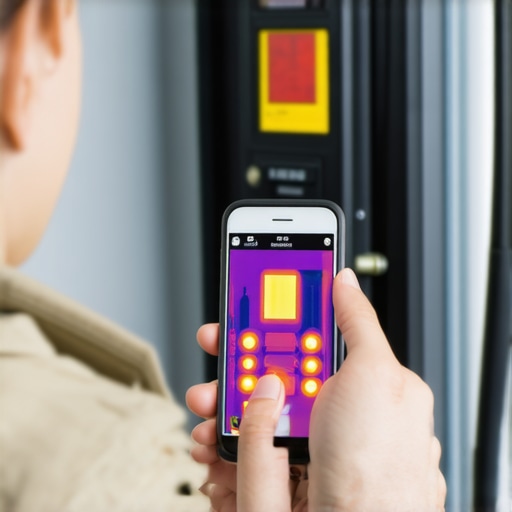
Smart Software and the Future of Home Charging
Looking ahead, I see the industry moving toward autonomous load-balancing. We are already seeing why your commercial garage needs load management software to prevent grid surcharges, and this tech is trickling down to residential units. Soon, your charger will ‘talk’ to your smart meter and your neighbors’ chargers to decide the best time to pull power. If you are already upgrading your panel for better EV charging performance, make sure you choose hardware that is ‘Open Charge Point Protocol’ (OCPP) compliant. This ensures you aren’t locked into one manufacturer’s ecosystem if they decide to start charging a monthly fee for their app. My advice? Go grab a torque screwdriver today and check your main breaker lugs; it is the single most effective way to ensure your house doesn’t become a cautionary tale in a local Facebook group. You need to know how to verify code compliance for your ev charger installation yourself because at the end of the day, you’re the one sleeping under that roof.
The Most Expensive Mistakes I Have Fixed in Other People’s Garages
After years of tinkering and helping neighbors, I’ve realized that the difference between a reliable system and a fire hazard usually comes down to three inches and a few pounds of pressure. First, the ‘I’ll remember what that breaker is for’ mindset is a trap. I have seen homeowners lose hours because they didn’t know the right way to label your electrical panel for EV circuits, leading to complete confusion during a simple reset. Second, never trust your ‘feel’ for tightness; metal fatigue is real. I always insist on the forgotten torque test that prevents panel fires because a loose lug is a ticking time bomb. Finally, don’t think you have to gut your whole house to get speed. You can often find the secret to getting faster charging without a new panel by using smart load management that prioritizes your car when the dryer is off.
The Toolkit I Use to Sleep Better at Night
If you are serious about DIY or even just overseeing a pro, you need more than a standard toolbox. I personally swear by an insulated torque screwdriver set, which is non-negotiable for ensuring code compliance when installing EV chargers. I also keep a smartphone-compatible thermal camera handy; it is the ultimate shortcut for ev charger troubleshooting because it spots heat before it becomes smoke. Lastly, keep a copy of your local jurisdiction’s latest electrical amendments. Knowing how to verify code compliance for your ev charger installation is the only way to ensure your insurance company doesn’t have an excuse to deny a claim later.
#IMAGE_PLACEHOLDER_E#
Own Your Electric Future
Transitioning to an EV is one of the most rewarding shifts you can make as a homeowner, but it requires shifting your mindset from ‘set it and forget it’ to active maintenance. By staying on top of your connections and occasionally upgrading your panel for better EV charging performance, you aren’t just powering a car—you’re building a more resilient, modern home. Don’t be intimidated by the wires; respect them, and they will serve you for decades. Have you checked your terminal torque settings since your charger was first installed? Drop a comment below and let me know what you found!