I’ll never forget the Tuesday evening I opened my utility portal and nearly choked on my coffee. I’d just spent three weeks smugly driving past gas stations in my shiny new EV, thinking I was a total financial genius. I was calculating how many lattes I could buy with all that saved gas money. Then the bill hit. It wasn’t just a little higher—it was double. I felt betrayed. I’d done the math on the window sticker, but my bank account was telling a much darker story. Was the whole ‘EVs save you money’ narrative just a clever marketing ploy? It turns out, I was doing almost everything wrong, from the time I plugged in to the hardware I chose for my garage.
The Night I Learned About Peak Pricing the Hard Way
The culprit wasn’t just the car battery; it was my own ignorance of how a home’s electrical ecosystem actually functions. I made the classic rookie mistake of coming home at 5:30 PM, plugging in my level 2 charger, and walking away. I didn’t realize that by doing so, I was drawing massive amounts of current during the ‘super-peak’ window when my utility company charges the absolute highest rates. I was essentially buying ‘premium’ electricity to fuel my budget-friendly car. It’s a painful lesson, but it’s one I can help you avoid. If you’ve been wondering why your level 2 charger takes twice as long or why the costs are spiraling, we need to talk about the math of your meter and the hidden losses in your setup.
Is my electric company actually out to get me?
It’s easy to feel like you’re being punished for trying to be environmentally conscious. However, the surge in your bill often comes down to complex rate structures you probably never had to care about before the car arrived. According to the U.S. Energy Information Administration, residential electricity prices can fluctuate by over 300% based on regional demand and time-of-day variables. Adding a high-draw appliance like an EV charger can also push you into a completely different pricing tier or ‘baseline’ allowance. If you haven’t looked into how to install a dedicated sub-meter for your ev charging costs, you might be flying blind when it comes to separating your car’s hunger from your refrigerator’s needs.
Early on, I also ignored the advice from my pro friends about why your electrician recommends a 60-amp circuit for a 48-amp charger. I thought I could just scrape by with the bare minimum, not realizing that thinner wires and maxed-out circuits generate more heat. Heat is literally wasted energy—electricity you pay for that never makes it into your car’s battery. Have you ever opened your utility app and felt that same sinking feeling in your chest after a month of driving electric? Tell me I’m not the only one who didn’t read the fine print on their rate plan before plugging in for the first time.
Today, we’re going to solve this mystery and get your budget back on track. I’m going to show you how to audit your own charging habits, why the difference between a 500 and 1500 charger install matters for your long-term efficiency, and the simple scheduling tweaks that can cut that bill back down to size. It’s not about driving less; it’s about charging smarter and understanding the load you’re putting on your home.
First, you need to dissect your utility bill like a crime scene investigator. Look for a line item called ‘Time of Use’ or ‘TOU’ rates. Most people stay on a flat-rate plan because it’s simple, but for an EV owner, simplicity is expensive. By switching to a plan that rewards off-peak usage, you aren’t just saving pennies; you are effectively cutting your ‘fuel’ cost by 70% or more. Many people don’t realize that why your electric utility might give you a free smart charger is often tied to these specific rate programs that help them manage the grid during heatwaves.
Stop Guessing and Start Auditing Your Utility Bill
Once you’ve settled on the right rate plan, you have to verify that your home can actually handle the extra thirst of a Level 2 unit. I once helped a neighbor who was convinced his charger was defective because it kept ‘cycling’ on and off. We did a quick check and realized his 100-amp panel was screaming for mercy every time his AC kicked on while the car was plugged in. Before you buy any hardware, you must know how to tell if your utility meter can handle the extra load. If you skip this, you’re just waiting for a main breaker to trip in the middle of the night, leaving you with a dead car and a warm refrigerator in the morning.
Your Panel Has a Maximum Capacity That You Should Not Ignore
Think of your electrical panel as a dinner table. If it only has six chairs, you can’t invite ten people to sit down at once. An EV charger is like inviting a very hungry guest who takes up two chairs. This is why many cities now insist on seeing professional math before they sign off on your project. Understanding why your ev permit application requires a load calculation worksheet is the only way to ensure you aren’t creating a fire hazard. If the math doesn’t add up, you might need to look into upgrading your panel for better ev charging performance to avoid bottlenecking your speeds.
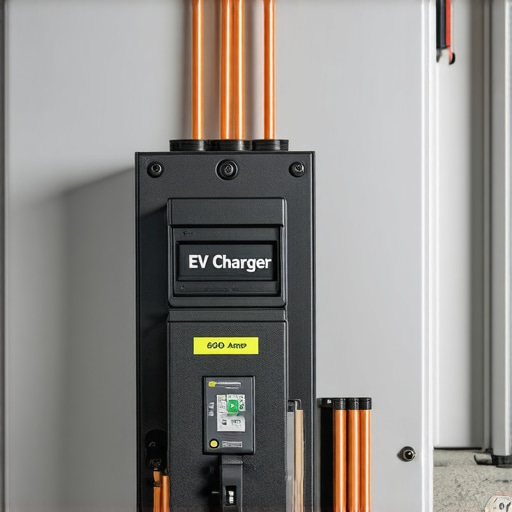
Choose Hardwired Connections Over Simple Plugs
I know the appeal of a NEMA 14-50 plug—you just buy it, plug it in, and you’re done. But for long-term savings and safety, hardwiring is the gold standard. Every time electricity passes through a mechanical connection like a plug and socket, there is resistance. Resistance equals heat, and heat equals wasted money on your bill. When you look at the real difference between hardwired and plug-in charging stations, the hardwired version wins on efficiency every single time. It also eliminates a common failure point that often leads to melted outlets.
Tighten Everything to Spec to Prevent Heat Loss
I learned this the hard way during my second year of EV ownership. I noticed the wall around my charger felt warm to the touch. When I opened the housing, I saw the insulation on the wires starting to discolor. I hadn’t used a torque wrench during the initial install. It turns out that the specific torque wrench settings for a wall connector are critical. A slightly loose wire creates a micro-arc that eats power and generates dangerous levels of heat. Ensuring you know how to verify code compliance for your ev charger installation means checking those lugs every year to make sure they haven’t vibrated loose. If you are planning for the future, you might even need to learn how to calculate the exact circuit load for a dual head charger so you don’t have to rip everything out when you eventually buy a second electric vehicle.
Most electricians will walk into your garage, see a 100-amp main breaker, and immediately quote you three thousand dollars for a full service upgrade. I am here to tell you that this is often overkill. The ‘big panel’ industry thrives on the assumption that you need raw, brute-force capacity, but we are living in the era of electrical intelligence. By looking into panel upgrade strategies to meet ev charging code requirements in 2025, you will discover that software can often solve what hardware can’t. You can save a small fortune by understanding how smart chargers use dynamic balancing to prevent blown fuses. This technology essentially throttles the car’s intake when your heavy hitters like the dryer or stove are running, keeping you safely within your current panel’s limits without ever tripping a breaker.
The Grounding Trap That Baffles Even Good Electricians
Here is the ‘oops’ factor that most DIYers—and even some seasoned pros—miss: the grounding system. An EV is not just another appliance; it is a sensitive computer on wheels. If your house was built before the mid-90s, your ground might be ‘noisy’ or insufficient for high-speed data handshakes between the car and the grid. I have seen dozens of owners pull their hair out over intermittent charging errors, only to realize that why your panel upgrade might require a new ground rod was not just a suggestion—it was a technical necessity for the car’s internal safety checks to pass. Without a clean path to earth, the charger’s internal safety relay often refuses to close, leaving you with a flashing red light and a dead battery in the morning.
Is your car fighting with your wallbox for control?
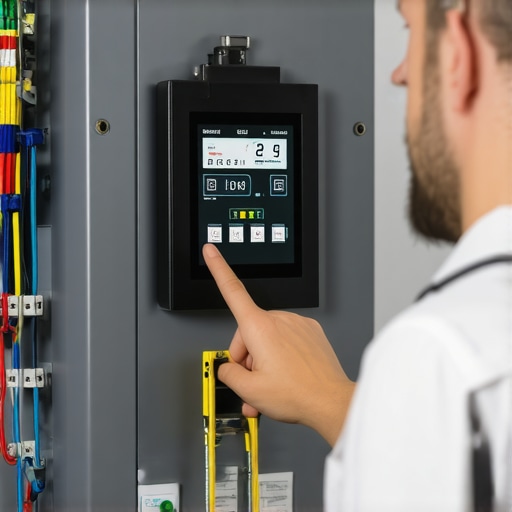
One of the most sophisticated headaches I encountered was what I call the ‘scheduling war.’ Your car has an app, and your charger has an app. If you set the car to charge at midnight but the charger is programmed to allow power only at 1:00 AM, they often go into a digital deadlock where neither side initiates the handshake. This is a massive part of troubleshooting ev charger connectivity problems that rarely gets mentioned in the manual. Beyond the software, you must ensure you are how to verify code compliance for your ev charger installation specifically regarding labeling and disconnects. The National Fire Protection Association (NFPA) explicitly states in the 2023 edition of NEC 625.42(B) that while load management is a legal alternative to service upgrades, it must be a ‘permanently installed’ system to be counted toward your home’s official load calculation. If you just ‘promise’ the inspector that you will only charge at night, they will reject your permit. Have you ever fallen into this trap of over-upgrading your hardware or getting stuck in a software loop? Let me know in the comments.
Once the software is playing nice and your scheduling wars are settled, most people make the mistake of thinking their job is done. I learned the hard way that an EV charger isn’t a ‘set it and forget it’ appliance like a toaster. It is a high-amperage continuous load that physically stresses every wire and screw in your system. About a year after my first install, I started noticing a faint ‘ozone’ smell in the garage. I grabbed my thermal imaging camera—a tool I now believe every EV owner should own—and saw a bright purple-white glow coming from the main lugs. This is a classic case of why your main lugs might be loose after a year of charging. Metal expands and contracts with heat; over hundreds of charging cycles, those connections can literally wiggle themselves free, creating a fire hazard.
How can I keep my charging setup safe for the long haul?
Maintenance is simpler than you think, but it requires discipline. Every six months, I do a visual ‘sniff test’ and a thermal sweep. If you don’t have a FLIR camera, a cheap non-contact infrared thermometer can still help you spot a breaker that is running 20 degrees hotter than its neighbors. I also keep a small kit of the essential spare parts to keep for your home charging unit, including a spare 60-amp breaker and a high-quality terminal block. According to the technical guidelines in the IEEE 2030.5 standard, the communication protocols between your car and the grid are only going to get more complex, meaning your hardware needs to be physically perfect to handle the rapid data and power fluctuations. If you ever find your charger acting up, you need to know how to diagnose a faulty internal relay in your charging station before you call an expensive technician for a simple fix.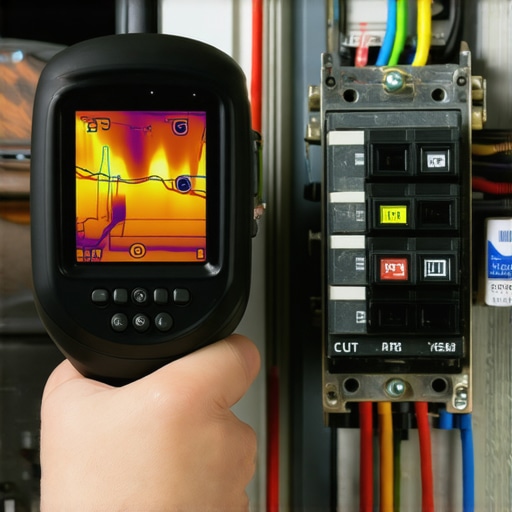
When One EV Just Isn’t Enough for the Family
The moment my spouse saw how much we were saving on gas—once I fixed my bill, at least—it was only a matter of time before a second electric car appeared in the driveway. This is where most homeowners panic. Do you need a second 200-amp service? Not necessarily. I avoided a $5,000 utility bill by looking into why your garage needs a sub-panel for multiple chargers. By installing a sub-panel with load-sharing capabilities, both cars can talk to each other and ‘split’ the available 60 amps. This is one of the most effective panel upgrade strategies to meet ev charging code requirements in 2025 without digging up your front yard. Looking ahead, the trend is moving toward Vehicle-to-Home (V2H) technology, where your car can actually power your house during a blackout. To get ready for that, you’ll need to ensure your system is robust. I highly recommend you try this tonight: go to your panel and feel the face of the EV breaker while the car is charging. If it’s too hot to keep your finger on for five seconds, you have a high-resistance connection that needs a torque wrench immediately.
Once the software is playing nice and your scheduling wars are settled, most people make the mistake of thinking their job is done. I learned the hard way that an EV charger isn’t a ‘set it and forget it’ appliance like a toaster. It is a high-amperage continuous load that physically stresses every wire and screw in your system. About a year after my first install, I started noticing a faint ‘ozone’ smell in the garage. I grabbed my thermal imaging camera—a tool I now believe every EV owner should own—and saw a bright purple-white glow coming from the main lugs. This is a classic case of why your main lugs might be loose after a year of charging. Metal expands and contracts with heat; over hundreds of charging cycles, those connections can literally wiggle themselves free, creating a fire hazard.
The One Mistake That Almost Burned My Garage Down
Maintenance is simpler than you think, but it requires discipline. Every six months, I do a visual ‘sniff test’ and a thermal sweep. If you don’t have a FLIR camera, a cheap non-contact infrared thermometer can still help you spot a breaker that is running 20 degrees hotter than its neighbors. I also keep a small kit of the essential spare parts to keep for your home charging unit, including a spare 60-amp breaker and a high-quality terminal block. According to the technical guidelines in the IEEE 2030.5 standard, the communication protocols between your car and the grid are only going to get more complex, meaning your hardware needs to be physically perfect to handle the rapid data and power fluctuations. If you ever find your charger acting up, you need to know how to diagnose a faulty internal relay in your charging station before you call an expensive technician for a simple fix.
The Gear Every EV Owner Should Keep in Their Glovebox
If you want to move from being a frustrated utility payer to a master of your home energy, you need the right toolkit. First, buy a digital torque wrench; knowing the specific torque wrench settings for a wall connector is the difference between a safe home and a molten plastic mess. Second, I highly recommend downloading a dedicated energy monitoring app that integrates with your utility’s API to track real-time rates. Finally, bookmark the latest panel upgrade strategies to meet ev charging code requirements in 2025 so you aren’t overcharged by contractors who only know how to suggest the most expensive solutions. These resources turned my ‘money pit’ into a well-oiled, efficient machine.
Take Control of Your Energy Independence
You didn’t buy an electric car to become a slave to a different kind of fuel bill. By auditing your panel capacity, mastering your utility’s rate schedule, and keeping a close eye on the physical health of your wires, you can finally enjoy the true savings you were promised. Transitioning to an EV is a learning curve, but once you stabilize your panel upgrade and charging habits, the freedom from the gas pump is absolutely worth the effort. Have you ever noticed your garage smelling like ozone or felt a breaker that was hot to the touch? Let me know your close calls in the comments below.