I was sitting on my workbench, scrolling through my phone while my new EV hummed in the garage. Everything was perfect for exactly twenty-two minutes. Then, I watched the charging rate on my dashboard dive off a cliff. It went from a crisp, fast flow to a trickle that felt like I was trying to fill a swimming pool with a straw. I felt that pit in my stomach—the one where you realize you might have just spent a fortune on a setup that doesn’t actually work. If you’ve been watching your charging curve collapse right when you need it most, you aren’t crazy, and your car probably isn’t broken either. [image_placeholder_1]
Your Charger Is Throttling to Save Itself
The truth is, most of us expect electricity to work like a light switch—either it’s on or it’s off. But EV charging is more like an endurance marathon for your home’s wiring. When I first started out, I made the classic rookie mistake of thinking a plug-in station could just run at max tilt forever without any consequences. I didn’t realize that heat is the silent killer of charging speeds. After about 20 minutes, components start to cook. If things get too hot, your car or your charger will intentionally slow down to prevent a fire. It’s a safety feature, but it’s a frustrating one. We are going to dig into exactly why this happens and how you can stop the slowdown, whether it’s a panel upgrade issue or just a bad settings configuration.
Is your electrical panel actually the hidden bottleneck?
I used to be skeptical about those massive quotes for electrical work. I thought, “Surely my 100-amp service can handle one little car.” I was wrong. When your house starts drawing heavy current for an extended period, the voltage can drop, and the heat in your breakers can skyrocket. According to research from the U.S. Department of Energy, home charging accounts for nearly 80% of EV energy intake, making the stability of your home grid the most important factor in your vehicle’s health. If you haven’t checked your load calculation worksheet lately, you might be asking your wires to do the impossible. Have you ever noticed your charger getting physically hot to the touch or making a weird sound right before the speed drops? Drop a comment or reach out, because that’s the first sign of a major troubleshooting need.
Stop the Heat Before It Kills Your Charge
The most common reason for that 20-minute dip is “thermal throttling.” Your car’s onboard inverter or the wall connector itself senses rising temperatures. If you’re using a NEMA 14-50 outlet that wasn’t designed for high-stress loads, it can start to soften and melt, triggering a safety slowdown. I learned the hard way that saving fifty bucks on a cheap outlet can cost you hours in charging time every single week. We need to look at everything from the wire gauge in your walls to how your smart charger handles dynamic balancing. Let’s get your speeds back to where they belong.To get your charging speeds back to a steady line, we have to start with the physical connections. I remember the first time I installed a high-powered wall unit. I tightened the lugs by hand until they felt ‘snug’ and called it a day. Three weeks later, I walked into the garage and caught that sickly-sweet ozone scent. I opened the panel to find the wire insulation bubbling. I realized then that the reason your ev charger smells like burnt plastic is almost always a loose terminal creating an arc. I had to buy a calibrated torque screwdriver to fix it, and I found out I was nearly eight inch-pounds below the manufacturer’s spec. This isn’t just about being neat; it is exactly why your charger needs a specific torque setting to pass inspection. Heat is generated by resistance, and a loose screw is the ultimate resistor. 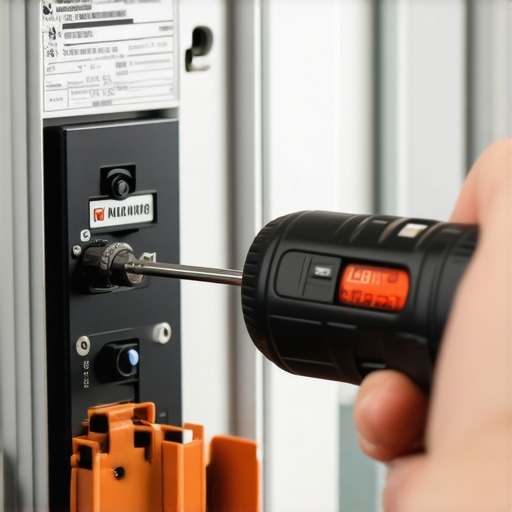
Swap out the weak links in your breaker panel
Not all circuit breakers are designed for the grueling marathon of an eight-hour EV session. Some residential breakers are built for ‘intermittent loads,’ like a toaster or a vacuum. When they face a continuous 40-amp draw, the internal spring mechanism loses its tension over time. I’ve had to go into clients’ homes and identify the specific breaker brands that are known to overheat with EVs just to stop the nuisance tripping. If your breaker feels hot to the touch—not just warm, but uncomfortable—it is likely failing internally and causing the charger to throttle the amperage to prevent a total trip. Replacing a standard $15 breaker with a high-quality, bolt-on, or industrial-grade equivalent can sometimes solve your speed issues overnight.
Stop the voltage drop with beefier wire
If your charger is located at the far end of the garage or in a detached shed, you are likely suffering from voltage drop. Think of electricity like water pressure in a long hose; the longer and thinner the hose, the less pressure you have at the nozzle. When your car senses the voltage dip below a certain threshold, its onboard computer thinks there is a grid failure and cuts the charging rate in half to stay safe. By utilizing the specific wire gauge that prevents voltage drop over long runs, you ensure the ‘pressure’ stays high enough for the car to pull its maximum rated current. I often recommend jumping up one wire size—say, from 8 AWG to 6 AWG—even if the code doesn’t strictly require it, just to provide that thermal headroom.
Manage the house load without a total teardown
You might be throttling because your house is literally out of breath. If your car slows down the moment the AC kicks on, you are experiencing a localized grid strain. Instead of spending thousands on a new utility service, you can learn how to use load shedding devices to avoid a full service upgrade. These devices act like a traffic cop for your panel; they monitor the total draw and only give the EV ‘permission’ to charge at full speed when other heavy appliances are off. This strategy is key to ensuring code compliance when installing ev chargers without needing to rip your entire electrical system out of the wall. Keeping the load balanced is the smartest way to maintain those peak 48-amp speeds without overheating your main lugs.Let’s be honest: most homeowners view the National Electrical Code (NEC) as a series of bureaucratic hoops designed to slow down their project. In reality, the NEC is a safety floor, not a performance ceiling. One of the biggest myths I encounter is that ‘if it passed inspection, it’s optimized.’ That’s simply not true. You can have a system that is technically legal but performs poorly because of thermal stress. I’ve seen countless setups that meet code compliance essentials for ev charger installations in 2025 but still suffer from significant amperage drop after an hour of use. The problem is usually the ‘Continuous Load’ rule. According to Article 625 of the NEC (the gold standard for US electrical safety), EV charging is defined as a continuous load, meaning the circuit must be sized at 125% of the charger’s output. If your setup isn’t strictly following this, you aren’t just breaking rules—you’re begging for a thermal slowdown. 
Why did the inspector fail my garage wiring when the charger was working fine?
It is the ultimate frustration: your car is charging, the lights are on, and yet the city says ‘no.’ Often, this comes down to why the city inspector failed your garage wiring despite it seemingly functioning. A common ‘trap’ is the type of circuit breaker used. There is a massive difference between a $40 and a $400 circuit breaker, and it’s not just the price tag. Higher-end breakers are designed to handle the constant thermal expansion of an EV’s 8-hour draw without the internal trip-mechanism weakening. If you use a bottom-shelf breaker, it might hold for a month, but it will eventually start ‘nuisance tripping’ as metal fatigue sets in, leading to those annoying speed drops you’ve been seeing.
The GFCI conflict that drives everyone crazy
Here is a nuance that even some pros miss: modern EV chargers often have built-in Ground Fault Circuit Interrupter (GFCI) protection. However, many local codes now require a GFCI breaker in the panel for any outlet in a garage. When you have ‘stacked’ GFCIs, they can talk over each other, creating a situation why the gfci in your panel keeps nuisance tripping your charger. It’s a classic case of too much safety equipment causing a functional failure. To get around this, I often recommend hardwiring the station, which frequently removes the requirement for a panel-level GFCI in many jurisdictions, effectively killing two birds with one stone.
Don’t assume every electrician is an EV expert
Everyone says, ‘Just call a pro,’ but in my experience, many general electricians treat an EV charger like a clothes dryer. It’s not. A dryer runs for 45 minutes; a car runs for 8 hours at max capacity. You need to know how to find an electrician who actually understands ev codes specifically, or you’ll end up with a system that meets the letter of the law but fails the ‘stress test’ of a hot August night. Have you ever had an electrician tell you that you didn’t need a permit, only to find out later your insurance wouldn’t cover a garage fire? Let me know in the comments; I’ve heard some absolute horror stories. If you are already seeing issues, start with some ev charger troubleshooting expert tips for common issues before you start ripping out drywall. Solving troubleshooting ev chargers common compliance pitfalls and fixes is usually about identifying these tiny, advanced nuances rather than looking for a broken wire.I’ve seen too many people treat their EV charger like a ‘set it and forget it’ appliance. That is a mistake that usually ends with a melted connector or a dead circuit in the middle of a winter storm. To keep your speeds at peak performance, you need to think like a technician. I personally never do a monthly check without my calibrated torque screwdriver. You might think your lugs are tight, but thermal cycling—the constant expansion and contraction of wires as they heat up and cool down—will eventually loosen even the best connections. This is exactly why your charger needs a specific torque setting to pass inspection and stay safe long-term. If you aren’t checking those terminals once a year, you are essentially waiting for a failure to happen.
Beyond the physical screws, I highly recommend investing in a basic thermal imaging camera. You don’t need a $2,000 professional rig; even a smartphone attachment will do. Once a month, while the car is pulling its full 48 amps, I scan my panel and the wall unit. If I see a bright purple or white glow on a single breaker, I know I have a high-resistance point before the reason your ev charger smells like burnt plastic becomes an actual emergency. This proactive approach is the difference between a reliable morning commute and an expensive ev charger troubleshooting session. 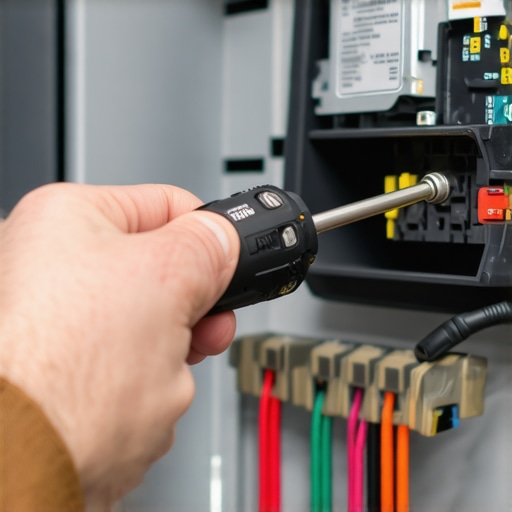
How do I keep my home charging setup safe for the long haul?
Maintenance isn’t just about cleaning the dust off the box. You need to focus on the ‘wear items’ that most people ignore. This includes checking the handle pins for any signs of pitting or discoloration. If those contacts look dark, they are creating heat. According to technical guidelines from the National Electrical Manufacturers Association (NEMA), terminal degradation is a leading cause of premature EVSE failure in residential settings. I also suggest keeping a kit of the essential spare parts to keep for your home charging unit, such as a replacement holster or a spare cable, especially if you live in a climate where your charging cable is stiff in the winter.
As we look toward the future, the ‘static’ charging station is going the way of the dodo. We are moving toward a world of bidirectional charging and AI-managed loads. If your current panel is already at its limit, you should be looking into how smart chargers use dynamic balancing to prevent blown fuses. This tech allows your car to talk to your house, scaling back the draw when the dryer is running and ramping it up at 3 AM. It is the most cost-effective way of ensuring code compliance when installing ev chargers without a massive $5,000 service upgrade. My advice? Grab a screwdriver this weekend and verify your torque settings—it’s the easiest piece of troubleshooting ev chargers common compliance pitfalls and fixes you can do yourself.
The Hard Truth About My First 10,000 Charging Miles
If there is one thing I’ve learned from years of tinkering in the garage, it’s that heat is the ultimate thief of time. I spent months scratching my head wondering why your charging speed drops when the sun hits the unit, only to find out that a small amount of thermal expansion was loosening my copper connections. Here is the lightbulb moment: an EV charger is the only appliance in your house that runs at a full-throttle ‘sprint’ for eight hours straight. Your oven doesn’t do that, and your AC cycles on and off. Because of this, how to verify code compliance for your ev charger installation is not just about passing a city check; it is about ensuring your house doesn’t treat that energy flow like a threat it needs to throttle. I eventually realized that ‘good enough’ wiring leads to ‘not enough’ range by morning.
The Gear That Keeps My Garage Running Cold
You don’t need a degree in electrical engineering to maintain a fast charge, but you do need the right toolkit. My first recommendation is a high-quality torque screwdriver—it is the only way to combat the ‘creep’ that happens when wires heat and cool. Secondly, I always point people toward panel upgrade strategies to meet ev charging code requirements in 2025 as a foundational guide for anyone seeing consistent amperage drops. Finally, don’t be caught off guard by a simple component failure; keeping a small stash of the essential spare parts to keep for your home charging unit, like a spare holster or weather-rated covers, can save you a week of waiting for shipping. I trust these tools because they move you from being a passive user to an active manager of your home’s energy.
Take Control of Your Home Grid
Transitioning to an electric vehicle is a massive shift in how we think about fuel. You are no longer just a customer at a gas station; you are the manager of your own personal power plant. By addressing the bottlenecks in your panel and ensuring your connections are torqued to perfection, you turn a frustrating ‘trickle’ back into a high-speed flow. If you are just starting this journey, learning how to prep your homes electrical for a future ev purchase now will save you thousands in remedial work later. You’ve got this—don’t let a little thermal throttling stand between you and a full battery every morning. Have you noticed your charging speed drop significantly during a summer heatwave? Let me know in the comments below, and let’s figure out the fix!