I thought I had scored the deal of the century. I found a high-end Level 2 charger for half price on a local classifieds site, feeling like a total pro as I drove it home. That smug feeling vanished at 2:00 AM when I woke up to a faint, acrid scent. I ran to the garage and found the smell of burnt plastic wafting from the unit because the previous owner’s ‘minor repair’ was a total hack job. It was a terrifying realization: when you buy a used charger, you aren’t just buying hardware; you are trusting someone else’s maintenance habits with your home’s safety. Today, I want to save you from that heart-pounding moment by showing you exactly how to vet a used station before it ever touches your wall. We are going to dive into the physical red flags and the technical deal-breakers that separate a bargain from a fire hazard. Have you ever been tempted by a used EV charger only to back out at the last second?
Why Secondhand Charging Stations Are a Different Beast
It is easy to think of a charger as just a fancy extension cord. It is not. It is a sophisticated power delivery system that pulls massive amounts of electricity for hours on end. Unlike a used drill or a toaster, a faulty EVSE can melt your electrical panel if it’s not up to snuff. I once completely ignored checking the internal terminal blocks on a used unit, failing to realize that missing a specific torque setting can lead to arcing and catastrophic failure. According to the National Electrical Code (NEC), equipment must be installed according to its listing and labeling, which is hard to verify when the manufacturer sticker is peeled off or the internals are charred.
Is Buying Used Equipment Actually Worth the Risk?
Most people are terrified that a used unit will fry their car’s battery, but the real danger is usually in the cable and the connections. You have to spot a cheap knockoff charging cable or a worn-out handle before you plug in, as these are the most common points of failure I see. If your EV plug contacts look burnt even slightly, walk away from the deal immediately. Ensuring that your purchase meets modern code compliance standards is the only way to sleep soundly while your car charges in the garage.
Give the Cable a Literal Stress Test
Think of the charging cable as a high-pressure fire hose for electrons. When you are looking at a secondhand unit, you need to run your hands along every inch of that cord. You are feeling for ‘hot spots’ or soft, mushy sections in the insulation. These are often signs that the internal copper strands have broken or been over-stressed, creating high resistance. I once ignored a slight kink in a cable on a used ClipperCreek unit, thinking it was just a cosmetic flaw. Within two weeks, that spot became so hot during a charging session that I couldn’t even touch it. If you find any localized bulging or deep gouges that expose the inner shielding, you need to spot a cheap knockoff charging cable replacement immediately or walk away. A damaged cable isn’t just a nuisance; it is a thermal event waiting to happen.
Don’t Ignore a Crunchy Handle
The charging handle is the most abused part of the system. People drop them, leave them in the mud, or run over them with their own tires. When you pick up the handle, give it a firm squeeze and a shake. It should feel solid. If you hear loose plastic rattling or feel a ‘crunchy’ sensation when you press the trigger, the internal microswitches or locking mechanisms are likely failing. More importantly, peek inside the business end. If the metal sleeves are discolored or if your EV plug contacts look burnt, even just a tiny bit, the unit has likely been subject to significant arcing. That damage won’t go away; it will only transfer heat to your car’s charging port, potentially leading to a multi-thousand-dollar repair bill on your vehicle.
Pop the Cover to Check for Hidden Scorching
You wouldn’t buy a used car without popping the hood, and you shouldn’t buy a used EVSE without looking at the terminal blocks. Ask the seller if you can open the casing. If they refuse, assume they are hiding something. Once inside, focus on the ‘lugs’ where the main power wires connect to the motherboard. You are looking for ‘rainbowing’ on the metal or any browning of the plastic housing. These are classic signs of a poor initial installation where the installer failed to realize that your charger needs a specific torque setting to maintain a safe connection. I recall a specific time I opened a used Wallbox and found the neutral wire was literally blackened. The previous owner had just hand-tightened the screws, and the resulting micro-vibrations from the AC current flow had slowly cooked the terminal. 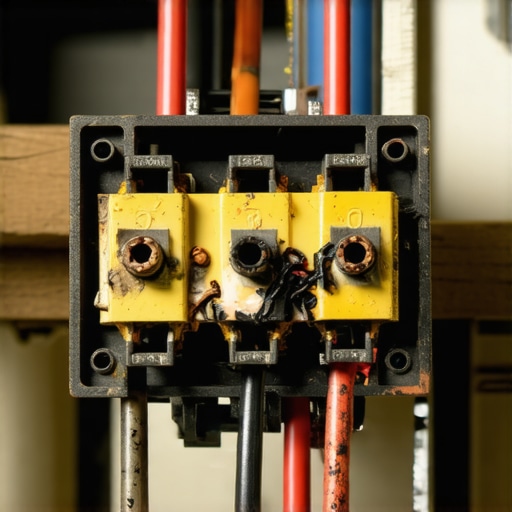
Does Your Electrical Panel Have Enough Room Left?
Before you hand over any cash, you have to ensure your home can actually sustain the ‘bargain’ you just found. Many older homes are already operating at their limit. Adding a 40-amp or 50-amp continuous load is like adding two central air conditioning units that run simultaneously for eight hours straight. You need to investigate panel upgrades for EV chargers if your current service is only 100 amps. I’ve seen homeowners buy a high-output 48-amp charger only to realize they can’t actually use it without tripping their main breaker every time the dryer kicks on. Always calculate the exact circuit load for your home first. If you are pushing the limits, you might need a unit that supports power sharing or manual amperage adjustment.
Testing the Digital Brain
Finally, verify that the smart features actually work. If it’s a ‘smart’ charger, have the seller show you the unit on their app and then ‘release’ the serial number from their account. If you can’t register the device to your own account, you might be locked out of essential features like scheduled charging or firmware updates. If the unit is acting glitchy, you may spend hours troubleshooting EV charger connectivity problems instead of actually fueling your car. Make sure you know how to update the firmware before you mount it, as an outdated OS can sometimes cause communication handshake errors with newer EV models.While the physical check of a secondhand unit is vital, the biggest mistake I see both pros and DIYers make is assuming that electrical capacity is the same as thermal capability. Most homeowners believe that if they have a 200-amp service, they are completely safe to add any charger they want. However, in my experience, the physical layout of your panel matters just as much as the number on the main breaker. I have seen 200-amp panels show signs of melting because the EV breaker was ‘thermal stacked’ right between other high-draw appliances like the AC and the electric range. I have helped many clients learn how to add an ev charger without a 200 amp panel upgrade simply by optimizing the existing load and improving airflow within the cabinet.
Can Your Existing Panel Handle Eight Hours of Continuous Fire?
This sounds dramatic, but from an electrical perspective, it is reality. According to the National Fire Protection Association (NFPA), an EV charger is a ‘continuous load,’ meaning it draws full power for three hours or more. This creates a cumulative heat effect that household appliances like your dryer or oven simply don’t match. If your installer doesn’t emphasize the 125% rule—sizing the circuit at 1.25 times the charger’s output—they are ignoring the backbone of ensuring code compliance when installing ev chargers. I once inspected a used install where a 48-amp charger was put on a 50-amp breaker. On paper, it fits; in reality, the sustained heat will eventually weaken the breaker’s internal components, leading to failure or a fire. 
The Sneaky Neutral Wire Trap
Here is a specific ‘trap’ for those buying older or specialized used units: the missing neutral wire. While many Level 2 chargers technically only need two ‘hot’ wires and a ground, you might find that your ev circuit needs a dedicated neutral in some jurisdictions to meet modern safety standards or to support internal smart-logic. Skipping this can lead to phantom ground faults or leave you troubleshooting ev charger connectivity problems that have nothing to do with your Wi-Fi and everything to do with unstable voltage.
Avoid Thermal Stacking in Your Panel
When adding a high-amperage circuit, location is everything. If you don’t leave ‘breathing room’ or a blank space between high-load breakers, you are inviting heat-related nuisance trips. This is a nuance often missed during upgrading your panel for better ev charging performance. Without proper spacing, you will eventually be asking why your breaker gets hot to the touch during charging even when it’s technically within its amp rating. Have you ever fallen into this trap? Let me know in the comments.
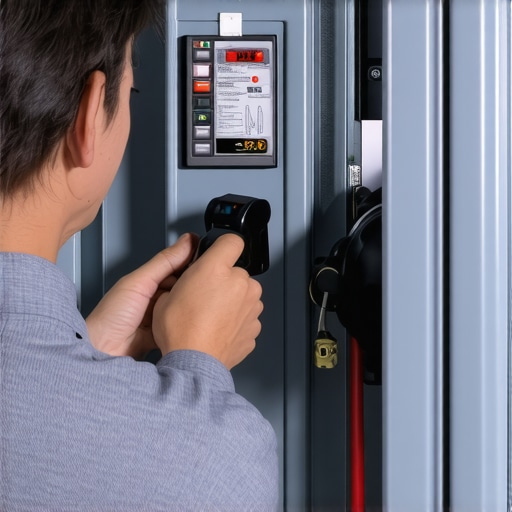
To move beyond just ‘getting it to work’ and into the realm of long-term reliability, I rely on a specific tool that most DIYers overlook: a non-contact infrared thermometer. Once every six months, I open my panel while the car is pulling its maximum load and scan the connections. If I see a lug that is 20 degrees hotter than the others, I know I have a high-resistance connection developing. This is the only way to catch why your main lugs might be loose after a year of charging before they literally weld themselves to the busbar. You also need a dedicated torque screwdriver. Most people just ‘crank it down’ until it feels tight, but the Tesla Wall Connector Gen 3 Installation Manual specifically mandates a torque of 50 lb-in (5.6 Nm) for the power terminals. Over-tightening is just as dangerous as under-tightening because it deforms the copper and creates hotspots.
How do I keep my secondhand charger alive for the next decade?
It comes down to software and physical protection. I have found that many ‘broken’ used units are just suffering from corrupt memory or missed updates. Learning how to update the firmware on your smart charging station is the first step in solving persistent handshake errors. Physically, keep the contacts clean with a quick blast of electronic contact cleaner once a year. I also recommend stocking up on the essential spare parts to keep for your home charging unit, specifically a spare J1772 holster and a replacement fuse if your unit uses internal glass fuses. Taking five minutes to wipe down the cable with a silicone-based protectant can also prevent the outer jacket from becoming brittle and cracking.
Get Ready for the Era of Bidirectional Power
Looking ahead, the next five years will shift from ‘charging your car’ to ‘powering your home’ with your car. Bidirectional charging (V2G/V2H) is coming fast, and if you are planning for it now, you should be looking into panel upgrade strategies to meet ev charging code requirements in 2025 that include space for an automatic transfer switch or a smart gateway. This will transform your used charger from a simple appliance into a vital piece of your home’s microgrid infrastructure. If you are still troubleshooting ev charger connectivity problems, do not just restart the router—check if your unit is properly shielded from electromagnetic interference from other appliances. My challenge to you: go get a cheap thermal leak detector or IR thermometer today and scan your breaker while charging; you might be surprised at what you see.
The Hard Truths I Learned from Burnt Plastic and Bad Deals
After years of tinkering, I’ve realized that a ‘good deal’ on a secondhand unit is only a bargain if you can verify its thermal history and internal integrity. I’ve seen too many DIYers skip the internal inspection, only to realize later that your charger needs a specific torque setting to pass inspection and avoid melting terminals. Another surprise for many is the wiring complexity; in my experience, your ev circuit needs a dedicated neutral in some jurisdictions regardless of what the old manual or the seller might claim. Finally, never underestimate the ‘smart’ in smart chargers—most connectivity headaches vanish once you learn how to update the firmware on your smart charging station immediately after purchase.
Tools That Keep My Used Hardware Running Like New
I don’t go into any inspection or maintenance session without my ‘big three.’ First, an infrared thermometer is essential for catching high-resistance heat at the breaker before it starts a fire. Second, a certified torque screwdriver is the only way of ensuring code compliance when installing ev chargers in your own garage. Lastly, I always keep the steps to verify code compliance for your ev charger installation bookmarked on my phone to cross-reference with local mandates. These aren’t just gadgets; they are the buffer between a functioning car and a potential emergency. #IMAGE_PLACEHOLDER_E#
Own Your Home Energy Future with Confidence
Buying a used station doesn’t have to be a gamble if you approach it with the eye of a professional inspector rather than a bargain hunter. By focusing on thermal safety and technical verification, you can enjoy the benefits of fast charging without the constant anxiety of the unknown. Effective troubleshooting EV charger issues early on turns a secondhand find into a reliable long-term asset for your home’s microgrid infrastructure. Have you ever encountered a hidden defect in a used electrical appliance that made you think twice? Let me know your stories below.