The smell of ozone is something you never forget. It’s that sharp, metallic tang in the air that tells you you’ve just made a very expensive mistake. I was standing in the back of my shop, trying to be the hero who saved three grand on installation costs by doing it myself. I had my 3-phase charger unboxed, the conduit run, and a false sense of confidence that would have made a seasoned journeyman laugh. Then I flipped the breaker. That ‘pop’ wasn’t just a fuse blowing; it was the sound of my pride taking a hit. I’d completely botched the load calculation, and for a second, I thought I’d taken out the power for the whole block. Wiring a 3-phase system for a business isn’t just ‘home charging on steroids.’ It’s a completely different logic. But don’t let my early panic stop you. Today, I’m going to walk you through the reality of getting these high-speed units live without the drama. We’re talking about more than just ensuring code compliance when installing EV chargers; we’re talking about future-proofing your livelihood. Have you ever stared at your commercial electrical panel and felt like you were looking at a complex puzzle you weren’t meant to solve? [image placeholder]
Stop Thinking Like a Homeowner and Start Thinking Like a Grid Manager
When I first started looking into how to set up a commercial charging fleet for your small business, I made the classic rookie mistake: I assumed a bigger charger just needed a bigger wire. Wrong. In the commercial world, 3-phase power is the gold standard because it delivers more ‘juice’ with less current per phase, making it incredibly efficient for running heavy loads like EV chargers all day long. However, if you don’t balance those phases correctly, you end up with equipment that runs hot and dies young. According to data from the International Energy Agency, commercial buildings can see significantly higher ROI on EV infrastructure when load management is integrated from day one. If you ignore the hidden cost of skipping a panel load calculation, you aren’t just risking a fine; you’re risking a fire. My mistake cost me a motherboard and two days of downtime. I don’t want that for you.
Is 3-Phase Actually Necessary for a Small Office?
You might be wondering if you can just get away with a standard 240V Level 2 setup. I asked myself the same thing when I saw the price of 3-phase components. The truth is, if you have more than two employees charging at once, single-phase power will struggle to keep up without causing why your breaker gets hot to the touch during charging. 3-phase is about reliability and speed. It allows you to distribute the load across three hot wires instead of two, which keeps your system cooler and your charging speeds consistent even when the office AC kicks on. It’s an investment in your property value and your sanity. We’re going to dive into the specific wire gauges and breaker types that won’t leave you smelling ozone like I did.
Your Panel Needs an Audit Before You Buy the Hardware
If you think you can just eyeball your electrical capacity, you’re setting yourself up for a very expensive surprise. Before I touched a single wire in my shop, I had to confront the hidden cost of skipping a panel load calculation. You need to know your peak demand, not just your average use. Think of your electrical panel like a bridge; it doesn’t matter if the average car weighs two tons if a twenty-ton semi-truck is about to cross it. If your building’s main service is already humming at 80% capacity when the industrial fridge and the HVAC kick in, adding a 22kW 3-phase charger will collapse that metaphorical bridge. I once watched a friend try to skip this step for his startup hub, only to have the main breaker trip every time someone started the microwave while a car was plugged in. He eventually had to look into panel upgrade strategies to meet EV charging code requirements in 2025 just to keep the lights on.
Keep the Scales Even Across All Three Phases
The magic of 3-phase power is balance. Imagine three people carrying a heavy log. If one person decides to slack off, the other two are going to strain their backs and eventually drop the load. In electricity, ‘dropping the load’ looks like melted insulation and fried circuit boards. When you are learning how to set up a shared charging station for a small office, you must ensure that your chargers are distributed across L1, L2, and L3. If you bunch everything onto a single phase, you create a voltage imbalance that makes your motors run hot and your utility company very angry. This is where how to verify code compliance for your EV charger installation becomes a practical tool rather than a legal hurdle. 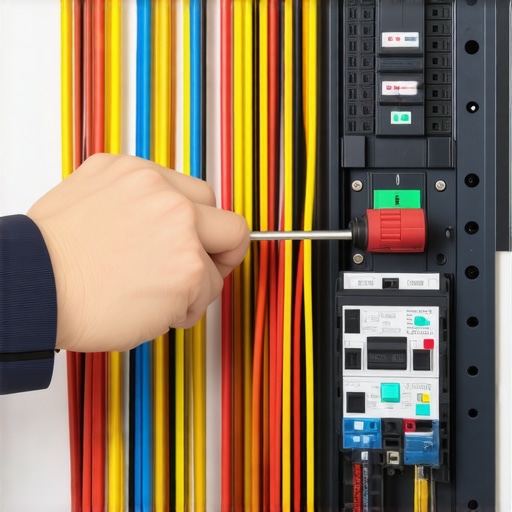
Choose Your Wire and Breaker Like Your Shop Depends on It
Don’t even think about using aluminum for these high-duty cycles. You need to understand the difference between copper and aluminum for EV wiring because copper handles the constant thermal expansion of a 10-hour charging session far better. When I was doing my install, I was tempted to reuse some old lugs I had lying around. Bad move. I caught the temperature rising on my thermal camera during a test run. I learned the hard way that the specific torque settings that prevent panel fires during high load charging are not suggestions. If those connections aren’t torqued to the exact inch-pound spec on the breaker, they will wiggle loose over time as they heat and cool. Also, ensure why your subpanel needs a separate ground bar for EV circuits is part of your layout; a shared neutral and ground in a subpanel is a recipe for ground-fault errors that will leave your charger in ‘waiting mode’ indefinitely.
Troubleshoot Before the Inspector Arrives
Once the physical work is done, you aren’t out of the woods. I spent four hours scratching my head because my unit wouldn’t sync with the office Wi-Fi. It turns out, 3-phase commercial units often require a rock-solid data connection to manage load-shedding protocols. If you’re stuck, check out EV charger troubleshooting expert tips for common issues. Most of the time, it’s a simple firmware update or a slightly loose communication wire that’s causing the headache. Documenting every step of this process isn’t just for your records; it’s how you prove to the city that you didn’t just wing it.
But documentation is only as good as the logic behind it. Here’s something most ‘pro’ installers won’t tell you: chasing the highest possible amperage is often a fool’s errand. Everyone assumes that a 48-amp or 80-amp charger is the gold standard for a business, but in reality, running your system at its absolute limit 24/7 is the fastest way to fry your components. I’ve seen more hardware fail from heat fatigue than from actual defects. If you find that why your charging station isnt reaching its full 48 amp potential is a constant frustration, it might actually be your system’s internal safety protocols saving you from a meltdown.
Forget the Amp Race and Focus on Thermal Stability
The biggest trap I see people fall into—and I fell into it too—is the ‘GFCI on GFCI’ nightmare. Most modern Level 2 and 3-phase chargers have sophisticated ground-fault protection built right into the unit. If your electrician (or you) installs a GFCI-protected breaker in the main panel to ‘be extra safe,’ the two systems will constantly fight each other. This results in ‘nuisance tripping,’ where the charger shuts down for no apparent reason while the car is only half-charged. Understanding why the gfci in your panel keeps nuisance tripping your charger can save you weeks of diagnostic headaches. It’s a classic case where more ‘protection’ actually leads to less reliability.
Can You Really Avoid a Service Upgrade Using Load Shedding?
This is the question that separates the amateurs from the experts. When your building’s capacity is maxed out, the standard advice is to spend $10,000 on a utility transformer upgrade. However, I’ve found that you can often bypass this by learning how to use load shedding devices to avoid a full service upgrade. These devices act as a digital traffic cop, automatically throttling the power to the EV chargers when the building’s elevator or HVAC system kicks in. The Electric Power Research Institute (EPRI) has noted that EV charging represents a ‘continuous load’—a technical term meaning it runs at full tilt for over three hours. This puts extreme stress on wires. By using load management, you protect your infrastructure without the massive price tag of a service overhaul.
Another nuance people overlook is the ‘invisible’ vibration in commercial panels. In an industrial or office setting, heavy machinery creates harmonics that can subtly vibrate your breakers. If you haven’t mastered the specific torque settings that prevent panel fires during high load charging, those vibrations will eventually loosen your connections. Once a connection is loose, resistance goes up, heat skyrockets, and you’re back to smelling ozone. It’s worth checking troubleshooting ev chargers common compliance pitfalls and fixes every six months just to be safe. Have you ever fallen into the trap of over-speccing your hardware only to have it fail? Let me know in the comments.
If you’re serious about managing more than one charger, you need to stop guessing and start measuring. I don’t go anywhere near my panel without my FLIR thermal imaging camera. It’s the only way to see if a breaker is under stress before it actually trips. When I see a glow on that screen, I know I need to double-check my work and focus on how to verify code compliance for your EV charger installation. According to the NFPA 70B Standard for Electrical Equipment Maintenance, regular infrared inspections are now a cornerstone of preventing catastrophic failures in commercial power systems. Beyond the camera, a high-quality, calibrated inch-pound torque wrench is non-negotiable. I use a CDI 1502MRMH because I trust its accuracy for those sensitive terminal blocks. If you aren’t torquing to spec, you’re basically waiting for a thermal event to happen.
The Secret Tools Every Business Owner Needs for Long-Term Safety
Most people think the job is done once the green light on the charger stops blinking. But the real work of being a fleet or office manager is in the data. I’ve started using networked management software to monitor peak demand in real-time. This isn’t just for fun; it’s about upgrading your panel for better ev charging performance without physical construction. If I can see that we’re hitting 95% of our capacity at 10 AM, I can use the software to throttle the charging speed until the lunch rush is over. 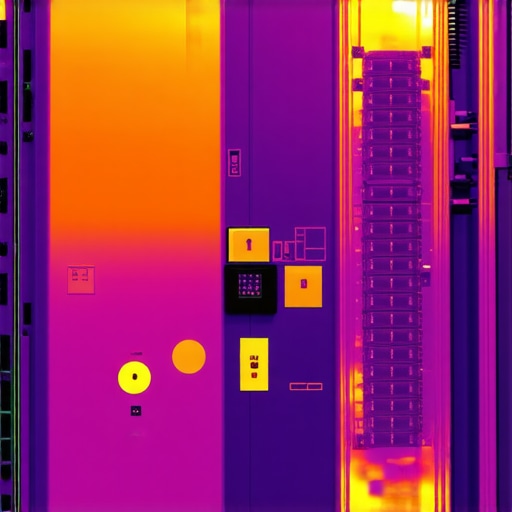
How Do I Keep My Charging Hardware from Failing Prematurely?
Maintenance isn’t just about cleaning the cobwebs out of the ports. Every six months, I do a physical walk-through of the site. I check for any signs of ‘creep’ in the conduit and look for micro-cracks in the charging cables. If you have an outdoor setup, you should follow 3 maintenance tasks that keep your outdoor charger running through winter like it’s your religion. Snow and salt are the enemies of conductivity. I also make it a habit to check the digital health of the units. You’d be surprised how many ‘hardware failures’ are actually just outdated code. Learning how to update the firmware on your smart charging station is the easiest way to solve 90% of connectivity drops. Looking ahead, we are moving toward a world of bi-directional charging. Your car won’t just take power; it will feed it back to your building. To get ready for that, you might eventually need panel upgrade strategies to meet EV charging code requirements in 2025. My advice? Grab a thermal camera this weekend and scan your panel while your cars are charging. You might be surprised at what’s ‘cooking’ behind the cover.
Lessons My Melted Breaker Taught Me
After my initial “ozone incident,” I realized three things that changed my entire approach to electrical work. First, thermal expansion is the silent killer of commercial circuits. If you don’t use the specific torque settings that prevent panel fires during high load charging, you’re just counting down to a failure. Second, always check your panel for double tapped breakers before adding a new load; shared terminals in a 3-phase panel are a recipe for localized overheating. Lastly, your data signal is as important as your copper—understanding why your commercial charger needs a cellular connection is a lesson you’ll learn the first time the office Wi-Fi reboots during a critical billing cycle and kicks everyone off the grid.
The Hardware I Trust When Lives are on the Line
To keep my shop running, I rely on a few “un-breakables.” I never close a panel without a scan from my FLIR thermal camera to check for hot spots that the naked eye can’t see. I also keep a copy of the NEC (National Electrical Code) nearby, but for the practical side of things, I regularly revisit strategies for upgrading your panel for better ev charging performance to ensure my logic is still sound as vehicle technology evolves. A CDI calibrated torque wrench is the only tool I trust for lug connections—don’t settle for “hand-tight” when you’re dealing with the constant draw of a commercial fleet. I’ve also found that keeping a digital log of your maintenance helps identify issues before they become expensive repairs.
Build for the Decade Not the Day
Transitioning your business to electric is about more than just running some conduit; it’s about shifting your mindset from a simple consumer to an infrastructure provider. By ensuring code compliance when installing EV chargers today, you are protecting your physical assets and your employees for years to come. Don’t let the initial complexity of 3-phase logic scare you away—every expert was once standing where you are, perhaps smelling a little bit of ozone and wondering which wire went where. Take it slow, torque it right, and monitor the heat. Have you ever caught a “hot spot” in your electrical panel during a routine check? Let me know your close calls in the comments.