I stood in my shop’s parking lot two years ago, looking at a shiny new Level 2 station that sat completely idle for three days straight. I’d spent thousands, checked the 3-phase charger wiring twice, and even bragged to the neighbors about my green upgrade. But I made a classic mistake: I assumed Google and the federal government just knew I existed. I didn’t realize that without being on the federal map, I was basically a ghost. Early on, I even managed to fry a motherboard because I thought I could skip the surge protector—talk about an expensive lesson in humility. Today, I’m going to show you exactly how to avoid my blunders and get your business pinned on the maps that actually drive traffic to your door.
Stop Being the Best-Kept Secret in Town
It’s frustrating to see a line of Teslas at a charger three blocks away while yours sits empty. The reality is that the federal government is pouring billions into the National Electric Vehicle Infrastructure (NEVI) Formula Program, and they’ve built a massive digital ecosystem to support it. If you aren’t visible there, you’re missing out on the high-end demographic that specifically hunts for reliable stops. You need a commercial charging layout that attracts high-end drivers, but they have to find you first. According to the U.S. Department of Energy, the Alternative Fuel Data Center (AFDC) is the gold standard for federal fleets and GPS providers, and if your data isn’t formatted correctly, you’re invisible to thousands of drivers.
Will this actually put more money in my pocket?
I get the skepticism. You’re busy running a business, not a tech firm. But think of this as the modern version of the Gas Next Exit sign. By getting on the federal map, you aren’t just helping travelers; you’re qualifying for potential federal tax credits for rural charging stations and making your site a preferred destination for government fleets. I once thought a cellular connection for my charger was an unnecessary monthly bill until I realized it’s often a requirement for real-time data reporting to these maps. Have you ever felt like you built the perfect amenity only for it to be ignored by the public? Let’s fix that right now.To get started, you need to treat your charger like a listing on a luxury real estate site. You need the exact specifications: output wattage, connector types, and your network provider details. I remember helping a fellow shop owner who couldn’t figure out why his station wasn’t showing up. It turned out he’d entered his 48-amp station as a 30-amp unit, and the filter on the federal map was hiding him from drivers looking for a fast top-off. To avoid this, you first need to know why your charging station isn’t reaching its full 48-amp potential before you claim those specs online. Take a photo of the nameplate on the side of the unit; that’s your source of truth for the Alternative Fuel Data Center (AFDC) submission form.
Avoid the Inspector’s Red Pen by Verifying Code Compliance
You cannot just slap a charger on the wall and call it a day if you want to be part of the federal network. The AFDC and NEVI programs often require proof that your installation meets the latest National Electrical Code (NEC) standards. I once saw a DIY job in a rural town where the owner used aluminum wire with lugs meant for copper. Within three months, the heat expansion caused the terminal to arc. If you want to stay on the map, you must verify code compliance for your ev charger installation immediately. This includes checking that your electrician used the specific torque settings that prevent panel fires. If the station isn’t safe, it won’t stay listed for long once an inspector or a savvy driver reports an issue.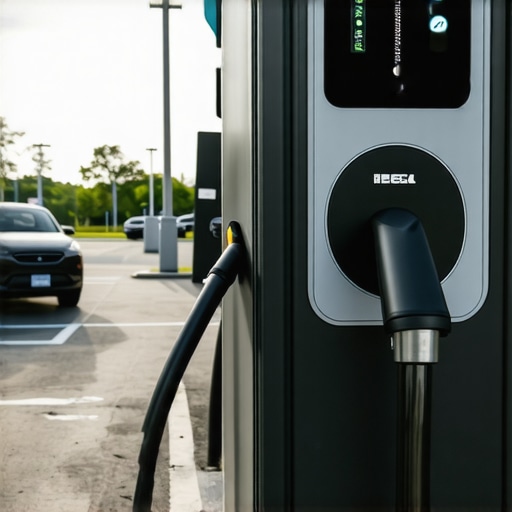
Don’t Ignore the Power Behind the Wall
Before you even fill out the federal registration form, look at your breaker panel. If your business is running old equipment, you might be at risk. I’ve had to tell several clients that their dream of a 4-station hub was impossible without panel upgrades for ev chargers. You also need to watch out for the hidden cost of skipping a panel load calculation. If the grid can’t support your station, your listing will constantly show as ‘offline’ or ‘reduced power,’ which is a death sentence for your reputation on apps like PlugShare or the AFDC.
Why a Spotty Signal Makes You Invisible
Modern federal maps rely on real-time data. If your station is ‘dumb’ (not connected to the internet), it’s much harder to get listed on the maps that federal fleets use. These fleets need to know if the plug is in use before they reroute a driver. If you’re having trouble with your unit dropping off the map, you’re likely troubleshooting ev charger connectivity problems caused by poor cellular reception. I once installed a unit in a concrete parking garage that was a total ghost until we added a signal booster. Without that link, you can’t easily claim the federal alternative fuel infrastructure tax credit because many of those incentives require data logging to prove the station is actually being used by the public.
A 200-Amp Panel Won’t Save a Bad Layout
Most contractors will tell you that the fix for every charging headache is to simply throw more power at it. They suggest that if you’re seeing performance drops, you just need to keep upgrading your panel for better ev charging performance. But here is the contrarian truth: raw capacity is often a mask for poor engineering. I’ve seen 400-amp services struggle because the load wasn’t balanced properly, while a 100-amp shop ran two Level 2 chargers flawlessly using load shedding devices to avoid a full service upgrade. It’s not about the size of the pipe; it’s about how much pressure you’re putting on it at 3:00 PM when the AC and the shop tools are screaming. If you aren’t careful, you’ll pay for a massive upgrade you didn’t actually need.
The Torque Trap That Can Burn Down Your Shop
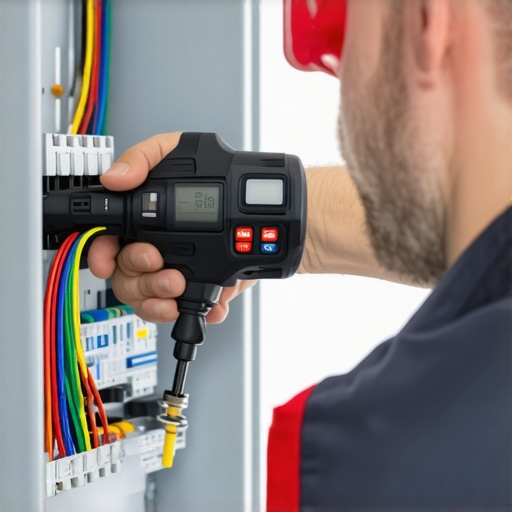
Let’s talk about the nuance that keeps me up at night: terminal torque. Most people assume ‘hand-tight’ is enough for a breaker. It’s not. EV charging is a ‘continuous load,’ meaning it draws maximum current for hours on end. According to the Electrical Safety Foundation International (ESFI), improper terminations are a leading cause of electrical fires in high-draw commercial circuits. Heat causes metal to expand and contract; if those connections aren’t set to the specific torque settings that prevent panel fires, the connection loosens, resistance builds, and you get a meltdown. I’ve personally walked into jobs where the plastic was already bubbling because someone skipped the torque wrench. This is the ultimate ‘oops’ factor that turns a green investment into a liability. Always verify code compliance for your ev charger installation by checking those termination specs yourself.
Why does my breaker keep tripping even when the car is barely charging?
This is where things get technical. You might be dealing with ‘nuisance tripping.’ Many modern chargers have internal ground-fault protection, but if your electrician installed a GFCI breaker in the panel as well, the two systems can actually ‘fight’ each other. This is one of those common compliance pitfalls and fixes that people overlook. You end up troubleshooting ev charger issues for days, thinking the hardware is broken, when in reality, the electrical code requirements for 2025 have very specific rules about which types of protection can coexist. If you’re seeing this, you need to look into why the gfci in your panel keeps nuisance tripping your charger. Have you ever fallen into this trap where you thought you had enough power but the breaker said otherwise? Let me know in the comments.
Stop Ignoring the Thermal Ceiling
Another common blunder is ignoring the ambient temperature of the panel. If your electrical room is a hotbox, your breakers will de-rate, meaning a 50-amp breaker might start tripping at 40 amps just because it’s too hot. Before you assume you have a faulty unit, look at the hidden cost of skipping a panel load calculation that factors in environmental heat. If you don’t account for the ‘thermal ceiling,’ you’ll be troubleshooting ev charger connectivity problems and power delivery issues all summer long. High-end drivers won’t come back if your station throttles down to a crawl every time the sun hits the building. Make sure you are following code compliance essentials for ev charger installations in 2025 to ensure your hardware survives the real world.
Spot the Heat Before the Smoke Starts
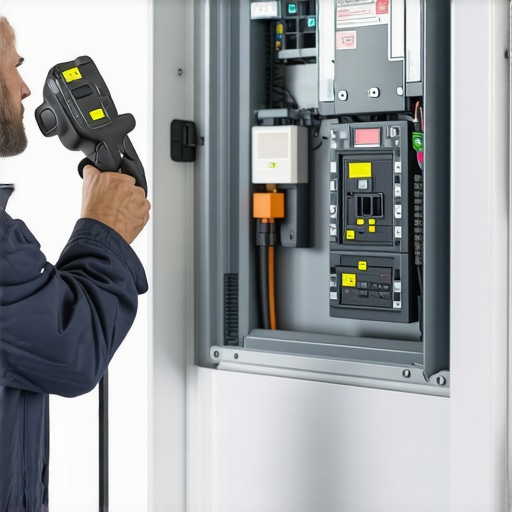
The biggest secret to long-term reliability isn’t a better charger; it’s a better inspection tool. I never walk onto a job site without my FLIR thermal camera. Why? Because you can’t see a loose lug with the naked eye until it’s already melting the plastic casing. If you start to notice that your ev charger smells like burnt plastic, you’re already in the danger zone. By using infrared technology, I can see a 5-degree temperature spike on a breaker before it ever trips. This is how you verify code compliance for your ev charger installation over the long haul. According to the NFPA 70B Standard for Electrical Equipment Maintenance, moving toward ‘condition-based’ maintenance—like infrared scans—is the only way to ensure high-draw continuous loads don’t fail prematurely. Don’t just trust the install; trust the heat map.
Expand Your Station Without Asking the Utility for Permission
When business picks up, your first instinct will be to add a second or third plug. Most contractors will tell you that you need a massive service upgrade, but that’s a rookie mistake that costs tens of thousands. You can actually add an ev charger without a 200-amp panel upgrade by using smart load management. This software-based approach throttles the chargers when the rest of your building is pulling heavy power. Before you buy more hardware, you must load test your house or business before adding a second charger. I’ve seen owners successfully scale from one to four chargers on the same panel just by being smart about how they distribute the load. It’s about working with the capacity you have rather than paying the utility company to dig up your parking lot.
How do I maintain my charging station for long-term reliability?
Maintenance isn’t just about cleaning the dust off the screen. You need a quarterly checklist. First, check the handle for ‘pitting’ or carbon buildup, which happens after hundreds of plug-ins. Second, you need to perform the 3 maintenance tasks that keep your outdoor charger running through winter, such as inspecting the seal on the NEMA enclosure. Third, never skip a software update. You need to know how to update the firmware on your smart charging station to patch security holes and improve charging logic. In my experience, 40% of ‘broken’ chargers are actually just running outdated software that can’t talk to the newer car models.
The Future is Two-Way Traffic
Looking ahead, the next big shift isn’t faster charging—it’s bidirectional charging, or Vehicle-to-Grid (V2G) technology. Within the next three to five years, your business’s EV fleet won’t just be a drain on your electricity; it will be your backup battery. We are already seeing chargers being designed to push power back into the building during peak hours to save on demand charges. To prepare for this, ensure your electrician used a high-quality install and verify your electrician actually used copper wire for the install, as aluminum won’t handle the constant two-way stress as well. Also, make sure your ev charger has a surge protector in the panel to protect the expensive V2G inverters from grid spikes. My best advice? Buy a calibrated torque screwdriver today and re-torque your breaker lugs to the specific torque settings that prevent panel fires. It is the cheapest insurance policy you will ever buy for your business.
Hard Truths I Learned from a Fried Main Breaker
Over the years, I’ve realized that a charger isn’t just an appliance; it’s a high-performance engine that lives in your wall. The biggest lightbulb moment for me was realizing that ensuring code compliance when installing ev chargers is actually a form of business insurance. If you cut corners on the wire gauge or skip the torque specs, you aren’t just risking a ticket; you’re risking your entire building’s reputation.
I also learned that federal visibility is a long game—you have to stay ‘online’ and ‘up to code’ to keep that prime spot on the map. Reliability isn’t a fluke; it’s the result of checking things when they aren’t broken. A loose wire at 2 PM is a fire at 2 AM.
Gear and Guides that Kept My Shop Running
If you want to move beyond the amateur phase, you need the right toolkit. First, I highly recommend a thermal imaging camera; it’s the only way to see if a connection is heating up before it becomes a fire hazard. Second, you should check out the latest panel upgrade strategies to meet ev charging code requirements in 2025 to ensure your hardware stays relevant as tech shifts.
I also found that simple ergonomics, like finding the best height for a wall mounted charger to avoid cord strain, makes a massive difference in how often your equipment breaks down. Finally, if this feels overwhelming, knowing how to find an electrician who actually understands ev codes is the most valuable shortcut you can take.
Take Control of Your Local Energy Hub
You have the power to turn your business into a vital landmark for the next generation of drivers. By focusing on a rock-solid **EV charger** setup and staying diligent with **troubleshooting**, you are doing more than just providing a plug—you are building infrastructure. Don’t wait for the grid to modernize itself; take the lead by finalizing your **panel upgrade** and getting your site listed on those federal maps today. The future of transportation is parked right outside your door, waiting for a reliable place to power up. Have you ever had a charging station show up as ‘offline’ on a map when it was actually working? Let me know your biggest visibility struggle in the comments below.