It starts as a faint, sweet chemical scent—the kind that makes you sniff the air twice just to be sure—before it sharpens into the unmistakable, acrid stench of melting plastic. I remember the first time I smelled it in my own garage. My first thought wasn’t a fire; I actually thought my kids had left a toy on top of a heater. But as I got closer to the wall, I realized the heat was radiating from the very spot where my car was drawing its power. If you are smelling that burning odor right now, I have one piece of advice: unplug the car immediately. We are going to get to the bottom of this together, because while it is a common headache, it is not something you can just ignore and hope it goes away.
Your Garage Should Not Smell Like a Chemical Factory
I’ll be the first to admit that I’ve made some questionable choices in the name of convenience. Early on, I thought I could save a few bucks and a lot of hassle by using a heavy-duty extension cord for a ‘temporary’ charge. That was a huge mistake, and the safety reason why you should never use an extension cord for your EV became very clear when the plug fused itself to the outlet. EV charging isn’t like running a toaster; it is a massive, sustained electrical draw that lasts for hours. This constant flow of electricity generates heat, and if there is even a tiny bit of resistance in your wiring, that heat builds up until things start to melt. I’ve seen everything from common troubleshooting issues to full-blown panel meltdowns. Today, I’m going to show you how to identify if the smell is coming from your outlet, your charger handle, or your home’s electrical panel, so you can fix it before the local fire department has to do it for you.
Is a Little Heat Actually Dangerous?
You might be wondering if it’s normal for things to get a bit warm. After all, your phone gets warm when it’s charging, right? But there is a massive difference between ‘warm to the touch’ and ‘smelling like a tire fire.’ According to the Electrical Safety Foundation International, home electrical fires account for over $1.3 billion in property damage annually, often caused by overloaded circuits or poor connections. If you find that your breaker gets hot to the touch during charging, you aren’t just looking at a minor glitch; you are looking at a system that is struggling to keep up with the demand. [image_placeholder_1]
Why Your High-Quality Outlet Is Probably Melting
Most people assume that if they bought a NEMA 14-50 outlet from a hardware store, it’s built for the task. I made that same assumption. However, many standard outlets are designed for dryers, which only run for 45 minutes at a time. Your EV might be pulling max current for eight hours straight. This leads to a phenomenon where the internal metal contacts expand and contract until they lose their grip on the plug. That loose connection creates an arc, and that arc creates the smell. This is why learning how to pick a NEMA 14-50 outlet that won’t melt under pressure is the most important upgrade you can make. Have you noticed any discoloration on your plug blades lately, or perhaps a slight buzzing sound when you plug the car in? Tell me your experience in the comments, because catching these signs early is the only way to prevent a total system failure. In the next section, we’ll look at the specific wire gauges and torque settings that keep your garage safe and smelling fresh.
Look for These Warning Signs in Your Main Breaker
If your garage smells like a chemical spill, your first stop shouldn’t be the car; it should be your electrical panel. Think of your home’s electrical system like a series of pipes. If you try to force a fire hose worth of water through a straw, something is going to burst. Your EV is that fire hose. I once helped a neighbor who complained that his garage lights flickered every time his Tesla started its cycle. When we opened his panel, the main breaker was so hot it literally sizzled when I touched it with a thermal probe. You need to know the 3 signs your main breaker is running dangerously hot during overnight charging before you find yourself in the dark. A humming sound, a faint ozone smell, or visible discoloration on the breaker plastic are your final warnings. If you see these, you aren’t just troubleshooting; you are preventing a structure fire.
Why You Must Demand Copper Over Aluminum
One of the biggest mistakes I see during DIY installs is the use of aluminum wiring for the heavy-duty circuit. Aluminum is cheaper, sure, but it expands and contracts significantly more than copper when it gets hot. Over months of charging, those connections wiggle loose. When they get loose, they spark. I always tell people that the difference between copper and aluminum for EV wiring is the difference between a permanent solution and a ticking time bomb. To handle a 50-amp load for eight hours, you need to be absolutely certain about the exact wire gauge you need for a 50-amp EV circuit. For most residential setups, that means 6 AWG copper. If your electrician tries to sell you on a thinner gauge or aluminum to save a few bucks, show them the door. Using the wrong material is the number one reason why the city inspector failed your garage wiring during a post-install check. 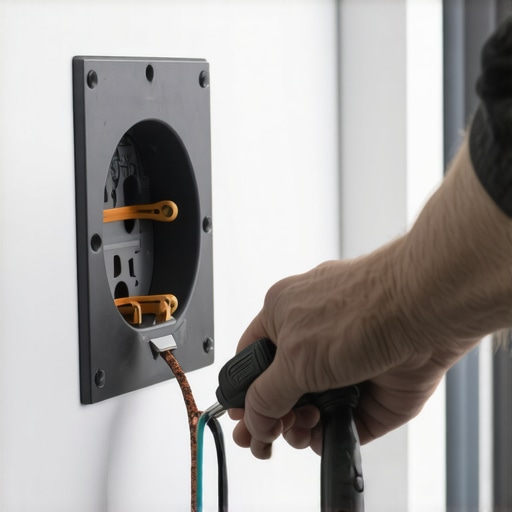
Tighten Your Connections to Stay Safe
Here is the secret most handymen won’t tell you: the most important tool for an EV install isn’t a drill—it’s a torque screwdriver. Electrical terminals have specific requirements for how tight the screws need to be. If they are too loose, you get resistance and heat. If they are too tight, you can crush the wire and create a weak point. I remember working on a site where the ‘professional’ installer just cranked the screws down as hard as he could. Within three weeks, the wire had sheared under the pressure and started arcing. You have to follow the specific torque settings that prevent panel fires during high load charging. This is part of the code compliance essentials for EV charger installations in 2025 that ensures your insurance company won’t deny a claim if things go south. While you are at it, check your subpanel. If you are running a separate line to the garage, remember that your subpanel needs a separate ground bar for EV circuits to keep everything safe. Taking these technical steps might feel like overkill, but when you can sleep soundly while your car pulls 11kW of power ten feet from your bedroom, you’ll realize it’s the only way to charge.Most people think that if they have an empty slot in their panel, they are good to go. This is a massive “oops” that even some seasoned DIYers fall into. Just because you have physical space does not mean you have electrical capacity. I have seen panels where the main breaker was rated for 100 amps, but the owner had already added a hot tub, an electric range, and an AC unit. Adding a Level 2 charger to that mix is like trying to add a fifth passenger to a motorcycle; something is going to break. This is why upgrading your panel for better EV charging performance is often the first thing I recommend, even if you think you have room. It is not just about the numbers; it is about how much heat the busbar can handle before it warps.
Does your electrical panel have the lungs for an eight-hour marathon?
Here is a nuance that even some electricians miss: the 80% rule. Under the National Electrical Code (NEC) Section 625.41, EV charging is classified as a continuous load. This means if your car draws 40 amps, the circuit must be rated for at least 50 amps. If you run a circuit at its absolute limit for hours, the heat does not just dissipate—it saturates the metal. This thermal saturation is exactly where troubleshooting EV chargers common compliance pitfalls and fixes becomes a daily reality for frustrated homeowners. 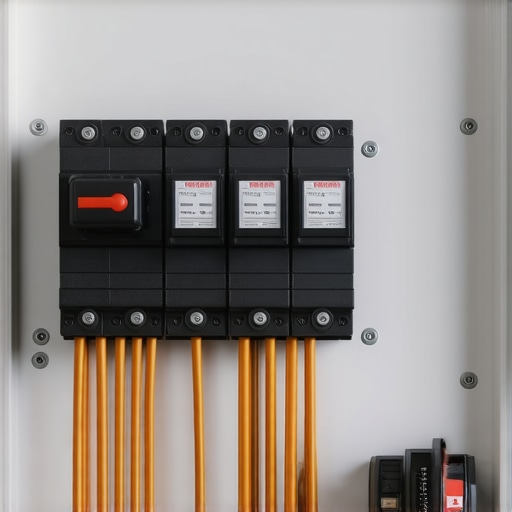 One contrarian view I hold is that “smart” load shedding isn’t always a substitute for a hardware upgrade. While many people try to use software to balance their home load to avoid a panel swap, ensuring code compliance when installing EV chargers means your hardware must handle the peak demand safely without relying on a Wi-Fi connection that might drop. Also, please, learning why you should check your panel for double-tapped breakers is a lesson you do not want to learn through a smell of smoke. Two wires under one screw creates an uneven contact point that eventually arcs. Have you ever fallen into the “but I have an open slot” trap? Let me know in the comments.
Don’t Guess When You Can Measure Your Panel’s Heat
If you want to be a pro at this, you need to stop relying on your nose and start using your eyes—specifically, infrared eyes. I never go into a panel without my FLIR thermal camera anymore. It’s the only way to see a loose connection before it starts smoking. If you don’t want to drop hundreds on a thermal camera, even a twenty-dollar infrared thermometer can help you learn how to spot a dying breaker before it shuts down your charging session. While the car is charging, point that laser at your main breaker and the EV circuit. If you see temperatures climbing above 140°F (60°C), you have a problem that needs immediate attention. According to the NFPA 70B (Recommended Practice for Electrical Equipment Maintenance), thermal inspections are the gold standard for preventing catastrophic electrical failure. 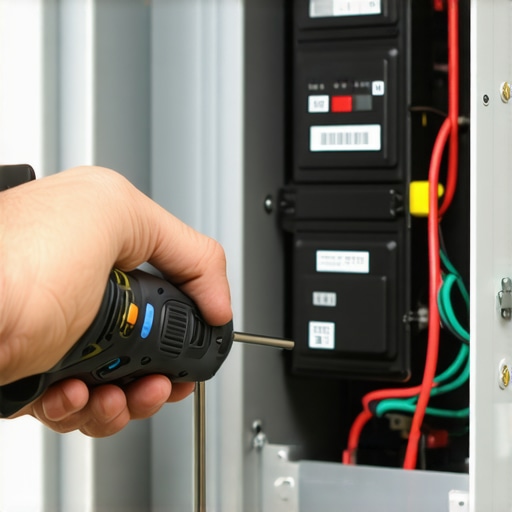
Keep Your Investment Safe From Invisible Power Spikes
Most people forget that their EV is essentially a giant, expensive rolling computer. Why would you plug a $50,000 computer into a wall without protection? I’ve seen utility surges fry internal charging boards in an instant. That’s why I always insist that your ev charger needs a surge protector in the panel. It’s a small hardware add-on that acts as a bodyguard for your car’s battery management system. This isn’t just about saving your car; it’s about panel upgrade strategies to meet ev charging code requirements in 2025, which are becoming stricter about whole-home protection.
How do I make sure my EV setup doesn’t fail three years from now?
Maintaining your charger isn’t just a ‘set it and forget it’ situation. Every six months, I recommend a quick physical audit. Check the charging handle for grit or debris that could cause arcing, and perform the 3 maintenance tasks that keep your outdoor charger running through winter if your unit is exposed to the elements. I also keep a torque screwdriver in my garage kit. Over time, the constant heating and cooling of the wires can cause the terminal screws to back out slightly. Giving them a quick check ensures you are following the code compliance essentials for ev charger installations in 2025. Looking forward, I predict we’ll see ‘smart breakers’ become the norm—breakers that can sense micro-arcs and alert your phone before you ever smell that burning plastic. If you’re planning for the long haul, consider how to upgrade your homes service for dual ev charging now so you don’t have to rip everything out when your spouse eventually gets an EV too. My challenge to you: Grab a digital thermometer and check your breaker temp tonight while the car is pulling its peak load; if it’s over 140°F, it’s time to call an expert.
Hard-Won Truths About High-Voltage Home Charging
Reflecting on my own journey, the biggest “lightbulb moment” was realizing that an EV charger is the most demanding appliance your home will ever host. It isn’t just another gadget; it is a continuous load that tests every weak point in your electrical system. I’ve learned that regular inspections aren’t just for professionals—they are part of being a responsible EV owner. You should always know how to verify code compliance for your EV charger installation because that knowledge is your best defense against corner-cutting installers. Heat is cumulative; just because it doesn’t smell in the first ten minutes doesn’t mean it won’t be melting by hour four. The quality of the outlet matters more than the charger, as a high-end unit on a budget outlet is a recipe for disaster. Never ignore your gut; if you think you smell something acrid, you probably do. Power down first and ask questions later.
Tools I Use to Keep My Home from Smoking
If you want to move beyond guesswork, I highly recommend building a small safety kit. I personally keep a high-quality torque screwdriver to ensure my terminals stay at the manufacturer-specified tightness. Another lifesaver is a simple infrared thermometer; it’s the easiest way to check if you need panel upgrades for EV chargers what you need to know before a component fails. I also keep the latest NFPA 70 guidelines bookmarked on my tablet to ensure I’m always up to date. These resources give me the confidence to know my garage is a safe zone, not a hazard zone. [image_placeholder_final]
Secure Your Home and Your Future Drive
Taking the time to fix a burning smell or a hot breaker isn’t just about preventing a fire; it’s about ensuring your transition to electric driving is as smooth as possible. Don’t let a minor wiring issue sour your experience with an amazing vehicle. By mastering ev charger troubleshooting expert tips for common issues, you are becoming an expert in your own home’s safety. If you ever feel over your head, remember that reaching out to a certified professional to contact us for a safety audit is always the smartest move. Your home, your family, and your car deserve nothing less than a rock-solid electrical foundation. Have you ever felt your breaker panel during a charging session and been surprised by the heat? Let me know your findings in the comments below!