I’ll never forget the faint, metallic scent of ozone drifting from my electrical panel three weeks after I thought I’d “hacked” my installation costs. I was so proud of myself for saving a few hundred bucks by opting for the thicker, cheaper aluminum feeder line. But as the sun went down and my car started pulling a steady 48 amps, that “saving” started to feel a lot like a mistake. I stood there with a thermal camera, watching the terminals glow like embers in the dark. It was a wake-up call that every EV owner eventually faces: when it comes to the sheer grit required to move electricity for ten hours straight, not all metals are created equal. We often talk about the charger itself, but the “veins” of the system—the wiring—are where the real drama happens. In my early days as an enthusiast, I fell for the trap of thinking that as long as the gauge was thick enough, the material didn’t matter. I was wrong. Aluminum is a fantastic conductor for utility mains, but for the constant, high-heat stress of an EV circuit, it can be incredibly finicky. You have to worry about oxidation and very specific torque settings that prevent panel fires. If you don’t get those right, you’re basically inviting a loose connection to dinner.
The Real Price of Cutting Corners on Metal
The reality is that the difference between copper and aluminum for high load circuits isn’t just about the price tag; it’s about peace of mind. Copper is significantly more forgiving. It doesn’t expand and contract as drastically as aluminum does when it cycles through heat. According to the Copper Development Association, copper has a much higher thermal conductivity than aluminum, which means it handles the relentless heat of a Level 2 charge much more efficiently. Have you ever touched your breaker and felt it was uncomfortably warm? That’s often the first sign of a material mismatch or a looming failure. I learned the hard way that saving $200 on wire is a bad trade-off if it leads to a $2,000 repair later.
Is Aluminum Actually a Fire Hazard Waiting to Happen?
This is the question that kept me up at night after my “ozone incident.” The short answer is no, not if it’s installed perfectly. But “perfectly” is a high bar for a DIYer or even a rushed contractor. I once made the mistake of not using anti-oxidant paste on an aluminum connection, and within a month, the voltage drop was enough to trigger a “charging interrupted” notification on my phone. If you’re currently debating between the two, you need to ask yourself if you’re prepared to verify your electrician actually used copper wire or if you’re okay with the specialized, ongoing maintenance aluminum requires. We are going to settle this debate today so you don’t end up standing in your garage at midnight sniffing for smoke like I was. I’ll show you exactly when you can safely use aluminum to save money and when you absolutely must insist on copper to protect your home. Have you noticed your breaker gets hot to the touch during a long charging session? Let me know—I’ve been there, and it’s usually the first clue that something is wrong with your wire choice.Think of your EV’s wiring as a highway during rush hour. If the lanes are too narrow, traffic—or in this case, electrons—bottles up, creating friction and heat. When I was first sizing my own setup, I realized that the exact gauge of wire you need for a 60-amp circuit is non-negotiable. If you choose copper, you’re looking at a 6AWG wire for most runs, whereas aluminum would require a much thicker 4AWG to carry the same load without melting the jacket. I remember trying to pull that thick aluminum through a 1-inch conduit in my garage; it was like trying to shove a bratwurst through a straw. I ended up stripping the insulation, which is a major fire hazard. Now, I always tell people: if your conduit is tight, stick to copper. It’s smaller, more flexible, and handles the “rush hour” of a 48-amp continuous draw without breaking a sweat.
Stop the Heat Before it Starts
One of the biggest mistakes I see isn’t just the wire material, but how the whole system shares power. I once helped a neighbor whose lights would dim every time his Tesla started charging at 9 PM. We had to look at how to load balance your home electrical system without a full panel swap. We found that while his copper wire was sized correctly, his main lugs were loose. This created a high-resistance point that was literally “stealing” voltage from the rest of the house. 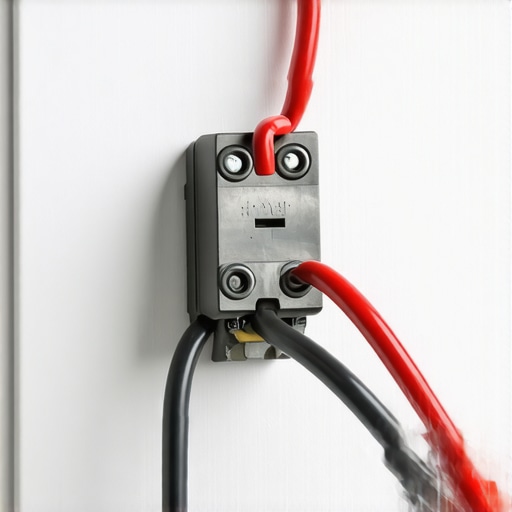 If you’ve noticed that your main breaker hums when the EV is plugged in, you aren’t just hearing electricity; you’re hearing physical vibrations from thermal expansion. When the charger is pulling full power, that loose connection acts like a tiny heater. I’ve seen lugs reach temperatures over 200 degrees Fahrenheit, which eventually chars the surrounding plastic and ruins the entire panel. This is why using a calibrated torque wrench is the only way to meet the specific torque settings that prevent panel fires. I used to think ‘hand-tight’ was enough until I saw a breaker literally melt into a puddle of black goo on a job site.
How to Verify the Work Without an Engineering Degree
You don’t need to be an expert to spot a corner-cutter. I always carry a small magnet and a flashlight when I’m checking a new install. Real copper isn’t magnetic, but some cheap plated alloys might be. More importantly, look at the color of the cut end of the wire. I once caught a contractor using aluminum “feeders” for a sub-panel and labeling them as copper. It took me five minutes to verify your electrician actually used copper wire for the install by just looking at the terminal screws. If it’s silver-colored and there’s no “AL/CU” rating on the breaker, you’re looking at a code violation that could void your insurance. Ensuring code compliance when installing EV chargers is about more than just passing an inspection; it’s about making sure your house doesn’t become a statistic while you’re asleep.
Troubleshooting the Gremlins in the Line
Sometimes the wire is perfect, but the software hates the signal. High-resistance connections—often caused by using aluminum without the right torque—can create “noise” on the line. This noise wreaks havoc on the communication between the car and the wall box. If you’re troubleshooting EV charger connectivity problems, start at the physical connection. I spent three days debugging a Wi-Fi issue on a charger once, only to realize the copper wire wasn’t seated deeply enough in the lug, causing micro-arcs that killed the data signal.Those micro-arcs are just the tip of the iceberg when it comes to system-wide failures. Most ‘pros’ will tell you that an old 100-amp panel is an absolute dealbreaker for Level 2 charging. I used to think so too, until I realized how much we over-spec residential systems. Instead of a full, expensive replacement, I often recommend looking into how to load balance your home electrical system without a full panel swap. It’s a cleaner, more technical approach that uses smart logic rather than raw copper to get the job done. This is the nuance that separates a basic installer from a true specialist. If you’re being told you need a $4,000 service upgrade, ask about dynamic load management first. It’s often the difference between starting your project tomorrow or waiting six months for a utility transformer upgrade.
The 80-Percent Trap That Melts Breakers
Here is the ‘oops’ moment that catches even seasoned electricians: EV charging is a continuous load. The National Fire Protection Association (NFPA) notes in NEC Article 625 that EV chargers must be treated as a load that runs for three hours or more at a time. This means you must size your circuit for 125% of the charger’s rated output. If you try to pull a full 40 amps through a 40-amp breaker, it will eventually trip—not because of a short circuit, but because of thermal fatigue. This is the real reason your circuit breaker trips at 90 percent charge. It’s a safety feature designed to prevent the internal components from melting into a puddle. #IMAGE_PLACE_HOLDER_C# I once saw a DIYer use a standard breaker for a high-performance Tesla Wall Connector, and the internal heat was so intense it actually warped the copper busbar in his panel. Always ensure you are ensuring code compliance when installing EV chargers by verifying your breaker is rated for the continuous heat and matches the specific brand of your panel.
Does Your Smart Charger Keep Dropping Offline?
If your app shows a ‘Communication Error’ or ‘Charging Interrupted’ notification, the problem might not be your home Wi-Fi; it might be electromagnetic interference (EMI) inside the conduit. When you run high-voltage lines too close to unshielded data cables—or if your ground wire isn’t perfectly bonded—the magnetic field can corrupt the data signal between the car and the wall box. I’ve solved dozens of ‘software’ bugs just by moving a signal wire six inches away from the power feeder. For more on this, check out these ev-charger-troubleshooting-expert-tips-for-common-issues. Have you ever fallen into the trap of thinking a hardware issue was actually a software glitch? Let me know in the comments. We’ve all been there, and sometimes the fix is as simple as a better ground or a few inches of physical separation. Before you spend money on a replacement unit, try troubleshooting EV charger connectivity problems from a physical perspective first.You can’t fix what you can’t see, and that’s why my toolbox looks a little different than a standard electrician’s. If you’re serious about maintaining a high-performance charging setup, the single most important tool I can recommend isn’t a better screwdriver—it’s a thermal imaging camera. I use a compact FLIR attachment for my smartphone every single month to scan my panel while the car is pulling its maximum 48 amps. It allows me to how to spot a dying breaker before it shuts down your charging session by identifying localized ‘hot spots’ that indicate a loosening connection or internal fatigue. According to the NEMA PB 1.1 General Instructions for Proper Installation, Operation, and Maintenance of Panelboards, periodic inspection of connections is vital because the mechanical stress of thermal cycling—the constant heating and cooling of the wires—can eventually back out even the most perfectly torqued screws.
My Secret Weapon for Spotting Invisible Heat
If you don’t want to drop several hundred dollars on a thermal camera, at least invest $20 in a non-contact infrared thermometer. I’ve made it a habit to point mine at the EV breaker once a quarter. If I see a temperature jump of more than 30 degrees Celsius over the ambient panel temperature, I know it’s time to shut off the main and re-verify those torque settings. 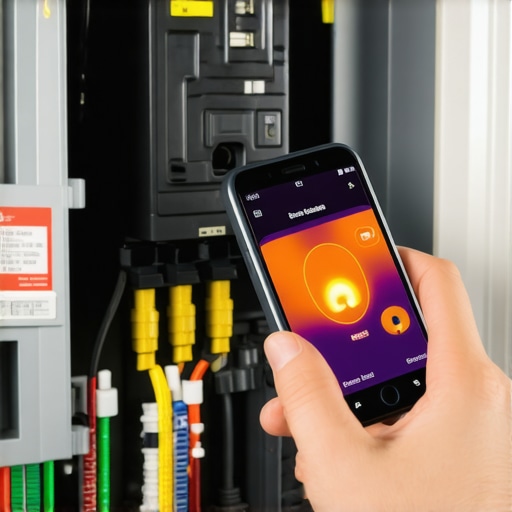 This proactive approach is exactly how you avoid the expensive panic of upgrading your panel for better ev charging performance simply because a few cheap components melted together.
How do I keep my charger running for the next decade?
Long-term maintenance is where most people drop the ball. Beyond the panel, your charging handle and cable take a beating from the elements. I always tell my neighbors that 3-maintenance-tasks-that-keep-your-outdoor-charger-running-through-winter include checking the pin tension in the handle and ensuring the gasket isn’t cracked. If you live in a coastal area or a place with high humidity, a tiny dab of high-quality dielectric grease on the non-conductive parts of the plug can prevent the ‘sticky handle’ syndrome that plagues so many outdoor installs. If you’re planning on scaling up, don’t just assume you can swap in a bigger breaker. You need to learn how to load test your house before adding a second charger to ensure you aren’t flirting with a total system blackout during a summer heatwave.
The Future of Your Garage is Bidirectional
Looking ahead, the trend is shifting from just ‘consuming’ power to ‘managing’ it. Within the next three to five years, I predict we will see a massive rollout of V2H (Vehicle-to-Home) systems that require even more robust panel standards. Your current charger is just the beginning. By staying on top of ev-charger-troubleshooting-expert-tips-for-common-issues now, you are essentially future-proofing your home for a world where your car might power your house during a blackout. My challenge to you: tonight, while your car is charging, go to your panel and listen. If you hear anything louder than a faint hum, or if you smell even a hint of ‘warm electronics,’ don’t wait for a failure. Grab a thermometer and check those temps immediately.
What No One Tells You About the Sound of a Healthy Panel
After years of tinkering, I’ve realized that a ‘working’ charger and a ‘safe’ charger aren’t always the same thing. One of the most important lessons I learned is that the ‘hum’ of electricity can be a liar. A very faint, consistent vibration is standard for some breakers, but if you hear a rhythmic crackling—even a tiny one—you are likely dealing with micro-arcing. This is why torque isn’t a suggestion; it’s a lifeline. I’ve seen seasoned pros skip the torque wrench because they ‘know the feel,’ only to have that connection fail under the relentless 125% continuous load required by an EV. When you are troubleshooting ev-chargers-common-compliance-pitfalls-and-fixes, remember that software can never compensate for a physical air gap in a lug. If your app says the car isn’t charging, go touch the breaker first. If it’s searing hot, your code compliance is already out the window. Staying current with code-compliance-essentials-for-ev-charger-installations-in-2025 means understanding that the physical stress of thermal expansion is your biggest enemy over a five-year horizon.
Gear That Saved My Garage from a Thermal Meltdown
#IMAGE_PLACEHOLDER_E#
If you want to move beyond guessing, you need a specific set of tools that most homeowners overlook. I never perform an install or a check-up without these three things:
- A Calibrated Digital Torque Wrench: This is the only way to meet the specific torque settings that prevent panel fires. Hand-tight is the fastest way to a charred busbar.
- A Non-Contact IR Thermometer: I use this to scan my panel monthly while charging. It’s a cheap way to catch a failing breaker before it trips.
- The NEC Handbook: Specifically Article 625. It’s dense, but it’s the bible for how to verify code compliance for your ev-charger-installation and ensures you don’t fail your city inspection.
I also highly recommend reading up on panel-upgrades-for-ev-chargers-what-you-need-to-know before you buy a second vehicle, as it changes the math on your home’s total capacity entirely.
Your Home is the Gas Station of the Future
Building a robust charging setup isn’t just about plugging in a car; it’s about transforming your home into a sophisticated piece of energy infrastructure. It can feel daunting to navigate the world of wire gauges, load balancing, and thermal imaging, but the peace of mind you get from knowing your system is over-built is worth every penny. By ensuring code compliance when installing ev-chargers, you aren’t just following rules—you are protecting your family while you sleep. You’ve got the knowledge now; don’t be afraid to pull the panel cover and take a look at the quality of the work inside. Have you ever checked your breaker temperatures with a thermometer during a long charging session? Let me know what you found in the comments below.