It was a freezing Tuesday morning, and I was already running five minutes behind for a meeting that definitely could have been an email. I grabbed my charging handle, expecting that satisfying click and release, but instead, I got nothing. It was stuck. I am not talking about a little bit of friction; I am talking about a mechanical lock that made me feel like my car had decided it was not done breakfasting on my home’s electricity yet. I felt that sudden surge of panic we all get when a piece of tech we rely on suddenly decides to stop cooperating. I even tried to wiggle it with a bit too much ‘neighborly’ force—a move I deeply regretted when I realized I could have snapped a three-hundred-dollar component. After a few deep breaths and a quick dive into some manuals, I realized this was not a broken port, but a safety protocol I had failed to respect. We are going to dig into exactly why this happens and how you can get back on the road without breaking your equipment.
Why Your Charger Is Holding Your Car Hostage
You are stuck. Your car is essentially an expensive paperweight anchored to your garage wall. It is frustrating, but it is also completely solvable. The most common reason a handle stays locked is that the car and the charger have not finished their ‘digital handshake.’ Even if the battery is at 100%, the car often maintains a physical lock on the connector to prevent someone from unplugging it while current is still potentially flowing. I learned the hard way that [how to stop your charger handle from sticking in the port](https://brightsparkzelectric.com/how-to-stop-your-charger-handle-from-sticking-in-the-port) often starts with understanding your car’s specific locking settings. Some vehicles are programmed to stay locked until the entire car is unlocked with the key fob, regardless of the charging status. If you are dealing with more frequent hangups, you might need to look into [ev charger troubleshooting](https://brightsparkzelectric.com/ev-charger-troubleshooting-expert-tips-for-common-issues) to see if there is a deeper communication lag. Have you ever found yourself tugging on that handle while the clock ticks toward a late arrival at work? It is a rite of passage for EV owners, but it usually points to a software setting or a dirty pin rather than a total hardware failure.
Is This Just a Sign of a Cheap Internal Component?
It is easy to assume that if the handle will not release, the manufacturer must have used sub-par parts. In reality, this locking mechanism is a heavy-duty safety requirement. According to the National Electrical Code (NEC), the locking mechanism is a vital safety feature designed to prevent ‘hot-unplugging,’ which can cause dangerous electrical arcing between the pins and the car. When you encounter a [communication error between your car and charger](https://brightsparkzelectric.com/how-to-troubleshoot-a-communication-error-between-your-car-and-charger), the car defaults to a ‘safe’ state, which often means keeping the plug locked in place. Early on, I actually tried to clean the port with a damp cloth—a massive mistake that led to more connectivity issues. I should have been looking at [how to clean the pins on your charging handle safely](https://brightsparkzelectric.com/how-to-clean-the-pins-on-your-charging-handle-safely) using the right materials. This issue is rarely about the quality of the plastic and almost always about the electrical signal telling the actuator to move. Before you call an electrician or assume your panel needs an upgrade, we need to look at the sequence of operations that allows that lock to slide back.
Stop the Flow Before You Pull
The first rule of EV charging is that the car and the station are constantly talking. If that conversation is still happening, the solenoid—the little pin that physically locks the handle—won’t budge. Most people just walk up and pull, but you need to force a digital goodbye first. I remember standing in the rain once, pressing the unlock button on my fob like I was trying to win a video game high score, only to realize the car was still actively trying to draw current. To release the tension, always stop the session via your car’s touchscreen or the charger’s mobile app before you even touch the handle.
Hit the Unlock Button Twice
On many models, unlocking the doors doesn’t automatically unlock the port. I once spent ten minutes wrestling with a cable only to realize that a double-click on my key fob was the magic combination. It’s a security feature to prevent charger theft, but it feels like a prank when you’re in a rush. If the fob doesn’t work, jump into your car’s infotainment system. You might find that how to update your charger software without calling a technician is the actual fix if the software is glitching and refusing to release the pin.
Use the Manual Override When Electronics Fail
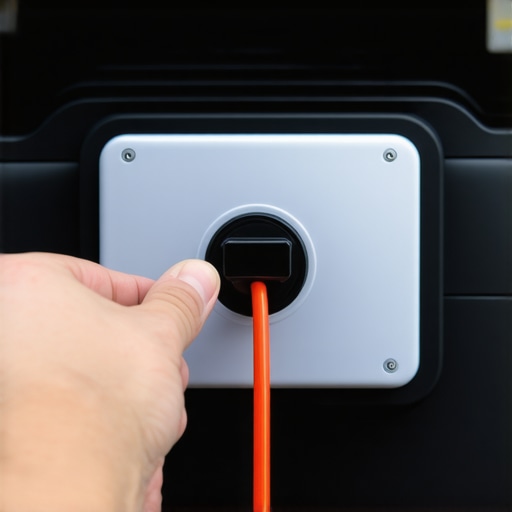
Sometimes the digital handshake just breaks. Maybe your 12V battery is low, or the actuator is jammed. Every EV has a ‘get out of jail free’ card—a manual release cable. I had to use this once after a heavy ice storm that seized the internal mechanism. I opened the trunk, pulled back a small plastic panel on the side closest to the port, and found a small, brightly colored pull-tab. One firm tug and the handle clicked right out. It’s important to how to find the best spot in your garage for a level 2 install so you have enough room to actually reach these emergency points without becoming a contortionist.
Digging Through the Trunk Liner
If you cannot find the tab, check your manual. Some cars hide it under the hood or even inside the wheel well. Knowing where this is located can save you an expensive tow bill. If you find yourself needing the manual release frequently, it is a sign that you are likely facing troubleshooting ev charger connectivity problems that need a professional look. A manual release is a temporary bypass, not a daily solution.
Stop Hardware Wear Before It Starts
If the sticking is mechanical rather than electronic, it’s usually due to friction or debris. You shouldn’t have to be a bodybuilder to unplug your car. Dust, pet hair, or even tiny bits of corrosion can create a ‘suction’ effect. I’ve seen ports so grimy they looked like they’d been dragged through a swamp. You need to know how to clean the pins on your charging handle safely without using liquids that could short the system. A shot of compressed air and a dry, non-conductive brush go a long way. If the issue persists, it might be a sign that the hardware is warped from heat.
Ensure Your Panel Can Handle the Load
Sometimes the ‘stuck’ feeling is actually a heat issue. If your wiring is undersized, the pins can expand slightly during a high-heat charge cycle, wedging the handle in place. If your charger is pulling more than it should, or if there is a common wire sizing error that causes voltage drops during charging, the physical heat can make the plastic and metal components bind. This is why upgrading your panel for better ev charging performance isn’t just about speed—it’s about hardware longevity. If your lights flicker or the breaker feels hot, you’re dealing with more than just a sticky handle; you’re dealing with an electrical bottleneck that needs to be addressed before it damages your car’s port permanently.
Your 200-amp panel isn’t the silver bullet you think it is
Most homeowners assume that because they have a modern 200-amp service, they can simply slap a 50-amp breaker in and call it a day. I used to think the same until I saw a busbar warped by heat because the total load calculation was ignored. In reality, panel upgrades for ev chargers are more about current headroom than just the number on the main breaker. If your house is running an electric range, a heat pump, and a dryer, you might be closer to the edge than you realize. According to the NFPA 70 (National Electrical Code) Section 625.41, an EV charger is considered a ‘continuous load,’ meaning the overcurrent protection must be sized at 125% of the charger’s rating. This is where most DIYers trip up—they see a 40-amp draw and think a 40-amp breaker is enough, but they are actually violating code compliance essentials for ev charger installations in 2025.
Does the brand of your circuit breaker actually matter?
Yes, and it’s not just about aesthetics. I’ve seen homeowners try to save twenty bucks by using a ‘compatible’ breaker that wasn’t UL-listed for their specific panel. This is a massive mistake. Identifying the specific breaker brand that keeps tripping on level 2 chargers is often a sign of poor heat dissipation or a slight physical mismatch that creates high resistance. Resistance equals heat, and heat is what causes that handle-sticking issue we talked about earlier. If the breaker isn’t seated perfectly, the heat travels through the wire right to your car’s port.
The torque wrench mistake that ruins chargers
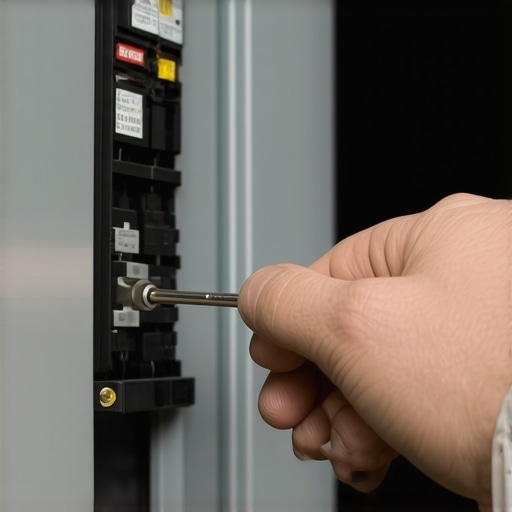
Here is the nuance no one tells you: you cannot just tighten a screw ‘until it’s tight.’ Professional electricians use torque screwdrivers because the specific torque settings that prevent panel fires during high load charging are measured in precise inch-pounds. If it’s too loose, you get arcing; if it’s too tight, you crush the wire and create a hot spot. This is one of those troubleshooting ev chargers common compliance pitfalls and fixes that you won’t find in a basic YouTube tutorial. If you’ve ever noticed a faint ‘burnt plastic’ smell in your garage, this is likely why. Have you ever fallen into this trap? Let me know in the comments. Ensuring code compliance when installing ev chargers isn’t just about passing an inspection; it’s about making sure your house doesn’t catch fire at 3:00 AM while you’re asleep.
Why hardwiring beats the NEMA plug every time
While a plug-in charger seems convenient, the extra point of connection—the outlet—is just another failure point. Most residential-grade 14-50 outlets weren’t designed to handle 40 amps for ten hours straight every single night. Over time, the tension in the outlet’s metal contacts weakens. This leads to voltage drops and communication errors. If you’re serious about longevity, upgrading your panel for better ev charging performance should include a hardwired connection. It removes the outlet from the equation entirely, reducing heat and making the ‘handshake’ between the car and the charger much more reliable. If you’re still seeing issues, it’s time for ev charger troubleshooting to pinpoint whether the fault lies in the charger’s logic board or your home’s infrastructure.
I have learned that the secret to a stress-free EV life isn’t just a professional install; it is the consistent follow-through. I now keep a simple infrared thermometer in my tool bag, and it is easily my most recommended piece of equipment. Every few months, I make it a point to scan the breaker while the car is pulling its full load. If I see a reading climbing toward the limit of the breaker’s thermal rating, I know I have a loose connection or a dying breaker before it shuts down your charging session. This twenty-dollar tool acts as my early warning system, preventing the kind of heat build-up that causes handles to stick in ports. It is far cheaper than replacing a charred busbar because I ignored the 3 signs your main breaker is running dangerously hot during overnight charging. 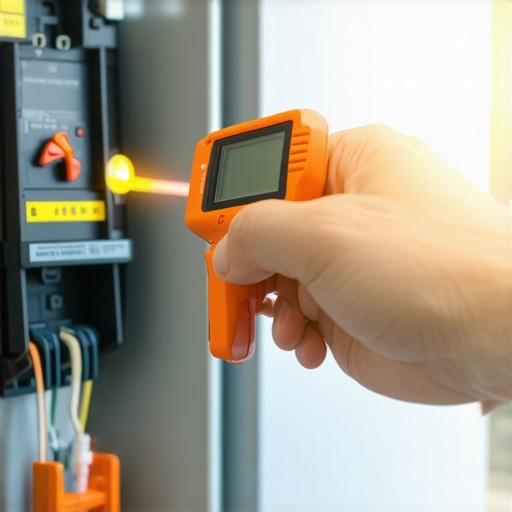
How can I make my home charging hardware last longer than the car?
Beyond heat management, you need a software and physical hygiene routine. I check for firmware updates monthly because how to update your charger software without calling a technician is often the fastest way to resolve those annoying ‘handshake’ delays. Physically, I treat the connector like a high-end camera lens. I use a dry, non-conductive contact cleaner to keep the pins pristine, following the steps for how to clean the pins on your charging handle safely. If you live in a cold climate, you also need to focus on 3 maintenance tasks that keep your outdoor charger running through winter, such as inspecting the cable jacket for cracks. Even the InterNational Electrical Testing Association (NETA) emphasizes that ‘thermal anomalies’ are the leading cause of electrical failure in high-draw residential systems, so don’t assume that because it’s working today, the connections aren’t loosening over time. Looking ahead, I predict we are quickly moving toward widespread bidirectional charging. If you are currently looking at panel upgrade strategies to meet ev charging code requirements in 2025, you should ask your electrician if your setup is ‘V2X ready.’ Your car will eventually act as a backup battery for your house during a blackout, which puts even more stress on your panel’s infrastructure. To stay ahead of the curve, ensure your installation prioritizes how to verify code compliance for your ev charger installation so you aren’t forced to redo the work when the tech evolves. I challenge you to go out to your garage tonight while the car is charging and just listen—if you hear a hum or smell even a hint of ozone, it’s time for some ev charger troubleshooting. Don’t wait for the handle to get stuck again before you take action.
What Five Years of High-Voltage Charging Taught Me About My Home
The biggest shift in my perspective happened when I stopped viewing my charger as just another appliance and started seeing it as a bridge between my home’s infrastructure and my mobility. I’ve realized that ensuring code compliance when installing ev chargers isn’t just about satisfying a city inspector; it’s about the peace of mind that comes from knowing your electrical busbar isn’t slowly cooking itself while you sleep. Another major ‘lightbulb moment’ was discovering that physical tension often stems from thermal expansion—if your wiring is even slightly undersized, that heat translates directly into a stubborn, sticking handle. Always prioritize code compliance essentials for ev charger installations in 2025 to avoid the physical and digital headaches of a system pushed to its absolute limit.
The Practical Toolkit I Use to Keep My Port Prisinte
You don’t need a van full of professional gear, but a few specific items will save you from an expensive service call. I highly recommend keeping a non-contact infrared thermometer in your garage. It is the most reliable way to monitor for 3 signs your main breaker is running dangerously hot during overnight charging before a failure occurs. Additionally, invest in a high-quality torque screwdriver if you plan on checking your own connections; using the specific torque settings that prevent panel fires during high load charging is the only way to guarantee a safe, low-resistance path for the current. Finally, a can of dry electrical contact cleaner is essential for those who want to know how to clean the pins on your charging handle safely without risking a short circuit.
Drive Away with Absolute Confidence Every Single Morning
Transitioning to an electric vehicle is a learning curve, but once you master the nuances of your home’s electrical capacity, the anxiety of a stuck handle or a tripped breaker becomes a thing of the past. By staying proactive with your maintenance and respecting the high-draw nature of these systems, you ensure that your technology serves you, rather than the other way around. If you ever run into a digital glitch you can’t solve with a reboot, don’t hesitate to dive back into ev charger troubleshooting to find the specific fix for your hardware. You’ve done the hard work of making the switch to clean energy—now make sure your home is ready to support that journey for the long haul. Have you ever had a morning where your car handle simply refused to let go? Let me know your story in the comments below!