I was settled in for the big game last Friday night, snacks at the ready, when I heard the familiar thunk of my Level 2 charger kicking in out in the garage. Instantly, my 4K television started doing its best impression of a 1920s silent film. The flicker was subtle but maddening, a rhythmic pulse that made it impossible to focus on the play-by-play. My first thought was that my TV was finally giving up the ghost, but as soon as I paused the charging session from my phone, the screen went back to being crystal clear. It was a classic case of electrical interference, and honestly, it felt like my high-tech car was pickpocketing the quality of my home life. If you have noticed your screen dimming or stuttering the moment your car starts pulling juice, you are not crazy, and you are definitely not alone. We are going to dig into why this happens and how you can reclaim your living room without leaving your car with an empty battery.
Stop the Screen Stutter When You Plug In
The reality is that your EV charger is one of the most power-hungry appliances your home will ever see. When it starts up, it creates a massive draw that can cause a momentary dip in voltage throughout your entire electrical system. I have spent years helping neighbors troubleshoot these exact issues, and I have seen how a simple installation oversight can turn into a daily annoyance. Sometimes the fix is as simple as learning how to stop your garage lights from flickering when the car starts charging, which often involves the same root causes as your TV troubles. Most people do not realize that their sensitive electronics and their heavy-duty car chargers are often fighting for the same ‘clean’ power. If your wiring is not up to the task, the television is usually the first thing to complain. Have you noticed your screen flickering or your smart home devices acting glitchy lately?
Could your home’s wiring be too old for this much power?
Early in my journey as an EV owner, I made a classic mistake: I assumed that because my panel had a vacant slot, it was ready for a 50-amp load. I ignored the fact that my home was built in the late 70s and that some of the connections had loosened over the decades. This led me to discover the hidden danger of loose neutral wires in your electrical panel, which was exactly what was causing my TV to freak out every time the charger ramped up. According to the Institute of Electrical and Electronics Engineers (IEEE), power quality issues like voltage sags and electromagnetic interference (EMI) can significantly degrade the performance of sensitive consumer electronics if the electrical infrastructure is not properly balanced. Often, the culprit is the common wire sizing error that causes voltage drops during charging. If the wire is too thin for the distance it travels, the resistance creates heat and a drop in voltage that your TV just cannot handle. You might even need to look into panel upgrades for ev chargers what you need to know before your electrical system can truly support both your commute and your Netflix habit simultaneously. It is about more than just having enough room in the box; it is about the integrity of the whole path from the street to your screen.
Fix the interference once and for all
First, you need to determine if your house is actually capable of handling the instantaneous draw of a Level 2 station. It is one thing to have the physical space for a breaker, and quite another for your service entry to manage the flow. I usually recommend that homeowners learn how to load test your house before adding a second charger or even your first one, as this reveals exactly how much headroom you have left when the AC and the oven are running. If you are already at 90% capacity, that EV charger is going to pull the rug out from under your television’s power supply every single time. This sudden dip is essentially starving your electronics, and a simple load test can confirm if you are redlining your electrical system.
Tighten your connections to stop the voltage sag
One of the most overlooked fixes is remarkably simple: checking the physical tightness of your wires. I remember helping my neighbor, Dave, whose smart home system would reset every time his Tesla hit its peak charging rate. We spent an hour poking around until we found a slightly loose lug on his main breaker. Five minutes with a torque wrench and his house stopped acting possessed. This is why following the specific torque settings that prevent panel fires during high-load charging is non-negotiable. A loose connection creates resistance, resistance creates heat, and heat causes the voltage to drop, leading to that annoying screen flicker. If the connection at the breaker or the neutral bar is even slightly off, the high current of the charger will expose it immediately. 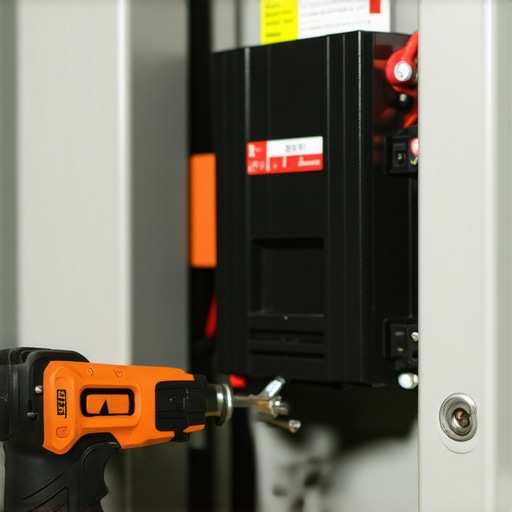
Ditch the aluminum and go for copper
If your installer cut corners, they might have used aluminum wiring to save a few bucks. While aluminum is legal in many jurisdictions, it expands and contracts significantly more than copper under the heavy thermal stress of an 8-hour charging session. You should definitely check the difference between copper and aluminum for ev-wiring to see if your setup is prone to these fluctuations. Copper provides a much more stable path for high-amperage loads, which keeps your sensitive electronics from feeling the ‘thump’ when the charger kicks in. Switching to copper for high-load runs is often the secret to silencing electrical noise in older homes.
Isolate the noise with a dedicated path
Your TV flickers because it is likely sharing a circuit or a phase that is being heavily influenced by the charger’s electromagnetic noise. Every high-power device should have its own lane. This is why your charging station needs a dedicated circuit breaker that is physically separated from your living room circuits in the panel if possible. If you are still seeing ghosts on the screen or experiencing audio lag, you might need to dive into ev-charger-troubleshooting-expert-tips-for-common-issues to rule out internal component failure in the charger itself. Finally, if your panel is just too crowded to move breakers around, you can often find a way how to load balance your home electrical system without a full panel swap, which uses smart relays to prioritize power and keep your entertainment system stable while you juice up for the morning commute.
The 80 Percent Myth That Could Melt Your Breaker
Most people think that if they buy a 50-amp charger, they can just slap it on a 50-amp breaker and call it a day. In reality, that is a recipe for a house fire. I have seen countless DIYers fall into the trap of ignoring the ‘continuous load’ rule. According to the National Fire Protection Association (NFPA) 70, also known as the National Electrical Code (NEC), any load that runs for three hours or more must only pull 80% of the circuit’s rated capacity. This means your 50-amp circuit is only safely rated for a 40-amp draw. If you push it to the limit, you are not just being efficient; you are inviting thermal runaway. This is one of the most frequent troubleshooting ev chargers common compliance pitfalls and fixes I deal with. People assume the breaker will protect them, but breakers are mechanical devices that can fail under the relentless heat of an 8-hour charging session.
Why does your 200-amp panel still struggle with a 48-amp charger?
It is a common misconception that having a modern 200-amp service means you have infinite power. The nuance lies in the load calculation, not just the number on the main breaker. If you have an electric range, a heat pump, and a hot tub, that ‘massive’ 200-amp panel is actually screaming for mercy before you even plug in your Tesla. I have walked into homes where the owners were baffled by flickering lights, only to find they were ensuring code compliance when installing ev chargers on paper, but failing the real-world math of simultaneous usage. This is exactly why a 100 amp service isnt always enough for two evs or even one high-powered charger in a fully electric home. Before you add that Level 2 station, you need to look at the ‘peak demand’ of your entire household, not just the vacant slots in the box.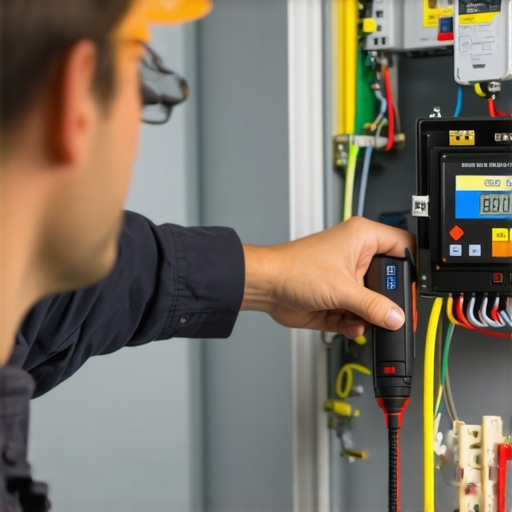
The Torque Wrench is Not Optional
Here is the ‘oops’ factor that haunts even some professional electricians: the failure to use a calibrated torque wrench. Most people think ‘hand tight’ is good enough for a breaker, but the high-vibration environment of alternating current at high amperages says otherwise. If those lugs are not tightened to the specific torque settings that prevent panel fires during high-load charging, the metal will expand and contract until the connection becomes loose. A loose connection creates an arc, and an arc creates a fire. I once helped a client who thought their charger was defective because it kept shutting down. In reality, the heat at the breaker was so intense it was tripping the thermal protection before the car could even reach a 50% charge. Don’t assume your installer got this right by ‘feel.’ If you want to avoid ev charger troubleshooting expert tips for common issues later, demand to see a torque screwdriver during the install. Have you ever fallen into the trap of thinking a 200-amp panel was an infinite resource or noticed your breaker getting unusually hot? Let me know in the comments. We need to stop treating these chargers like simple toasters; they are industrial-grade appliances living in our residential garages. Check out code compliance essentials for ev charger installations in 2025 to make sure your setup actually meets the latest safety benchmarks.
How do I maintain my EV charging setup over time?
Most homeowners think of their charger as a ‘set it and forget it’ appliance, but that is a dangerous assumption for something moving that much energy. I have made it a habit to perform a quick visual inspection every quarter. I look for any signs of discoloration on the outlet or the charging handle. If you see even a hint of brown or melted plastic, stop immediately. You also need to know how to clean the pins on your charging handle safely because road salt, dust, and oxidation can increase resistance, leading to the exact heat issues we discussed earlier. If your charger is outside, you should follow 3 maintenance tasks that keep your outdoor charger running through winter, specifically checking the cable jacket for cracks caused by extreme temperature swings. Beyond the physical, you should learn how to update your charger software without calling a technician. Manufacturers often push ‘over-the-air’ updates that improve thermal management or fix communication bugs that cause those annoying mid-night charging drops.
The pro tools I actually use for troubleshooting
If you really want to stay ahead of electrical failure, you need more than just a screwdriver. I personally swear by an infrared (IR) thermal camera, like the FLIR TG165-X. Once a month, while the car is pulling its full 48 amps, I open the panel cover and scan the breakers. If I see a lug that is 20 degrees hotter than the others, I know I have a loose connection before it ever smells like smoke. This is the ultimate way to verify code compliance for your EV charger installation in real-time. According to Section 625 of the National Electrical Code (NEC), EV charging systems must be installed as ‘continuous loads,’ but even compliant systems can degrade. By using a thermal camera, you are catching the degradation of the spring tension in your breakers before they fail. 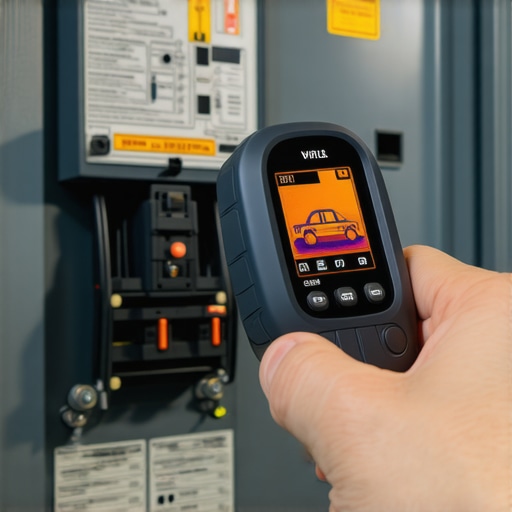
Bidirectional power is closer than you think
The next step in this journey isn’t just taking power from the grid; it is giving it back. We are moving toward a world of Vehicle-to-Home (V2H) and Vehicle-to-Grid (V2G) technology. This means your car becomes a backup battery for your house during a blackout. However, if you are planning for this, you should consider upgrading your panel for better EV charging performance now. Most current panels are not wired to handle ‘back-feeding’ from an EV without a specific transfer switch or a smart gateway. I am already seeing early adopters struggle because their initial install was too ‘lean.’ If you are sticking with a basic setup for now, at least ensure you are ensuring code compliance when installing EV chargers so you don’t have to rip everything out when V2G hits the mainstream in the next three to five years. My advanced tip for you this week: Buy a cheap IR thermometer and check your charger’s plug temperature after two hours of use. If it is over 140 degrees Fahrenheit, you have a high-resistance connection that needs professional attention before your next long-distance trip.
Lessons Bought with Sweat and Electrical Sparks
Looking back on my first year of EV ownership, the biggest lightbulb moment wasn’t about the car—it was about the house. I quickly realized that ignoring the real reason your circuit breaker trips at 90 percent charge is the most common path to a costly service call. Most homeowners treat a charger like a simple toaster, but it is actually closer to running an industrial welder for eight hours straight. I learned that upgrading your panel for better ev charging performance is often the only way to truly future-proof your setup against interference. Finally, never underestimate the power of a tiny loose screw; checking the specific torque settings that prevent panel fires during high load charging saved my garage from a potential disaster that no standard breaker could have predicted.
The Gear That Keeps My Garage and Sanity Intact
I don’t leave my electrical safety to chance, and neither should you. Here are the tools and steps I always use to ensure everything stays stable and my TV stays clear. First is a reliable infrared thermometer to spot 3 signs your main breaker is running dangerously hot during overnight charging before an arc can even form. Second, I recommend everyone learn how to update your charger software without calling a technician to keep the digital communication between the car and the grid seamless. Lastly, if you are feeling overwhelmed by the technicalities, browsing code compliance essentials for ev charger installations in 2025 is the best way to arm yourself with the right questions for your electrician.
#IMAGE_PLACEHOLDER_E#
Taking Charge of Your Home Energy Future
Transitioning to an electric vehicle is an exciting leap into the future, but it requires us to be more in tune with our home’s heartbeat than we used to be. By ensuring code compliance when installing ev chargers, you aren’t just following bureaucratic rules—you’re protecting your family and your peace of mind. Don’t let a flickering TV or a humming breaker discourage you; these are just signals that your system needs a little fine-tuning to handle its new high-tech guest. It is about creating a balance between your commute and your comfort. Have you ever felt your breaker panel and noticed it was surprisingly warm to the touch? Let me know in the comments below!