I remember standing in my kitchen, coffee in hand, opening that first utility bill after I finally got my Level 2 charger installed. My heart didn’t just sink; it did a full-on Olympic dive into my stomach. The total was nearly double what I usually paid. I’d spent months bragging to my brother about how much I was “saving” by skipping the gas station, only to realize I was essentially handing that cash right back to the power company. I felt like a total rookie who’d been sold a bill of goods. It was a visceral realization that owning an electric vehicle wasn’t just about the car; it was about managing a miniature power plant in my garage.
The Moment I Realized My EV Savings Were a Myth
It turns out, I made a classic mistake. I assumed that plugging in my car was no different than plugging in a toaster or a vacuum. But an EV is a massive, power-hungry beast that can draw more electricity than every other appliance in your house combined. If you’re seeing a massive spike, you aren’t alone. Today, we’re going to dive into the hidden reasons your meter is spinning like a top and, more importantly, how to stop the bleeding. One of the biggest culprits is something called “Time-of-Use” pricing. When I first started, I just plugged in at 6:00 PM when I got home from work—exactly when everyone else was running their AC and dishwashers. I didn’t realize the best time of day to charge your car for the lowest utility rate is usually in the middle of the night. According to the U.S. Energy Information Administration, residential electricity prices vary significantly based on demand, and hitting that “peak” window can cost you three times as much as off-peak hours. I was essentially paying a premium to charge my car during the most expensive hours of the day because I didn’t know how to talk to my utility company.
Is this fancy tech actually worth the extra cost?
People often think that just because a charger is “smart,” it’s automatically saving money. I found out the hard way that why your smart charger isn’t saving you money often comes down to user error in the settings. I had mine set to “Charge Immediately” instead of using the sophisticated scheduling feature. It’s a common pitfall that turns a high-tech tool into an expensive paperweight. You might even need to use an app to schedule charging properly to see any real savings. Beyond the schedule, I noticed my equipment was struggling. I once caught why your breaker gets hot to the touch during charging, which is a sign of inefficiency and potential danger. Have you ever opened your utility bill and wondered if there was a mistake, or did you realize it was the charger right away? Let me know if you’ve felt that same sticker shock. We are going to look at everything from utility rebates to hardware issues that might be draining your wallet so you can finally start saving as promised.
Stop Overloading Your Home’s Brain
Think of your electrical panel as the brain of your house. Every time you flip a switch, a tiny signal goes through. But when you plug in an EV, it’s like asking that brain to run a marathon while reciting the dictionary. Most older homes were never designed for this kind of sustained, high-amperage draw. I learned this the hard way when I noticed my lights flickering every time my car started its cycle. I realized that why a 100-amp service isnt always enough for two evs—or even one power-hungry modern car—comes down to the total load calculation. Before you even buy the charger, you need to how to load test your house before adding a second charger or even your first one. It’s about more than just having an empty slot in the box; it’s about the total capacity of the main breaker to handle the car, the AC, and the oven all at once.
The Simple Way to Dodge a Main Breaker Failure
If your panel is already pushing its limits, don’t panic. You don’t always have to spend thousands on a full service upgrade. There are clever workarounds like how to add an ev charger without a 200-amp panel upgrade by using load management devices. These gadgets act like a traffic cop, pausing the car’s charging if the house starts pulling too much juice elsewhere. I once helped a neighbor install a ‘dryer buddy’ style splitter, and while it worked, we quickly found out that ensuring code compliance when installing ev chargers is non-negotiable for insurance purposes. If you cut corners here, you aren’t just risking a fine; you’re risking a fire that your provider might not cover because the installation wasn’t permitted or up to the 2025 standards. 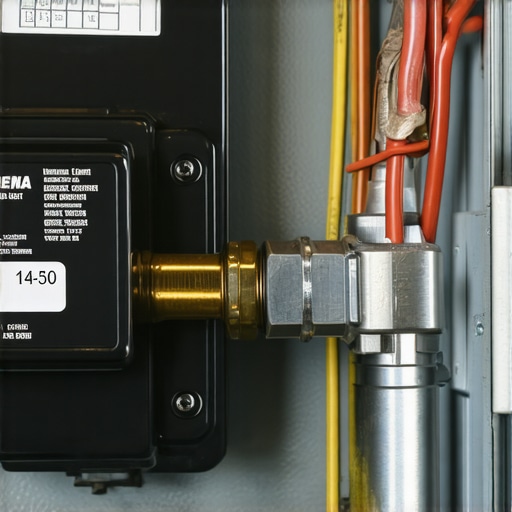
Wiring Choices That Keep Your House From Smelling Like Burnt Plastic
When it comes to the actual wires hidden in your walls, there is a massive debate: copper versus aluminum. While aluminum is cheaper, for a high-load, long-duration draw like EV charging, the consensus is shifting. Understanding the difference between copper and aluminum for ev wiring is vital because aluminum expands and contracts more than copper when it gets hot. This can loosen connections over time. I remember checking my own connections after six months and finding one of the lugs was a quarter-turn loose. That’s why pros emphasize the specific torque settings that prevent panel fires during high load charging. If those screws aren’t tightened to the exact inch-pound specification, the resistance creates heat, and heat creates a disaster.
Don’t Let a Cheap Outlet Melt Your Progress
I once tried to save twenty bucks by buying a standard range outlet from a big-box store instead of an industrial-grade version. Big mistake. Within two weeks, I noticed a faint smell of hot ozone in the garage. When I pulled the plug, the plastic housing was already starting to char and deform. I quickly learned how to pick a nema 14-50 outlet that wont melt under pressure—you need something with reinforced contacts designed for constant use, not just a stove that cycles on and off. If you’ve already got your hardware up, but you’re seeing weird errors on the dash, you might need to know how to fix a check charger warning on your cars dashboard, which often stems from a poor ground or a fluctuating voltage issue caused by these cheap components.I’ve seen it a thousand times in the forums: “You must upgrade to 200 amps if you want a Level 2 charger.” It’s become this unquestioned dogma, but honestly, it’s often an expensive waste of money. Most people jump straight to panel upgrades for ev chargers without looking at the actual load math of their home. In my experience, a smart load-management setup is far more efficient. If you’re willing to think like an engineer rather than a consumer, you can use load shedding devices to avoid a full service upgrade entirely. These devices monitor your total home usage and throttle the car back when the dryer or AC kicks on. It’s a nuance that many standard electricians overlook because they’d rather sell you a massive hardware overhaul than a clever, code-compliant software solution.
Why Does a 50-Amp Breaker Trip When Charging at Only 40 Amps?
This is the “Oops” factor that catches even the smartest homeowners off guard. You see a 50-amp breaker and think you can pull the full 50 amps. However, the National Fire Protection Association (NFPA), under NEC Article 625, specifies that EV charging is a continuous load—meaning it runs for more than three hours at a time. Because of this, you must derate the circuit by 20%. If you try to push the limit, you’ll find the real reason your circuit breaker trips at 90 percent charge is simply physics; the heat buildup is too much for the components to handle over a six-hour session. This is where ev charger troubleshooting expert tips become invaluable, helping you identify if the issue is a faulty breaker or just a violation of the 80% rule. For those of us with chargers exposed to the elements, you can’t just set it and forget it. I follow a strict routine involving 3 maintenance tasks that keep your outdoor charger running through winter because road salt and freezing rain are absolute killers for electrical contacts. I also periodically check the specific torque settings that prevent panel fires during high load charging to ensure nothing has wiggled loose from the constant thermal expansion and contraction of the wires. If you find that your current setup is struggling, or if you’re planning on adding a second EV to the family fleet, you’ll need to look into upgrading your panel for better ev charging performance. It’s better to do it right than to keep patching a system that’s at its breaking point. #IMAGE_PLACE_HOLDER_D# Looking forward, I’m keeping a close eye on bidirectional charging. The trend is moving toward your car acting as a backup battery for your home during outages. To prepare for this, I’ve already started panel upgrade strategies to meet ev charging code requirements in 2025 with a transfer switch in mind. It’s the next logical step in making our homes truly independent energy hubs. If you haven’t yet, go out to your garage right now and feel the temperature of your charger’s handle after an hour of use. If it’s too hot to hold comfortably, you’ve got a problem that needs fixing today. One thing I wish someone had screamed from the rooftops when I started is that EV charging is a marathon, not a sprint. Because the car draws heavy current for hours, your electrical system faces stress it was never built for. I learned that you must check your panel for double-tapped breakers immediately; even if it looks okay, shared terminals create hotspots that can lead to catastrophic failure. I also had to learn how to spot a dying breaker before it actually gave up. If you see discoloration or feel a hum, it’s time for a swap. Finally, understanding the real reason your circuit breaker trips at 90 percent charge changed my life; it’s rarely a ‘bad’ breaker and usually just physics pushing a standard 50-amp part past its continuous-load limit. If you want to skip the trial and error I went through, there are a few resources and tools that are non-negotiable. First, invest in an industrial-grade receptacle. Knowing how to pick a NEMA 14-50 outlet that won’t melt is the single best piece of advice for anyone using a plug-in Level 2 charger. Second, I swear by my utility’s mobile app for tracking real-time usage. Don’t leave money on the table—always check for utility rebates that can reimburse you for the hardware or the installation. Lastly, keep a digital thermometer in your toolkit; it’s the most honest way to tell if your wiring is handling the load safely. #IMAGE_PLACEHOLDER_E# Owning an electric vehicle means you are now in charge of your own fuel supply, and that is an incredibly empowering feeling. By taking these small safety steps, you aren’t just protecting your car; you’re protecting your home and your family. With these ev charger troubleshooting expert tips in your back pocket, you can charge with confidence and finally start seeing those fuel savings you were promised. You’ve done the hard work of making the switch—now it’s time to enjoy the ride. Have you noticed your electrical panel getting warm to the touch during a long charging session? Let me know your experience in the comments below!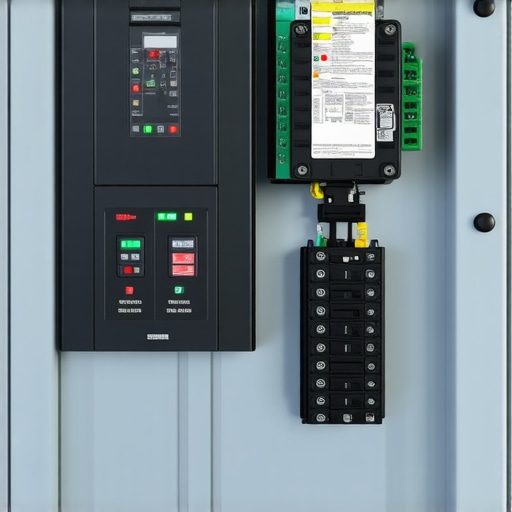 One of the biggest traps for DIYers and pros alike is the “ghost error.” You get a red light on the charger and assume the unit is toast. However, I’ve found that how to verify code compliance for your ev charger installation often starts with the ground wire. If your house has older electrical, you might struggle with how to ground your ev charger according to the latest standards, which requires a much more robust connection than a standard light circuit. Without a perfect ground, the car’s onboard computer will refuse the handshake for safety. We also need to keep an eye on panel upgrade strategies to meet ev charging code requirements in 2025. The rules are shifting rapidly, and what passed last year might not pass an inspection today—especially regarding redundant GFCI protection. Have you ever fallen into the trap of spending thousands on a panel upgrade you didn’t actually need? Let me know in the comments.Once the initial installation stress faded, I realized that my job wasn’t actually over. To sleep soundly, I bought a digital infrared thermometer. It sounds like overkill, but I use it once a month to scan my main breaker while the car is pulling 40 amps. If I see a reading significantly higher than the ambient temperature or approaching 140°F, I know I have a loose connection or a failing breaker before it ever smells like smoke. This is the level of detail that keeps a house from becoming a statistic. According to the IEEE Power & Energy Society, even a minute increase in contact resistance can lead to a ‘thermal runaway’ event where the heat itself causes more oxidation, creating even more heat. It’s a vicious cycle. Beyond the physical hardware, you really need to update the firmware on your smart charging station regularly. These updates often include better safety protocols or ev charger troubleshooting expert tips that the manufacturer discovered after the unit hit the shelves.
 The 80 Percent Rule That Almost Burned My Garage Down
My Go-To Gear for a Stress-Free Setup
Take Control of Your Own Power Plant