I’ll never forget the smell of ozone that wafted through my garage the first time I tried to go green without doing my homework. It was a Saturday, mid-July, and the sun was scorching. I plugged in my car, thinking I was a genius for saving money on fuel. Five minutes later, the air conditioner cut out, the TV died, and I was left in a silent, sweltering house. My wife was not impressed. I had completely underestimated the thirsty nature of a Level 2 station. It wasn’t just a solar problem; it was a lack of understanding regarding the panel space and capacity I needed to sustain that kind of load. If you have ever felt that pit in your stomach when your charger stops mid-session or your lights start flickering like a horror movie, you are in the right place. Today, I am pulling back the curtain on the reality of solar-powered EV charging. We are going to look at why your current setup might be lying to you and how to actually make it work without blowing a fuse or melting a breaker.
The Brutal Reality of Solar Wattage vs Level 2 Demand
Most people think adding solar panels is like adding a larger gas tank to their home. It is not. It is more like trying to fill a swimming pool with a garden hose while someone else is using the pressure washer. When you install a high-speed charger, you are often doubling the peak demand on your home’s electrical system. I learned the hard way that you cannot just slap panels on the roof and expect your electrical panel to handle a Level 2 charger without a bit of serious math. You have to learn how to balance your household loads so you do not end up sitting in the dark while your car tops off. Early in my journey, I neglected to calculate the simultaneous draw of my dryer and the charger, which led to a very expensive service call. Trust me, you want to avoid that. Have you ever experienced your main breaker running hot or tripping for no apparent reason during a charge? It is a sign your system is screaming for help.
Is a 100% solar-powered EV charger actually worth the hype?
It is the question every homeowner asks me, and honestly, the answer is a bit complicated. While it sounds incredible on paper, the Solar Energy Industries Association (SEIA) points out that residential systems are often sized for average daily loads, not the massive 7kW to 11kW continuous draw required by an EV. In my early days, I made the mistake of trying to charge at full speed during a cloudy afternoon, which basically meant I was pulling most of my power from the expensive grid anyway while thinking I was being eco-friendly. It is a frustrating realization when you check your utility bill and see peak-rate charges for your solar car. Before you spend another dime on extra panels, you really need to consider if upgrading your panel for better charging performance is the actual missing link in your setup. We need to bridge the gap between what the sun provides and what your car actually demands.
To stop your house from flickering like a cheap motel sign, you have to start with a ruthless audit of your main service. Think of your electrical panel as a highway. If you have a 100-amp service, it is a two-lane road. Adding a Level 2 charger is like trying to drive a wide-load semi-truck down that road while rush-hour traffic is already at a standstill. Before you even look at your inverter settings, you must learn how to calculate if your 100-amp panel can handle a daily commute. If the math doesn’t check out, you are essentially gambling with your home’s safety every time you plug in after sunset.
Stop Guessing if Your Panel Can Handle the Load
Most DIYers focus on the number of panels on the roof, but the bottleneck is almost always the physical space and the busbar capacity in your garage. I remember helping a neighbor who had just spent ten grand on a new solar array, only to realize he had zero physical room for the 60-amp breaker his charger required. He was devastated. We had to sit down and look at the specific panel space requirements for a Level 2 install to figure out if he could consolidate smaller breakers or if a total sub-panel addition was necessary. It is not just about having a hole in the cover; it is about the heat dissipation and the 80% continuous load rule that the NEC (National Electrical Code) mandates for EV circuits.
Hunting for the Heat Before It Becomes a Fire
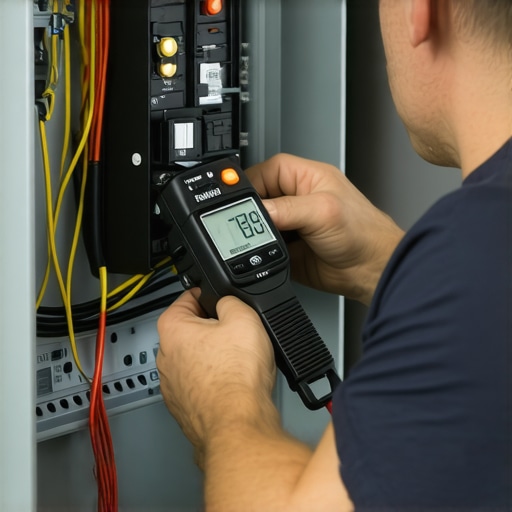
Troubleshooting is where most people lose their minds. If your session cuts out at 2:00 AM, it is usually not a ‘glitch.’ I once spent three nights tracking down why my EV charger stopped mid-session without throwing a code. It turned out to be a microscopic amount of arcing at the terminal because I had skipped a step. I found the hidden danger of loose neutral wires in my electrical panel was causing enough of a voltage drop to trigger the car’s internal safety shutoff. The connection felt tight to my hand, but it wasn’t torqued to spec. This is the forgotten torque spec that fails half of all panel inspections. Always use a calibrated torque wrench on your lugs; heat makes metal expand and contract, and a ‘snug’ fit today is a loose, melting fire hazard three months from now.
The Inspection Traps That Catch Every DIYer
If you want to avoid a red tag from the city inspector, you need to be obsessed with the fine print. I have seen perfectly functional systems get ripped out because of 3 grounding mistakes that will instantly fail your home EV inspection. For example, people often forget that your EV circuit needs a very specific path to ground that doesn’t interfere with your solar inverter’s sensitive electronics. When ensuring code compliance when installing EV chargers, you must also consider the height of the unit and the protection of the conduit. In my early days, I ran a conduit too shallow across a garden path, and the inspector didn’t even step out of his truck before telling me to dig it up. It is much cheaper to do it right the first time than to pay for a second permit and a weekend of re-digging. If your current panel looks like a bird’s nest of wires, it is time to start looking into upgrading your panel for better EV charging performance before you add the complexity of solar integration.
Common wisdom suggests that a NEMA 14-50 outlet is the ultimate ‘future-proof’ setup for any EV owner because of its versatility. However, after years of fixing melted receptacles, I’m here to tell you that hardwiring is the only way to go for a high-demand solar integrated system. The benefit of a hardwired charger over a NEMA plug isn’t just about speed; it is about eliminating a massive point of thermal failure. Most residential-grade outlets aren’t designed for the 40-amp continuous draw of an EV charger running for eight hours straight. According to the Electrical Safety Foundation International (ESFI), overloaded circuits and poor connections are leading causes of residential electrical fires. If you are serious about safety, skip the plug and go direct.
Why is your smart charger’s app actually lying to you about efficiency?
We love our data, but those shiny charts in your charger’s app often ignore the ‘vampire’ losses happening at the panel level. When your inverter is fighting to balance solar input and grid demand, there is a conversion loss that your app won’t show you. This is where EV charger troubleshooting expert tips for common issues become invaluable. You might see 9kW leaving the charger, but your panel might be drawing 10kW from the source due to heat waste and resistance. If you don’t account for this 10-15% efficiency gap, your solar ROI calculations will be perpetually wrong. Have you ever noticed a discrepancy between your utility bill and your charger’s app? Let me know in the comments, because this is the most common ‘ghost’ in the machine I see.
Don’t Let Your Storage Shelves Fail Your Inspection
The ‘Oops’ factor that catches even the smartest homeowners is the NEC 110.26 working space rule. I’ve walked into garages where the charger is perfectly installed, but it is tucked behind a stack of holiday decorations or a workbench. In the eyes of an inspector, that is an immediate fail. You need a clear three-foot deep and thirty-inch wide space in front of that equipment. It’s not just a bureaucracy; it’s so a technician can work safely without being trapped. When you are how to verify code compliance for your EV charger installation, look at the floor, not just the wires. If you can’t stand comfortably in front of the panel with your arms extended, you aren’t up to code.
Beyond the physical space, the technical nuance often lies in the neutral. I’ve seen countless DIYers focus entirely on the hot legs and neglect the health of their neutral bar. Learning how to spot loose neutral wires before they burn your charging port is a skill that saves thousands. A floating neutral can cause wild voltage swings that fry the sensitive communication boards in your car and your solar gateway. If you’re seeing troubleshooting EV charger connectivity problems that seem to happen randomly, your first stop should be the torque of those neutral lugs. As we look toward the future, using panel upgrade strategies to meet EV charging code requirements in 2025 will require a much more holistic view of your home’s energy ecosystem than just adding another breaker.
I used to think that once the inspector signed off and the green light on my charger stayed solid, the job was done. I was wrong. The sheer amount of electricity moving through your walls every single day creates a dynamic environment. Over time, heat expansion and contraction can loosen even the most professional connections. That is why I became obsessed with my ‘six-month checkup.’ I don’t just look at the app; I get hands-on with the hardware. I started using a FLIR thermal camera—just a simple smartphone attachment—to scan my panel while the car is charging at full blast. Seeing a breaker glow bright purple on the screen is a much better warning than a house fire. If you are noticing strange behavior, you should start by looking at EV charger troubleshooting expert tips for common issues before you assume the whole system is broken.
The Two Tools That Saved My Garage From Melting
If you want to handle this like a pro, you need more than a standard screwdriver. I personally swear by a calibrated torque screwdriver (mine is a Wiha). Most people ‘arm-tighten’ their breakers, but that is a recipe for disaster. I’ve found that even a few inch-pounds of difference can lead to the terminal heating up. According to the NFPA 70B Standard for Electrical Equipment Maintenance, periodic thermal inspections are the only way to catch resistive heating before it compromises the insulation. I also keep a can of electronic contact cleaner and a set of non-conductive brushes. I’ve learned how to clean the pins on your charging handle safely because even a tiny bit of grit or oxidation can cause a voltage drop. If you ignore that grime, you will eventually find the real reason your charging handle feels hot to the touch is just simple resistance at the plug.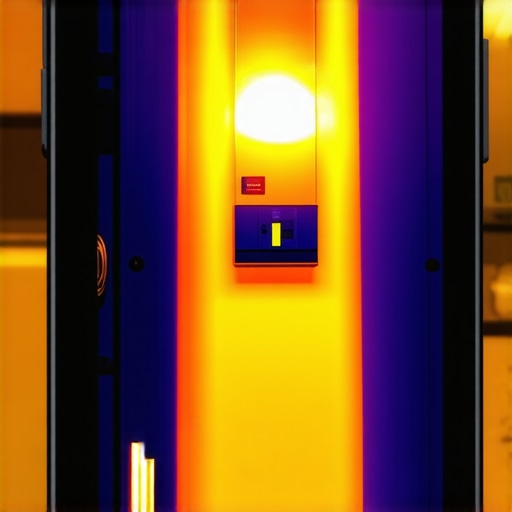
How do I maintain my solar-EV system over time?
Maintenance is 90% observation and 10% software updates. Most modern chargers are basically computers that happen to move high voltage. I actually set a calendar reminder to check my firmware, and luckily, I’ve learned how to update your charger software without calling a technician because many manufacturers push bug fixes that specifically address thermal throttling or solar-syncing errors. Beyond the software, I do a physical walk-through of my conduit. I check for any signs of sagging or moisture ingress, especially where the solar inverter ties in. If you are constantly seeing red lights, you might be falling for troubleshooting EV chargers common compliance pitfalls and fixes that you missed during the initial rush to get the car on the road.
Where the Charging Revolution is Heading in 2026
We are moving toward a world where your car isn’t just a consumer of energy, but a battery for your entire home. Bidirectional charging (V2H) is the next frontier. In the next two years, the trend will shift from just ‘charging your car’ to ‘managing your microgrid.’ This will put even more stress on your electrical panel. That is why I keep telling people that upgrading your panel for better EV charging performance isn’t just an expense; it is a prerequisite for the future of home energy. If your panel is already struggling with a Level 2 charger, it will never handle the demands of sending power back into the grid during a peak-load event. My advice? Grab a thermal camera this weekend and do a ‘load test’ scan while your car, dryer, and AC are all running. It is the single most eye-opening thing you can do for your home’s safety.
The Expensive Myths About Solar EV Charging That Nearly Fried My Nerves
After years of tinkering, I’ve realized the biggest lie in the industry is that solar-powered EV charging is a set it and forget it project. It is not. One of my biggest lightbulb moments was realizing that over-sizing your solar array won’t fix a weak electrical panel. I spent months chasing efficiency only to find out that troubleshooting EV chargers common compliance pitfalls and fixes usually leads back to the basics: heat and loose connections. Another lesson? Don’t trust the auto-load-shedding software blindly; manual verification of your panel upgrade strategies to meet EV charging code requirements in 2025 is the only way to sleep soundly during a heatwave. I also learned that the sun doesn’t just provide power; it provides data about your home’s hidden electrical bottlenecks.
My Battle-Tested Gear for a Worry-Free Charging Setup
If you are serious about moving away from the grid, you need a toolkit that goes beyond a standard wire stripper. I personally trust the NFPA 70 Handbook more than any YouTube tutorial when I am how to verify code compliance for your EV charger installation. For physical tools, I never touch a lug without my Wiha Torque Screwdriver; it is the difference between a secure connection and a fire hazard. I also recommend keeping a digital copy of code compliance essentials for EV charger installations in 2025 on your phone to settle any debates with overzealous inspectors on the spot. Finally, a simple infrared thermometer can help you track if your loose neutral wires are starting to overheat before they cause a failure.
The Future of Your Garage Starts at the Main Breaker
Transitioning to a fully integrated solar home is a marathon, not a sprint. While the initial technical hurdles of solar-powered EV charging can feel overwhelming, the payoff is a house that works for you, rather than you working to pay the utility company. If you are still feeling unsure about your setup, do not hesitate to look into upgrading your panel for better EV charging performance to give your system the breathing room it deserves. You have got the knowledge now; it is just a matter of taking that first safe step toward energy independence. If you run into a snag that this guide did not cover, feel free to contact us for expert advice on your specific configuration. Have you ever noticed your lights dimming when your solar inverter kicks over to the grid? Let me know in the comments below!