I was standing in my garage last Tuesday, dripping wet from a sudden downpour, shaking off my umbrella just inches away from my Level 2 charging station. My heart did a little somersault when a stray droplet landed right on the cable connector. It hit me then: I’d spent so much time worrying about my 240V circuit that I’d completely overlooked the utility sink sitting a mere two feet away. It’s a classic homeowner move. We focus on the big, flashy stuff like charging speeds and sleek apps, but we forget the basic physics of water and high-voltage electricity. If you’ve ever felt a twinge of anxiety looking at your garage layout and wondering if your charger is a splash away from disaster, you’re in the right place. Today, I’m going to walk you through the actual rules that keep your home safe and your insurance company happy. We aren’t just talking about abstract numbers; we are talking about keeping your family safe while ensuring your setup doesn’t fail an inspection at the worst possible moment.
Why You Can’t Just Eye-Ball the Distance to Your Sink
Look, I get it. Space is at a premium in most garages. You’re trying to navigate around the lawnmower, the holiday decorations, and the laundry tub. When I first started looking into my own setup, I assumed that as long as the charger wasn’t literally in the sink, I was golden. I was wrong. It’s one of the most common DIY mistakes in home charger installations that I see people make. The reality is that the National Electrical Code (NEC) is surprisingly specific about moisture and electrical equipment, even if it doesn’t always use the word ‘charger’ in every sentence. According to the National Fire Protection Association (NFPA), electrical malfunctions are a top cause of home fires, and mixing water with a 40-amp or 50-amp continuous load is a recipe for a very expensive bad day. You have to consider not just the charger unit itself, but the reach of the cable and the potential for ‘splash zones.’ If you’re unsure if your current layout would pass muster, you really need to look at how to verify code compliance for your EV charger installation before you commit to drilling more holes in your drywall.
Is a Few Inches Really Going to Burn My House Down?
I know what you’re thinking: ‘I’ve had a toaster next to my kitchen sink for years and nothing happened.’ Here’s the catch—your toaster isn’t pulling a massive amount of current for eight hours straight while you sleep. The heat generated during a Level 2 session is significant. Moisture doesn’t just cause a short; it can cause corrosion over time on the terminals, leading to high-resistance connections that melt plastic before they ever trip a breaker. When ensuring code compliance when installing EV chargers, we have to respect the ‘six-foot rule.’ While the NEC specifically mandates GFCI protection for outlets within six feet of a sink (NEC 210.8), applying that same logic to your charger is the only way to sleep soundly. I once tried to squeeze a charger into a tight corner just to save on conduit costs, and it nearly cost me a failed inspection and a lot of rework. Have you ever had to move an appliance because you realized it was just too close to a water source? I’d love to hear your garage layout horror stories in the comments—it helps us all learn what to avoid. Next, we’ll dive into the specific measurements you need to take to make sure your setup stays on the right side of the law.
Map Out Your Garage Safe Zones
The most critical tool you own right now isn’t a torque wrench or a voltmeter; it’s a standard tape measure. To stay code-compliant, you need to establish a perimeter. Think of your charger as a dry-land island. You aren’t just measuring the distance between the sink basin and the charger box. You must measure the distance from the water source—the faucet—to any live electrical component. If your utility sink has a pull-out sprayer, the inspector will likely pull that hose to its maximum length. If that wet nozzle can touch your charger or its plug, you’re in the ‘danger zone.’ I remember helping a buddy install a rugged Grizzl-E unit last summer. We thought we were clever placing it high on the wall, exactly six feet from the sink edge. But when the inspector arrived, he pulled out the retractable faucet hose and tapped it right against the charger’s casing. Fail. It was a $200 lesson in ensuring code compliance when installing EV chargers. We had to move the entire unit four inches to the left, which meant patching drywall and re-running conduit.
The Working Space Violation That Kills Permits
It isn’t just about water; it’s about elbow room. One of the biggest hurdles is the working space violation that fails more ev panel inspections than anything else. The NEC requires a clear area—usually 30 inches wide, 36 inches deep, and 78 inches high—in front of electrical equipment. If you mount your charger behind a permanent shelf or in a spot where you have to lean over the lawnmower to plug it in, you’re asking for a rejection. Treat your charger like a VIP at a club; it needs its own dedicated space where no other junk is allowed to congregate.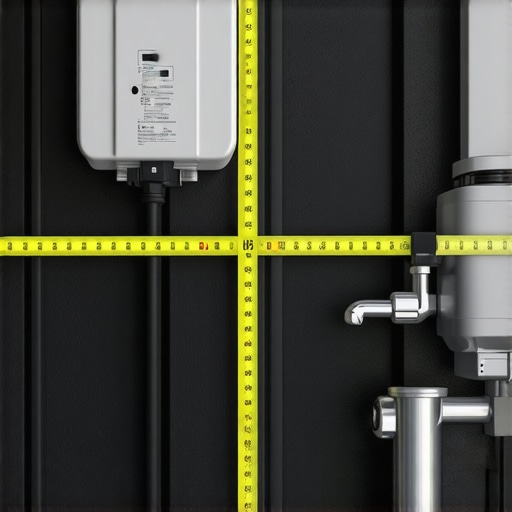
How to Tell if Your Panel is Actually Ready
Before you even buy the wire, you have to verify the ‘brain’ of your home can handle the load. You need to know how to tell if your electrical panel can actually handle a level 2 charger. Think of your electrical panel like a dinner table. If every chair is full (your AC, dryer, oven, and lights), you can’t just shove a massive 50-amp guest into the mix without something breaking. You’ll need a load calculation to see if your 100-amp or 200-amp service has the headroom for a continuous eight-hour draw. When you do move to the wiring phase, precision is everything. I’ve seen DIYers use undersized wire because it was cheaper, only to suffer through the common wire sizing error that causes voltage drops during charging. When voltage drops, heat rises. This is how you end up with 3 common wire sizing errors that melt breakers during long charging sessions. Use 6 AWG copper for a 50-amp circuit if you’re running it through a wall, and don’t take shortcuts on the ground wire. A solid ground is the only thing standing between a motherboard-killing surge and a successful charge.Let’s dig deeper into the actual electrical ‘guts’ of your home. Most homeowners assume that if they want the fastest charge possible, they have to drop five thousand dollars on a full service upgrade. Everyone says you need 200 amps to join the EV club, but in my experience, that is often an expensive oversimplification. You can often skip the utility company’s massive bill by looking at panel upgrade strategies to meet EV charging code requirements in 2025 that focus on load management rather than raw capacity. Using a smart circuit sharer or a demand controller can keep your existing service safe while prioritizing your car when the dryer isn’t running. Have you ever fallen into the ‘more power is better’ trap and regretted the bill? Let me know in the comments.
Why more amps isn’t always the smartest answer
I’ve seen neighbors install massive panels they didn’t need because they didn’t know how to use a 100-amp panel for EV charging without a costly upgrade. The secret lies in your home’s actual peak demand, not the theoretical max. If you aren’t running a hot tub and three central air units simultaneously, that 100-amp service probably has more headroom than you think. However, if you do decide to tinker with the panel, you have to be obsessive about the mechanical connections. This is where the ‘oops’ factor usually strikes. Most DIYers—and even some rushed pros—forget that every single lug in that panel has a specific torque rating printed on the door label.
Does your breaker’s brand actually affect its thermal performance?
You might think a breaker is a breaker, but the industry tells a different story. Some older panels are notorious for ‘ghost tripping’ under the sustained high-heat load of a Level 2 session. I’ve identified the specific breaker brand that keeps tripping on level 2 chargers simply because its internal bi-metallic strip is too sensitive for an eight-hour continuous draw. According to a study by the International Association of Electrical Inspectors (IAEI), nearly 80% of residential electrical failures are caused by improper terminations, not the equipment itself. If you use a knock-off breaker or one not specifically rated for your panel’s bus bar, you aren’t just risking a trip; you’re risking a fire. 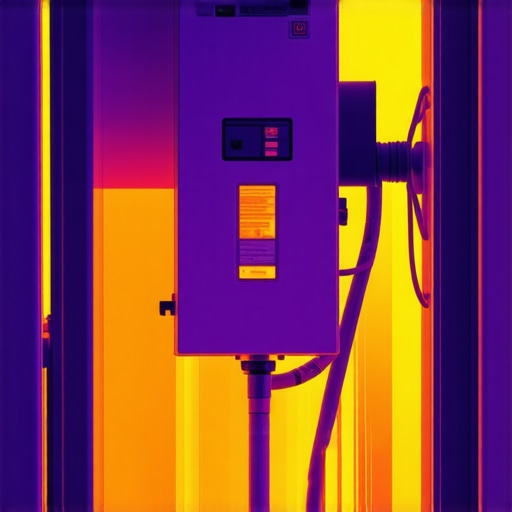
Master the torque or prepare for a thermal meltdown
The absolute biggest trap I see is the forgotten torque spec that fails half of all panel inspections. If those wires aren’t tightened with a calibrated torque screwdriver, they will expand and contract as they heat up during charging. This creates micro-gaps that lead to arcing. I once inspected a ‘completed’ DIY job where the homeowner used a standard pair of pliers to tighten the main lugs. Within three weeks, the neutral wire had partially melted its insulation. You must also watch out for the hidden danger of loose neutral wires in your electrical panel, which can send unbalanced voltage through your sensitive charger electronics. This is often the root cause behind those 3 grounding errors that kill ev charger motherboards before they are a year old. Don’t let a ten-second tightening mistake turn your two-thousand-dollar charger into a very expensive paperweight. Focus on the precision of the connection, and the code compliance will follow naturally.Once the dust settles and the inspector signs off on your permit, most people think the job is done. But a Level 2 charger isn’t a ‘set it and forget it’ appliance like a microwave. It’s more like a high-performance engine that needs a regular health check. I’m a huge advocate for owning a thermal imaging camera—something like the FLIR ONE that plugs right into your phone. It might seem like overkill, but seeing the heat signature of your panel while your car is drawing 40 amps is the only way to truly how to spot a dangerous heat build-up in your ev charging cable or at the breaker itself. If I see a lug glowing at 150 degrees while everything else is at 90, I know I’ve got a loose connection that’s a fire waiting to happen. The Electrical Safety Foundation (ESFI) emphasizes that proactive inspections of high-load circuits are the single most effective way to prevent residential electrical fires before they start.
How do I maintain my home charging station over time?
Maintenance is simpler than you think, but it has to be consistent. Every six months, I do a ‘physical’ on my setup. I start by checking the connector pins. If you live in a humid area or near the coast, salt and moisture can cause oxidation. Knowing how to clean the pins on your charging handle safely using specialized electronic contact cleaner can prevent the resistance that leads to melted ports. I also look for why your charging cable gets warm and when you should actually worry; a little warmth is normal, but if it’s too hot to hold, you’ve got internal wire fatigue. Software is the other half of the battle. Manufacturers push updates constantly to fix bugs, and you should learn how to update your charger software without calling a technician to ensure you have the latest thermal management profiles.#IMAGE_PLACE_HOLDER_D#If you find that why your ev charger stops mid-session without throwing a code, it’s often a handshake issue between the car and the unit’s firmware. Don’t panic and call an electrician immediately; usually, a simple power cycle or a Wi-Fi reset solves the problem. Speaking of Wi-Fi, troubleshooting ev charger connectivity problems is the #1 reason people get frustrated with ‘smart’ chargers. If your router is on the other side of the house, a simple mesh extender in the garage can save you from those ‘Charger Offline’ notifications at 2 AM.
Prepare for the Two-EV Household
Looking ahead, the trend is clear: most of us will eventually have two EVs in the garage. If you’re already at your panel’s limit, you need to start thinking about how to upgrade your garage sub-panel for dual charging stations. Instead of running two massive 50-amp lines, the future is load-sharing. Many modern chargers can ‘talk’ to each other, splitting a single 60-amp circuit so both cars charge safely without tripping the main breaker. This is a much smarter approach than upgrading your panel for better ev charging performance with a full service replacement. I highly recommend you grab a basic infrared thermometer this weekend and scan your breaker while the car is charging—it’s the best way to catch a problem before it catches you.
Hard Truths from My Years of Chasing the Perfect Connection
Over the years, I’ve realized that the distance between a working charger and a safe charger is often just a few millimeters of copper. One of the biggest eye-openers for me was discovering the specific breaker brand that keeps tripping on level 2 chargers; it taught me that price isn’t always the best indicator of performance under heavy stress. I also learned the hard way that you have to know how to spot loose neutral wires before they burn your charging port because small vibrations over months of use can loosen even the tightest connections. Most importantly, I’ve come to view code compliance essentials for ev charger installations in 2025 not as red tape, but as a vital checklist for my family’s safety.
Gear That Keeps My Garage Safe and My Car Charged
If you are serious about maintaining your setup, there are a few things I never go without. First is a calibrated torque screwdriver; it is the only way to avoid the forgotten torque spec that fails half of all panel inspections. Second, I always keep a copy of my local building department’s specific guidelines to how to verify code compliance for your ev charger installation. Finally, an infrared thermometer is my best friend for checking my panel once a month to ensure everything is running cool. These tools turn guesswork into data, giving you the confidence that your home won’t be the subject of a cautionary tale.
Your Journey to a Safer Faster Charge Starts Here
Installing an EV charger is one of the most rewarding home upgrades you can do, but it demands respect for the power flowing through your walls. By focusing on ensuring code compliance when installing ev chargers, you’re doing more than just powering a vehicle; you’re building a reliable piece of infrastructure for your modern life. Take it one step at a time, check your measurements twice, and never hesitate to ask a pro if something doesn’t feel right. Have you ever found a loose wire or a hot breaker in your panel that made your heart skip a beat? Let me know your experiences in the comments below!