I sat in my office staring at a utility bill that looked more like a mortgage payment than a power statement. Just three weeks prior, I had proudly unveiled a shiny new Level 2 station at my shop, thinking I was finally doing my part for the planet while attracting high-end foot traffic. I thought the ‘cost’ was just the charger and the labor. Boy, was I wrong. My stomach dropped as I realized I’d completely ignored the concept of demand charges and load management. I felt like I had invited a very hungry, very expensive guest into my electrical panel without checking my fridge first. Today, I’m going to pull back the curtain on the actual expenses you’ll face—from the hardware to the hidden spikes in your monthly overhead—so you don’t repeat my expensive rookie mistakes. Have you ever looked at your business’s overhead and wondered if adding tech was actually worth the headache?
Why Your First Month’s Bill Might Give You Heart Palpitations
It’s easy to get caught up in the excitement of a new installation, but why your electricity bill doubled after installing a charger is often a mystery to most small business owners until it happens. In my case, the shock wasn’t just the energy usage; it was the ‘demand charge.’ Commercial utilities often charge you based on the highest amount of power you draw at any single moment. If two customers plug in while your industrial HVAC is kicking on, you’re in for a world of hurt. I learned the hard way that the hidden cost of skipping a panel load calculation can haunt you for years. I didn’t think I needed a pro to look at my service capacity, and I ended up with a system that nearly toasted my main lugs. According to the U.S. Department of Energy, installation costs for commercial chargers can vary by tens of thousands of dollars depending on your existing electrical infrastructure. That’s why panel upgrades for EV chargers are usually the first thing you should budget for, rather than an afterthought.
Will This Actually Pay for Itself Anytime Soon?
It’s the question that kept me up at night: is this a vanity project or a viable business move? You might worry that you’re just providing free fuel for people who aren’t even buying your products. To avoid this, you need to think about why your commercial charger needs a cellular connection. Without it, you can’t charge for the power used, and you’re basically running a charity. I initially bought a ‘dumb’ charger to save a few hundred bucks, but I quickly realized I was losing thousands in unrecovered energy costs. It was a classic case of ‘saving’ money that ended up costing me my sanity. We’re going to look at how to get your shop on the map the right way, ensuring you’re using how to wire a 3-phase charger for your business location safely without burning through your capital.
Stop Guessing and Start Calculating Your Real Load
Before you even unbox that shiny new pedestal, you need to treat your electrical panel like a finite bank account. You can’t spend more amps than you have deposited. I learned this the hard way when I tried to add a second unit without checking the math. I thought I had plenty of room, but I hadn’t factored in the peak summer heat when our AC units were screaming. To avoid a dark shop and a very angry customer base, you must understand why your ev permit application requires a load calculation worksheet. This isn’t just bureaucratic red tape; it’s the only way to ensure your service can handle the continuous draw of an EV. If your current service is maxed out, don’t panic. You can often how to use load shedding devices to avoid a full service upgrade, which basically acts as a traffic cop, pausing the charger if the building’s main power draw gets too high.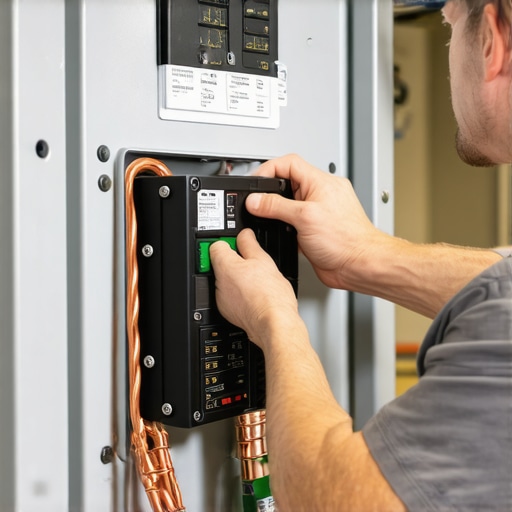
The Copper Connection That Keeps Your Shop From Burning
Wiring is where most rookie DIY-ers (and even some general contractors) trip up. I once watched a competitor try to save fifty bucks by using aluminum wire for a high-amperage run. Six months later, he was calling me to figure out why his conduit was melting. When it comes to high-power delivery, the difference between copper and aluminum for ev wiring is the difference between a reliable asset and a fire hazard. Copper handles the heat of a 48-amp continuous draw much better than aluminum. You also need to be vigilant during the install; I always make it a point to how to verify your electrician actually used copper wire for the install by checking the markings on the jacket and the color of the strands at the lug. If you’re pushing for maximum speed, remember that why your electrician recommends a 60 amp circuit for a 48 amp charger is because of the 80% rule in the electrical code—you never want to run a circuit at 100% capacity for hours on end.
Solve the Waiting Mode Mystery and Technical Glitches
There is nothing more frustrating than a customer coming inside to tell you the station isn’t working. Usually, the hardware is fine, but the setup is botched. If you see a status light but no power flow, you’re likely dealing with why your charging station is stuck in waiting mode. This often happens because the car’s internal timer is fighting with the charger’s schedule. I spent three hours on a support call once, only to realize the driver had a ‘home charging’ schedule set on their dashboard that was blocking my commercial unit. To keep things running smoothly, you must prioritize ensuring code compliance when installing ev chargers, which includes proper labeling and grounding. I’ve seen why your ev charger needs a surge protector in the panel firsthand after a local transformer blew; the businesses with protection were back up in minutes, while the others were ordering $2,000 replacement motherboards. Finally, if you notice the charging speeds are lackluster, investigate why your charging station isnt reaching its full 48 amp potential—it’s often a simple dip switch setting inside the unit that was never flipped during the initial commissioning.Most business owners treat the building inspector like the final boss of a video game—once you pass the inspection, you assume you’re safe forever. But here is the contrarian truth: code compliance is the bare minimum for safety, not the gold standard for performance. In my experience, many installations that pass a cursory glance are ticking time bombs because of thermal expansion issues that codes can’t always catch in a single visit. I’ve seen countless owners focus on getting the sticker while ignoring code compliance essentials for ev charger installations in 2025 that go far beyond a basic visual check. One of the biggest ‘oops’ factors I encounter is the complete neglect of torque settings. According to the National Electrical Code (NEC) Section 110.14, all electrical connections must be tightened to specific manufacturer specifications using a calibrated torque wrench. If your electrician just ‘eye-balled’ the tightness, you are inviting high-resistance heating into your panel. Over months of heavy, continuous charging, those connections expand and contract, which is exactly why your main lugs might be loose after a year of charging. I’ve personally opened panels where the lugs were so loose they were literally arcing, yet the charger hadn’t tripped a single internal fault yet. #IMAGE_PLACE_HOLDER_C#
Can Your 200-Amp Panel Actually Fail the Load Test?
You might think having a 200-amp service is a silver bullet for your charging needs, but that’s a dangerous assumption. It is not just about the number on the main breaker; it is about the physical health and continuous load capacity of your bus bars. When you are looking into panel upgrade strategies to meet ev charging code requirements in 2025, you have to realize that heat is your biggest enemy. Another common ‘sophisticated’ headache is what I call the GFCI War. Many owners insist on installing a GFCI breaker for ‘extra safety,’ but almost every Level 2 charger already has extremely sensitive internal GFCI protection. When you stack these two together, they often nuisance trip each other, which is why the gfci in your panel keeps nuisance tripping your charger. It’s a technical conflict that makes your expensive equipment look broken when it’s actually just poorly coordinated. Also, don’t let a budget contractor tell you a neutral wire is optional for a 240V load; why your new charger requires a neutral wire even for 240v usually comes down to the delicate logic boards and Wi-Fi modules that require 120V to function correctly. If you are seeing ‘Check Charger’ lights or losing connectivity, check these ev charger troubleshooting expert tips for common issues before you spend a dime on a technician. Have you ever fallen into this trap of over-engineering the safety only to have it backfire? Let me know in the comments.One of the biggest lies in the EV industry is that these units are maintenance-free. I watched a colleague lose a $5,000 pedestal because he didn’t realize why commercial charger pedestals fail after the first heavy winter—usually due to ice expansion in the base and road salt corroding the grounding plate. Every spring, I make it a ritual to open the cabinet and blow out any debris or spider webs that might interfere with cooling fans. If you aren’t staying on top of how to update the firmware on your smart charging station, you’re leaving yourself open to software bugs that can ‘brick’ the unit during a handshake with a new car model.
How do I keep my charging infrastructure reliable over the long haul?
The secret isn’t just cleaning the outside; it’s a proactive ‘spares’ kit. I always keep the essential spare parts to keep for your home charging unit or business pedestal on site—specifically a spare charging cable and holster. These are the most abused parts of the system and will eventually fray or crack. According to the Electrical Safety Foundation International (ESFI), routine infrared thermography can prevent up to 25% of commercial electrical failures by identifying loose connections before they glow red. I personally use a FLIR thermal camera once a quarter to scan my panel while a car is drawing its full 48 amps. If one breaker looks significantly brighter than the others, I know I’ve got a resistance issue that needs immediate attention. 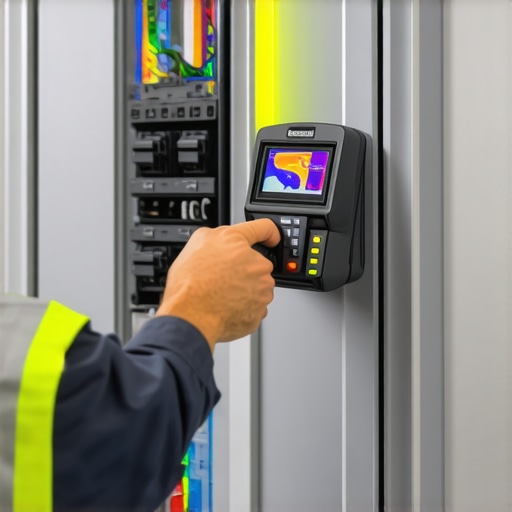 Beyond hardware, you need to think about visibility and scaling. If your chargers aren’t listed on the major apps, they simply don’t exist to drivers. I spent hours figuring out how to get your business on the federal map of charging locations because that digital data flow is what actually drives foot traffic to your door. If you’re planning to grow your footprint, don’t just add chargers piecemeal; you should focus on upgrading your panel for better ev charging performance so you can handle multiple units without bottlenecks. Learn how to set up a commercial charging fleet for your small business using a backend management system that handles load balancing automatically. I predict we are moving toward V2G (Vehicle-to-Grid) technology where your parked EVs will actually support your shop’s grid during peak demand spikes. It sounds futuristic, but the foundations are being laid today. My best advice? Grab a torque screwdriver and verify every lug in your main panel this weekend; it’s the single most effective way to protect your investment and prevent a midnight service call.
The Hard-Earned Truths from My First Year in the Charging Game
Experience is a brutal but effective teacher. One of the biggest lessons I learned is that the ‘set it and forget it’ mentality is a myth. You need to be proactive about troubleshooting your setup before a small glitch becomes a business-stopping failure. I’ve found that many owners fall into the permit error that stops home charger installs in their tracks because they didn’t consult the local utility first. Furthermore, don’t ignore audio cues; learning how to stop a charging station from humbling or buzzing can save you from a melted contactor down the line. Finally, remember that your relationship with your installer matters—knowing how to find an electrician who actually understands ev codes is the single best insurance policy for your hardware.
The Tools That Actually Make a Difference
If you’re serious about maintaining your infrastructure, you need more than just a standard toolbox. I personally swear by these resources. First, the NFPA 70 (NEC) Handbook—it’s not just for pros; it’s for any owner who wants to verify that their contractor isn’t cutting corners on code compliance. Second, a calibrated torque screwdriver; as we discussed, loose lugs are the primary cause of electrical fires in heavy-load circuits. Third, I highly recommend checking out troubleshooting ev chargers common compliance pitfalls and fixes to keep as a quick-reference guide for your maintenance staff. Lastly, keep a thermal imaging camera handy—scanning your panel upgrade during a peak charge cycle will reveal hidden hotspots that a visual inspection will always miss.
Build Your Grid with Confidence
Transitioning to an electrified business model is a journey, not a one-time event. By focusing on troubleshooting, EV charger maintenance, strict code compliance, and smart panel upgrade strategies, you are positioning your business as a leader in the new energy economy. It might feel overwhelming at first, but each step you take toward a more robust electrical system is a step toward long-term resilience and customer loyalty. Don’t let the technical hurdles scare you away from the massive potential of this technology. We are all learning together as the grid evolves. #IMAGE_PLACEHOLDER_E# Have you ever encountered a technical glitch that seemed to defy logic during your installation process? Let me know in the comments below.