I remember standing in my garage at midnight, staring at a brand-new Level 2 charger that refused to show anything but a pulsing red light. I had spent six hours sweating, pulling wire, and feeling like a weekend warrior king. But when I flipped the breaker, the only thing I got was a faint smell of ozone and a very expensive piece of wall art. I thought I followed the manual to a T, but I had made a classic rookie mistake with the torque settings that almost turned my sub-panel into a toaster. Today, I want to pull back the curtain on why these ‘simple’ weekend projects often go sideways and show you how to avoid the dangerous traps that lead to troubleshooting EV chargers common compliance pitfalls and fixes late at night.
The Night I Nearly Burned Down My Garage
It started with a YouTube video and a sense of overconfidence. I figured that if I could swap a light fixture, I could certainly handle a 50-amp circuit. I was wrong. The reality is that EV charging isn’t like running a toaster; it is a continuous load that puts massive stress on your home’s infrastructure for hours on end. That tiny bit of play in a wire connection? That’s where the heat builds up. I learned the hard way that ensuring code compliance when installing EV chargers isn’t just about following rules to please an inspector; it is about making sure your house is still standing in the morning. Have you ever noticed a weird humming or a warm spot on your panel after a long charging session?
Is This DIY Project Actually Worth the Risk?
Many homeowners dive into this to save a few hundred bucks, but the hidden costs of a failed inspection or a melted terminal block can triple that price tag instantly. Beyond the hardware, there is the paperwork. I completely missed the one calculation homeowners forget that fails every EV permit, which meant I had to rip out my work and start over. According to the National Fire Protection Association (NFPA), nearly 50,000 home fires involve electrical failure or malfunction each year, and high-draw appliances like chargers are prime suspects when installed incorrectly.
Stop Using Your Hands to Measure Tightness
My biggest blunder was trusting my ‘feel’ for how tight the lugs were. In the world of high-voltage charging, ‘tight enough’ is a myth. You need a calibrated torque wrench. Without it, you are almost guaranteed to suffer from 3 common wire sizing errors that melt breakers during long charging sessions. If the wire is too small or the connection is too loose, physics takes over, and things start to liquefy. I want to walk you through the specific mechanical failures I see every week that turn a dream garage into a fire hazard. [image-placeholder-1] We are going to fix these habits before you strip another screw.
The Math That Keeps Your Lights On
Before you even touch a screwdriver, you have to do the math. I once tried to add a second charger to a 100-amp service without checking my existing loads. Every time the AC kicked on while the car was charging, the whole house went dark. It was embarrassing, especially when I had to explain to my wife why the freezer was defrosting. I had ignored the one calculation homeowners forget that fails every EV permit. Think of your electrical panel like a bucket of water; if you try to pour out more than it holds, you are going to have a bad time. You need to know how to calculate if your 100-amp service can handle a daily commute before committing to a Level 2 install. If the numbers do not add up, you might find yourself how to balance your household loads to avoid tripping the main breaker or facing a mandatory service upgrade.
Why Thin Wires Are a Fire Hazard
Next, let’s talk about the ‘firehose’ problem. Running a 50-amp load through cheap or undersized wire is like trying to force a gallon of water through a cocktail straw. The resistance creates heat, and in a closed wall, that heat has nowhere to go. I’ve seen Romex insulation melted into a sticky black goo because someone thought they could save forty bucks on wire. This is where 3 common wire sizing errors that melt breakers during long charging sessions come from. Always err on the side of beefier copper, especially since the exact gauge of wire you need for a 60-amp circuit is not a suggestion—it is a physical requirement for safety. 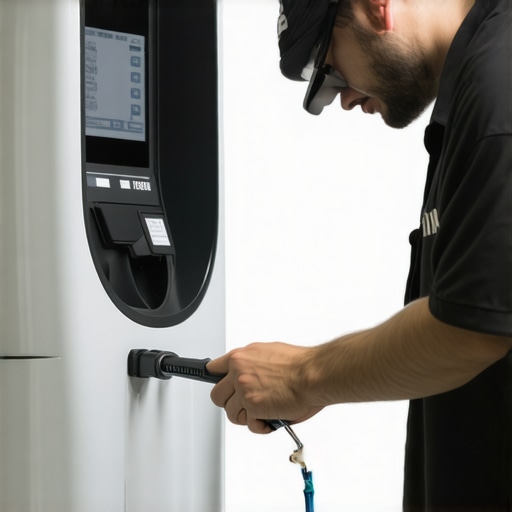
Protect Your Charger from Silent Killers
Don’t forget the ground. I once spent three days troubleshooting EV charger connectivity problems only to find out the ground rod was not actually making good contact with the earth. The charger’s computer was getting ‘dirty’ power and kept rebooting. You have to run 3 tests to make sure your ground rod passes the EV permit inspection. If you skip this, you are risking 3 grounding errors that kill EV charger motherboards before they are a year old. It is a tiny detail that costs fifty dollars in parts but hundreds in repairs when the motherboard fries.
Give the Equipment Some Breathing Room
Finally, look at your physical workspace. Inspectors are getting brutal about 5 new garage panel clearance rules to pass your 2026 audit. You cannot just shove a charger behind a stack of old tires. There is a specific working space violation that fails more EV panel inspections than anything else. If you cannot stand comfortably in front of the panel with your arms out, you are probably in violation. I had to move a whole workbench once just because I was three inches short of the requirement. Sometimes panel upgrades for EV chargers are as much about physical space and cooling as they are about electrical capacity. Before moving forward, evaluate how to tell if your electrical panel can actually handle a level 2 charger without cramping the room. If your equipment is packed too tight, you may need to look into upgrading your panel for better EV charging performance to stay within code.Let’s dig deeper into a nuance that most DIYers—and even some pros—completely miss. Everyone tells you that installing a NEMA 14-50 outlet is the smartest move because it offers flexibility. I’m here to tell you that is a trap. In my experience, the benefit of a hardwired charger over a NEMA plug is not just a minor technicality; it is a massive reliability upgrade. Plugs are designed for occasional use, like a dryer, not for pulling 40 amps for ten hours straight every single night. The heat fatigue on those spring-loaded contacts is a leading cause of melted faceplates. If you want a set-it-and-forget-it system, skip the plug and go hardwired.
The GFCI Trap No One Warns You About
Here is a specific ‘oops’ factor that drives homeowners crazy: GFCI stacking. Many modern EV chargers have sensitive Ground Fault Circuit Interrupter (GFCI) protection built directly into the motherboard. However, many local jurisdictions now require a GFCI breaker in the panel for any outlet in a garage. When you have two GFCI devices on the same line, they talk to each other in the worst way possible. This leads to nuisance trips where the charger shuts down for no apparent reason. If you are stuck in this cycle, ev charger troubleshooting expert tips for common issues usually involve identifying these hardware conflicts before you start replacing expensive components.
Why does your charger trip the breaker only on hot afternoons?
It is not a coincidence; it is physics. This is the nuance of ambient temperature derating. According to the National Electrical Code (NEC) Article 625, EV charging is defined as a continuous load, meaning the circuit must be sized at 125% of the charger’s output. But if your panel is in a garage that hits 100 degrees in July, that breaker is already operating near its thermal trip limit. I have seen dozens of installs that follow code compliance essentials for ev charger installations in 2025 on paper, yet they fail in the real world because the installer did not account for seasonal heat. This is exactly why your ev charger trips the breaker only on hot afternoons. 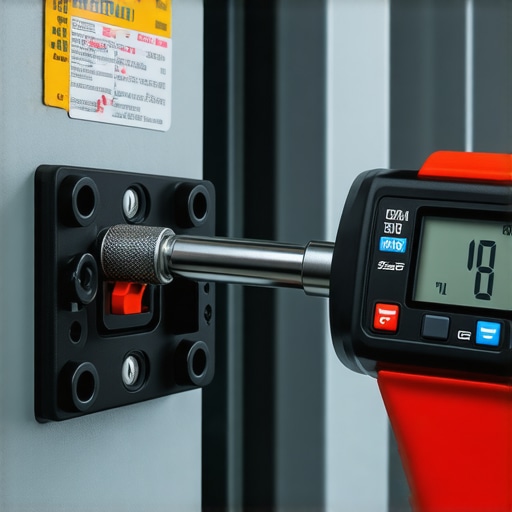
Don’t Ignore the Smallest Number in the Manual
Another common mistake is ignoring the torque specifications. We touched on this earlier, but it deserves a deeper look because it is the forgotten torque spec that fails half of all panel inspections. Even if you use the right wire, a loose connection at the breaker will create a localized heater. You might think you have tightened it enough by hand, but without a calibrated tool, you are just guessing with your family’s safety. To stay ahead of the curve, you should look into panel upgrade strategies to meet EV charging code requirements in 2025 that prioritize thermal management and modern busbar materials. Finally, always take the time to how to verify code compliance for your ev charger installation through a professional third-party inspection. It is the only way to be 100% sure your home is safe. Have you ever fallen into this trap or dealt with a charger that just would not stay on? Let me know in the comments.
I’ve spent thousands on my EV, and I’ll be damned if I let a small contact issue ruin the battery or, worse, my home. Once the installation is signed off, most people think the job is done. But after a year of heavy use, those connections can settle, and environmental grime can start to interfere with your charging speeds. Let’s talk about the specific kit I keep in my garage to make sure I’m never stuck with a dead battery on a Monday morning.
Keep the Heat in Check with These Two Tools
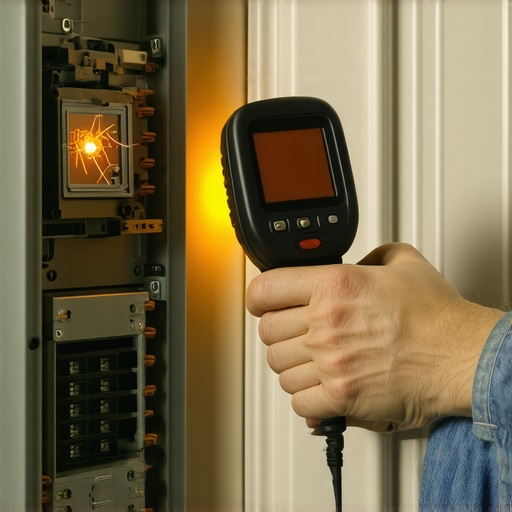
I swear by a non-contact infrared thermometer. It is the single best way to how to spot a dangerous heat build-up in your ev charging cable before you smell smoke. Once a month, while the car is pulling its full 40 or 48 amps, I aim the laser at the breaker and the charging handle. If I see anything over 140°F (60°C), I know I’ve got a loose connection or a failing contact. According to technical guides from the International Association of Electrical Inspectors (IAEI), electrical connections under continuous load are prone to ‘thermal cycling’ which can eventually loosen even the best-torqued lugs. The second tool is a simple can of electronic contact cleaner. Dust and moisture in a garage are the enemies of high-voltage pins. Learning how to clean the pins on your charging handle safely can prevent the arcing that leads to those expensive melted handles we see all over the forums.
How do I maintain my home charging setup over time?
Maintenance isn’t just about cleaning; it’s about the digital health of the unit. I make it a habit to check for firmware updates every quarter. Manufacturers often release patches that improve thermal management or fix communication bugs with newer car models. You can usually how to update your charger software without calling a technician right through the manufacturer’s app. If your app is acting up, you might be dealing with troubleshooting ev charger connectivity problems caused by a weak Wi-Fi signal in the garage, which can actually prevent safety updates from installing. Don’t ignore those ‘Update Available’ notifications; they are often the difference between a smooth charge and a red-light error.
Prepare Your Panel for the Two-Car Future
The trend is clear: most households will eventually have two EVs. If you are already pushing your 100-amp service to the limit, you need to start thinking about how to upgrade your garage sub-panel for dual charging stations now. In the near future, we are going to see a massive shift toward Vehicle-to-Home (V2H) technology, where your car actually powers your house during a blackout. This means your panel won’t just be sending power out; it will be receiving it back. This is why panel upgrade strategies to meet ev charging code requirements in 2025 are focusing so heavily on bi-directional compatibility. If you’re doing work today, over-spec your conduit and your sub-panel. It costs 20% more now but saves you 100% of the cost of a full re-install in three years. I strongly recommend you how to verify code compliance for your ev charger installation one last time before you close any walls. My challenge to you: tonight, go to your charger while it’s running and just place the back of your hand near the breaker—if it feels ‘toasty’ rather than just ‘warm,’ it is time to grab a torque wrench and double-check those lugs.
Hard Lessons from My Midnight Electrical Meltdown
Looking back at that red pulsing light, I realized that the biggest mistakes aren’t always the loud ones; they are the quiet omissions. First, never skip the sticker. I spent an hour arguing with an inspector because I didn’t clearly label the dedicated EV breaker in the main panel. Second, remember that copper is soft. After the first thirty days of high-load charging, thermal cycling can cause wires to settle slightly. I always go back and do a ‘one-month check’ to ensure every lug is still seated correctly. This simple habit prevents 90% of troubleshooting EV chargers common compliance pitfalls and fixes later on. Finally, I learned that smart chargers are only as smart as your Wi-Fi; a dedicated mesh node in the garage stops those frustrating offline errors that prevent your car from pre-conditioning in the winter.
The Gear That Saved My Sanity
I don’t go near a 240V circuit without three specific things. My first pick is a digital torque wrench—it is the only way to meet code compliance essentials for ev charger installations in 2025 without guessing. Second, I keep a basic infrared thermometer to check for hot spots during the first few charging cycles. Third, I highly recommend keeping a can of professional-grade contact cleaner. Using it to how to clean the pins on your charging handle safely once a year removes the micro-arcing that eventually kills the handle’s temperature sensor. I trust these tools because they turn electrical work from a guessing game into a science.
#IMAGE_PLACEHOLDER_E#
Building a Setup That Outlasts Your Next Car
The transition to electric driving is one of the biggest upgrades you will ever make to your home. While it feels daunting to navigate code compliance and EV charger troubleshooting, or even a full upgrading your panel for better EV charging performance, getting it right the first time gives you a level of freedom and safety that a gas pump simply can’t match. If you are ever in doubt, it is worth every penny to how to verify code compliance for your ev charger installation with a pro. Your future self—and your house—will thank you for the peace of mind. Have you ever run into a specific permit requirement or technical error that surprised you? Let me know below.