I’ll never forget the morning I opened my utility bill and nearly choked on my morning coffee. I’d just spent weeks bragging to my brother-in-law about how I was “done with gas stations forever,” only to see my electricity costs spike by a staggering $180 in a single month. I felt like a total amateur. I’d spent all that time researching the car and the panel upgrades for EV chargers, but I completely ignored the actual juice coming out of the wall. It turns out, I was plugging in at 5:30 PM—the absolute most expensive time to draw power. If you’ve felt that same sting of “sticker shock” after your first month of EV ownership, you aren’t alone. Today, I’m going to show you exactly how to hunt down those elusive off-peak rates so you can stop donating your hard-earned money to the power company.
Stop Paying Peak Prices to Power Your Car
[IMAGE_PLACEHOLDER]I made the classic rookie mistake of assuming that “nighttime” automatically meant “cheap time.” In reality, every utility company is a different beast with its own weird definitions of when energy is actually on sale. If you don’t know your specific “Time-of-Use” (TOU) window, you might be paying three times more than you need to. I eventually figured out the best time of day to charge your car by digging through my provider’s messy website, and it changed everything. My bill dropped back down to Earth, and suddenly, the EV life felt as affordable as I’d originally hoped. According to the U.S. Energy Information Administration, more utilities are adopting these dynamic pricing models to manage grid load, but they don’t always make the “opt-in” button easy to find.
Is a special EV rate actually worth the hassle?
I get it—you’re worried that switching to a specialized plan might make your 2:00 PM laundry load cost a fortune. It’s a valid fear. When I first looked into it, I was terrified I’d have to live in the dark during the day just to save a few bucks on charging. But once I learned how to use an app to schedule charging, I realized I could keep my house running normally and just let the car sip power while I slept. Have you ever tried to look up your rates and ended up more confused than when you started? It’s a common frustration. To get this right, you need to know exactly what to ask your provider and where to look for those hidden rebates. If you aren’t careful, you might find out why your electric bill tripled when it really should have stayed flat. Let’s break down the scavenger hunt for these rates together.Finding the right rate isn’t just about saving pennies; it’s about making your EV investment actually pay off. Start by logging into your utility portal and searching for ‘Time-of-Use’ or ‘Residential EV’ rates. Most people don’t realize that standard rates are flat, meaning you pay the same price regardless of when you plug in. I remember sitting on hold with my utility rep for 40 minutes, feeling like a fool, until she mentioned a ‘Super Off-Peak’ tier that wasn’t even on their main landing page. By just clicking one box in my account portal, my cost per kilowatt-hour dropped from 22 cents to 8 cents between midnight and 6 AM. It was like finding a $100 bill on the sidewalk every single month.
Dig through your bill for the Time-of-Use treasure map
Before you commit to a new plan, you need to know if your current setup can handle the draw. This is where you should learn how to load test your house before adding a second charger or even your first one if you have an older home. If your panel is already screaming for mercy when the AC kicks on, adding a 50-amp car charger at midnight might trip your main breaker. You might need to look into panel upgrades for EV chargers to ensure you aren’t waking up to a dark house and an uncharged car. Think of your electrical panel like a highway. During rush hour (5 PM), every lane is packed and prices are high. But at 2 AM, it’s a ghost town. Charging at night is like taking a wide-open 10-lane highway for a fraction of the cost.
Ask your provider about those secret EV-only plans
Next, don’t leave money on the table. There are often 7 utility rebates that pay for your charger installation costs, but they usually require you to be on one of these specific EV plans. I almost missed out on a $500 rebate because I didn’t realize I had to submit my application before the electrician finished the job. While you’re at it, make sure you know how to claim the federal alternative fuel infrastructure tax credit. This isn’t just a deduction; it’s a direct credit that can cover a significant chunk of your hardware and labor costs. It’s basically the tax credit secret that pays for half your installation costs if you play your cards right.
Put your charger on a strict schedule
Once the paperwork is done, focus on the execution. You need to master how to use an app to schedule charging and save on your bill. Most modern chargers, like the Tesla Wall Connector or ChargePoint Home Flex, allow you to set a charging window. If you set this to match your utility’s off-peak hours, the car will wait patiently until the rates drop before it starts pulling power. This is the ultimate set it and forget it move. If you live in an apartment, check on the specific permits required for multi-unit dwelling chargers, as your landlord might actually get a better commercial rate that you can tap into. By aligning your hardware with your utility’s schedule, you ensure that you never have to wonder why your electric bill tripled after your first month of driving electric.
Your panel’s empty slots are lying to you
Most people assume that if they have a few open spaces in their electrical box, they are ready for a Level 2 charger. This is a dangerous oversimplification. Your panel’s physical space has almost nothing to do with its actual electrical capacity. I’ve seen homeowners try to squeeze a 50-amp circuit into a crowded box and then wonder why your main breaker hums when the ev is plugged in. The truth is, why a 100-amp service isnt always enough for two evs—or even one—is because of the ‘continuous load’ rule. According to the Electrical Safety Foundation International (ESFI), residential systems are often pushed to their limits by high-draw appliances that run for hours, which can lead to thermal degradation. If your house already runs a heat pump, an electric water heater, and a dryer, you aren’t just ‘adding a breaker’; you’re potentially overloading the entire service. Instead of a massive, expensive service upgrade, I often recommend looking into how to use load shedding devices to avoid a full-service upgrade. These devices automatically pause your car charging if the rest of your house hits a certain power threshold, keeping you safe without the $5,000 utility bill.
Why ‘snug’ isn’t tight enough for an EV circuit
The biggest mistake I see—even from experienced ‘general’ electricians—is ignoring torque specifications. When you’re installing a standard light switch, ‘hand-tight’ is usually fine. But an EV charger pulls a massive amount of current for six to ten hours straight. This creates intense heat, causing the metal to expand and contract. Without using a calibrated torque wrench to meet the specific torque settings that prevent panel fires during high load charging, those connections will eventually loosen. A loose connection creates an arc, and an arc creates a fire. This is almost always the reason your ev charger smells like burnt plastic after a few months of use. 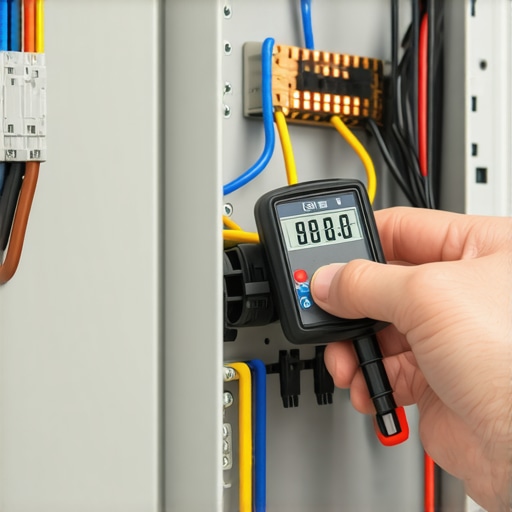 Furthermore, you need to how to verify your electrician actually used copper wire for the install. While aluminum is cheaper, it expands at a different rate than copper and requires specific terminal logic. For the high-intensity world of EV charging, the difference between copper and aluminum for ev wiring can be the difference between a decade of reliability and a melted breaker in year two. Have you ever checked your breaker panel for heat after a long charging session? Let me know in the comments if you’ve ever felt a ‘hot’ breaker.
Why is my charging speed dropping when the AC kicks on?
It’s a question that plagues many new EV owners: you paid for 48 amps of speed, but you’re only getting 24. This isn’t usually a broken charger; it’s often ‘thermal throttling’ or a load-management setting. If your setup was installed properly, it might be that the reason your charging speed drops when your ac kicks on is a smart energy management system protecting your main fuse. Beyond that, ensuring code compliance when installing ev chargers means the circuit must be rated for 125% of the load. If you want to pull 40 amps, you need a 50-amp breaker and wire that can handle it without getting why your breaker gets hot to the touch during charging. If your system is cutting power, it’s actually doing its job to prevent a disaster. Don’t fight the safety features; instead, focus on upgrading your panel for better ev charging performance to handle the true demand of your vehicle.If there’s one tool I swear by for peace of mind, it isn’t a screwdriver—it’s a basic thermal imaging camera. Every few months, I fire it up and point it at my main breaker while the car is pulling its full 48 amps. If I see a glowing ‘hot spot’ that looks like a miniature sun, I know a connection is loosening. It’s the easiest way to learn how to spot a dying breaker before it shuts down your charging session before it becomes a genuine fire hazard. Professionals often refer to the NFPA 70B standard, which highlights the importance of thermographic inspections for electrical equipment under load. You don’t need a $2,000 rig; a simple smartphone attachment works wonders for catching issues that the naked eye misses.
How do I maintain my home charging station over time?
You might think a charger is a ‘set it and forget it’ appliance, but it’s actually more like a tiny computer mounted on your wall. Once a quarter, you should check for software updates. I’ve seen charging speeds double or connection bugs vanish just by knowing how to update the firmware on your smart charging station. If your unit is outside, you also need to tackle 3 maintenance tasks that keep your outdoor charger running through winter, like clearing snow from the holster and checking for spider nests in the plug. Believe me, a single cobweb in the J1772 pin-out can trigger a ‘ground fault’ that leaves you with zero range in the morning. For those weird glitches, I always keep a bookmark on ev charger troubleshooting expert tips for common issues just so I’m not panicking at 11 PM. Looking ahead, I expect we’ll stop thinking of our chargers as one-way straws and start seeing them as active grid participants. Bidirectional charging is the next frontier. Soon, your car won’t just take power; it will feed your house during a blackout or sell energy back to the grid when prices are high. This makes upgrading your panel for better ev charging performance even more critical today, as you’re essentially installing the gateway for your home’s future power plant.
The small details that keep you code-compliant
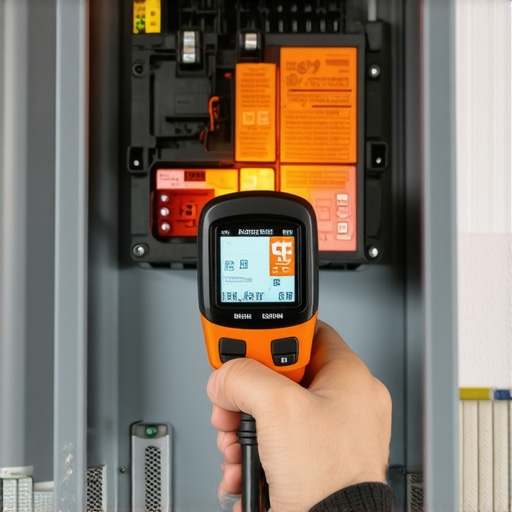 Staying legal isn’t just about passing the initial inspection. As local regulations evolve, ensuring code compliance when installing ev chargers means keeping your workspace clear and your labels legible. If you ever sell your house, a savvy inspector will look for the specific circuit labels required by the electrical inspector. If they aren’t there, you might be on the hook for a costly re-install. My best advice? Grab a thermal camera today and do a ‘heat sweep’ of your panel tonight while the car is charging. It’s the single most proactive thing you can do to protect your home.
The Hard Truth About My Five-Thousand-Dollar Learning Curve
I’ve spent more hours staring at my electrical panel than I care to admit. Looking back, the biggest lesson wasn’t about the car—it was about the infrastructure. I realized that a professional install isn’t just a luxury; it’s a safety requirement because an EV is the only appliance in your house that pulls maximum current for 8 hours straight. If you skip the small stuff, like how to verify code compliance for your ev charger installation, you’re basically playing a waiting game with a house fire. Another lightbulb moment was realizing that ‘smart’ chargers are only smart if you actually program them. If you don’t take ten minutes to learn how to reset your home charging station after a power outage, you might wake up to an empty battery on the one morning you have a big presentation. Finally, I’ve learned to treat my charger like any other high-performance machine—it needs a quick visual inspection every season to catch loose wires before they start melting plastic. [IMAGE_PLACEHOLDER_E]
My Go-To Toolbox for Stress-Free Charging
You don’t need to be an electrician to keep things running, but you do need the right intel. First, I highly recommend downloading your utility’s specific mobile app; it’s the only way to see real-time usage spikes. Second, keep a digital copy of ensuring code compliance when installing ev chargers on your phone to show any contractor you hire. Third, invest in a basic infrared thermometer to check your breaker temps once a month while the car is pulling power. Lastly, I always keep a tab open for ev charger troubleshooting expert tips for common issues because when the red light starts blinking, Google is usually too slow to give you a straight answer.
Own Your Power and Drive Better
Switching to an EV is a massive shift in how you interact with your home’s energy. It’s about more than just avoiding the gas station; it’s about becoming a savvy manager of your own mini-power plant. When you focus on ensuring code compliance when installing ev chargers, you aren’t just following rules—you’re building a foundation for the future of transportation. Take it one step at a time, check your connections, and enjoy the silence of a full battery every single morning. Have you ever noticed your lights dimming or flickering the moment you plug your car in? Let me know in the comments, and let’s figure out if it’s a wiring issue or just a heavy load!