I stood in my dim garage, staring at my 100-amp panel with a sense of impending financial doom. I had just bought my first electric car, but the first electrician I called dropped a bomb: he wanted five thousand dollars to rip out the guts of my home’s electrical service just to support a Level 2 charger. It felt like a punishment for trying to be efficient. I almost fell for it. I almost believed that my only path to fast charging was a massive construction project that would leave my drywall in shambles. But then, I discovered the “secret” of load-shedding devices, and it changed the entire game for my wallet and my home. Today, I’m going to share exactly how you can keep your existing equipment and still get the charging speeds you need without the unnecessary contractor markup.
Stop Writing Checks for Massive Service Upgrades
Most of us are told that if our breakers are full, we’re out of luck. We’re led to believe that panel upgrades for EV chargers are a mandatory entrance fee for the electric vehicle club. I’m here to tell you that’s often a myth. I spent weeks obsessing over load calculations until I realized a simple truth: my house doesn’t use all its power at once. My oven, dryer, and AC rarely scream for juice at the exact same moment I’m plugging in the car at 2 AM. I once made the mistake of trying to manually “time” my charging to avoid a trip, but one forgotten night resulted in a total blackout while I was halfway through a shower. It was embarrassing and completely avoidable.
We are going to solve that problem today by looking at smart energy management. You’ll learn how to load balance your home electrical system without a full panel swap, saving you thousands of dollars and weeks of waiting for utility permits. Even if you are looking at how to add an EV charger to a home with a small 60-amp panel, the technology exists to make it work safely and legally. Have you ever been told your panel is simply “too small” for an EV? I’d love to hear your story, because chances are, you were only getting half the story from your contractor.
Is a load-management device actually safe for my home?
I get the skepticism. It sounds like a “hack,” and nobody wants to risk a house fire. However, the National Electrical Code (NEC) is actually on our side here. According to NEC Section 625.42(B), energy management systems are a recognized and safe way to limit the maximum current a charger draws. It’s not about cutting corners; it’s about being smarter with the power you already have. You might occasionally notice the reason your charging speed drops when your AC kicks on—and that’s actually a sign of the system working perfectly to protect your main breaker. It is a beautiful, automated dance that keeps your lights on while ensuring your car is topped up for the morning commute.
Turn Your Charger Into a Smart Listener
To avoid a five-figure bill, you need to stop thinking about your electrical panel as a static bucket of power. Think of it more like a crowded highway. A traditional charger just enters the highway and drives at full speed, potentially causing a traffic jam—which, in your home, means a tripped breaker. A smart load-management system acts like an intelligent traffic controller. It uses Current Transformer or CT clamps that literally hug your main power lines. These clamps do not touch the copper; they listen to the magnetic field created by the electricity moving through them. When you turn on your electric oven and your dryer simultaneously, these sensors tell the EV charger to slow down for a few minutes. This is how you master how to load balance your home electrical system without a full panel swap while staying within the limits of your existing service.
Clamping Down on Your Power Consumption
The physical installation of these sensors is surprisingly clean because you aren’t cutting your main service lines; you are simply snapping sensors around them. I remember the first time I tried this on my own 100-amp panel. I was terrified of touching the main lugs, even though the sensors are non-contact. I had my headlamp on, and I accidentally dropped one of the tiny sensor screws into the very bottom of the dark panel enclosure. It took me forty-five minutes with a telescopic magnet and a lot of sweat to get it back out. But once those sensors were snapped in place, I realized I didn’t need to worry about the reason your charging speed drops when your AC kicks on—it was actually the system doing exactly what it was designed to do to protect my home.
Avoid the Spark by Getting Your Torque Right
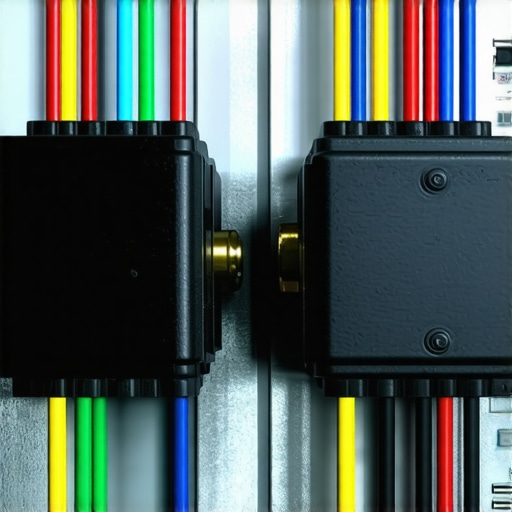
If you are doing this yourself or watching your electrician, you need to be obsessed with the mechanical connections. High-load devices like EV chargers create significant heat, and heat causes metal to expand and contract. If your connections are even slightly loose, you are looking at a serious fire risk over time. Always double-check the specific torque settings that prevent panel fires during high load charging. I have seen DIYers use a standard screwdriver when they should have used a calibrated torque wrench, only to find their breaker casing discolored and melted a month later. While the panel is open, it is also the perfect time to learn how to spot a dying breaker before it shuts down your charging session. Look for any signs of pitting on the bus bar or a breaker handle that feels “mushy” rather than snapping firmly.
Keep Your Local Inspector Happy
Even with smart management, you cannot ignore the physical basics of wire sizing. You might think you can save money by using thinner wire since the load is managed, but the electrical code still demands you use the exact wire gauge you need for a 50-amp EV circuit based on the breaker size, not just the expected average load. This is a non-negotiable part of panel upgrade strategies to meet EV charging code requirements in 2025. I once saw an installation fail inspection because the homeowner used aluminum wire without the proper rated terminals, and it was a costly mistake to tear it all out and rewire. Stick to the copper standards, use the management technology to avoid the five-thousand-dollar service upgrade, and you will have a system that is both legal and incredibly efficient for your daily commute.
Everyone says you need the biggest breaker possible to ‘future-proof’ your home, but in my experience, chasing a 50-amp circuit is often a waste of money and precious panel space. According to data from the Electric Power Research Institute (EPRI), the average driver only covers about 30 miles a day. A 16-amp or 24-amp charger can easily replenish that in a few hours, yet homeowners are routinely upsold on massive circuits that their panel can’t actually handle without a total overhaul. Chasing higher numbers often leads to unnecessary heat buildup, which is a major reason why your breaker gets hot to the touch during charging because you are pushing an older system to its absolute thermal limit for a benefit you rarely use. Have you ever fallen into this trap of over-speccing your electrical needs? Let me know in the comments.
The Melting Outlet Trap Nobody Warns You About
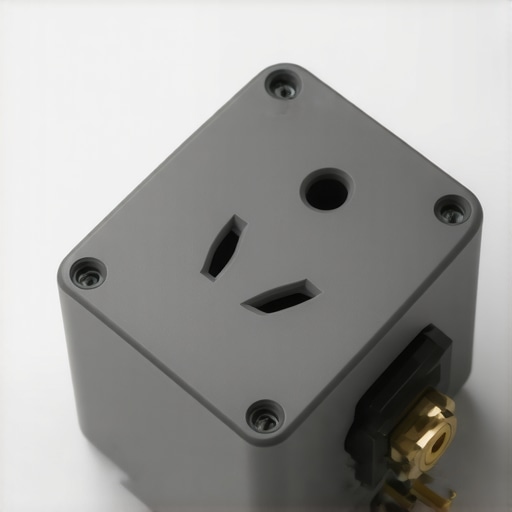
The biggest ‘oops’ factor I see in the field involves the standard NEMA 14-50 outlet. If you choose a plug-in charger over a hardwired unit, you might think any 50-amp outlet from the big-box hardware store will suffice. It won’t. Cheap residential-grade outlets are designed for kitchen ranges that run for 30 minutes at a time, not for an EV that pulls max current for eight hours straight. You must understand how to pick a NEMA 14-50 outlet that won’t melt under pressure. I have seen budget sockets literally char the drywall because the internal tension clips weren’t beefy enough for a continuous high-load draw.
Why is My Main Breaker Humming While the Car Charges?
If you hear a distinct buzz or vibration coming from your panel when you plug in, don’t panic, but don’t ignore it either. You should investigate why your main breaker hums when the ev is plugged in. While some slight 60Hz hum is normal under high load, a loud buzz often indicates harmonic resonance or a slightly loose connection that only reveals itself when the car starts gulping juice. This is a critical part of troubleshooting EV chargers common compliance pitfalls and fixes. Most residential systems were never designed for a continuous load of this magnitude, which explains why a 100-amp service isn’t always enough for two EVs if you aren’t using smart load management. One last nuance to watch for is ‘double-GFCI’ tripping. Modern codes require a GFCI breaker for garage outlets, but since your charger has its own internal GFCI, the two systems can ‘fight’ each other. This is a classic headache when ensuring code compliance when installing EV chargers while navigating the reality of modern hardware interference.
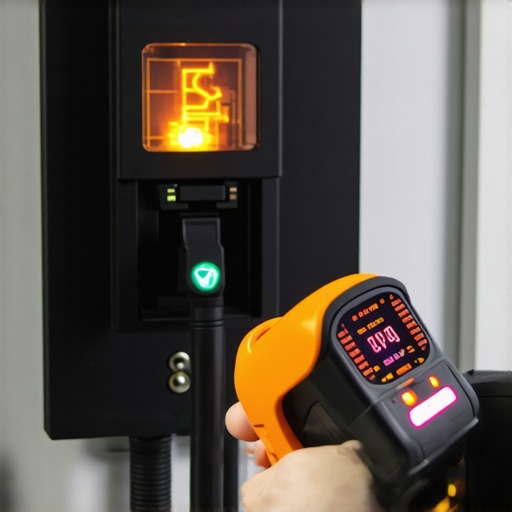
To keep your charging setup from becoming a fire hazard or a source of constant frustration, you need a few specialized tools in your arsenal. I personally swear by a handheld thermal imaging camera—something like the Seek Thermal or a FLIR attachment for your phone. Every three months, I plug my car in and let it run for an hour, then I scan my panel. If I see a breaker glowing significantly brighter than the others, I know I have a loose connection or a failing component. This simple habit is part of troubleshooting EV chargers common compliance pitfalls and fixes before they become emergencies. Another must-have is a dedicated torque screwdriver. I don’t trust my ‘feel’ for tightness anymore because over-torquing can be just as dangerous as leaving a wire loose.
How do I keep my charging setup safe for the long haul?
Maintenance isn’t just about the wires; it is about the environment around them. I’ve seen chargers fail simply because of spider webs and dust buildup inside the charging handle. If your unit is outside, you need to perform 3 maintenance tasks that keep your outdoor charger running through winter, such as checking the gaskets for cracks and ensuring the holster is free of debris. According to the Copper Development Association (CDA), the integrity of high-load electrical connections is highly dependent on preventing oxidation and maintaining mechanical pressure. Once a year, I shut off the main breaker and give every terminal screw on my EV circuit a tiny fraction of a turn to ensure it hasn’t vibrated loose. If you notice any discoloration on the wire insulation, stop immediately—that’s your sign that the heat has already started to win.
Software is the other half of the battle. We often forget that these aren’t just ‘dumb’ appliances. Most high-end units require regular patches to fix bugs that can cause communication errors between the car and the grid. You should regularly check how to update the firmware on your smart charging station to ensure you are getting the most efficient charging curves. This is especially true if you are upgrading your panel for better EV charging performance and want to integrate with solar or battery storage later. I expect that in the next few years, we will transition from just ‘charging’ to ‘Vehicle-to-Home’ (V2H) systems, where your car actually powers your house during a blackout. Preparing for that today means how to verify code compliance for your EV charger installation now, so you don’t have to rewire everything when the tech changes. I also highly recommend looking into why your ev charger needs a surge protector in the panel. One lightning strike nearby can fry the sensitive logic boards in both your charger and your car, turning a three-thousand-dollar investment into a paperweight instantly. My advanced tip for you today: buy a torque wrench this weekend and check the lugs on your EV breaker—it is the single best way to prevent a future service call.
The Hardest Lesson I Learned About Load Management
After months of tinkering, I realized the biggest obstacle to a cheap install isn’t your wires; it’s the outdated mindset that every home needs a 200-amp service upgrade. I spent way too much time worrying about my 100-amp limit before I saw the beauty of automated load shedding. Another lightbulb moment came when I realized how many people skip how to verify code compliance for your ev charger installation until the inspector is already at the door. If I could go back, I would have stopped obsessing over the circuit size and focused on the quality of the mechanical connections from day one.
#IMAGE_PLACEHOLDER_E#
My Go-To Toolbox for Safer Charging
If you want a setup that won’t keep you up at night, there are three things you need. First, get a digital copy of the latest electrical handbook—it is the ultimate guide to ensuring code compliance when installing ev chargers without guessing. Second, buy a dedicated torque screwdriver; “hand-tight” is not a safety standard. Third, I highly recommend a thermal imaging camera attachment for your phone to scan your panel once a month for hot spots. This proactive approach helps with troubleshooting ev chargers common compliance pitfalls and fixes before they turn into a fire hazard.
Your Future Home is Already Electrified
Adding an EV to your life doesn’t have to mean tearing your house apart or draining your savings account. By using smart energy management and verified components, you can have a reliable Level 2 charging experience on your existing panel. Don’t let a high contractor quote scare you away from electric—just be the smartest person in the room when it comes to your home’s power. It is also the perfect time to consider why your ev charger needs a surge protector in the panel to keep that new vehicle safe from unpredictable grid spikes. Have you ever been quoted an outrageous price for a panel upgrade you didn’t actually need? Let me know in the comments below!