The air in my garage smelled like ozone and victory the day I finally finished my charger install. I had already figured out exactly how much space I needed in the panel, and the wiring was as neat as a pin. But then I looked at the tax implications. I will be honest: I spent three nights down a rabbit hole of IRS PDFs, nearly convinced that the Alternative Fuel Infrastructure Tax Credit was a myth designed to keep me up at night. I eventually figured it out, but not before making a massive mistake—I assumed that just because I bought the charger, the government would hand me a check. It is a bit more nuanced than that, and today, I am going to help you avoid the same face-palm moment I had.
Get Your Money Back for That Garage Upgrade
When I first started looking into the federal 30C credit, I thought it was a simple buy-this-get-that deal. I was wrong. The credit, which can cover up to 30% of your costs (capped at $1,000 for residential property), isn’t just about the charger itself. It includes the labor and the panel upgrades you might have needed to get things up to code. I made the classic blunder of only keeping the receipt for the hardware. I completely ignored the specific tax forms for electrical upgrades that I had paid for. My mistake cost me hours of digging through old emails to find my electrician’s invoice weeks after the fact. Don’t be like me. Have you ever looked at a government form and felt your brain slowly turn to mush? I want to know—have you already started your installation, or are you waiting to see if the math actually adds up first?
Is the Federal Tax Credit Actually Worth the Hype?
It is a fair question. Why jump through hoops for a credit that might not even apply to you? Here is the neighborly truth: the rules changed recently. Under the Inflation Reduction Act, the credit is now laser-focused on specific geographic areas. According to the Internal Revenue Service, your property must be located in an eligible census tract—either low-income or non-urban—to qualify for equipment placed in service after 2022. This caught me off guard. I spent weeks planning before realizing I needed to check a map first. If you aren’t in a qualifying zone, you might be better off looking into utility-specific rebates instead. But if you are in the right spot, this is essentially the government paying for a third of your project. Whether you are dealing with troubleshooting a buggy unit or just trying to get the permit signed off, knowing you are getting a rebate makes the headache a lot easier to swallow. We are going to break down the exact steps to ensure your paperwork is as solid as your grounding wire.
Get the Foundation Right Before Flipping the Switch
I remember staring at my aging 100-amp panel, wondering if I could squeeze a Level 2 charger in without the whole house going dark when the dryer kicked on. I learned the hard way that calculating if your 100-amp service can handle a daily commute is the first real math problem you have to solve. I actually tried to ‘wing it’ once at a buddy’s place, and the main breaker started humming—a sound like a beehive in your wall that you never want to hear. This led me to research why your main breaker hums when the EV is plugged in, and trust me, it is usually a sign that you are pushing your system to its absolute limit. If you are in a similar boat, you need to look at how to load balance your home electrical system without a full panel swap before you even think about the tax credit. The IRS won’t care how much you spent if the inspector won’t sign off on a buzzing, overloaded panel.
Don’t Let the Conduit Rule Ruin Your Inspection
When you are running your wires, you have to think like an inspector, not just a DIYer. I once saw a guy lose a whole afternoon because he buried his run just four inches too shallow. The conduit depth rule that fails more garage inspections than anything else is a classic trap. If you are going through the floor or across a yard, check your local amendments. Also, pay attention to the small stuff—the specific torque settings that prevent panel fires during high load charging are not just suggestions. High-amperage draws generate heat, and heat causes metal to expand and contract. If those lugs aren’t torqued to the manufacturer’s spec, they will loosen over time, leading to arcs or worse. I use a dedicated torque screwdriver now for every terminal; it is the only way to sleep soundly while the car pulls 40 amps overnight.
Keep the Paperwork the IRS Actually Demands
To claim the 30C credit, you need more than just a box receipt. You need an itemized breakdown. When I did mine, I made the mistake of getting a ‘lump sum’ invoice from my electrician. I had to go back and ask him to separate the labor, the permit fees, and the cost of the panel upgrades for EV chargers. The IRS wants to see the ‘cost of the property,’ which includes the installation labor. This is often the most common error on home EV charger rebate applications. If the paperwork is messy, the credit gets denied.
Resolve Connection Glitches Early
Once the hardware is up, don’t panic if the app doesn’t talk to the car immediately. Most of the time, you just need to update your charger software without calling a technician to bridge that communication gap. If the car still won’t ‘handshake’ with the plug, you are likely looking at a communication error between your car and charger that is usually solved by a simple hard reset of the station’s internal logic board.
It is tempting to think that once your app is synced and the LEDs are green, the job is done. But after years of tinkering with these systems, I have seen one massive mistake repeated over and over by folks who think they have nailed the installation. Most DIY guides will tell you to install a NEMA 14-50 outlet because it gives you ‘flexibility.’ I am here to tell you that flexibility is a trap. In my experience, the benefit of a hardwired charger over a NEMA plug far outweighs the convenience of a plug. Plugs introduce another point of failure—specifically, the contact points between the plug and the socket. Under a continuous 40-amp draw for eight hours, any minor resistance in that outlet turns into a miniature space heater. Plus, newer code requirements often mandate a GFCI breaker for outlets in garages, which leads to ‘nuisance tripping’ when the charger’s internal safety check fights with the breaker.
Stop Chasing Flexibility and Start Hardwiring Your Unit
When you hardwire, you eliminate the need for that pricey GFCI breaker and create a much more robust thermal connection. If you are aiming for top-tier performance, upgrading your panel for better EV charging performance should always include a discussion about direct connections. I have seen homeowners spend hundreds on a high-end plug only to have it melt three months later because the outlet wasn’t industrial-grade. Have you ever fallen into this trap? Let me know in the comments. We need to move past the ‘standard’ advice and look at what actually survives a decade of nightly use. 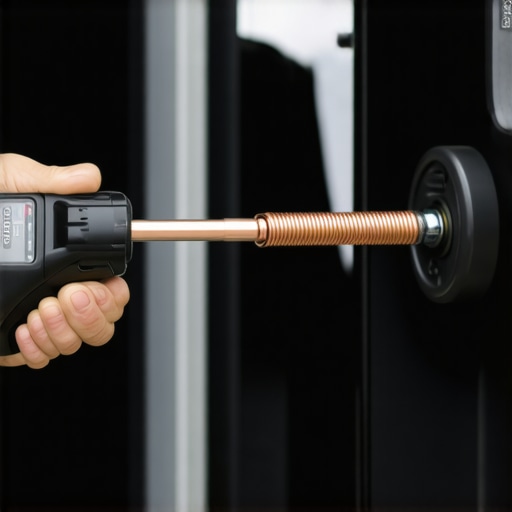
The Hidden Temperature Math That Melts Junction Boxes
Another nuance that catches people off guard is the ‘temperature rating’ of your wire. This is the common wire sizing error that causes voltage drops during charging. You might see a chart saying 6-gauge wire is good for 55 or 60 amps, but that depends entirely on the insulation type (like NM-B vs. THHN). If you use standard Romex (NM-B), it is only rated for the 60°C column in the NEC ampacity table. That means you technically cannot run a 48-amp charger on a 60-amp circuit using Romex, even though ‘everyone on the forums’ says you can. According to the National Fire Protection Association, electrical failures often stem from precisely these kinds of misunderstandings regarding continuous load versus peak load.
Why Does My High-End Breaker Keep Tripping at 3 AM?
This is a classic advanced troubleshooting headache. If your breaker trips after several hours of charging, it is likely not a short circuit, but a thermal trip. High-amperage loads create heat in the breaker itself. If your panel is crowded, that heat can’t dissipate. I have found that there is a specific breaker brand that keeps tripping on Level 2 chargers more than others due to its internal sensitivity. To fix this, you might need panel upgrade strategies to meet EV charging code requirements in 2025, which include spacing out high-load breakers to allow for better airflow. Before you call an electrician to swap the whole panel, check how to verify code compliance for your EV charger installation to see if a simple circuit relocation can save you thousands. Staying ahead of code compliance essentials for EV charger installations in 2025 is the only way to ensure your home insurance doesn’t have an excuse to deny a claim later on.
One tool I swear by that most DIYers ignore is a compact thermal imaging camera. I use mine once a month to scan the panel while the car is pulling its full 48 amps. If you see a breaker glowing bright purple or white on the screen, you have found a loose connection or a failing component before it has the chance to shut you down. This is the best way to spot a dying breaker before it shuts down your charging session. According to the International Association of Electrical Inspectors (IAEI), infrared thermography is one of the most effective non-destructive ways to ensure electrical system health. If you see signs your main breaker is running dangerously hot, it is often a symptom of poor airflow or an aging busbar that needs attention.
Stop Heat-Related Failures Before They Start
Maintenance isn’t just about the panel; it is about the handle you touch every morning. I have seen pins get pitted and charred because of salt air or simple dust buildup. Learning how to clean the pins on your charging handle safely with a quick blast of compressed air and a non-conductive electronic cleaner can save you from a five-hundred-dollar cable replacement later.
How do I maintain my home charging station over time?
Beyond cleaning the pins, you need to check the physical integrity of your outdoor setup. If your unit is mounted outside, remember that outdoor charging stations need more than just a plastic cover to survive the freeze-thaw cycles. I always check the gaskets and seals once every autumn to make sure moisture hasn’t found a path into the electronics. If you ever notice a dangerous heat build-up in your EV charging cable, stop the session immediately and check for internal wire degradation. This is where expert troubleshooting tips become your best friend.
Prepare Your Garage for the Multi-Car Future
Looking ahead, the trend is clearly moving toward bidirectional charging—where your car can actually power your house during a blackout. To get ready for this, you should be thinking about upgrading your garage sub-panel for dual charging stations now. If you are already in the walls, run a larger conduit than you think you need. It is much cheaper to pull a second set of wires later than it is to dig a new trench. Ensuring code compliance essentials for EV charger installations in 2025 means being ready for smart load management systems. I highly recommend picking up a thermal imager this week and doing a ‘heat sweep’ of your panel—it is the single best advanced habit you can form for long-term home safety.
The Hardest Lesson I Learned About High-Amperage Wiring
After years of tinkering, I realized that ensuring code compliance when installing ev chargers isn’t just about passing a test—it is about the safety of your family. The biggest “aha!” moment for me was realizing that electricity is lazy; it always finds the path of least resistance. If your connections aren’t perfect, that resistance turns into heat. I have also learned that the most common diy mistakes in home charger installations usually involve underestimating the physical strain on the wires. Don’t just plan for the car you have now; plan for the one you will have in five years. If you are on the fence, checking how to verify code compliance for your ev charger installation early can save you from a massive headache down the line.
#IMAGE_PLACEHOLDER_E#
My Go-To Toolbox for a Stress-Free Install
I never start a project without my “big three” items. First is a high-quality torque screwdriver—it is the only way to meet those manufacturer specs and avoid a fire hazard. Second, I recommend the NEC Handbook. It is thick and intimidating, but it is the gold standard for maintaining safety. Lastly, that thermal camera I mentioned earlier is worth its weight in gold for spotting loose lugs. If you ever run into a snag, ev charger troubleshooting expert tips can help you narrow down the problem before you spend a dime on new parts.
Turn Your Garage into a Powerhouse
Starting this journey can feel like learning a new language, but once those lights turn green and your car starts humming, every hour of research pays off. You are not just installing a gadget; you are building personal infrastructure. If you are feeling overwhelmed by panel upgrade strategies to meet ev charging code requirements in 2025, just take it one circuit at a time. The future is electric, and you are officially part of it. Have you ever struggled with getting your local inspector to sign off on a DIY project? Let me know below!