I was standing in a puddle at 6:00 AM, staring at a screen that said “Connecting…” while a very frustrated Tesla owner glared at me. We had just finished a beautiful installation, but the building’s guest Wi-Fi decided that morning was the perfect time for a security update. My client was losing money, the driver was losing his mind, and I was losing my patience. That was the moment I realized that if you’re running a business, you can’t treat your chargers like a smart toaster.
The Day I Realized Shared Wi-Fi is a Trap
I used to think I was saving my clients a few bucks by piggybacking on their existing office network. Big mistake. I learned the hard way that troubleshooting EV charger connectivity problems usually leads back to one thing: interference. When your chargers share a signal with forty employees streaming movies on their lunch break, the charger loses every time. It’s not just about speed; it’s about dedicated priority. If the internet goes down, your revenue goes down with it. I’ve seen chargers go dark for days because someone changed a router password and forgot to tell the “EV guy.” Today, we’re going to talk about why a dedicated cellular connection is the only way to ensure your station stays online and profitable.
Isn’t a Cellular Monthly Fee Just a Money Grab?
I get it. You’re already paying for the hardware and the installation, so why add a recurring bill? I used to be skeptical too, thinking it was just another subscription to drain the wallet. But here’s the reality: a dedicated connection means you aren’t at the mercy of the IT department’s firewall. When you look at the reason your smart charger app keeps losing connection, it’s almost always a local network handshake issue. According to data from the Alternative Fuels Data Center, reliable network uptime is critical for public-facing chargers to maintain “findability” on maps and apps. If the charger can’t “phone home,” it effectively doesn’t exist to the drivers searching for it.
Keep Your Fleet Moving Without the IT Headache
For those managing a business, the maintenance guide for commercial fleet charging stations starts and ends with uptime. If your delivery vans aren’t charged because the Wi-Fi signal didn’t reach the far corner of the lot, that’s a logistical nightmare. Cellular connections don’t care about your building’s thick concrete walls or how many people are on the guest network. They just work. Have you ever had a charger go offline right when you needed it most? Reach out to us through our contact page—I’d love to hear if you’re fighting the “no signal” battle right now. We are just scratching the surface on how to make these systems bulletproof.
Fix the Signal Before You Bolt the Box
I once spent four hours on a ladder in a freezing parking garage because the signal was perfect at ground level but vanished the second I mounted the charger. I had to pivot to an external antenna kit just to clear a structural beam that was acting like a lead shield. This is why you never start drilling until you’ve performed a real-world signal test. Think of your charger’s network like a highway; if the road is full of potholes (interference) or too narrow (low bandwidth), your data isn’t getting through. When you are ensuring code compliance when installing EV chargers, remember that local codes often require specific accessibility for monitoring. If the inspector can’t see the charger online, you aren’t passing.
The 5-Minute Site Survey Trick
Before you commit to a location, use a cellular signal analyzer or even a simple app on your phone to check the decibel milliwatt (dBm) levels at the exact height the charger will sit. If you see anything lower than -90 dBm, you are begging for a service call next week. This is one of the most effective ev charger troubleshooting expert tips for common issues I can give: if the signal is weak, move the charger or install a high-gain antenna. Don’t assume it will ‘just work’ once the shell is closed.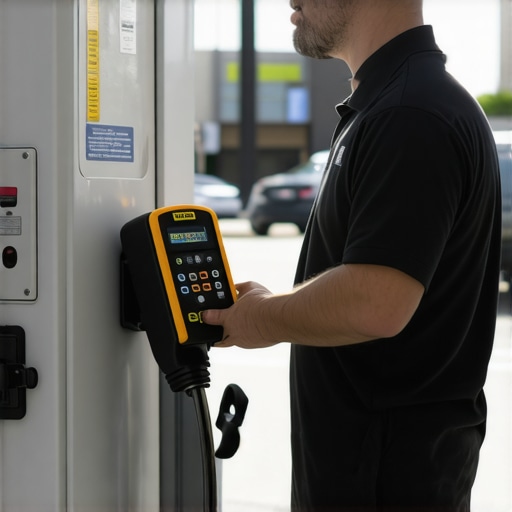
Hardwire Your Data Whenever Possible
While cellular is the gold standard for reliability in commercial settings, some sites have zero reception. In those cases, I always advocate for a shielded Ethernet cable. Using a the benefit of a hardwired charger over a nema plug applies to your data too. A physical wire doesn’t care about radio interference from a nearby microwave or a neighboring business’s new security system. It creates a stable tunnel for your billing data and firmware updates. If you find your unit lagging, check how to update your charger software without calling a technician to see if a simple patch can fix the handshake between the hardware and the network.
Ensure Your Panel Can Support the Smart Tech
A smart charger is only as good as the juice feeding it. I’ve seen chargers drop their network connection because the voltage was sagging under heavy load, causing the internal computer to reboot. Before adding high-tech chargers to an old building, you need to look at panel upgrades for ev chargers what you need to know to ensure stable power delivery. If your main breaker is running hot, the electronics inside the charger are the first things to suffer. When you upgrade your panel for better ev charging performance, you aren’t just adding capacity; you are cleaning up the electrical noise that can interfere with sensitive communication modules. If you are worried about the cost, there are ways how to load balance your home electrical system without a full panel swap while still maintaining a stable internet-connected charging environment. Avoid the the most common diy mistakes in home charger installations by verifying that your grounding is solid, as a bad ground is a silent killer of network cards.People often assume that as long as they follow the basic manual, they are golden. But there is a huge misconception that ‘code compliant’ means ‘perfectly functional.’ You can pass an inspection and still have a system that fails under the heavy duty cycle of an EV. I see it all the time: a homeowner installs a high-end unit, follows the instructions, and then wonders why your ev charger stops mid-session without throwing a code. The reality is that EV charging isn’t like a toaster or a dryer; it is a continuous load for hours. Most standard hardware isn’t built for that kind of heat soak without meticulous installation.
Why do some breakers trip even when you aren’t overloading them?
It usually comes down to the brand. Many DIYers and even some seasoned pros think breakers are interchangeable. They aren’t. Using a ‘UL-classified’ breaker that fits physically but isn’t specifically listed for your panel can lead to micro-arcing. This is one of those troubleshooting ev chargers common compliance pitfalls and fixes that people miss because the charger looks ‘on.’ If you have a specific panel type, you need to be aware of the specific breaker brand that keeps tripping on level 2 chargers to avoid nuisance trips. 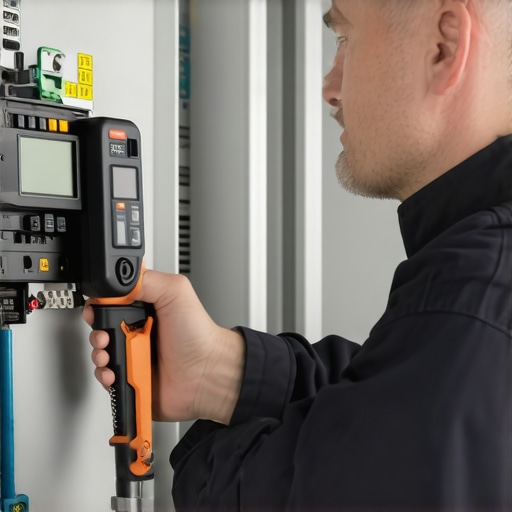 One of the biggest ‘oops’ moments I see involves the screws themselves. We call it the forgotten torque spec that fails half of all panel inspections. Most people just crank the screwdriver until it ‘feels’ right. But the National Fire Protection Association (NFPA) notes in NEC 110.14(D) that using a calibrated torque tool is mandatory for most terminals. Without it, the connection is either too loose, creating heat, or too tight, deforming the wire; both eventually lead to failure. Have you ever fallen into this trap and just ‘winged it’ with a standard screwdriver? Let me know in the comments—I’ve definitely been there before I bought my first torque wrench. Finally, don’t overlook your physical environment. I’ve seen chargers pass every electrical test but fail because of the working space violation that fails more ev panel inspections than anything else. If an inspector can’t stand safely in front of the panel because you mounted the charger too close to a water heater or a shelf, you’re starting over. When you are looking into panel upgrade strategies to meet ev charging code requirements in 2025, always measure twice and account for the ‘living space’ of the equipment. If you’re stuck, check our how to verify code compliance for your ev charger installation guide to stay ahead of the curve.I’ve learned that the most important tool in my bag isn’t a screwdriver—it’s my thermal camera. I use a FLIR because it allows me to see the invisible. When I’m performing ev charger troubleshooting expert tips for common issues, I always scan the terminal blocks while the car is pulling its full 48 amps. If one wire is glowing white while the others are purple, I know I have a loose connection or a bad crimp. This is the only real way to how to spot a dangerous heat build-up in your ev charging cable before it melts the insulation.
Thermal Imaging Shows What Your Eyes Miss
It’s not just about the charger itself; it’s about the whole path. I’ve found breakers in the main panel that were within their amp limit but were failing internally, radiating heat that would have eventually caused a fire. If you’re serious about long-term safety, you need to look at how to spot a counterfeit charging cable before it melts your port, as these cheap knock-offs are the primary culprits for thermal runaway. 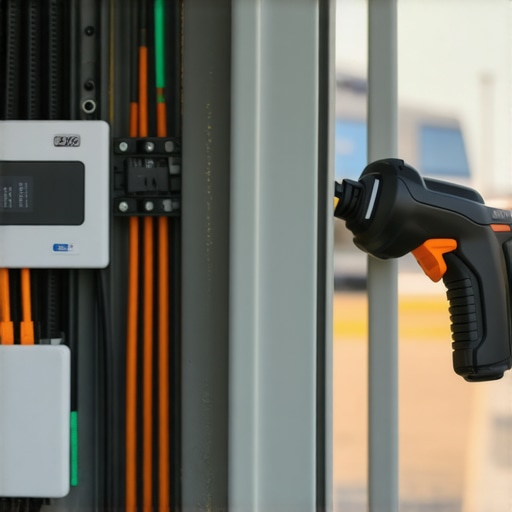
How do I keep my charging hardware from failing early?
Maintenance isn’t just for the car; the charger needs love too. For business owners, the maintenance guide for commercial fleet charging stations recommends a physical inspection every six months. According to the Charging Interface Initiative (CharIN), specialized inspection of the contact pins is required every 1,000 mating cycles to prevent resistance buildup that leads to connector failure. I tell my clients to learn how to clean the pins on your charging handle safely using compressed air and specialized non-conductive contact cleaner—never stick a metal screwdriver in there!
The Future is Bi-Directional
We are moving toward a world where your car doesn’t just take power; it gives it back. As we look at panel upgrade strategies to meet ev charging code requirements in 2025, we are already planning for Vehicle-to-Home (V2H) tech. This means your electrical panel needs to be smarter than ever. When you how to verify code compliance for your ev charger installation, you should also be asking if your hardware is “ISO 15118” compliant, which is the international standard for this kind of advanced communication. My best advice for an immediate safety check? Next time your car is charging, feel the handle after 30 minutes. If it’s too hot to hold comfortably, shut it down and call a pro—that’s a five-second test that could save your garage.
Three Hard Lessons I Learned While Chasing Signal Bars
Over the years, I’ve realized that a charger is more than just a plug; it’s a communication hub that requires constant attention. First, never trust ‘full bars’ on your phone when testing a mounting spot; actual data throughput during a handshake is a different beast entirely. Second, if you ignore troubleshooting ev chargers common compliance pitfalls and fixes during the initial setup, you will inevitably pay for it in costly service calls later. Finally, the best installations are the ones where you assume something will fail and build the system so that it can be reset easily without tearing apart your drywall. It is always about building resilience, not just basic connectivity.
Gear That Keeps My Projects from Melting
I never step onto a job site without my calibrated torque wrench. It might seem like overkill to a DIYer, but it is the only real way to avoid the 3 scary noises your electrical panel makes when charging an ev. I also swear by my FLIR thermal camera to see exactly why your main breaker runs hot during level 2 charging before a catastrophic failure happens. #IMAGE_PLACEHOLDER_E# Lastly, I recommend every homeowner keep a digital copy of the latest NEC handbook; it is the ultimate resource to how to verify code compliance for your ev charger installation and keeps you from making the kind of expensive mistakes that fail inspections.
You Are Ready to Power Up
Stepping into the world of high-powered EV charging can feel like learning a completely new language, but once you master the basics of heat management and data stability, the rest falls into place. You are not just installing hardware; you are building the infrastructure for your future mobility and home value. Do not be afraid to double-check your connections and trust your gut if something feels too hot or looks off during a charge. A safe home is a happy home, and a solid EV setup is the heart of a modern electrical system. Have you ever noticed your charger handle or cable getting surprisingly warm during a long session? Let me know in the comments below!