I remember sitting in a drafty community room three years ago, clutching a stack of diagrams that I was absolutely convinced would solve our building’s EV problem. I told the board we should just run a separate wire from every tenant’s panel down to their assigned parking spot. It sounded so simple, so fair, and so straightforward. Then our master electrician looked at me like I had suggested we power the elevators with hamsters. He pointed out that if even five people plugged in their Teslas at the same time, we would likely blow the main transformer for the entire block. I felt like a total amateur, realized I had no idea how to tell if your electrical panel can actually handle a level 2 charger on that scale, and that was the day I stopped being a fan of individual meters for multi-family housing.
Individual Meters Sound Fair Until Your Transformer Explodes
In my early days of troubleshooting these setups, I made the classic mistake of thinking that physical wires and dedicated breakers were the only things that mattered. I ignored the ‘diversity factor’ of the building’s load. Most apartment complexes built before 2010 were never designed for the massive, sustained draw of twenty or thirty cars pulling 40 amps each. If you try to give everyone their own meter without any oversight, you are basically playing Russian Roulette with the building’s main switchgear. According to a study by the National Renewable Energy Laboratory (NREL), unmanaged EV charging can increase peak load on local distribution systems by up to 200%, which is why ‘smart’ or managed systems have become the gold standard for high-density living. To keep things running safely, we often find that panel upgrades for EV chargers are just too expensive for most HOAs to swallow upfront. That is where managed charging steps in to save the day by distributing power where it is needed most without requiring a massive infrastructure overhaul. Have you ever tried to convince your HOA to install a charger only to be met with a flat-out ‘no’ because of power limits?
Will Managed Charging Leave Me Stranded with an Empty Battery?
The biggest fear I hear from my neighbors is that ‘managed’ is just code for ‘slow.’ People worry that if the building is controlling the power, they will wake up to a car that only gained ten miles of range overnight. I totally get that anxiety. But the reality is that managed charging is more about ‘peak shaving’ than it is about cutting you off. It is the same logic we use when we load balance your home electrical system without a full panel swap; it is about being smart with the juice you already have. By following code compliance essentials for EV charger installations in 2025, buildings can now use software to talk to the cars, ensuring everyone gets a full charge by morning without ever risking a blackout or a fire. It is not about restriction; it is about coordination.
Stop Guessing and Start Measuring Your Building’s Real Capacity
Before you even think about buying a charger, you have to perform a rigorous load calculation. Think of your building’s electrical service like a main water line. If everyone in the complex turns on their showers, dishwashers, and garden hoses at the exact same time, the pressure drops to a useless trickle. Electrical wires work exactly the same way. When I first started consulting for HOAs, I saw a well-meaning board member try to ‘eyeball’ the capacity by looking at the sticker on the main service door. That is a recipe for a thermal event. You need to know how to tell if your electrical panel can actually handle a level 2 charger by reviewing the last 12 months of utility bills to find the actual peak demand. If your building’s peak is already sitting at 80% of the transformer’s capacity, you have zero room for EVs without being strategic. Sometimes, you simply cannot avoid the inevitable, and upgrading your panel for better ev charging performance becomes the only viable way to satisfy the growing demand from tenants.
Why Software Beats Copper for Saving Your Budget
I once worked on a project for a mid-rise condo where the board wanted to install six chargers in the basement. The initial quote for a full infrastructure overhaul was a staggering $85,000 because the contractor assumed they needed to run massive new feeders to each spot. Instead, we pivoted to a managed load system. We showed them how to load balance your home electrical system without a full panel swap by utilizing chargers that communicate via a local mesh network. When car A is nearly full, it automatically releases its ‘power share’ to car B. It is like a group of people sharing a single pizza; as long as everyone doesn’t grab a slice at the exact same second, everyone gets fed and stays happy. This saved the HOA nearly $60,000 in copper costs alone. If you are dealing with a smaller footprint, like a detached shared garage, you might only need to look into how to upgrade your garage sub-panel for dual charging stations rather than rewriting the entire building’s blueprints.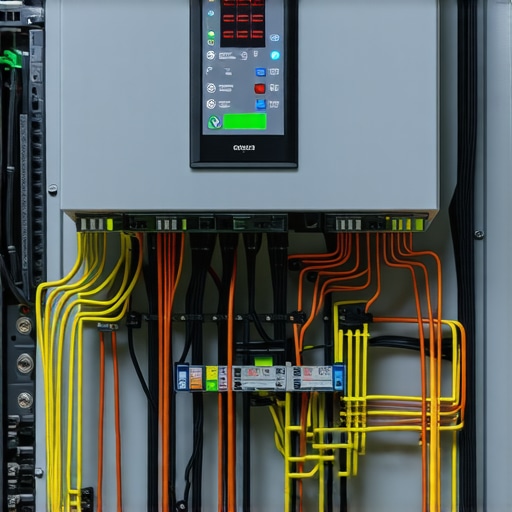
The Boring Details That Actually Pass Your Final Inspection
Passing the city inspector is the part every property manager dreads, but it is where the safety of the residents is actually guaranteed. I remember a job in a high-density complex where we did everything right—or so we thought—until the inspector pulled out a calibrated torque wrench. We had missed a specific tightening requirement for the main lugs. It turns out that the forgotten torque spec that fails half of all panel inspections is the number one reason projects get delayed by weeks. You have to be meticulous with the physical install. This includes ensuring code compliance when installing ev chargers by double-checking your grounding paths and bonding. One tiny slip-up, like the tiny neutral wire mistake that shuts down new ev charging circuits, can lead to phantom ground fault errors that drive your residents crazy and make your maintenance phone ring at 3 AM.
Don’t Let Connectivity Kill Your Project
A managed system is only ‘smart’ if it can talk to the cloud. I have seen beautiful, expensive installations turn into high-tech paperweights because the WiFi in the reinforced concrete parking garage was non-existent. When troubleshooting ev charger connectivity problems, we often find that installers forgot that three feet of steel-reinforced concrete is basically a lead shield for radio signals. If the charger cannot check in with the server to receive its load-management commands, it might default to its lowest safety setting—charging at a snail’s pace—leaving your tenants with empty batteries and a very valid reason to be angry at the HOA board.Common wisdom says that if you have a power bottleneck, you just throw more copper at it. But I have seen countless HOAs sink $50k into massive upgrades only to realize they still haven’t solved the core issue. People assume that panel upgrades for EV chargers are a one-and-done fix, but without a strategy for upgrading your panel for better ev charging performance, you are just delaying the inevitable grid-lock when the next five tenants buy electric. In my experience, focusing on peak capacity is a rookie mistake; you should be focusing on load shape. One of the biggest ‘oops’ factors I encounter isn’t even electrical—it’s spatial. You can have the most advanced system in the world, but if your installer ignores the working space violation that fails more ev panel inspections than anything else, your project is dead on arrival. The National Electrical Code (NEC) is very specific about the three-foot clear zone in front of equipment. I’ve seen beautiful installs ripped out because they were three inches too close to a trash compactor or a water heater. This is a classic case of why ensuring code compliance when installing ev chargers means looking at the room, not just the wires.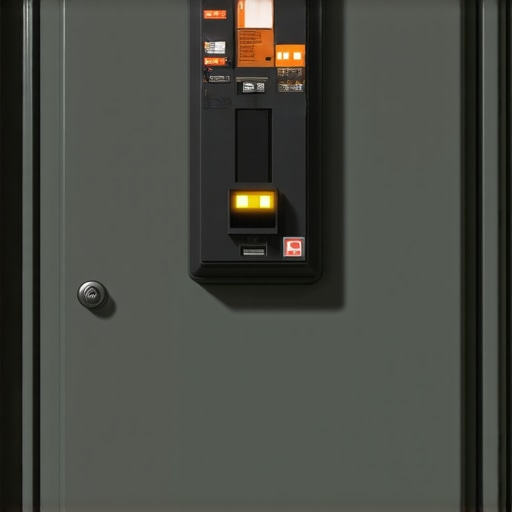
Is Your Breaker Truly Rated for a Ten-Hour Marathon?
Most people don’t realize that a standard breaker is only designed to carry 80% of its rated load for more than three hours. This is why you see so many forum posts asking why your main breaker runs hot during level 2 charging. When you are pulling 40 amps for eight hours straight, that heat builds up. According to a technical report by the Electrical Safety Foundation International (ESFI), thermal stress is a leading cause of premature breaker failure in EV setups. If your contractor didn’t account for this with better panel upgrade strategies to meet ev charging code requirements in 2025, you’re essentially slow-cooking your electrical panel. Even if the hardware holds up, the software might not. I’ve spent more nights than I’d like to admit troubleshooting ev charger connectivity problems because a board member wanted to save $200 by skipping a hardwired data line. In a concrete garage, that’s a death sentence for your smart features. And don’t even get me started on the grounding; 3 grounding errors that kill ev charger motherboards before they are a year old are the reason I never trust a handyman install for high-voltage gear. You need to know how to verify code compliance for your ev charger installation yourself, because one loose neutral can fry $3,000 worth of electronics in a heartbeat. Have you ever fallen into this trap? Let me know in the comments.After the city inspectors finally sign off and the ribbons are cut, the real work of asset management begins. I always tell HOA boards that a high-capacity EV charger isn’t a ‘set it and forget it’ appliance like a lobby microwave; it is more like a high-performance engine that runs at full throttle for ten hours every night. To keep things from melting down, I have started carrying a handheld FLIR thermal imager on every quarterly walkthrough. It is the only reliable way to catch why your ev charger trips the breaker only on hot afternoons before a resident even notices a problem. You can literally see the heat blooming from a slightly loose lug or a failing internal contactor long before the equipment reaches a critical temperature or throws a fault code.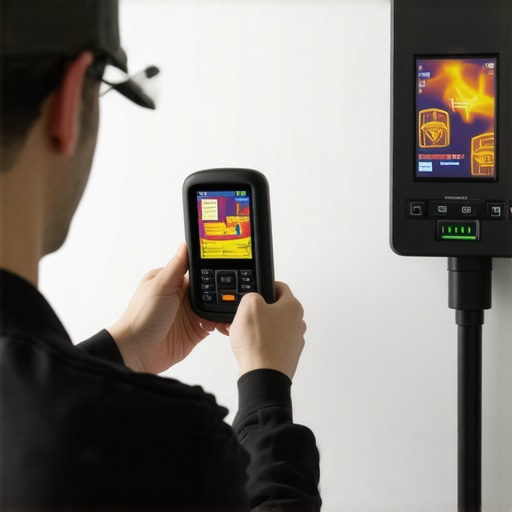
How do I maintain this multi-unit system over time?
Maintaining these setups isn’t just about tightening screws, though that is a massive part of it. You really need to follow the maintenance guide for commercial fleet charging stations, even for smaller residential condos, because the duty cycle is nearly identical. One of my favorite tools for long-term health is a high-quality calibrated torque wrench—I do not just use it for the initial install; I re-verify the main service connections every six months. Thermal expansion and contraction are physical certainties, and they will slowly loosen your hardware over time. Beyond the physical gear, you have to stay on top of the ‘digital’ health of the system. I am a huge advocate for property managers knowing how to update your charger software without calling a technician. Most firmware updates include improved load-balancing algorithms that weren’t available when you first bought the hardware, and staying current can actually extend the life of your transformers.
Forget the WiFi and Go Cellular Instead
If you are managing more than three stations, I have found that skipping the building’s shared WiFi in favor of a dedicated cellular bridge is the only way to avoid troubleshooting ev chargers common compliance pitfalls and fixes related to signal drops. This is exactly why your commercial charger needs a dedicated cellular connection; you cannot have your billing revenue or your critical load management failing just because someone in unit 4B changed their router password or the basement repeater got unplugged. Looking ahead, the next big shift is going to be V2G (Vehicle-to-Grid) integration. We are moving toward a world where your building isn’t just feeding the cars, but the cars are acting as a massive battery bank for the building during emergency peak demand. The NFPA 70B (Standard for Electrical Equipment Maintenance) is already evolving to reflect these much higher duty cycles for residential infrastructure. If you want to stay ahead of the curve, start by auditing your current setup for panel upgrade strategies to meet ev charging code requirements in 2025. My advanced tip for you this week? Buy a can of high-quality electrical contact cleaner and a small nylon brush. Every six months, power down the station and clean the handle pins. It sounds trivial, but it prevents 90% of the ‘failure to communicate’ errors that drive residents crazy. Try it this weekend and see how much cooler your charging handle runs.
Hard Lessons from the Basement Electrical Rooms
Over the years, I’ve learned that the most expensive mistakes aren’t usually found in the wires, but in the assumptions we make before the first screw is turned. First, never take a panel’s nameplate at face value; I’ve seen 400-amp panels that were already crying for help at 320 amps because of poor ventilation. Second, your managed charging software is only as good as its signal—if you can’t get a solid cellular bar in the garage, your ‘smart’ system is basically a paperweight. Third, always anticipate the ‘second wave’ of EV buyers; if you design a system that only works for the first three tenants, you’ll be doing a costly teardown in eighteen months. Finally, heat is the ultimate snitch; if a breaker feels hot to the touch, it’s already failing, and you need to know why your ev charger trips the breaker only on hot afternoons before a thermal event occurs. I’ve realized that being the ‘smart building’ advocate isn’t just about saving money—it is about ensuring the safety of every resident sleeping above those chargers.
My Personal Toolkit for Successful Installations
If you are stepping into a project manager or HOA lead role, there are a few things I never go without. I always keep a copy of the latest NEC Handbook nearby to settle arguments with contractors on the spot. I also swear by a handheld thermal imager; it is the single best way to show a skeptical board member exactly where the energy bottlenecks are. For maintenance, a simple nylon brush and electrical contact cleaner are non-negotiable for anyone who wants to learn how to clean the pins on your charging handle safely. Lastly, I recommend the NREL unmanaged charging studies as the perfect ‘educational’ material to hand over to a landlord who thinks simple individual meters are the long-term answer.
Take the Lead on a Greener Building
Getting your building ready for the electric revolution can feel like a mountain of paperwork and technical hurdles, but remember that you are building the infrastructure of the future. You don’t have to do it all at once, but you do have to do it correctly. By focusing on smart coordination and knowing when panel upgrades for EV chargers are truly necessary, you can provide a reliable service that adds massive value to every unit. Staying informed on how to update your charger software without calling a technician will keep your system running smoothly for years to come. It takes a bit of courage to push for these changes, but the first time a neighbor thanks you for a seamless morning commute, it makes every meeting worth it. Have you ever tried to pitch an EV project to your HOA only to have it voted down? I’d love to hear your stories and help you brainstorm the next steps in the comments below!