I’ll never forget the acrid, metallic smell that woke me up at 3:00 AM just two weeks after I brought my first electric car home. I was exhausted, the car was at 10%, and I figured one night of using that orange ‘heavy-duty’ extension cord I used for the leaf blower wouldn’t hurt anyone. I was wrong. I stumbled into the garage to find the plug so hot it had fused itself to the outlet, and the cord was pulsing with a heat that honestly terrified me. That moment of laziness almost cost me my house. We’re going to talk about the real risks of bridging that gap between your wall and your car with anything other than a dedicated circuit, and I’ll show you how to avoid the same boneheaded mistake I made.
The Hidden Heat Your Cord Can’t Handle
Most folks think a wire is just a wire, but an EV is basically a hair dryer that runs for ten hours straight. When you use a standard extension cord, you’re creating a massive amount of electrical resistance. That resistance turns into heat, and heat is the enemy of your home’s safety. I used to think the danger of using an extension cord for Level 1 charging was just an old wives’ tale told by electricians to sell more panels, but then I saw my own outlet starting to char. This isn’t just about speed; it’s about the integrity of your home’s infrastructure. If you are noticing signs your main breaker is overwhelmed, adding the resistance of an extension cord is like throwing gasoline on a campfire.
Is a high-end cord really that much of a risk?
The skepticism is real—I get it. You see ’12-gauge’ or ‘Pro-Grade’ on the packaging and think it’s enough. But according to the Electrical Safety Foundation International (ESFI), extension cords are not intended for high-power, long-duration loads like EV charging, as they are a leading cause of home fires. Even if the cord is thick, the connections at either end are often the weak points. If you’ve been wondering what happens if you use a standard outlet for daily charging, the answer is usually a slow degradation of your home’s wiring.
Don’t Ignore the Early Warning Signs
Before my plug melted, there were signs I ignored because I didn’t know better. My charging would randomly stop, and I just figured it was troubleshooting EV charger connectivity problems or a glitchy app. In reality, it was the thermal protection in the car sensing the heat at the plug and cutting the power. If you’ve noticed your cord feels ‘warm’ to the touch, you are already in the danger zone. You need to learn how to spot arc faults before they kill your charging session or worse. Have you ever touched your charging cable and felt it was uncomfortably hot? It’s a scary realization, isn’t it? Let’s look at why this happens and what you can do instead.
Check Your Panel Before You Fry Your Main Breaker
Everything starts at the source. Think of your electrical panel like a heart; if you are asking it to run a marathon while it is already struggling to keep the lights on, something is going to give. I remember helping a neighbor who was convinced he did not need a professional. We popped the cover, and I saw 5 signs your main breaker is overwhelmed—discoloration on the bus bar that he had just ignored. You need to perform a load calculation before adding a 40-amp or 50-amp load. If your home has an older 100-amp service and you are already running an electric range and central air, you are hitting a massive bottleneck. This is where upgrading your panel for better EV charging performance becomes a necessity rather than an elective. If you skip this, you are not just risking a slow charge; you are risking a total system failure at the worst possible time.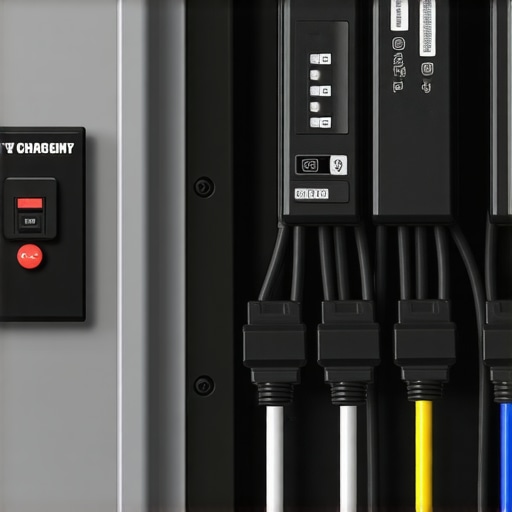
Go Hardwired to Avoid Nuisance Trips
Once you know your panel can handle the juice, you have to decide between a NEMA 14-50 plug or hardwiring the unit directly. I used to be a fan of plug-in units because they seemed flexible. Then I realized that every extra connection point is a point of failure. A plug-in charger requires a high-quality GFCI breaker, which can often lead to 6 ways to stop nuisance tripping during high humidity charging. When I finally hardwired my own station, those intermittent errors simply vanished. You also need to understand the critical difference between hardwired and plug-in chargers in terms of amperage capacity. Hardwiring often allows you to pull 48 amps on a 60-amp circuit, whereas a plug-in is strictly capped at 40 amps to meet safety codes.
Don’t Forget the Torque Wrench
This is the part most DIYers and even some pros ignore. When I was setting up my first subpanel, I just tightened the lugs until they felt right. Six months later, I noticed a faint buzzing and a whiff of ozone. When I checked, the heat cycles had loosened the connection because I had not used a torque wrench. I learned the hard way that the forgotten torque test prevents panel fires. Every terminal has a specific inch-pound rating stamped on it. If it is too loose, you get arcing; if it is too tight, you crush the wire and create a dangerous hot spot. It is a precise science, not a guessing game.
Why Your Local Inspector is Your Best Friend
I know nobody likes paperwork or the city coming by to judge their work. But when it comes to high-voltage equipment, you want that second pair of eyes. They are checking for things you might miss, like ensuring code compliance when installing EV chargers. They will look at your conduit depth and your wire gauge selection. If you used 6-gauge Romex but ran it through a hot attic, you might find that 4 signs your electrician used the wrong gauge wire actually apply to your situation due to temperature derating. Verification is not just about passing a test; it is about knowing your family can sleep soundly while the car gulps down electricity in the garage.Most electricians will tell you that if your panel is full, you absolutely need a $3,000 to $5,000 service upgrade. I am going to go against the grain: you might not. In many cases, a smart load-management system can save you a fortune. These devices monitor your home’s total draw and temporarily throttle the car’s intake if you turn on the oven and the dryer at the same time. It is a sophisticated dance that keeps you within code without digging up your front yard for a new utility line. However, if you do decide to go the traditional route, you need to be aware of panel upgrade strategies to meet EV charging code requirements in 2025. It is not just about the breakers; it is about the bus bar’s ability to handle sustained heat.
Does Your Existing Panel Have a Hidden Bottleneck?
Beyond the amperage, the physical state of your equipment matters more than you think. I have seen 200-amp panels that were absolute fire hazards because of corrosion or brand-specific flaws. If you are seeing 5 signs your old electrical panel is a charging bottleneck, a simple breaker swap won’t save you. According to the NFPA 70 (National Electrical Code) Article 625.41, the overcurrent protection for an EV charger must be sized at no less than 125% of the maximum load. This is not a suggestion; it is a safety buffer required because EV charging is a ‘continuous load.’ This sustained stress exposes every single weak point in your system.
Why Your Grounding Rod Might Be Your Biggest Compliance Headache
One major ‘oops’ factor I see constantly is the grounding system. Many homeowners think their existing house ground is fine, but adding a high-powered EV circuit often triggers an inspector to require a second grounding rod to meet modern safety standards. If you skip this, you are looking at the grounding rod mistake that voids your EV warranty. It is a cheap part, but the labor of driving an eight-foot rod into rocky soil is why people avoid it. Don’t be that person. Learning how to fix the grounding fail that ruins EV permits now will save you a failed inspection and a costly second visit from the electrician. #IMAGE_PLACE_HOLDER_C#
The Nuisance Trip Trap Most People Ignore
Another nuance is the ‘nuisance trip.’ If you have been diving into EV charger troubleshooting expert tips for common issues, you know that GFCI-on-GFCI interference is a nightmare. If your charger has built-in GFCI protection and you plug it into a GFCI-protected outlet, they can ‘fight’ each other. This is a primary reason I advocate for hardwiring. Hardwiring removes that extra layer of sensitive circuitry that does not play well with high-humidity or minor voltage fluctuations. Finally, never underestimate the power of the forgotten torque test that prevents panel fires. It sounds like overkill, but as metal heats and cools, it expands and contracts. Without the exact inch-pounds of pressure, those wires will eventually wiggle just enough to create an arc. Have you ever fallen into the trap of thinking your 100-amp panel was ‘plenty’ only to have the lights flicker when the car starts? Let me know in the comments.
I didn’t just stop at the torque wrench after my first close call. Now, I keep an inexpensive infrared thermometer in my garage drawer. Once every few months, while my car is pulling its full 48-amp load, I open the panel and scan the breakers. If I see one circuit significantly hotter than the others, I know I have a loose connection or a failing breaker before it ever starts to smell. This kind of proactive EV charger troubleshooting has saved me at least two service calls. You also have to keep the physical hardware clean. Dust and spider webs in the port can cause high resistance, so knowing how to clean your charger ports without damaging them is a maintenance task you should do at least twice a year.
How do I keep my charging setup running for a decade?
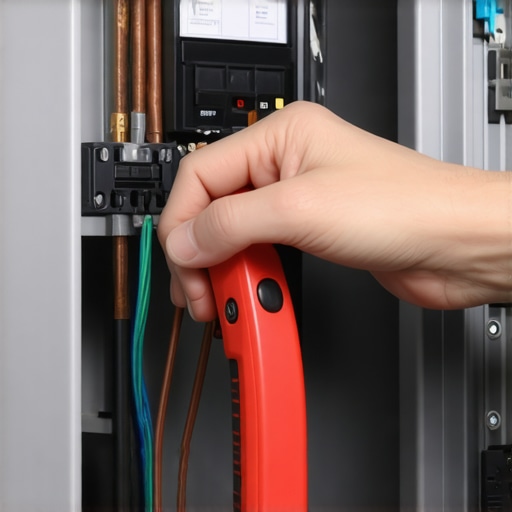
Consistency is key. Beyond the thermal checks, I recommend a yearly ‘tightness test.’ As a reference point, Section 110.14(D) of the 2023 National Electrical Code (NEC) explicitly requires the use of a calibrated torque tool for any terminal where a torque value is provided. I follow the specific torque wrench settings for a wall connector religiously because even a quarter-turn of loosening over a year can lead to 3 signs your main lug is loose and causing power flickers. If you hear a faint buzzing or a clicking sound that wasn’t there last month, do not wait. That is the sound of electricity jumping a gap, and it is a precursor to a fire.
Looking ahead, the next big trend isn’t just getting power into your car; it’s getting it back out. We are entering the era of bi-directional charging, where your car becomes a whole-home battery during a blackout. To get ready for this, you should start looking into how to use your EV as a backup home battery safely. This technology requires even stricter code compliance when installing EV chargers because the power flows in two directions, which changes how your main disconnect and grounding must be configured. If you are already planning a panel upgrade for better EV charging performance, ask your electrician about a manual transfer switch or a ‘gateway’ that supports vehicle-to-home (V2H) tech.
Lastly, don’t ignore the software side of the house. Many modern chargers rely on cloud connectivity to manage load balancing and utility rebates. If you find yourself wondering why your EV charging app requires a cloud subscription, it is often to facilitate these complex power-sharing algorithms. If your charger loses its connection, it might default to a slower, ‘safe’ charging speed to protect your panel. Keeping your firmware updated is just as important as keeping your lugs tight. I strongly encourage you to grab a torque wrench and verify your charger’s internal connections this weekend—it’s the single most effective way to prevent a middle-of-the-night emergency.
Three Realities That Changed My Approach to High-Voltage DIY
Looking back at my orange extension cord debacle, I realize I was looking for a shortcut where none exists. First, I learned that a ‘warm’ plug is a failing plug—there is no middle ground in electrical safety. Second, I realized that how to verify code compliance for your EV charger installation isn’t just for the city inspector; it’s the only way to ensure your insurance company doesn’t walk away if something goes wrong. Lastly, I discovered that 3 small mistakes that turn your garage panel into a fire hazard usually involve things we ignore, like loose neutral wires or skipped grounding rods.
What I Keep in My Garage to Sleep Better at Night
If you’re serious about maintaining your setup, you need a few non-negotiable tools. I personally swear by a calibrated torque wrench because I’ve seen firsthand how the specific torque wrench settings for a wall connector prevent the heat-creep that causes melted plastic. I also keep a basic infrared thermometer to scan my breakers once a quarter while the car is pulling its full load. If you suspect your current setup is on the edge, checking how to tell if your panel is actually a fire hazard is a great first step before buying any new hardware.
#IMAGE_PLACEHOLDER_E#
Your Garage is No Longer Just a Parking Spot
Transitioning to an electric vehicle turns your garage into a mini-power station. It’s a massive shift in how your home consumes energy, and while it feels daunting, it’s also an opportunity to modernize your entire infrastructure. Whether you are currently upgrading your panel for better EV charging performance or just finishing a hardwire install, remember that precision is your best friend. If you ever feel over your head, don’t hesitate to reach out to a professional through our contact-us page to ensure your home stays safe for years to come. Have you noticed any strange smells or flickering lights since you started charging at home? Let’s talk about it in the comments below.