I’ll never forget the Tuesday morning my utility bill arrived. I had just spent a month feeling incredibly smug about my brand-new EV, thinking I was basically driving for free. Then I opened that envelope. My jaw hit the floor. It wasn’t just a little higher; it was like my house had suddenly decided to power a whole carnival. I made the classic rookie mistake: I came home at 5:30 PM, plugged in immediately, and let the charger rip while I was also running the dishwasher and the AC. I didn’t realize that my bill had tripled simply because I was “stacking” my electrical loads during the most expensive part of the day. Have you ever opened your utility bill after a week of charging and wondered if you accidentally started powering the entire neighborhood?
The Day My Electric Bill Tripled
It’s a painful lesson, but I’m glad I learned it early. Most of us think that “electricity is electricity,” but for your utility provider, the time of day you use it matters more than the amount you use. If you’re charging during peak hours, you’re paying a premium for the convenience of the grid being stressed. Before I learned how to load balance my home system, I was essentially throwing money out the window. Today, I want to show you exactly how to find that “sweet spot” in your local utility’s schedule so you can keep those savings in your pocket where they belong.
Is shifting your schedule actually worth the hassle?
I get it. You’re tired when you get home, and you just want to know the car is ready for tomorrow. But consider this: according to the U.S. Department of Energy, Time-of-Use (TOU) rates can vary by as much as 300% between peak and off-peak hours. That is a massive gap. If you aren’t careful, DIY mistakes in your charging habits can negate all the gas savings you expected.
When the Grid Goes to Bed Your Wallet Wakes Up
The secret is “Off-Peak” charging. For most folks, this happens while the rest of the world is asleep. Have you ever felt that sinking feeling when you see your smart meter spinning like a top? I have. If you’ve been frustrated by a bill that doesn’t reflect the “cheap” EV lifestyle you were promised, you aren’t alone. Let’s look at how utility rebates and smart scheduling can turn things around and make your electric car truly affordable.
The first thing you need to do is pick up the phone or log into your utility’s online portal. Don’t assume you’re automatically on the cheapest plan. Most companies default residential customers to a “Flat Rate,” which is like paying a premium weekend buffet price even when you’re just grabbing a quick snack on a Tuesday morning. You want to ask specifically for the Time-of-Use (TOU) plan. Once you switch, your electricity becomes a massive bargain, often after 11:00 PM or midnight. I remember when I first made the swap; I felt like I was getting away with a heist every time I plugged in at bedtime. But you have to stay disciplined. If you charge during a “Super Peak” window by mistake, you might as well be burning dollar bills for warmth. To keep your system running efficiently, you should always focus on ensuring code compliance when installing EV chargers so your home’s infrastructure doesn’t buckle under the sudden, sustained draw of power.
Put Your Charger on a Strict Curfew
Most modern electric vehicles and Level 2 smart chargers have built-in scheduling features. Use them religiously. Think of your charger like a lawn sprinkler; you don’t want it running while you’re trying to enjoy the backyard, or in this case, while you’re cooking dinner and running the dryer. I once set my schedule incorrectly on my first smart charger, and because of a sync error, it didn’t start at all. I woke up to a 10% battery and a very expensive, very long Uber ride to work. If your app is giving you grief, you might need to investigate the reason your smart charger app keeps losing connection. Reliability is everything when you are relying on a midnight start to save fifty bucks a month.
Check if Your Panel Can Handle the Midnight Shift
Charging at 40 or 50 amps for six hours straight is a massive stress test for your home’s electrical guts. It’s not like a toaster that runs for two minutes; it’s more like running four toasters simultaneously for half the night. This is where many homeowners run into trouble. I’ve seen main breakers that were so hot you could practically fry an egg on the casing. You need to keep an eye out for 3 signs your main breaker is running dangerously hot during overnight charging. If you hear a faint buzzing or a distinct hum, that’s not just “electricity sounds”—it’s a warning. I once ignored a slight vibration in my panel and ended up with a scorched busbar that cost three times what a proactive check-up would have. It’s far more cost-effective to look into upgrading your panel for better EV charging performance now than to replace your entire service entrance after a failure. Also, verify your installer used the exact gauge of wire you need for a 60-amp circuit. Using thin wire for a high load is a recipe for “voltage drop,” which slows your charging and generates dangerous heat behind your walls. If your garage lights start acting up the moment you plug in, don’t ignore it. Learning how to stop your garage lights from flickering when the car starts charging can be the first step in identifying a loose neutral or an overloaded circuit before it becomes a hazard.
Why a Massive Panel Upgrade Might Be a Total Waste of Money
Common wisdom says if you have a 100-amp service and want a fast charger, you’re doomed to spend thousands on a service upgrade. But here is a contrarian take: I’ve seen homeowners drop $4,000 on a panel they didn’t actually need. If you know how to load balance your home electrical system without a full panel swap, you can often run a Level 2 charger safely by using smart energy management controllers that pause the car when the dryer kicks in. Before you sign a contract for a heavy-up, take the time to calculate if your 100-amp service can handle a daily commute based on your actual driving habits, not just the worst-case scenario. Many people over-provision their homes and end up with capacity they never touch.
Is your electrician actually using a torque wrench?
This is the most common “advanced” mistake I see, and it’s a dangerous one. Most DIYers—and even some pros who have been in the game for thirty years—think they can “feel” the tightness of a screw. They can’t. The National Fire Protection Association (NFPA) actually updated NEC 110.14(D) to mandate that torque wrenches be used on all terminations where a torque value is provided. If those lugs aren’t tightened to the exact inch-pound specification, the high-heat cycles of an EV charger will eventually cause the metal to expand and contract until the connection loosens. That is how fires start. When you are verifying code compliance for your ev charger installation, ask your installer to show you their torque settings. If they roll their eyes, you might want to find a new pro.
The Connectivity Trap That Mimics Hardware Failure
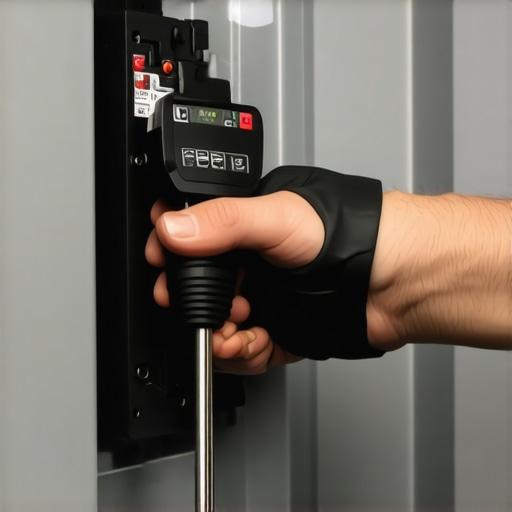
I’ve seen people replace their entire wallbox because it kept “failing,” only to realize the issue was their Wi-Fi signal strength at the garage wall. It’s easy to blame the hardware when you’re troubleshooting ev chargers, but digital gremlins are often the culprit. If your app says the car isn’t charging but the lights on the unit are green, you are likely dealing with troubleshooting ev charger connectivity problems rather than a blown fuse. A simple range extender or switching to a hardwired ethernet connection can save you from a $700 replacement bill. Have you ever fallen into this trap of over-diagnosing a simple fix? Let me know in the comments below. It’s also vital to check code compliance essentials for ev charger installations in 2025 because some jurisdictions now require specific disconnects that, if flipped accidentally, can look like a dead unit. Always look for the simple solution before you start upgrading your panel for better ev charging performance needlessly.
I used to think that because an EV charger doesn’t have moving parts, it was essentially a permanent fixture like a light switch. I was wrong. After eighteen months of daily use, I noticed the handle on my charger felt slightly sticky. When I looked closer, the pins were starting to oxidize. If I hadn’t caught it, that oxidation would have increased resistance, generated heat, and eventually melted the port on my car. You absolutely must learn how to clean the pins on your charging handle safely to avoid a multi-thousand-dollar repair. A little electronic contact cleaner and a lint-free swab every six months can save your vehicle’s charging port from a slow, expensive death.
Stop Guessing and Buy an Infrared Thermometer
The best tool in my garage isn’t a fancy wrench—it’s a $20 infrared thermometer gun. Once a month, while the car is pulling its full load at 2:00 AM, I walk out and aim that laser at the plug and the breaker handle. If you see temperatures climbing above 140°F (60°C), you are looking at a potential fire hazard. This is the most reliable way for how to spot a dangerous heat build-up in your ev charging cable before you smell smoke. If the breaker itself is the hot spot, you might be looking at how to spot a dying breaker before it shuts down your charging session entirely. Heat is the enemy of your home’s electrical health, and being proactive is the only way to stay ahead of it.
How can you keep your charging setup healthy for a decade?
Maintenance isn’t just about cleaning; it’s about software and hardware synergy. I always recommend checking for firmware updates at least once a quarter. Manufacturers frequently release patches that improve thermal management or fix communication bugs with new vehicle software. Knowing how to update your charger software without calling a technician is a basic skill every owner should master. Additionally, according to technical documentation from SAE International, the J1772 standard relies heavily on precise contact resistance. Even a tiny bit of grit from your garage floor can compromise that connection. I also suggest periodically verifying code compliance for your ev charger installation if you live in an area with extreme temperature swings, as wire terminals can loosen over time due to thermal expansion.
Prepare for the Multi-Car Garage Reality
In five years, having just one charger will feel like having just one smartphone for a whole family. If you’re already pushing your electrical limits, it’s time to look into panel upgrade strategies to meet ev charging code requirements in 2025. I’m currently planning a second drop in my own garage, and I’ve realized that upgrading your garage sub-panel for dual charging stations is much smarter than trying to daisy-chain two units off a single circuit. I predict we are heading toward a “Vehicle-to-Home” (V2H) future where your car doesn’t just take power—it gives it back during peak hours or blackouts. To be ready for that, you need a robust panel. Don’t be afraid to look into upgrading your panel for better ev charging performance now to avoid being left behind. If you’ve ever dealt with a mysterious fault code, check out ev charger troubleshooting expert tips for common issues before you call a pro. My challenge to you: Go to your garage tonight while the car is charging and touch the handle—if it’s hot to the touch (not just warm), it’s time to clean those pins.
The Hardest Lessons I Learned About Home Grid Management
Reflecting on my journey from that first shocking bill to a streamlined, efficient setup, a few things stand out. First, I realized that modern electricity isn’t just a utility; it’s a managed resource, and you have to be the manager. I also learned that troubleshooting ev chargers is 90% preparation and 10% reaction. If you build the system right the first time, you won’t be scratching your head in the dark at 2:00 AM. Lastly, don’t ignore the small stuff—like the torque on a breaker or the dust on a pin—because those tiny variables are what lead to major equipment failure down the road.
The Gear That Keeps My Garage Safe
If you want to move from a rookie owner to an EV pro, there are three resources I swear by. First, the NEC (National Electrical Code) Handbook is the ultimate authority for anyone curious about ensuring code compliance when installing EV chargers. Second, I always keep a high-quality infrared thermometer handy to monitor heat; it’s my first line of defense against melting components. Third, your utility company’s mobile app is your best friend for tracking peak hours in real-time. If you’re still feeling overwhelmed by the technical specs of your own home, you can always contact us to walk through your specific layout and needs.
The Road Ahead for Your Home Grid
Switching to electric driving is more than just a change in fuel; it’s a change in how you interact with your home’s infrastructure. It might feel technical or even a bit daunting at first, but once you master your schedule and verify your system’s health, the savings and convenience are unbeatable. Whether you’re looking into panel upgrades for ev chargers or just trying to survive your first month of charging, remember that you are in control of your energy future. Keep your connections tight, your software updated, and your charging sessions off-peak, and you’ll be an expert in no time. Have you noticed any weird noises or heat coming from your panel since you started charging at home? Let me know in the comments below!