I stood in the dim, flickering light of my apartment’s underground garage, holding a Level 1 charging cable like a lost hiker holding a twig in a snowstorm. My neighbor, who had lived there since the late 80s, watched me with a mix of pity and suspicion. I had just bought my dream car, but I was suddenly realizing that my “assigned spot” was effectively a dead zone for electricity. I made the classic mistake of assuming that because there was a lightbulb nearby, there was power for a car. Spoiler alert: there wasn’t. It took me six months and three failed board meetings to realize that shared garages are the final boss of EV ownership.
The Concrete Wall Blocking Your Green Commute
Installing a charger in a private house is usually a straightforward Saturday project. But when you share a roof—and a meter—with fifty other people, things get messy fast. I learned the hard way that the legal way to install a charger in a condo parking lot involves more paperwork than a mortgage application. You aren’t just fighting physics; you’re fighting bylaws, insurance liabilities, and ancient infrastructure that was never meant to handle a sustained 40-amp draw. My first attempt was a total disaster. I tried to convince the board that we could just “tap into” the garage circuit. I quickly learned that ensuring code compliance when installing ev chargers is non-negotiable. My proposed “shortcut” would have likely tripped the lights for the entire building, leaving my neighbors in the dark. According to the National Fire Protection Association (NFPA), improper EV installations in multi-unit dwellings represent a unique fire hazard due to the continuous load on aging wiring, which is exactly why your building manager is so hesitant.
Is the HOA actually trying to ruin your life?
It feels like it, doesn’t it? Every time you bring up panel upgrades for ev chargers, they look at you like you’re asking to install a nuclear reactor in the basement. But here is the truth: they are worried about the “first come, first served” problem. If I take the last 40 amps of available power, what happens when the neighbor in unit 402 buys a Rivian next month? Today, I’m going to show you how to navigate this maze without losing your mind or your security deposit. We’re going to talk about load management, why your building’s transformer is probably sweating, and how to present a plan that the board actually can’t refuse. [image-placeholder] Have you ever been told “no” by your building manager before you even finished your sentence? I want to hear your story in the comments, because you are definitely not alone in this fight.
Get a Load Calculation Before You Buy Anything
Think of your building’s electrical capacity like a shared pizza. There are only so many slices to go around. If the elevators, hallway lights, and HVAC systems are already eating eight of the ten slices, you cannot just shove a high-powered EV charger into the mix. You need a professional to perform a demand load study. I remember sitting in my car with a laptop, looking at the technical specs of my panel and feeling completely overwhelmed until I learned how to read the load calculation your electrician sent you. My own installation hit a wall when I realized my unit’s subpanel exhibited 5 signs your old electrical panel is a charging bottleneck. Without this data, your HOA will default to saying no because they simply do not know if the building’s infrastructure can handle the new load.
Smart Load Management Beats Expensive Infrastructure Upgrades
If the electrical pizza is too small, you do not necessarily have to buy a bigger oven—you just have to share the slices better. This is where Load Management or Circuit Sharing comes in. Instead of a dedicated 50-amp line that sits idle twenty-two hours a day, these systems throttle the charging speed based on how much power the rest of the building is using. It is the primary reason why your commercial garage needs load management software. I once saw a neighbor try to bypass this by installing a dumb charger on a shared circuit; every time the garage door opened, his car stopped charging because the voltage dipped too low. By using a smart system, you can often avoid a massive six-figure transformer upgrade by the utility. 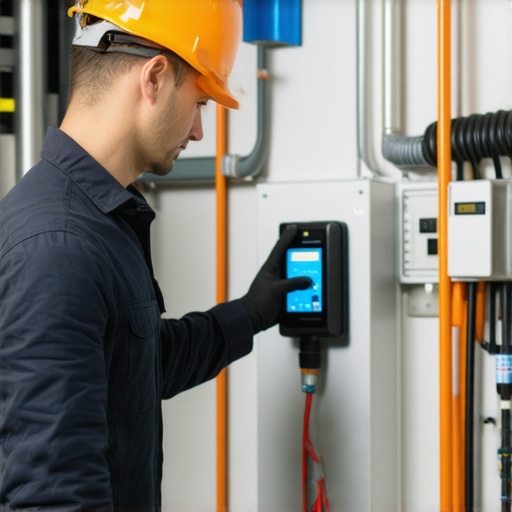
Look for These Warning Signs of a Hack Job
Because condo installs are expensive, you will be tempted to hire the cheapest contractor. Do not do it. I watched a contractor try to run Romex through a damp garage ceiling without conduit, which is a major code violation. You need to know how to verify code compliance for your ev charger installation yourself before you sign off on the job. If you see thin, flimsy cables, you might be looking at 4 signs your electrician used the wrong gauge wire. This is not just about charging speed; it is about heat management. Continuous loads like EV charging generate massive amounts of thermal energy. If the wire is too small, it effectively turns into a heating element inside your walls, which is a significant fire risk.
Future-Proofing Your Service for 2025 Standards
The rules are changing, and what worked in 2020 might not pass a modern inspection. You should specifically look into panel upgrade strategies to meet ev charging code requirements in 2025. In my case, I had to install a separate shut-off switch that was accessible to the fire department—something my first three quotes completely ignored. It cost me an extra few hundred dollars, but it meant my permit was actually signed off on the first try. If you are planning for multiple EVs in the future, consider how to properly size a subpanel for your ev workshop style setup now, rather than paying for labor a second time down the road.
But here is where the ‘experts’ usually steer you wrong: they tell you to max out your amperage every single time. The prevailing wisdom says that if you have a 50-amp circuit, you should be pulling 40 amps. In my experience, especially in aging multi-family buildings, running at the absolute limit is a recipe for premature equipment failure. Most people assume that more speed is better, but stability beats speed every time. I’ve seen more melted lugs and scorched busbars from ‘perfectly legal’ 40-amp draws than I care to count. Often, dialing your charger back to 32 amps provides plenty of overnight range while drastically reducing the heat stress on your building’s infrastructure. Have you ever fallen into this trap? Let me know in the comments, because I suspect many of you are running your systems hotter than you realize.
The Silent Killer of Shared Garage Panels
The biggest ‘oops’ factor I encountered wasn’t even the wiring itself—it was the torque. EV charging isn’t like a toaster; it’s a continuous load that lasts for hours. According to the National Electrical Code (NEC) Section 625.41, EV chargers must be calculated at 125% of the rated load because they are continuous. This constant flow creates a cycle of heating and cooling that causes metal to expand and contract. If your electrician didn’t use a calibrated tool, you’re looking at the forgotten torque test that prevents panel fires. I actually went back and checked my own terminals three months later and found two of them had loosened by almost a full turn. This is why troubleshooting ev chargers common compliance pitfalls and fixes usually starts with a physical inspection of the connections, not the software. 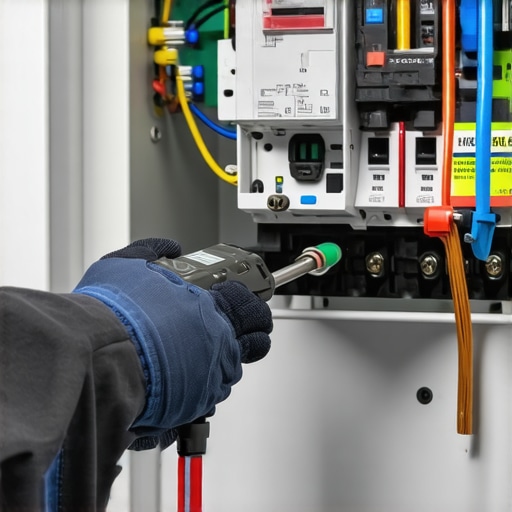
Why does my charger stop working when it gets humid?
If you find your charger tripping the breaker on rainy or humid nights, you aren’t crazy. High humidity increases the conductivity of dust and debris inside your panel, which can trigger sensitive ground-fault sensors. This is one of the 6 ways to stop nuisance tripping during high humidity charging. Most people think their charger is broken, but the reality is often a lack of proper sealing in the conduit or the outdoor pedestal. When you are upgrading your panel for better ev charging performance, ensure your contractor uses NEMA 3R or 4X rated enclosures even for indoor garages if they are prone to dampness. Following code compliance essentials for ev charger installations in 2025 means looking beyond the wire gauge and focusing on the environmental seals that protect your investment from the elements.
I remember the first time I saw a thermal image of a “snug” terminal lug—it looked like a miniature supernova. I personally don’t step foot in my garage for a maintenance check without a calibrated digital torque wrench. Most people think ‘hand tight’ is good enough for a residential circuit, but EV charging isn’t a toaster—it’s a marathon for your copper. I follow the specific torque wrench settings for a wall connector every single time I open the housing. Even a quarter-turn of looseness creates micro-arcing, which creates resistance, and resistance creates heat. As the experts at Fluke emphasize in their thermal imaging training, high-resistance connections are the leading cause of electrical component failure in continuous-load systems. If you see any slight discoloration on your wire insulation, or if it smells like ozone, you’re already behind the curve. This is why troubleshooting ev chargers common compliance pitfalls and fixes almost always starts with a physical torque check before we even look at the software logs.
How do I maintain my home charging station over time?
It’s not a ‘set it and forget it’ appliance. Every six months, I do a physical ‘walk-around.’ I check the handle for ‘stickiness’ and ensure the pins are clear of debris. Knowing how to clean your charger ports without damaging them is a skill that will save you a $500 out-of-warranty replacement fee later. I use compressed air and a specialized electronic cleaner—never a metal screwdriver. If the software starts acting up, don’t panic. Most troubleshooting ev charger connectivity problems can be traced back to signal interference in the garage’s concrete shell rather than a hardware failure. 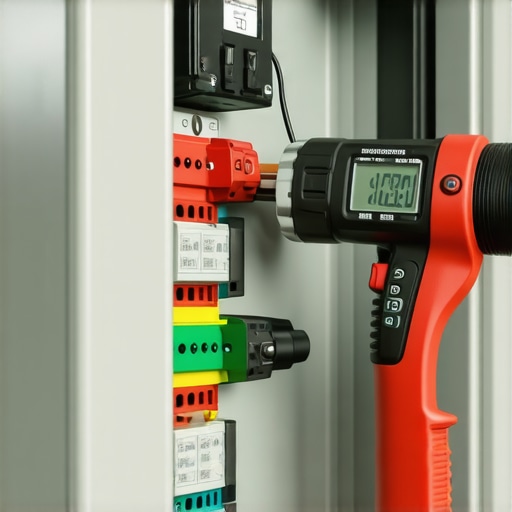
The Future Is Two-Way Traffic for Your Electricity
The tech is moving so fast that what we consider a “smart charger” today will be a “dumb brick” by 2027. The biggest shift I see coming by 2025 isn’t just faster charging—it’s Bi-Directional charging (V2H). Your car is essentially a massive rolling power bank, and soon, it will be powering your fridge during a blackout. To get ready, you need to be looking at panel upgrade strategies to meet ev charging code requirements in 2025 now. If you’re just upgrading your panel for better ev charging performance today, ask your electrician about ‘Islanding’ switches. This allows you to learn how to use your ev as a backup home battery safely without backfeeding the grid and endangering utility workers. If you’re still seeing errors, don’t skip the basics; ev charger troubleshooting expert tips for common issues often point toward simple firmware mismatches. My advanced tip for you this week: grab a non-contact infrared thermometer and scan your breaker while the car has been charging for at least an hour. If it’s hitting above 140°F, you need to call a pro to check those connections before something melts.
The Brutal Truths Only Six Months of Garage Drama Can Teach
Looking back at my first failed board meeting, I wish I knew that your HOA isn’t necessarily against EVs; they are often just terrified of what they don’t understand. If you walk in with a clear, professional plan for ensuring code compliance when installing ev chargers, you change the conversation from a ‘maybe’ to a ‘how.’ I also learned that ‘good enough’ wiring is the leading cause of late-night anxiety. If you ever feel like the garage panel is struggling, don’t wait for a failure; check for 3 small mistakes that turn your garage panel into a fire hazard before they become dangerous. Thermal stress is the silent enemy of the shared garage—tight connections and proper venting are your best defenses. Another lightbulb moment was realizing that torque is everything. Following the specific torque wrench settings for a wall connector isn’t just a suggestion; it is a safety requirement for anyone who wants a reliable daily charge. Finally, keep in mind that most glitches aren’t fatal. Knowing a few ev charger troubleshooting expert tips for common issues can keep you from being stranded while you wait for a technician.
My Personal Survival Kit for a High-Voltage Life
I don’t recommend tools unless I’ve seen them save a project. First, a reliable digital torque wrench is non-negotiable for biannual maintenance checks. Second, stay informed on the evolving legal landscape; knowing how to verify code compliance for your ev charger installation gives you the authority to speak with building managers as an equal. For persistent Wi-Fi drops, which happen constantly in concrete bunkers, I rely on troubleshooting ev charger connectivity problems guides to bridge the gap with powerline adapters or mesh nodes. If you hit a wall that feels too high to climb, you can always contact us for a second opinion on your building’s electrical capacity.
Your Path Toward a Hassle-Free Garage Setup
Transitioning to an EV in a condo or apartment complex can feel like a lonely battle, but you are paving the way for everyone else in your building. By focusing on safety and upgrading your panel for better ev charging performance now, you ensure that your setup is ready for the higher demands of future vehicle models. Stay patient with your neighbors, stay strict with your safety standards, and enjoy the convenience of waking up to a full battery every morning. You’ve now got the baseline knowledge to manage ev charger troubleshooting and code compliance like a seasoned pro. Have you ever had to convince a skeptical HOA board to let you install a charger? Let me know your best negotiation tips in the comments below!