I remember standing in a slushy parking lot back in 2022, looking at a row of brand-new charging pedestals that had been installed just four months prior. The business owner was furious. Every single unit was dead, and one was leaning at a fifteen-degree angle like a miniature Leaning Tower of Pisa. It was a classic case of ‘first winter syndrome.’ I’ve seen this happen more times than I care to count, and it usually stems from a few avoidable mistakes made during the initial setup. Today, I’m going to walk you through exactly why these expensive pedestals give up the ghost when the temperature drops and what you can do to make sure yours stays online through the spring thaw.
Why Frozen Ground is Your Chargers Worst Enemy
When you are installing a charger on a pedestal instead of a wall, you are essentially fighting a war against the earth itself. The biggest mistake I made early in my career was underestimating frost heave. If the concrete base isn’t deep enough, the ground freezes, expands, and literally tries to eject your charger from the soil. This movement doesn’t just tilt the unit; it often snaps the rigid conduit buried beneath it. Once that conduit breaks, moisture finds its way in, and that is game over for your electronics. You have to respect the specific depth requirements for underground EV wiring if you want to avoid a total system failure. According to the American Society of Civil Engineers, frost heave can exert upward pressure of up to 40,000 pounds per square foot, which is more than enough to crush or snap standard electrical fittings.
Is winterized equipment actually worth the extra cost?
Many of my clients wonder if they really need to spend the extra money on specialized protection or if a standard setup will do. In my experience, cutting corners here is the fastest way to double your long-term costs. I once tried to save a client a few hundred dollars by using a standard plastic enclosure instead of a reinforced weather-rated one, and by January, the seals had cracked from the extreme cold-contract cycle. This is why outdoor charging stations need more than just a plastic cover to survive. Between the salt spray from snowplows and the relentless moisture, your pedestal needs a robust defense strategy. Have you ever noticed your commercial chargers going offline right after the first big blizzard of the year? Tell me about your experience in the comments or reach out—I’d love to hear what happened. Beyond the physical structure, you have to look at the internals, specifically how 3 maintenance tasks that keep your outdoor charger running through winter can prevent the dreaded ‘communication error’ that leaves drivers stranded. It’s not just about the hardware; it’s about the connection too, which is why your commercial charger needs a cellular connection that won’t drop out when the local Wi-Fi router gets buried in snow.
Dig Deep or Prepare to Rebuild
I once spent six hours hand-digging a footing in northern Vermont for a single Level 2 unit. The client thought I was being obsessive for going forty-eight inches down, but two years later, his was the only charger in the entire office park that wasn’t leaning at a weird angle. When the ground freezes, it acts like a slow-motion hydraulic press. If your base isn’t anchored well below the frost line, the soil will eventually spit that pedestal right back out. You must follow the specific depth requirements for underground EV wiring to ensure the stability of the entire system. Think of the concrete base as the anchor for a ship; if it’s too light or too shallow, the first storm is going to move it.
Why the Frost Line is Non-Negotiable
Most local codes will specify a depth, but I always go an extra six inches. This creates a buffer zone. In that Vermont job, we hit a layer of shale that made the digging a nightmare, but skipping that depth would have led to the conduit shearing off as the earth shifted. When the ground moves and the pedestal stays still (or vice versa), the electrical connections inside the base get pulled like a game of tug-of-war. Eventually, something snaps. 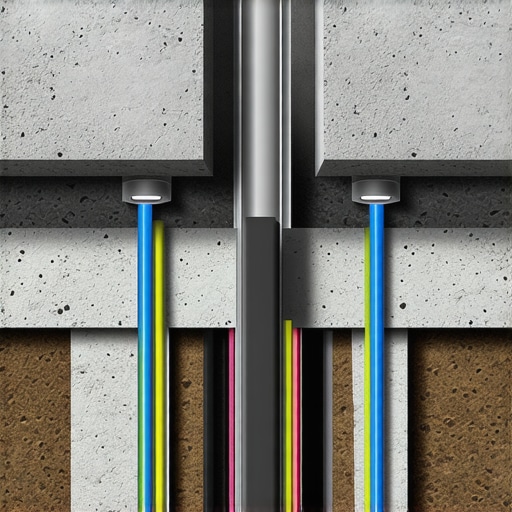
Seal Your Conduits Like a Deep-Sea Vessel
Moisture is a silent killer in winter. Cold air on the outside of the pedestal meets the warm air generated by the charging electronics on the inside, creating condensation. If you don’t seal the entry points, that water drips directly onto your terminal blocks. I always use a high-quality duct seal or a specialized expansion foam inside the conduit where it enters the pedestal body. This creates an airtight barrier. Without it, you are basically inviting a short circuit. This is a critical part of ensuring code compliance when installing EV chargers, as many inspectors are now looking specifically for moisture mitigation in outdoor setups.
Don’t Let Thermal Expansion Snap Your Wires
Materials expand and contract at different rates. Metal pedestals and the wires inside them are constantly ‘breathing’ as temperatures fluctuate. This is where the difference between copper and aluminum for EV wiring becomes vital. Copper is more resilient to these cycles, but regardless of the material, your connections must be tight. I’ve seen terminal screws back themselves out over a single winter just from the vibration of temperature shifts. You must use a torque wrench and adhere to the specific torque settings that prevent panel fires during high load charging. A loose wire is a hot wire, and in the middle of a blizzard, a hot wire is a fire hazard.
Grounding and Connectivity in the Snow
If your charger starts acting up after a heavy snow, it’s often because of a ground fault. Melting snow can carry road salt into the base of the pedestal, which increases conductivity and can trick the sensors. This is why your EV charger trips the gfci even when not in use during the winter months. Ensuring you how to ground your ev charger according to the latest standards is the only way to prevent these phantom trips. Finally, don’t forget the data. If your unit relies on a signal to start a session, cold air and thick snow can degrade Wi-Fi signals significantly. This often leads to troubleshooting ev charger connectivity problems that could have been avoided by using a hardwired ethernet line or a dedicated cellular link.
While the physical stability of your pedestal is crucial, I’ve found that the real ‘ghosts in the machine’ usually haunt the electrical panel inside your building. Most people assume that if the charger turns on, the job is done. But there is a massive difference between a charger that functions and one that is truly optimized for long-term survival. I see it all the time: a DIYer or even a general electrician installs a high-power unit, only for the homeowner to realize later that why a 100 amp service isnt always enough for two evs when the dryer and AC are running simultaneously. If you aren’t looking at the whole-house load, you’re just waiting for a midnight blackout.
Stop Assuming You Need a Massive Service Upgrade
Here is a contrarian take that might save you thousands: you don’t always need to rip out your entire electrical service to add an EV charger. The common myth is that more power always requires a bigger pipe from the utility. In my experience, how to load balance your home electrical system without a full panel swap is often a much more elegant (and legal) solution. By using smart energy management systems (EMS), you can prioritize your home’s essentials while the charger ‘sips’ whatever is left over. This is one of the most effective panel upgrade strategies to meet ev charging code requirements in 2025 without the headache of utility permits and months of waiting. Have you ever fallen into the trap of thinking a service upgrade was your only option? Let me know in the comments.
Can you safely run two chargers on a single 100-amp panel?
The short answer is yes, but the nuance lies in ‘managed charging.’ If you simply double up on breakers, you’re violating the National Electrical Code (NEC) Section 220. According to a study by the National Fire Protection Association (NFPA), nearly 15% of electrical fires in residential settings involve some form of circuit overload or improper installation. This is why upgrading your panel for better ev charging performance is about intelligence, not just raw capacity. You have to understand the real reason your circuit breaker trips at 90 percent charge—it’s often not a short circuit, but thermal cumulative stress on the busbar because someone forgot the ‘continuous load’ rule.
Why the 80 Percent Rule Still Catches Pros Off Guard
The biggest ‘oops’ factor I encounter in ev charger troubleshooting expert tips for common issues is the failure to derate. Because an EV pulls full power for hours, it’s a continuous load. Your 50-amp breaker is only legally and safely rated to carry 40 amps for that duration. Pushing it to 48 or 50 amps for eight hours straight is how you melt terminal blocks. This is a core part of code compliance essentials for ev charger installations in 2025. I once walked into a garage where the owner was proud of his ‘fast’ charger, only to find the breaker was so hot it had discolored the plastic of the panel. Knowing how to verify code compliance for your ev charger installation isn’t just about passing an inspection; it’s about making sure your house is still standing in five years. If you’re seeing weird behavior, check out troubleshooting ev chargers common compliance pitfalls and fixes before you call for a full-scale rebuild.
I’ve learned the hard way that a professional install isn’t truly finished once the permit is signed. To keep a system running for a decade rather than just a few seasons, you need to transition from ‘installer mode’ to ‘maintenance mode.’ One tool I never step onto a job site without is my Wera 7441 torque screwdriver. It might seem like overkill to some, but when you are dealing with high-amperage continuous loads, ‘snug’ isn’t a measurement. The International Association of Electrical Inspectors (IAEI) has frequently noted in their technical literature that over 70% of electrical failures in high-load circuits are the direct result of improper torque at the connection points. This is why adhering to the specific torque settings that prevent panel fires during high load charging is my number one rule for long-term safety.
Spot Hidden Heat Before It Melts Your Main Breaker
Every six months, I recommend doing a thermal sweep of your electrical panel while the car is actively charging. I use a FLIR thermal camera to look for ‘hot spots’ that the naked eye would never catch. If a breaker is glowing bright white on the screen compared to the others, you are looking at a looming failure. This is the most reliable way to how to spot a dying breaker before it shuts down your charging session or worse, causes a fire. In the world of high-voltage equipment, heat is the ultimate snitch; it tells you exactly where the resistance is building up before the smoke starts. If you see a rise in temperature, it’s time to check for ev charger troubleshooting expert tips for common issues like loose lugs or oxidizing copper.
How do I keep my charging station running for a decade?
Consistency is more important than intensity when it comes to maintenance. For my commercial clients, I set up a quarterly schedule that mirrors the maintenance guide for commercial fleet charging stations, even for residential setups. This includes checking the seals on the pedestal base, clearing any debris from the cooling vents, and performing 3 maintenance tasks that keep your outdoor charger running through winter like inspecting the cable jacket for cracks. I also make it a point to how to clean the pins on your charging handle safely using a quick-dry electronic contact cleaner. Dust and grit inside that handle act like sandpaper every time you plug in, eventually wearing down the conductive plating and increasing resistance.
The Future of Home Energy Management is Bi-Directional
Looking ahead, the trend is moving rapidly away from simple ‘dumb’ chargers toward fully integrated home energy ecosystems. We are seeing a massive shift toward bi-directional charging (V2H), where your car acts as a backup battery for your house during a blackout. This shift will make upgrading your panel for better ev charging performance even more critical, as your panel will need to handle power flowing in both directions. If you want to stay ahead of the curve, I suggest you how to verify code compliance for your ev charger installation today, so you aren’t stuck with an obsolete setup when V2H becomes the standard next year. I highly recommend buying a basic infrared thermometer today and checking your breaker temps during your next long charging session—it’s the easiest way to sleep better at night knowing your house isn’t under undue stress.
What Nobody Tells You About Year-Five Maintenance
After a decade in the field, I have realized that the most successful installations aren’t the ones that look the flashiest on day one—they are the ones that are still pulling full power five years later. My first big ‘lightbulb moment’ was realizing that electrical connections are dynamic. They aren’t static; they heat up and cool down, causing them to loosen over time. If you don’t revisit those lugs, you are asking for trouble. Secondly, moisture doesn’t just come from rain; it comes from the air itself inside your pedestal. If you don’t have proper ventilation and sealing, you’re building a miniature greenhouse for corrosion. Lastly, I’ve learned that ev charger troubleshooting expert tips for common issues often boil down to one thing: thermal management. If it gets too hot, it will fail, every single time.
The Kit I Use to Ensure My Installs Stay Online
To do this right, you need more than just a standard toolbox. I personally trust the Wera 7441 Torque Screwdriver because it eliminates the guesswork and ensures you hit the specific torque settings that prevent panel fires during high load charging with surgical precision. For diagnostic work, the FLIR C5 Thermal Camera is non-negotiable; it lets me see a failing breaker before it even trips. I also keep a copy of the NEC 2023 Handbook in my truck—specifically Article 625—because staying ahead of code is better than falling behind on an inspection. Finally, a high-quality electronic contact cleaner is my secret weapon for keeping those charging pins free of the grit that causes resistance and heat.
Your Future in the Electric Revolution
Installing an EV charger is more than just a home improvement project; it is your first step into a cleaner, more efficient energy future. By focusing on quality today, you are avoiding the headaches of tomorrow. Whether you are upgrading your panel for better ev charging performance or simply setting up your first pedestal, remember that safety and stability are the foundations of a great experience. If you’re ever in doubt, I recommend looking at how to verify code compliance for your ev charger installation to make sure your setup is truly built to last. Have you ever found a loose wire or a hot breaker that was causing your charger to act up? Let me know in the comments below!