I stood in my driveway last summer, sweat dripping into my eyes, holding a heavy Level 2 charging station against the brick wall. It was the “perfect” spot—sandwiched neatly between the garage door and the gas meter. I was focused on short wire runs and keeping the project cheap, feeling pretty proud of myself for [upgrading my panel for better performance](https://brightsparkzelectric.com/upgrading-your-panel-for-better-ev-charging-performance) earlier that week. Just as I was about to sink the first screw, my neighbor Greg, a retired fire marshal, yelled over the fence, “Hey, you might want to rethink that unless you want a front-row seat to an explosion!” I froze. I realized right then that I was making one of the [most common DIY mistakes](https://brightsparkzelectric.com/the-most-common-diy-mistakes-in-home-charger-installations) in the book. I had plenty of technical knowledge about amps and volts, but I had completely overlooked the physical safety distance required between high-voltage equipment and gas infrastructure. Today, I’m going to save you the embarrassment (and the potential danger) I faced by walking you through the exact clearance rules you need to follow to keep your home safe and [pass your electrical inspection](https://brightsparkzelectric.com/how-to-pass-your-electrical-inspection-on-the-first-visit) without breaking a sweat. Have you ever actually measured the gap between your utility meters and your charging setup?
Don’t Let Your New Charger Become a Safety Hazard
The reality is that electricity and gas are like that one couple that should never be in the same room together—they just create unnecessary drama. When you are [ensuring code compliance when installing ev chargers](https://brightsparkzelectric.com/ensuring-code-compliance-when-installing-ev-chargers), that distance isn’t just a suggestion; it is a life-saving buffer. Most utility companies and the National Fire Protection Association (NFPA) specify a three-foot radial clearance from gas meters and regulators. Why? Because gas regulators are designed to vent small amounts of gas if pressure builds up. If your charger—a known ignition source—is sitting right there when a vent happens, the results can be catastrophic. According to the National Fire Protection Association (NFPA 54), the point of discharge of a vent shall be located not less than 3 feet from any source of ignition. This includes your charger, your disconnect switch, and even your junction boxes.
Is this spacing rule actually enforced by inspectors?
You bet it is. I once watched a friend lose three weeks of charging time because he had to relocate his entire circuit after failing a final walkthrough for a [working space violation](https://brightsparkzelectric.com/the-working-space-violation-that-fails-more-ev-panel-inspections-than-anything-else). It is not just about the fear of a fire; it is about accessibility. Technicians need to be able to service that gas meter without bumping into your charging cable or getting shocked. Even if you’ve mastered [how to find the best spot in your garage](https://brightsparkzelectric.com/how-to-find-the-best-spot-in-your-garage-for-a-level-2-install), if that spot is too close to the gas line, the city will make you tear it all out. Don’t risk the time or the money on a setup that isn’t legal.
Measure Twice to Avoid Moving It Once
After Greg’s warning, I didn’t just nudge the charger over an inch; I grabbed a tape measure and a piece of chalk to physically mark the ‘no-fly zone’ on my brick. To do this right, you need to treat the gas meter like a live wire. Start at the center of the meter and the regulator vent, then swing your tape measure in a three-foot arc. If any part of your charging equipment—the unit itself, the disconnect, or the conduit—falls inside that circle, you are in the red. I remember a specific job where a client wanted their charger tucked behind a bush, right next to the gas shut-off. I told them we could do it, but they’d be calling me back in two weeks to move it after failing the walkthrough. Sure enough, we followed the steps for how to verify code compliance for your ev charger installation and realized the regulator vent was pointed right at the proposed mounting bracket. We moved it four feet to the left, and the inspector didn’t even blink. 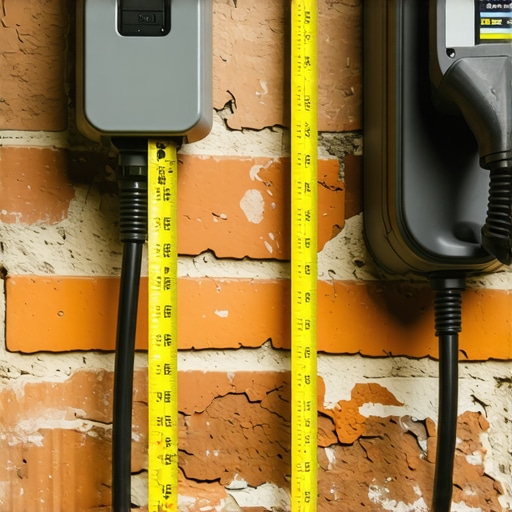
How to Check Your Spare Capacity Without a Pro
Once you’ve cleared the gas meter, you have to look inside the gray box. Your electrical panel is a budget, and your EV charger is a massive new recurring expense. You need to know the specific panel space requirements for a level 2 install before you buy any hardware. I once tried to help a neighbor who had a 100-amp service and wanted to add a 48-amp charger on top of his electric range, dryer, and AC. We sat at his kitchen table and did a load calculation. We realized that if he did a load of laundry while the car was charging, the main breaker would pop. Instead of a $2,000 service upgrade, we looked into how to load balance your home electrical system without a full panel swap. Using a smart energy management system allowed his charger to throttle down when the dryer was humming, keeping him within code without the massive bill.
Don’t Settle for the Wrong Wire Gauge
The physical wire you pull through that conduit is the literal lifeline of your system. Heat is the enemy here. Since an EV charger pulls a continuous high load for hours, the wires get much hotter than they would for a toaster or a vacuum. You must use the exact gauge of wire you need for a 60-amp circuit to ensure you don’t experience a voltage drop or, worse, a fire. I always recommend copper for residential chargers. While aluminum is cheaper, it expands and contracts more than copper under load. I’ve seen far too many DIYers ignore the difference between copper and aluminum wiring for high-load circuits, only to find charred insulation six months later. If you’re running a 48-amp charger on a 60-amp breaker, #6 AWG copper is your best friend.
The Grounding Rule You Can’t Ignore
Finally, let’s talk about the ground. An EV charger isn’t just another appliance; it is a sensitive computer. If your grounding isn’t perfect, you’ll end up with ‘nuisance tripping’ or a fried circuit board. I’ve seen 3 grounding errors that kill ev charger motherboards before they are a year old, and most of them start with loose connections at the ground bar. Ensure your ground wire is sized correctly and bonded tightly. If your charger keeps losing its ‘ready’ light, checking the integrity of your ground is the first step in ev charger troubleshooting expert tips for common issues.Most ‘experts’ will tell you that a 200-amp service is the absolute baseline for modern living, but I’m here to tell you they are often wrong. I have seen homeowners talked into $4,000 upgrades they didn’t actually need because they weren’t aware of modern load-sharing technology. If you learn how to load balance your home electrical system without a full panel swap, you can frequently run a high-speed Level 2 charger on a modest 100-amp service without ever blowing a fuse. The industry secret is that your home rarely hits its theoretical maximum load. Before you commit to upgrading your panel for better ev charging performance, you should use a data logger to see your actual peak demand. You might find that you can simply learn how to calculate if your 100-amp service can handle a daily commute and save yourself thousands in infrastructure costs.
Hardwiring is Almost Always Better Than a NEMA Plug
There is a common myth that a NEMA 14-50 outlet is ‘future-proof’ because you can unplug your charger and take it with you. In reality, these outlets are becoming a major headache for ensuring code compliance when installing ev chargers. Under the latest National Electrical Code (NEC) Section 210.8(A) updates, any garage outlet used for EV charging requires GFCI protection at the breaker. Since almost all Level 2 chargers have their own internal GFCI, you end up with two ‘brains’ trying to monitor the same circuit. They often conflict, causing the charger to shut down for no apparent reason. This is a primary reason for the benefit of a hardwired charger over a nema plug; it bypasses the need for an external GFCI breaker, resulting in a much more stable connection. 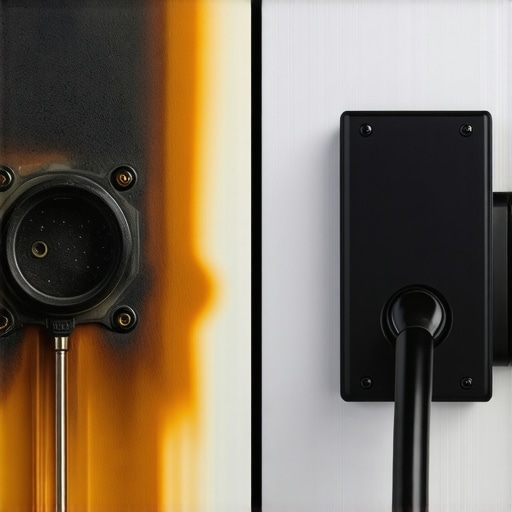
Why does my breaker trip at 3 AM when the car is almost full?
This ‘ghost trip’ usually happens because of heat-soak or a loose connection that has finally reached its breaking point. If your equipment is older, you might be using the specific breaker brand that keeps tripping on level 2 chargers due to thermal fatigue. EV charging is a continuous load, meaning it draws max power for hours on end, which is very different from an oven or a dryer. This constant heat can reveal the hidden danger of loose neutral wires in your electrical panel that stayed hidden for years. Even a slightly loose lug can create enough resistance to trip a high-sensitivity breaker. I have personally investigated 3 grounding errors that kill ev charger motherboards before they are a year old, and they almost always start with a DIYer who didn’t use a calibrated torque wrench on the terminals. Have you ever fallen into the trap of thinking a plug was ‘safer’ than a hardwired connection? Let me know in the comments.
Keep Your Investment from Cooking Your Main Panel
Many homeowners think that once the inspector signs off, the job is done forever. But I treat my EV charger like my HVAC system—it needs a check-up. The most valuable tool I own isn’t a fancy multimeter; it’s a compact thermal camera that plugs into my phone. Every six months, while the car is pulling its full 48 amps, I take a quick peek at the breaker and the charging handle. If you see a bright purple or white glow on the screen where the wire hits the lug, you have a problem. Learning how to spot a dangerous heat build-up in your ev charging cable early can save you from a melted port or a midnight house fire. Heat is a silent killer in high-amperage circuits, and catching a loose connection before it arcs is the difference between a five-minute tightening job and a $3,000 panel replacement.
How do I maintain my home charging setup over time?
Maintenance isn’t just about the wires; it’s about the physical connections you touch every day. I make it a habit to inspect the pins inside the J1772 or NACS handle. Dust, pet hair, and even small spiders love to nestle in there, which increases resistance and creates heat. You can follow the guide on how to clean the pins on your charging handle safely using compressed air or electronic cleaner, but never stick a metal screwdriver in there. Also, don’t ignore the software. Most modern units like the Wallbox or ChargePoint are essentially computers on your wall. If your app feels sluggish, you should learn how to update your charger software without calling a technician to ensure you have the latest safety patches and load-balancing algorithms. 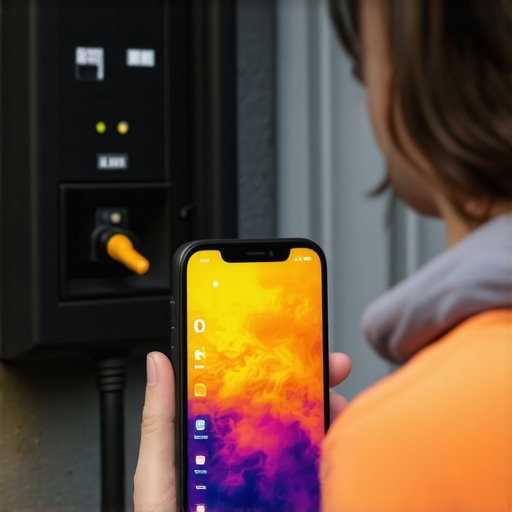
Scale Your System Without Tearing Down the Walls
Looking ahead, the trend is moving toward ‘Bi-directional’ charging. Your car is essentially a massive battery on wheels, and soon, you’ll likely want to use it to power your home during a blackout. This is why I always tell people to leave physical space in their panel during upgrading your panel for better ev charging performance. If you’re maxed out now, you’ll be stuck later. According to the Electric Power Research Institute (EPRI), smart managed charging will be the standard by 2030, allowing homes to shift loads automatically based on grid demand. If you’re already seeing issues, don’t wait for a total failure. Check out ev charger troubleshooting expert tips for common issues before you call an emergency electrician. If your app keeps dropping, it might just be a signal issue; the reason your smart charger app keeps losing connection is often as simple as a poorly placed Wi-Fi extender or a metal garage door blocking the signal. I challenge you this weekend to grab a flashlight and just listen to your panel while the car is charging. If you hear a faint buzzing or ‘sizzling’ sound, that is your early warning sign to tighten those lugs or call a pro at our contact us page before a nuisance trip becomes a permanent outage. Knowing troubleshooting ev chargers common compliance pitfalls and fixes now will keep you ahead of the curve as home energy tech evolves.
The Lessons Only an Overheated Panel Can Teach You
After years of tinkering and testing, I’ve realized that the best setup isn’t the one that looks the prettiest—it’s the one that stays cool under pressure. The most valuable insight I can share is that your electrical system is a living thing. If you ignore 3 scary noises your electrical panel makes when charging an ev, you’re essentially ignoring a cry for help. I used to think ‘tight’ was ‘tight enough’ until I saw a melted lug firsthand. Now, I never close a panel without checking for 3 common wire sizing errors that melt breakers during long charging sessions. It’s those small details, like using a calibrated torque wrench, that separate a weekend DIY project from a professional-grade installation.
Another lightbulb moment for me was realizing that code compliance isn’t just about passing an inspection; it’s about future-proofing. When I look at panel upgrade strategies to meet ev charging code requirements in 2025, I see a roadmap for a home that can handle whatever technology comes next. Don’t view these rules as red tape; view them as the blueprint for your family’s safety.
The Small Tools That Save Big Money
You don’t need a massive workshop to maintain a safe charging environment, but there are a few items I never go without. First, an infrared thermometer is non-negotiable for spotting heat buildup before it causes damage. Second, keep your smartphone handy to stay on top of troubleshooting ev charger connectivity problems; often, a simple firmware update solves more issues than a screwdriver ever could. Finally, I always keep a digital copy of my installation permit and photos of the open panel—these are worth their weight in gold if you ever decide to sell your home or need to file a warranty claim.
#IMAGE_PLACEHOLDER_E#
Start Your Electric Journey with Confidence
Stepping into the world of home EV charging can feel like learning a new language, but you’ve already done the hard part by doing your research. Whether you are currently upgrading your panel for better ev charging performance or just planning your first circuit, remember that you are part of a massive shift toward cleaner, more efficient energy. Safety and compliance might seem technical, but at their core, they are about peace of mind. If you ever run into a snag you can’t solve, don’t hesitate to reach out to a professional through our contact us page. We’re all learning together in this new electric frontier.
What is the biggest challenge you’ve faced while trying to get your home ready for an EV? Let me know in the comments below!