I remember standing in my cold garage at 2:00 AM, shivering in my pajamas, staring at a completely dark dashboard. My wife’s car was at 12% battery, mine was at 15%, and the main breaker had tripped hours ago. We had just bought our second electric vehicle, and in my infinite wisdom, I assumed I could simply plug both into a cheap adapter on our single 50-amp circuit. I was wrong. The sudden pop of that breaker was a loud, expensive-sounding wake-up call. If you are currently trying to figure out how to keep two hungry electric cars fed without spending thousands of dollars on utility upgrades, I have some great news for you. You absolutely do not need to tear up your walls or spend a fortune to make this work safely. Today, I am going to share exactly how you can share a single circuit between two vehicles without ever hearing that dreaded ‘click’ of a failing breaker again. We will look at smart hardware, load sharing, and the simple mistakes that almost caused me a major electrical emergency.
Why This Single-Circuit Battle Matters Right Now
When we added a second EV to our household, my first instinct was to call an electrician for a second dedicated line. The quote I got back was staggering. Between the labor, the permit fees, and the inevitable service panel upgrade, I was looking at nearly $3,000. For many homeowners, the real cost of upgrading to a 200-amp service is simply too high, or their local grid connection cannot handle the extra load. This is why mastering the art of circuit sharing is a game-changer. By utilizing intelligent power management, you can keep both vehicles topped off overnight using the exact same wiring you already have in your garage. It is not just about saving money on copper wire; it is about preserving your home’s electrical capacity. Many older homes struggle to support modern appliances alongside car chargers. Knowing how to efficiently split your power keeps your system running cool and prevents you from experiencing those frustrating signs your main breaker is overwhelmed by a new level-2 charger.
Is Sharing One Circuit Actually Safe for My Home?
It is completely natural to feel skeptical. We are taught that heavy-duty appliances need dedicated lines, and National Electrical Code (NEC) guidelines generally agree. However, modern technology has officially caught up to our multi-EV realities. According to the National Fire Protection Association (NFPA), home electrical fires peak during winter months due to heating and heavy appliance loads, making smart load management crucial for safety. By using certified, smart-sharing systems, your chargers communicate with each other in real-time, dynamically adjusting the amperage so they never exceed 80% of your circuit’s continuous rating. Early in my journey, I made the classic mistake of using a basic ‘Y-splitter’ cable I bought online. It had no smart communications, and it eventually melted the receptacle. That was a terrifying lesson in why we must use approved methods. Have you ever gone out to your garage in the morning only to find that your cars did not charge because a breaker tripped overnight? Let me know in the comments below, because today we are going to make sure that never happens to you again. Let us dive into the actual options that keep your home safe and your batteries full.
How Smart Sharing Splits the Electrical Pie
Think of your home’s electrical panel as a water main and your EV chargers as two massive fire hoses. If you open both valves fully at the same time, you drop the pressure across the entire house and blow the safety valve. In electrical terms, you trip the main breaker. To prevent this, we use dynamic load balancing. This technology acts like an intelligent, automated valve that senses the total flow of electricity. Instead of trying to pull 40 amps of current for each car simultaneously on a circuit only rated for a continuous 40-amp load, the two chargers talk to each other. They split the available power down the middle, giving 20 amps to each car. Once one car finishes its cycle, the system automatically routes the full 40 amps to the remaining vehicle. When I first tried configuring this, I spent two hours in a drafty garage, deeply confused about why my master unit refused to recognize the secondary unit. I eventually realized that modern smart systems are highly sensitive to signal interference, and a quick lookup on troubleshooting EV charger connectivity problems helped me reroute my communication cables away from high-voltage lines, instantly establishing a clean link.
Step One: Choose the Right Hardware Architecture
You cannot achieve safe, code-compliant load sharing with simple splitters or cheap knockoff adapters. You have two real paths. The first is installing two smart chargers from the same manufacturer that support wireless or wired power-sharing protocols. These units continuously communicate to negotiate the power limit. The second path is utilizing physical how load management modules prevent expensive panel upgrades by monitoring your main electrical panel dynamically and adjusting the charger output based on what other appliances, like your dryer or HVAC, are running at that exact second.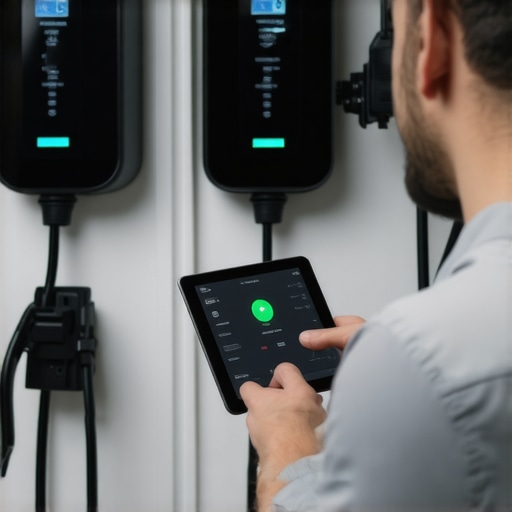
Step Two: Configure the Master and Slave Settings Correctly
Once your hardware is mounted, you must configure the software limits. One charger must be designated as the primary leader and the other as the follower. During my setup, I made the mistake of setting both to ‘independent’ auto-detect. The result? They both tried to pull maximum current at midnight, creating a thermal spike that made my main panel uncomfortably warm. If you ever experience this, you should immediately check why your main electrical panel feels hot when the car is plugged in to prevent melting your insulation. Always hard-cap the total combined output in the master charger’s commissioning app to exactly 80% of the breaker rating. For a 50-amp breaker, this means your combined limit must be set to precisely 40 amps.
Step Three: Verify Code Compliance Before Wrapping Up
Do not skip the legalities. Every jurisdiction has specific requirements for continuous load management. If an inspector walks into your garage and sees two active Level 2 ports on a single run without an approved energy management system, you will fail your inspection on the spot. Make sure your system carries UL certification for active load management. Taking the time to understand code compliance essentials for EV charger installations in 2025 ensures that your home remains fully covered by your homeowner’s insurance policy if any electrical issues ever arise down the line.
The Myth of the ‘Equal Split’ in Dual Charging
Many electrical handbooks and internet forums will tell you that the cleanest way to share a circuit is to split the amperage exactly down the middle. They suggest that on a 50-amp circuit, limiting both cars to 20 amps continuous is the ultimate set-it-and-forget-it solution. But in my experience, this static equal split is actually a terrible waste of your charging window. Cars rarely arrive home with identical state-of-charge levels. If your commuter car only needs a 10% top-off while your road-trip SUV sits at 5%, a flat 50/50 split forces the depleted SUV to trickle-charge at half-speed long after the commuter car is completely full. Modern energy management is about dynamic allocation, not lazy division. By letting the chargers actively negotiate, you maximize overnight recovery and avoid the classic the voltage drop secret that is ruining your morning charge.
Why Does My Smart Charger Refuse to Share Power Safely?
The most frustrating trap for homeowners trying to coordinate two chargers is wireless signal attenuation. Most manufacturers rely on local Wi-Fi or Bluetooth peer-to-peer signals for their load-management communication. The moment you close your heavy metal garage door or park a massive battery pack directly between the two units, that wireless signal drops. When the connection drops, many chargers default to their failsafe mode, which either completely stops charging one vehicle or drops both to a sluggish 6 amps. If you find yourself constantly resetting your system, you are likely suffering from troubleshooting EV charger connectivity problems rather than a hardware failure. A study by the Electric Power Research Institute (EPRI) highlights that physical infrastructure interference is the leading cause of residential smart-charging communication dropouts. The pro tip here? Skip the wireless convenience and run a physical, shielded RS-485 data cable between the two units if your manufacturer supports it. It is the only way to guarantee they will talk to each other when the garage gets crowded.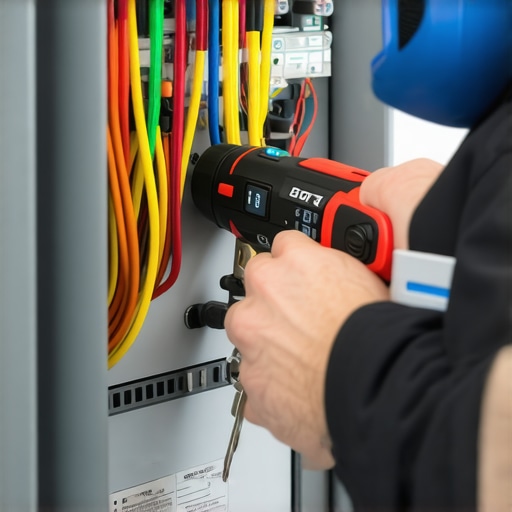
The Over-Torque Trap That Ruins Garage Panels
When DIYers or hurried installers set up a shared circuit, they focus heavily on the software configuration and often ignore physical physical connection integrity. Because a shared circuit will be running at its maximum continuous thermal limit for eight to twelve hours straight every single night, any tiny resistance in the wire connections will generate extreme heat. I cannot emphasize this enough: you must use an accurate torque screwdriver when securing the wires into your breaker and terminal blocks. Simply tightening them ‘until they feel snug’ is a recipe for disaster. Failing to perform the forgotten torque test that prevents panel fires can lead to arc faults that slowly melt your breaker casing. Have you ever fallen into this trap of skipping the fine-print specifications during a home project? Let me know in the comments below, because sharing our close-calls is how we keep the community safe. If you want to sleep peacefully while both of your EVs pull heavy current, double-check your terminal torque values and review the troubleshooting EV chargers common compliance pitfalls and fixes before your local inspector comes to sign off on the permit.
My Personal Toolkit for Long-Term Safety and Efficiency
Once you have configured your dynamic load sharing and verified the torque settings, you might think your work in the garage is complete. I made that exact assumption during my first year of dual charging. I left the units completely alone, assuming the automation would handle everything forever. But continuous high-amperage charging is brutal on physical infrastructure. Now, I schedule a quick 10-minute physical inspection of my charging setup every six months. My personal toolkit for this routine includes a high-quality non-contact infrared thermometer to check for abnormal thermal signatures on the breaker, and a dedicated torque screwdriver to make sure no connections have backed out due to thermal expansion and contraction cycles. Taking a few minutes to check these components prevents costly failures and ensures you are not dealing with ev charger troubleshooting expert tips for common issues down the road.
If you discover that your current electrical panel simply cannot handle the continuous strain even with smart software limits in place, it might be time to stop patching a overloaded system. Transitioning to a clean, robust setup often requires evaluating your home’s incoming power supply. You can explore upgrading your panel for better ev charging performance to give your dual-charger setup the headroom it truly needs to operate at peak speeds without throttling either vehicle.
How Do I Maintain My Shared Charger Setup Over Time?
To keep your shared circuit running without unexpected downtime, you must treat your charging hardware like any other major home appliance. First, regularly check the physical plug interface for any signs of discoloration or pitting on the metal prongs. If you notice the plastic around the outlet or the connector handle warping, shut off the breaker immediately. Second, keep your smart chargers’ firmware updated. Manufacturers constantly release stability patches that address wireless communication dropouts and timing bugs in their load-sharing algorithms. According to technical bulletins from the Society of Automotive Engineers (SAE), outdated firmware remains a leading contributor to handshake failures between residential chargers and modern vehicle battery management systems.
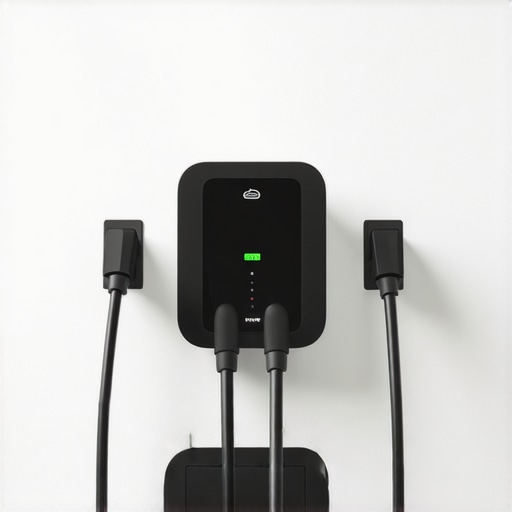
In my garage, I also make sure to keep the charging cables neatly coiled on wall hooks rather than leaving them run over by heavy vehicle tires. Damaging the internal data lines inside a smart charging cable will instantly break your power-sharing system, dropping you back to square one. Keeping your hardware protected is just as important as mastering the initial software setup.
The Future of Smart Energy Management in Your Home
We are rapidly moving away from simple circuit-sharing toward fully integrated home energy ecosystems. In the next few years, I predict that static dual-charging setups will be replaced by comprehensive home energy management systems (HEMS). These systems do not just split power between two cars; they actively coordinate your EV charging with your solar array, your home battery storage, and real-time utility pricing data. If you want to keep your system fully compliant with evolving electrical standards, it is crucial to understand code compliance essentials for ev charger installations in 2025. By planning your hardware layout with future upgrades in mind, you will save yourself from having to rip out your wiring when bidirectional vehicle-to-home charging becomes the standard. I highly encourage you to log into your primary charger’s commissioning app tonight and verify that your maximum combined current is hard-capped to exactly 80% of your breaker’s limit. Taking this one simple step will guarantee a safe, uninterrupted charge before morning.
When I look back on that freezing night in my garage, I realize the biggest hurdle wasn’t the wiring itself. It was the lack of practical, real-world advice for households running multiple electric vehicles. You do not have to accept sluggish charging or risk overloaded panels to keep your cars ready for the morning commute.
The Hardest Lessons I Learned Managing Two Hungry EVs
Sharing an electrical line teaches you a lot about the physical limits of your home’s infrastructure. Here are the crucial insights that completely changed my approach to energy management:
- Software automation is only as good as the signal: I wasted countless nights wondering why my cars weren’t charging at full speed, only to discover that metal garage doors and dense car batteries were blocking the wireless sync signals. Hardwiring the data link is always the superior choice.
- Heat is the invisible enemy of continuous loads: Running a circuit at its maximum safety limit for twelve hours straight creates extreme thermal stress. Ignoring the tightness of your connections can lead to disastrous physical damage. Always perform the forgotten torque test that prevents panel fires.
- Never assume your default settings are safe: Out of the box, many smart chargers are programmed to pull maximum power. If you don’t manually establish a hard ceiling in the primary charger’s settings, you are risking a tripped main breaker every single time you plug in both vehicles.
My Personal Toolkit for Trouble-Free Home Charging
I don’t rely on guesswork to keep my garage safe anymore. Over the years, I have built a small, highly effective kit of physical tools and digital resources that help me monitor my setup and avoid common pitfalls:
- A Dedicated Torque Screwdriver: Because terminal screws can back out slightly over time due to thermal cycling, I use a calibrated torque screwdriver every six months to verify that my breaker lugs remain exactly at the manufacturer’s specified tightness. This simple check prevents resistance heating and eliminates 3 small mistakes that turn your garage panel into a fire hazard.
- Non-Contact Infrared Thermometer: During a peak dual-charging session, I occasionally scan the front of my panel cover. A sudden spike in temperature is an early warning sign that a breaker is starting to wear out.
- Official Code Guidelines: Keeping up with local regulations is essential. I regularly review code compliance essentials for ev charger installations in 2025 to make sure my DIY tweaks remain completely legal and fully covered by insurance.
Take Control of Your Garage Power Today
You don’t need to live in fear of tripped breakers or spend thousands on unnecessary service upgrades. By implementing dynamic load sharing, securing your physical connections, and verifying your software limits, you can easily support two electric vehicles on a single circuit. It is about charging smarter, not throwing more money at the utility company. If you suspect your current setup is bottlenecked by outdated home wiring, it might be time to research upgrading your panel for better ev charging performance to give your vehicles the breathing room they deserve.
Have you ever had your main breaker trip in the middle of the night because both of your electric vehicles tried to charge at the same time? Let me know in the comments below, and let’s troubleshoot your setup together!