I sat there staring at my laptop, a half-drunk cup of cold coffee in my hand, and a sense of mounting dread. I’d just spent a chunk of change on a shiny new Level 2 charger and a full panel upgrade. I knew there was a tax credit. Everyone said there was a tax credit. But looking at the IRS website felt like trying to read a menu in a language I didn’t speak. I almost gave up and left $1,000 on the table because I couldn’t find the right form. Don’t do that. Seriously. I’ve been through the ringer on this, and I’m here to make sure you don’t repeat my $500 blunder.
Get Your Money Back From Uncle Sam Without the Headache
When I first started looking into how to claim the federal tax credit for your home installation, I made a classic amateur mistake. I focused entirely on the price of the charger itself. I totally ignored the fact that upgrading your panel for better ev charging performance also counts toward the total cost. I almost threw away the receipt from my electrician! That’s a massive slice of the 30% credit pie just gone. [image_placeholder_1] Today, I’m breaking down the wall between you and that rebate. We’re going to talk about Form 8911, what receipts you need to keep in that “junk drawer” of yours, and how to ensure your installation meets the necessary requirements so the IRS doesn’t come knocking. It’s not just about the hardware; it’s about the labor, the wiring, and even those pesky permits. According to the IRS official instructions for Form 8911, the Alternative Fuel Vehicle Refueling Property Credit (Section 30C) can cover up to $1,000 for residential installations, provided you live in an eligible census tract.
Will the IRS actually reject my claim?
I get it. You’re worried that one small typo or a missing invoice will trigger an audit or a rejection. I had that same pit in my stomach. The truth is, most rejections happen because of the rebate paperwork mistake that costs homeowners 500 or more. It’s usually something simple, like not realizing you’re in a “non-urban” or “low-income” census tract as defined by the latest 2023 updates. But if you have your ducks in a row, this is basically a guaranteed discount on your green transition. Have you ever started a tax form and just closed the tab in frustration? I want to hear about it—let me know if the jargon is what’s stopping you. We aren’t just talking about a few bucks here. This is about recouping the 3 hidden costs of diy ev charger wiring that most people don’t see coming. Let’s get into the nitty-gritty of the paperwork so you can get that direct deposit and move on with your life.
Start Your Paper Trail Early or Lose Money
I remember my first Level 2 install like it was yesterday. I shoved the permit invoice into my car’s glove box and forgot about it until April 14th. When I finally went to find it, I spent four hours digging through old fast-food napkins and dried-up pens only to realize the thermal ink had faded to a blank white square. I had to call the city clerk’s office like a beggar to get a duplicate. Don’t be me. Scan everything the second you get it. You aren’t just claiming the charger hardware; you are claiming the labor, the the specific conduit size needed for a 50-amp circuit, and even the panel upgrades for ev chargers required to handle the load. If your electrician doesn’t itemize the invoice, ask them to redo it. You need a clear line for ‘EV Charging Infrastructure’ so the IRS can’t claim you were just doing general home maintenance.
The Census Tract Hurdle That Trips Everyone Up
This is the part that makes most homeowners want to throw their laptop out the window. Since the 2023 update, the 30C credit isn’t a free-for-all. It is specifically targeted at ‘non-urban’ or ‘low-income’ census tracts. Before you even download the form, go to the Department of Energy’s mapping tool. If you aren’t in a shaded area, you likely won’t qualify for the residential credit. I’ve seen people spend $3,000 on a high-end setup assuming they’d get a $900 check back, only to realize they live one block too far into a ‘wealthy’ urban zone. Checking this first saves you from the heartbreak of a rejected claim. 
How to Tackle Form 8911 Without a CPA
Form 8911 looks intimidating, but for residential use, you’re mostly looking at Part II. You need to enter the total cost of the ‘refueling property.’ This is where you combine the charger price with the electrician’s bill. If you had to deal with the permit error that stops 40 of residential charging installs, those permit fees are part of your basis too. One nuance people miss is the ‘Alternative Minimum Tax’ (AMT). If you’re already paying AMT, your credit might be limited. I once helped a neighbor who was convinced he’d get the full $1,000, but because his tax liability was already offset by other credits, he only saw about $400.
Verify Your Installation Meets the Code Standards
The IRS doesn’t just want to see a receipt; they want to know the work was legal. This means you need to how to verify code compliance for your ev charger installation before you file. If an inspector never signed off on that new circuit, you’re technically on shaky ground. I always tell people to take a photo of the final inspection sticker inside the panel. If the IRS ever asks for proof that the property was ‘placed in service’ during the tax year, that sticker is your smoking gun. It proves the date and the legality in one shot.
Don’t Ignore the Panel Upgrade Portion
If your old home couldn’t handle the 50-amp draw, you probably had to pay for a service upgrade. Most people think this is a separate expense, but it’s actually a vital part of the charging system. I’ve found that upgrading your panel for better ev charging performance is often the most expensive part of the job, and yes, it qualifies for that 30% calculation up to the $1,000 cap. When I did my own house, the panel work was $2,200. Without including that in the 8911 form, I would have only been claiming the $500 charger, which would have left hundreds of dollars of credit on the table.
Everyone tells you to go for the highest amperage possible, but in my experience, that’s where most homeowners start their downward spiral into unnecessary costs. They think a 60-amp circuit is the gold standard, yet they ignore the thermal stress it puts on an older busbar. I’ve seen panels that are technically within their limit but run so hot during an overnight charge that they eventually warp. This is the nuance that separates a DIY enthusiast from a pro: bigger isn’t always better if your infrastructure can’t breathe. If you aren’t careful, you’ll end up needing troubleshooting ev chargers common compliance pitfalls and fixes before the first month is even over.
Why Lower Amperage Often Beats the 60-Amp Obsession
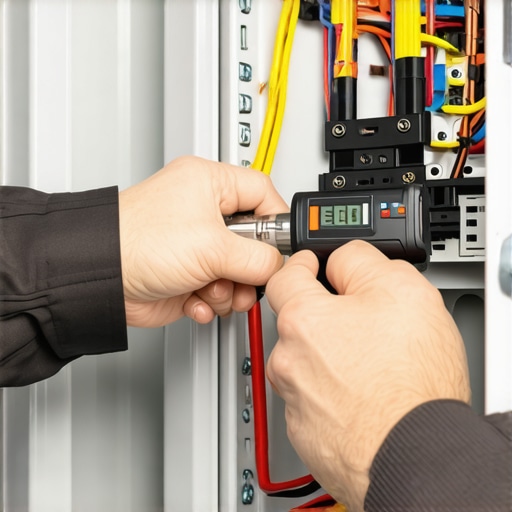
The National Electrical Code (NEC) 625.41 requires EV chargers to be considered a continuous load. This means the circuit must be sized at 125% of the charger’s output. A 48-amp charger requires a 60-amp breaker. However, many people forget that ensuring code compliance when installing ev chargers involves looking at the ambient temperature of your garage. If your panel is in a space that hits 100 degrees in the summer, that breaker is going to trip early. I often recommend dialing back to 32 or 40 amps; you still get a full charge overnight, but you significantly reduce the risk of 3 small mistakes that turn your garage panel into a fire hazard. Have you ever fallen into the ‘more power’ trap only to have your breaker trip at 2 AM? Let me know in the comments.
Does your load calculation account for the summer AC surge?
This is the advanced question your electrician might skip. A standard load calculation is a snapshot in time, but your EV charger is a marathon runner. According to a study by the Electric Power Research Institute (EPRI), residential panels see their highest failure rates when EV charging coincides with peak HVAC usage. If your electrician didn’t perform a ‘peak demand’ analysis, you might be at risk. This is why upgrading your panel for better ev charging performance isn’t just about adding a breaker; it’s about ensuring the main lugs can handle the simultaneous draw of your car and your central air. If they can’t, you’ll start seeing 3 signs your main lug is loose and causing power flickers.
The Torque Wrench Mistake That Voids Your Peace of Mind
If I could point to one single ‘oops’ factor that ruins a perfectly good install, it’s the lack of a torque wrench. Most people—and even some lazy pros—just tighten the breaker screws until they ‘feel’ right. But the NEC 110.14(D) specifically mandates using a calibrated torque tool. Why? Because copper and aluminum expand and contract at different rates. If it’s too loose, you get arcing; if it’s too tight, you strip the threads and create a hot spot. I always insist on the forgotten torque test that prevents panel fires. It’s the difference between a system that lasts twenty years and one that melts in two. Also, keep in mind that why thinner wire is costing you miles every night often comes down to voltage drop caused by these poor connections. If you want to get this right the first time, don’t hesitate to contact us for a professional review of your setup.
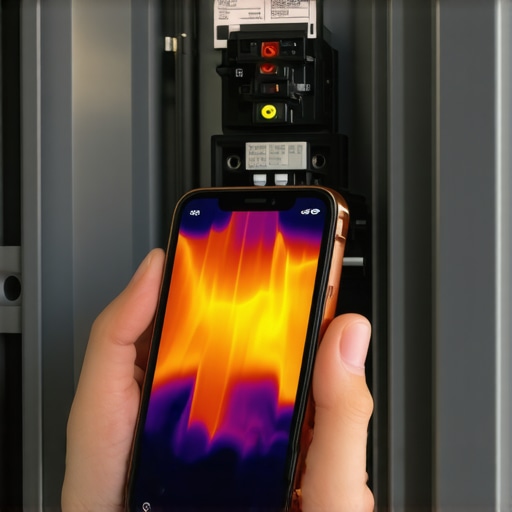
I don’t just walk away once the permit is signed. If you want your setup to last more than five years without a service call, you need to think like a maintenance tech. I personally keep a FLIR thermal camera attachment for my phone. It sounds like overkill until you see a bright purple hotspot on a breaker that’s about to fail. Using this tool helped me catch a loose wire before it could trigger a troubleshooting ev chargers common compliance pitfalls and fixes scenario that would have cost me a weekend. If you see heat, you have high resistance. High resistance leads to melted plastic and potential fire hazards.
How do I keep my charging station from dying early?
Maintaining your investment is mostly about cleanliness and physical inspections. Once a month, I take a can of compressed air to the handle. You’d be surprised how much dust and spider webs can get in there, leading to a charger that won’t click into place. If you live near the ocean, you’re fighting an uphill battle with salt. I’ve written before about the real lifespan of a level 2 charger in coastal-salt air, and the secret is honestly just keeping the pins clean. Use a specialized contact cleaner; never use WD-40 or water. You should also check the cable for ‘memory’ or kinks. A stiff cable in winter can crack the outer insulation. For more details, check out how to clean your charger ports without damaging them for the right technique.
Prepare for the Bi-Directional Revolution
We are moving toward a world where your car isn’t just a consumer of power but a supplier. Vehicle-to-Home (V2H) technology is the next big wave. If you’re doing a panel upgrade now, you should be looking at panel upgrade strategies to meet ev charging code requirements in 2025. In the very near future, your Level 2 setup will likely integrate with an automatic transfer switch so you can learn how to use your ev as a backup home battery safely during a blackout. This requires more than just a big breaker; it requires communication wires (like RS-485 or Ethernet) to be pulled alongside your power conductors. If you have the walls open now, pull a Cat6 cable too. You’ll thank me in three years.
According to the NFPA 70: National Electrical Code, Article 625.42, the rating of the overcurrent protective device must be determined by the maximum current the equipment is capable of drawing. This technicality is why you can’t just ‘guess’ on your breaker size. If you want to be 100% sure your system is ready for the long haul, I recommend you contact us for a professional load calculation. My big tip for today? Go buy a $20 infrared thermometer. Every few months, while the car is charging at full speed, point it at your main breaker. If it’s over 140°F (60°C), something is wrong. Stop what you’re doing and call a pro before a minor issue becomes a major replacement.
I used to think ‘good enough’ was okay for home wiring until I smelled fish—a classic sign of melting plastic. Realizing that 3 small mistakes that turn your garage panel into a fire hazard wasn’t just a clickbait title changed my perspective on safety forever. I now treat my panel like a piece of high-performance machinery rather than a ‘set it and forget it’ box in the garage. Another lightbulb moment? The IRS doesn’t care about your total bill if it is not broken down properly. I spent hours arguing with my first electrician because they wouldn’t separate labor from materials, which is crucial for maximizing your claim on Form 8911.
What I Learned After My First Breaker Actually Melted
The hardest lesson was understanding that heat is the silent killer of electrical systems. Even if your installation looks clean, the forgotten torque test that prevents panel fires is the only thing standing between a full charge and a melted busbar. I also realized that ‘placed in service’ is a legal term, not a suggestion. If your inspector signs off on January 2nd, you cannot claim that credit for the previous tax year, regardless of when the charger was mounted. Finally, never assume your neighbor’s experience applies to you; census tract eligibility can change from one side of the street to the other.
The Gear That Saved Me From a $500 Electrical Bill
You don’t need a degree in electrical engineering, but you do need the right kit to keep things running efficiently. I swear by my Klein Tools infrared thermometer for monthly checks on the main breaker. I also keep a bookmark for the code compliance essentials for ev charger installations in 2025 to ensure any adjustments stay legal. For the financial side, the Department of Energy’s mapping tool is the only resource I trust to verify tax credit eligibility before spending a dime. If you are stuck on the technical side, reviewing ev charger troubleshooting expert tips for common issues can often save you a $200 service call fee.
Stop Overthinking and Start Plugging In
Transitioning to an EV shouldn’t feel like a part-time job as a tax attorney and a master electrician. While it is vital to focus on upgrading your panel for better ev charging performance, remember that the ultimate goal is the freedom and savings that come from leaving the gas pump behind. Every receipt you save and every torque screw you double-check brings you one step closer to a reliable, cost-effective setup that adds value to your home. If the process ever feels overwhelming, do not hesitate to contact us for professional guidance. You have the knowledge now; just take it one step at a time and get that charger running. Have you ever had a tax credit claim rejected, or did the census tract map catch you by surprise? Let me know in the comments below!