I remember the exact moment I realized I was doing this whole ‘electric vehicle’ thing wrong. It was a Tuesday morning, and I was staring at a utility bill that looked more like a mortgage payment. My coffee went cold as I scrolled through the line items, realizing I’d been plugging in my car at 5:30 PM every day—right when everyone else in the neighborhood was blasting their AC and preheating their ovens. I was paying peak-hour rates for every single kilowatt. It was a classic amateur mistake, and honestly, I felt a bit foolish. I had this high-tech machine in my garage, but I was treating it like a toaster. Why your electric bill tripled after installing a home charger isn’t a mystery; it’s usually just bad timing. Today, I’m going to help you avoid that gut-punch of a bill by showing you how to actually use the app that came with your charger. We’re going to move your charging from those expensive ‘rush hours’ to the middle of the night when electricity is practically being given away. Have you ever opened your power bill and felt like you were paying for the whole street’s electricity?
I Learned the Hard Way that Timing is Everything
Early on, I thought that as long as I wasn’t using a gas pump, I was winning. I didn’t realize that utility companies are like airlines—they charge a premium when demand is high. By simply letting my car charge the moment I got home, I was voluntarily opting into the highest possible rates. I even struggled with troubleshooting EV charger connectivity problems because I was so frustrated I kept resetting my router instead of just fixing my schedule. The ‘set it and forget it’ mentality only works if you set it correctly in the first place. Research from the Idaho National Laboratory suggests that managed charging can significantly reduce the strain on the grid and lower costs for homeowners by shifting demand. It’s not just about being green; it’s about being smart with your wallet. Finding the best time of day to charge your car for the lowest utility rate is the single most effective way to lower your total cost of ownership.
Is a Smart App Actually Worth the Headache?
Some people tell me they prefer a ‘dumb’ charger because they don’t want to deal with another app on their phone. I get it. We are all app-exhausted. But without that interface, you’re essentially flying blind. You’re missing out on the ability to track your usage, set your ‘off-peak’ windows, and even pre-condition your battery in the winter so it’s ready to go when you are. If you’ve ever worried about signs your main breaker is running dangerously hot, scheduling also helps ensure you aren’t pulling massive amounts of power while your water heater and dryer are also running. We’re going to walk through the setup process next so you can start seeing those savings immediately.
Sync the Hardware to Your Phone First
Before you can save a dime, your charger and your phone need to be on speaking terms. Most chargers use a Bluetooth handshake to get onto your home Wi-Fi. I once spent forty-five minutes swearing at a blinking red light because my router was tucked behind three brick walls and an old metal freezer. It turns out, troubleshooting EV charger connectivity problems usually starts with just checking your signal strength in the garage. If your phone can’t stream a basic video where the charger sits, the charger won’t be able to report data to the cloud reliably. I ended up installing a cheap Wi-Fi extender right next to the water heater, and suddenly, the app sprang to life. 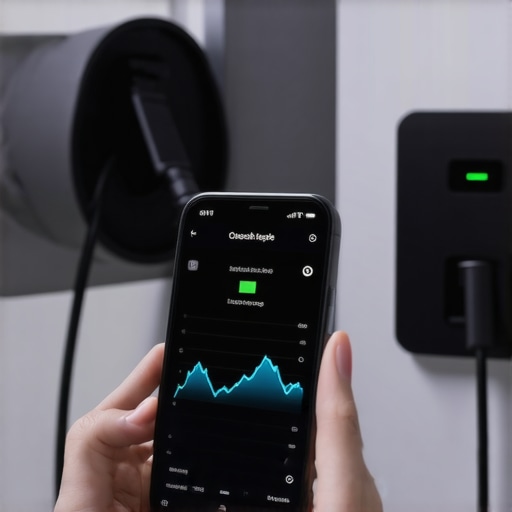
Fixing the Signal Before You Give Up
Once the connection is stable, look for the ‘Smart Charging’ or ‘Scheduling’ tab. This is where the magic happens. You aren’t just setting a simple timer; you’re building a digital fence around your electricity usage. If you see a ‘Communication Error’ on your screen after a few days, don’t panic. Often, troubleshooting a communication error between your car and charger is just a matter of re-seating the charging handle or checking if the manufacturer pushed a firmware update that requires a restart.
Find Your Utility’s Hidden Savings Windows
Now, grab that utility bill I mentioned earlier. You’re looking for terms like ‘Time-of-Use’ (TOU) or ‘Off-Peak.’ Most companies offer dirt-cheap rates between 11 PM and 6 AM when demand is at its lowest. I set my charger to start its session at midnight. By doing this, I moved my car’s massive hunger for power away from the ‘dinner-time peak’ when the grid is screaming for help. This simple shift is exactly how you find the best time of day to charge your car for the lowest utility rate. I actually saved nearly fifty dollars in the first month just by toggling a virtual switch. It’s the closest thing to ‘free money’ you’ll ever get from a power company.
Don’t Melt Your Main Breaker While You Sleep
If you live in an older home, you can’t just throw a 50-amp load onto the system and assume everything is fine. Think of your electrical panel like a highway; if too many semi-trucks try to merge at once, everything grinds to a halt—or in this case, things start to get dangerously hot. I remember my first week charging, I woke up to a dark house because the car, the dishwasher, and the HVAC all kicked on at the exact same moment. You need to learn how to load balance your home electrical system without a full panel swap to avoid those annoying midnight trips to the garage. Pay attention to signs your main breaker is running dangerously hot, like a faint humming or a distinct ‘hot plastic’ smell near the panel. To keep things safe, I staggered my appliances: the dishwasher runs at 9 PM, and the car starts at midnight. This spread prevents the total load from exceeding what your service can handle. Finally, always verify code compliance for your ev charger installation to ensure your setup is as safe as it is efficient.Most people will tell you that a NEMA 14-50 plug is the “gold standard” for home charging because it allows you to take the charger with you if you move. In my experience, that’s a dangerous oversimplification. I’ve seen far too many melted receptacles because these “heavy-duty” plugs aren’t always designed for the continuous 40-amp draw an EV pulls for eight hours straight. The benefit of a hardwired charger over a NEMA plug isn’t just about a cleaner look; it’s about removing a significant failure point. Hardwiring creates a secure, permanent connection that handles the heat much better than a tension-based plug. If you’re serious about safety and long-term reliability, skip the outlet.
Why Does Your Circuit Breaker Keep Tripping at Random?
This is the “advanced” headache that drives people crazy. You’ve set your schedule, your Wi-Fi is strong, and yet you wake up to an uncharged car. Often, the culprit is a conflict between the charger’s internal ground-fault protection and a GFCI breaker in your panel. The specific breaker brand that keeps tripping on level 2 chargers is usually a result of “nuisance tripping” where two safety systems fight each other. Research from the Electrical Safety Foundation (ESFI) emphasizes that while safety devices are critical, improper layering can lead to system instability and frequent interruptions. 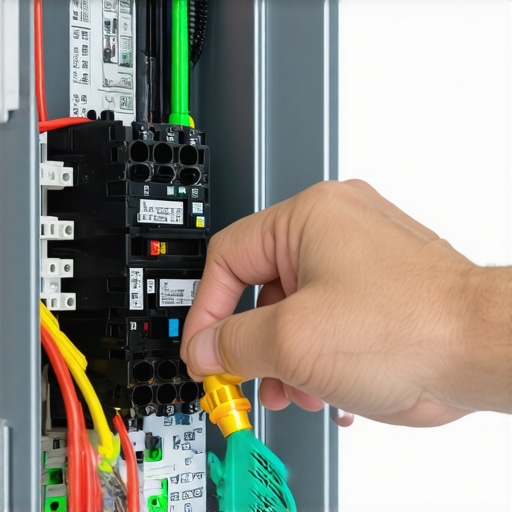 The real “oops” factor that most DIYers—and even some general electricians—miss is the torque. It sounds boring, but the specific torque settings that prevent panel fires are non-negotiable. If those lugs aren’t tightened to the exact inch-pound specification required by the manufacturer, the metal will expand and contract until the connection loosens, creating an arc. I’ve also seen people try to save money by using existing wires without checking the material. The difference between copper and aluminum wiring for high load circuits is a critical distinction; aluminum requires larger gauges and specific anti-oxidant paste to be safe under constant high-load conditions.
Precision Matters More Than Your Permit
A permit proves you paid the city; code compliance essentials for ev charger installations in 2025 prove you won’t burn your house down. I always tell friends that upgrading your panel for better ev charging performance isn’t just about adding more amps; it’s about ensuring the physical integrity of the bus bar. If you learn why you should check your panel for double-tapped breakers, you’ll understand that overcrowding is the enemy of electrical efficiency. Another common trap is ignoring the distance. The common wire sizing error that causes voltage drops happens when you don’t account for the run length from the panel to the garage. A wire that is too thin for the distance will get hot, drop voltage, and slow your charging to a crawl. Have you ever fallen into this trap? Let me know in the comments.
Once the dust from the installation settles, it’s easy to treat your charger like a light switch—you flip it on and assume it’ll work forever. But I’ve learned that high-voltage equipment is a living thing; it expands, contracts, and occasionally gets cranky. If you want to avoid a service call three years from now, you need to handle the digital side first. I make it a habit to check for updates every month because learning how to update your charger software without calling a technician can fix bugs that cause those annoying mid-night disconnects before they even happen.
Why Your Charger Pins Deserve More Love
I noticed my charging handle felt a bit gritty a few months ago. When I looked inside, there was a tiny buildup of oxidation and road salt. If you ignore this, that resistance builds up heat right at the port of your expensive car. I’ve become a huge advocate for knowing how to clean the pins on your charging handle safely. A quick blast of compressed air and a specialized contact cleaner can be the difference between a fast charge and a melted connector. This is especially true if you’re doing maintenance tasks that keep your outdoor charger running through winter, where moisture and salt are your biggest enemies.
Grab an Infrared Thermometer Before Something Smells
I’ve started carrying a small infrared thermometer in my toolkit. It feels a bit overkill until you see a lug in your panel that’s 20 degrees hotter than its neighbor. According to the National Electrical Code (NEC) Section 110.14(D), terminal torque must be verified to prevent high-resistance connections. I use the thermometer once a quarter to scan the breaker while the car is pulling its full 40 amps. If I see a spike, I know a connection is loosening. It’s the easiest way to spot a dying breaker before it shuts down your charging session entirely. 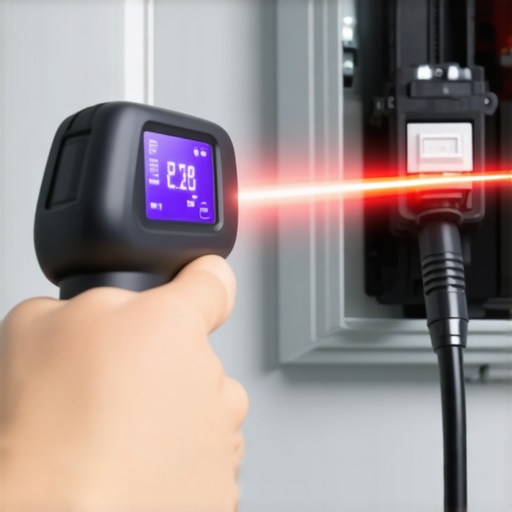
How can I keep my charging setup safe for years?
Beyond the physical connections, you have to think about the ‘invisible’ threats. Power surges don’t just happen during lightning storms; they happen when the grid fluctuates. I realized that my charger didn’t have built-in defense for the whole house, so I looked into signs you need a whole house surge protector for your ev. It’s a small investment that protects the motherboard in your charger and your car’s sensitive onboard computer. In the future, I expect we will see ‘bi-directional’ charging become the norm, where your car actually powers your house during a blackout. Preparing for that means ensuring code compliance when installing ev chargers today so you don’t have to rip everything out when the tech evolves.
Thinking About Adding a Second Car to Your Garage
The biggest ‘scaling’ mistake I see is people assuming they can just add a second charger on another 50-amp breaker and be done with it. Most 200-amp panels will scream for mercy if you try that while the AC is running. Before you buy that second EV, you need to load test your house before adding a second charger. You might need a smart load shedder or a charger that can ‘talk’ to its twin to share a single circuit. I highly recommend checking your charger’s app right now—see if there’s a firmware update waiting. It’s the simplest bit of maintenance you can do today to keep your system healthy.
What My First Five Melted Outlets Taught Me
Looking back, the biggest shift in my thinking was realizing that an EV isn’t just another appliance; it’s a massive, sustained load that tests every weak point in your home. I used to think code compliance was just red tape. Now, I see it as the only thing standing between a full battery and a fire department visit. One major takeaway is that you should never cut corners on the ‘invisible’ stuff—the torque settings and the wire gauge matter far more than the brand of the charger itself. Most of the most common DIY mistakes in home charger installations happen because we treat high-voltage work like we’re just wiring a light bulb. It’s also worth noting that your car is smarter than you think. If it stops charging, it’s often a safety feature, not a failure. Learning how to spot a dying breaker before it shuts down your charging session saved me from a very stressful morning commute last winter.
The Gear That Keeps My Charging Station Stable
I don’t leave my electrical safety to guesswork anymore. Here is the toolkit I actually use to sleep better at night. First, a simple infrared thermometer—it’s the quickest way to check for hotspots on your EV charger circuit. Second, I always keep a copy of the NEC Handbook to stay current on code compliance essentials for ev charger installations in 2025. Third, don’t overlook your utility’s own mobile app. Most people ignore the data, but it’s the best way to track if you’re actually getting those utility rebates that pay for your charger installation costs. Finally, a high-quality torque wrench is non-negotiable for anyone doing their own maintenance.
Your Garage is the New Gas Station
Taking ownership of your home energy doesn’t have to be a source of anxiety. Once you’ve handled the initial panel upgrade and set your schedules, the system mostly takes care of itself. You’re no longer just a consumer; you’re managing your own personal infrastructure. If you’re ever in doubt about your setup, don’t hesitate to reach out to a pro for a quick inspection. Investing in a solid foundation today means years of cheap, reliable miles tomorrow. Have you ever been woken up by a tripped breaker in the middle of the night, or did your installation go perfectly on the first try? Let me know in the comments below!